Event production · Jammu, Jammu & Kashmir
Sports Events & Ceremonies AV in Jammu
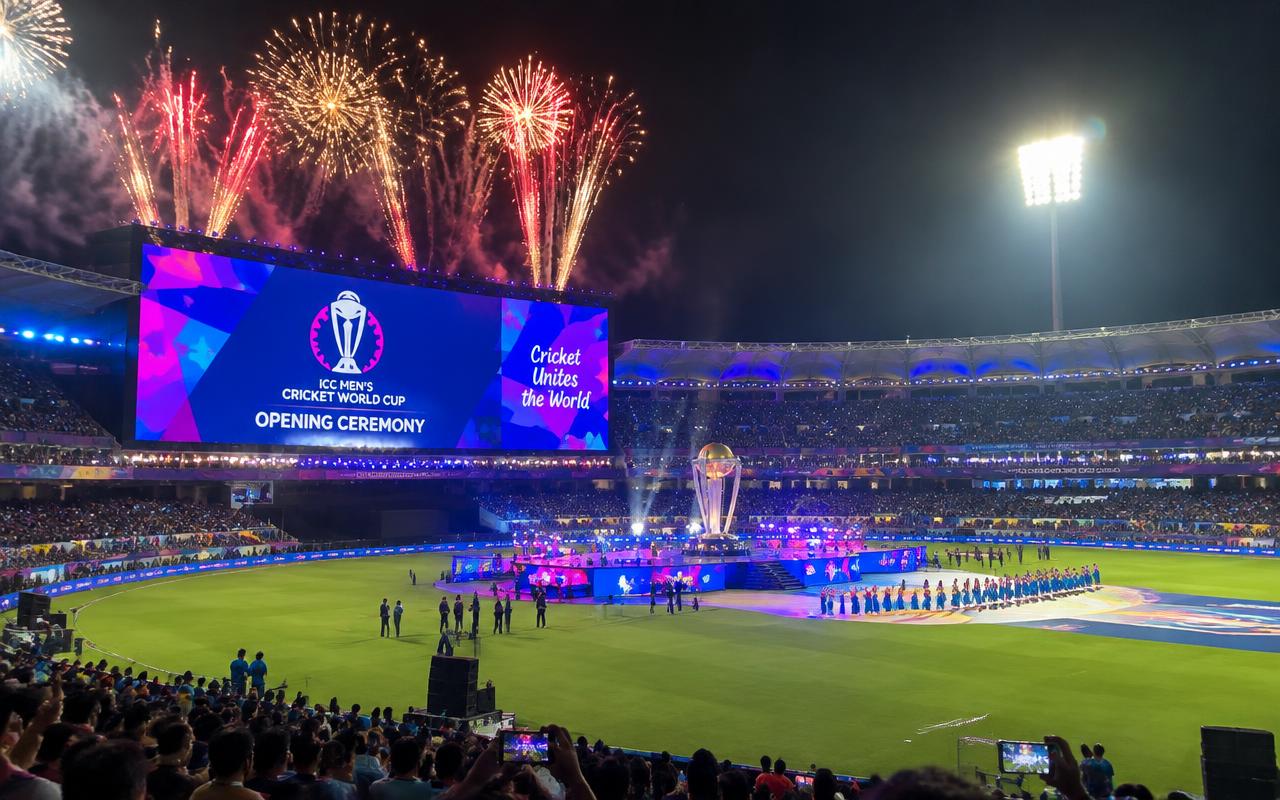
Jammu's event economy runs on the pilgrim corridor to Vaishno Devi at Katra, the administrative and defence establishment of a Union Territory that hosts Northern Command, and a Dogra wedding market with its own customs. It is a city where security clearance is as much a part of the production schedule as the load-in. Prime AV Solutions produces the sports events & ceremonies end of that calendar — stadium-scale PA, giant outdoor LED, opening ceremony shows — with one crew owning the whole stack.
- Lead time
- 8 weeks out
- Peak season
- Oct–Mar
- Coverage
- Jammu & Jammu & Kashmir
Key takeaway
Complete AV for sports events & ceremonies in Jammu
Stadium audio is a public-address problem first and an entertainment system second. Announcements have to be intelligible to a crowd generating ninety-odd decibels of its own noise, across tiers with wildly different distances and plenty of hard reflective concrete, which means distributed coverage aimed tier by tier rather than a central cluster turned up. Build the system so the announcer always takes priority over the music feed through a hardware override, and verify intelligibility in a full stadium rather than an empty one, because an empty bowl tells you almost nothing useful.
Stadium geometry decides screen placement, speaker hangs per tier and where a stage can stand without a wheel touching the playing surface. In Jammu we work at Radisson Blu Jammu, Abhinav Theatre, Maulana Azad Stadium and venues across Gandhi Nagar, Trikuta Nagar, Bahu Plaza, Channi Himmat, Nanak Nagar.
Ceremonies are a build-window exercise on somebody else's playing surface. The groundsman controls the pitch, the fixture list controls the calendar, and you may have six hours between the end of pitch preparation and the first guests, often with a rule that no wheeled vehicle crosses the turf. The answer is a modular ceremony rig carried on boards, pre-assembled sections, cable routes laid on protective matting around the boundary, pitch-side distribution boxes placed before covers come off, and a strike plan that clears the surface before the officials inspect it.
What your event needs
- Stadium-scale PA
- Giant outdoor LED
- Opening ceremony shows
- Broadcast feeds
Why Jammu organisers choose Prime AV
- Crews and trucks positioned for fast load-in at KC Residency and venues in Nanak Nagar and Gandhi Nagar.
- Build the schedule jointly with the venue and the match officials, pre-assemble everything possible outside the bowl, and rehearse the move-in and strike as timed drills with a counted crew.
- A standing Jammu client base across dogra community weddings and multi-day functions and government, administrative and ut-level conferences, so the rig is specified from experience rather than a catalogue.
- Working knowledge of Jammu & Kashmir venue rules, power sanctions and permission timelines.
What you will be judged on afterwards
- Safety and in-play announcements were intelligible in every tier with the stadium full.
- The ceremony came on and off the playing surface inside its window, and the groundsman passed the pitch.
- Replays and the match clock on the big screens stayed in step with what the crowd was watching live.
- The broadcaster received the agreed clean feeds at the agreed reference without a single dropout.
- No cable, box or structure left a mark on the surface or sat in a crowd escape route.
Local conditions
Producing sports events & ceremonies in Jammu
Weather & the rig
Stadium work is entirely open to the sky, so the ceremony rig, the screens and a seated crowd all take the conditions exactly as they come. Jammu is the hot anomaly of a cold Union Territory — the plains here reach 44°C in May and June, hotter than anywhere in the Kashmir valley, and the Jul–Sep monsoon brings the Tawi up fast with flash-flood risk on riverside ground. Winter is the operational problem: January fog closes Jammu airport for hours at a stretch, slows the NH-44 run to a crawl and makes projection and any aerial plan unworkable, while 4–20°C days require heating for every outdoor function. May–Jun plains heat; Jul–Sep monsoon and Tawi flooding; and dense-fog January for anything depending on air freight, projection or drone work.
Power & redundancy
Stadiums have power but almost never where a pitch-side ceremony needs it, so temporary distribution around the boundary with generator backup carries the show. Among the more demanding power environments in north India. JPDCL operates scheduled curtailment in both the winter heating peak and the summer cooling peak, so a show here is planned DG-primary with the mains treated as a bonus, and N+1 redundancy with automatic changeover is standard rather than premium. Fuel storage and a bowser plan matter because a long outage is normal, not exceptional.
Permits & noise rules
Match-day events sit under the stadium authority's rules, a police crowd plan and separate clearance for any pyrotechnic or drone element, all on a fixture date that cannot move. Jammu Municipal Corporation for the licence and temporary structures, the SSP Jammu and the district magistrate for assembly and loudspeaker permission, and the J&K noise rules with the 10 pm outdoor limit. Two constraints are specific to this city: Jammu's airfield is a shared civil-military field effectively inside the urban area, which closes drone operations in practice, and any event near an Army or paramilitary installation needs security clearance with crew lists submitted for verification well in advance. Everything within Katra and on the track is governed by the Shri Mata Vaishno Devi Shrine Board, whose rules on content, catering and structures supersede the municipal file.
Load-in & access
Build windows are dictated by the fixture list and the groundsman, so everything loads in, moves on boards and strikes around play rather than around the production. Delhi is 600 km and a realistic 10–11 hours on NH-44, with the Lakhanpur toll and security checks adding unpredictable hours. Pathankot at 100 km is the useful staging point, and rail parcel into Jammu Tawi is reliable. Northbound movement towards the valley is regularly halted for highway closures, so never plan a Jammu show on gear still sitting past Udhampur. In the city, Residency Road and the old town bar heavy vehicles through the day; 10 pm–6 am is the window.
Season & booking
Both Navratris — Chaitra in spring and Sharad in autumn — bring peak Vaishno Devi footfall and absorb the region's hospitality, transport and police capacity. The Jhiri Mela in Oct–Nov, Lohri and Baisakhi, the Bahu Mela, and the Army Day and Republic Day ceremonial calendar all lock dates. The Dogra wedding grid runs Oct–Mar around the auspicious tithis, with the pre-winter weeks busiest. Peak demand runs Oct–Mar.
Crew & dispatch
Local crew based in Jammu with working stock held in the city, because the Delhi run is too long and too interruptible to rely on for a tight call time; Delhi supplies large-format LED and specialist inventory with at least 48 hours in hand, and Pathankot serves as the staging point.
What it costs here
Government and defence work is tendered, documented and reliable but slow to settle, and the paperwork load is heavier here than in most states. Dogra weddings spend confidently on stage, lighting and entry production. Honest pricing has to carry the real cost of redundancy — DG sizing, fuel and a spare-stock position that this grid and this highway demand — rather than pretending to a plains cost base.
Local expectations
Dogra weddings carry their own ritual sequence, with the baraat, dhol and Dogri wedding songs needing acoustic space before the sangeet takes over at full level. A large share of functions have serving or retired defence families in the room, which sets a formal tone: punctual starts, clear protocol order, accurate rank and title on every name board. Hindi and Dogri scripting with English for official events, and a visible preference for dignified formality over spectacle in institutional work.
Run of show
A typical sports events & ceremonies schedule
| Time | Moment | What AV is doing |
|---|---|---|
| T−3 days | Screen and PA build | Giant screens erected on engineered supports, distributed speaker positions hung or stacked per tier, cable routes matted around the boundary. |
| T−1 day | Integration and rehearsal | Broadcast feed points tested with matched reference, scoring and clock integration verified, ceremony rehearsed with stand-ins on the boards. |
| T−5 hrs | Announcement and music check | Announcer override tested from every position, music bed levels set per tier, emergency message script read through with the venue safety officer. |
| 16:00 | Gates open | Walk-in music at measured level per tier, welcome and safety messages on a timed rotation, screens on sponsor and wayfinding content. |
| 17:30 | Fan engagement | Crowd cameras cut to the big screens, competitions run from the announcer position, audio follows the active zone rather than running flat everywhere. |
| 18:30 | Opening ceremony | Ceremony rig live on the boards, performance audio taken by a second engineer, lighting and effects cued, broadcast taking the clean programme feed. |
| 19:00 | Match start | Ceremony struck off the surface inside the agreed window, screens switch to match feed with replays, announcer on priority for all in-play messaging. |
| 22:15 | Presentation | Podium placed and lit, radio mics on an allocated block, screens on the presentation cut, recording closed and feeds reconciled with the broadcaster. |
Broadcast integration is where sports events differ most from other live work. The host broadcaster owns the match feed and the timing, and your giant screens, replay and ceremony coverage have to interface with that cleanly: agreed feed points, matched reference and frame rate, a clear understanding of who supplies replays and with what delay, and a scoring and clock integration that does not drift. Fan-park screens elsewhere in the city then take a distributed feed with their own audio, their own power and their own crowd plan.
Scope
Sports Events & Ceremonies scope levels in Jammu
Match-night overlay at a mid-size stadium: distributed PA supplement, announcer position, one large screen or LED panel set, playback and a show-caller.
An opening or closing ceremony on the field of play: modular stage on boards, performance-grade PA, programmed lighting rig, LED, pitch-side power and a rehearsal day.
Multi-match delivery with giant screens, full stadium PA supplement, broadcast feed integration, replay to screens and a resident crew across the fixture window.
A large opening ceremony with drone or pyrotechnic finale, multi-zone audio across the bowl, broadcast-grade camera package, full generator redundancy and a multi-day build.
Government and defence work is tendered, documented and reliable but slow to settle, and the paperwork load is heavier here than in most states. Dogra weddings spend confidently on stage, lighting and entry production. Honest pricing has to carry the real cost of redundancy — DG sizing, fuel and a spare-stock position that this grid and this highway demand — rather than pretending to a plains cost base.
Venues
Where sports events & ceremonies happen in Jammu
| Venue | Capacity | Production note |
|---|---|---|
| Radisson Blu Jammu | Up to 1,000 across ballroom and lawns | The city's most capable conference property, bypass-side with a usable service approach; ballroom rigging provision is conservative, and winter load-ins have to be planned around the dense January fog that slows every vehicle movement into the city. |
| Abhinav Theatre | Roughly 700 fixed seats | The J&K Academy's proscenium house at Kachi Chawni — a real theatre with a house grid and wings, but the electrical infrastructure is dated and sized for house lighting, so a substantial rig needs a parallel temporary supply, and the stage door restricts case dimensions. |
| Maulana Azad Stadium | 15,000-plus with the field in use | City-centre stadium near Residency Road with no permanent rigging and turf that needs full boarding before any vehicle or tower goes on; one service gate and a congested surrounding block mean a staged, shuttled load-in across two nights rather than one. |
| General Zorawar Singh Auditorium | Roughly 1,000 fixed seats | Jammu University's main auditorium for convocations and cultural programmes; campus security logs every vehicle, academic-calendar blackouts are firm, and the in-house technical team's processes have to be worked with rather than around. |
| KC Residency | Up to 600 seated across halls | Established Residency Road hotel where the load-in is from a busy commercial street with no dock at all — a hand-carry and goods-lift operation that has to run overnight. |
Demand
What Jammu books most
Jammu event mix
- Dogra community weddings and multi-day functions
- Government, administrative and UT-level conferences
- Defence and paramilitary ceremonial functions
- Vaishno Devi pilgrim-season and Shrine Board events
- Trade exhibitions and regional dealer meets
- University convocations and cultural programmes
Services
Recommended production stack
Line Array Systems
Flown line array systems designed in prediction software for outdoor grounds, convention halls and arenas of 1,000 to 50,000 guests.
LED Screen Rental
Large-format LED screens and IMAG side screens with switching, so every guest sees speakers, performers and content in crisp detail.
Drone Light Shows
Choreographed drone light shows with 100 to 1,000+ drones that paint logos, names and stories across the night sky — with all permissions handled.
Broadcast & Multi-Camera
Broadcast-grade cameras, jibs, PTZs and OB-style control for IMAG, TV feeds and post-event films that capture every moment.
Timeline
Planning milestones
- 8 weeks out
Fixture and access plan
Match date, pitch-preparation schedule, build and strike windows and the surface protection method agreed with the venue and groundsman.
- 6 weeks out
Audio and screen design
Tier-by-tier coverage modelled, screen positions fixed against sightlines and support engineering, announcer override architecture specified.
- 4 weeks out
Broadcast interface agreed
Feed points, reference and frame rate, replay responsibility, clock and scoring integration documented with the host broadcaster.
- 3 weeks out
Ceremony design and safety sign-off
Modular rig drawings, cable plan, effect clearances and crowd-safety review completed with the venue safety officer.
- T−3 to T−1 day
Build, integration and rehearsal
Screens and PA installed and tested, broadcast integration proven, ceremony rehearsed with timed move-in and strike drills.
- Immediately post event
Strike and surface handover
Ceremony off the surface first, full derig to the venue deadline, and a joint pitch and stand inspection before sign-off.
Risk control
What goes wrong, and how we stop it
What can go wrong
How we prevent it
- What can go wrong
The ceremony build window collides with pitch preparation.
How we prevent itBuild the schedule jointly with the venue and the match officials, pre-assemble everything possible outside the bowl, and rehearse the move-in and strike as timed drills with a counted crew.
- What can go wrong
Crowd noise masks announcements when it matters most.
How we prevent itSpecify distributed coverage aimed tier by tier with a hardware announcer override above the music feed, and verify intelligibility with the stadium full rather than signing it off in an empty bowl.
- What can go wrong
Big-screen replays drift out of sync with the live action.
How we prevent itLock to the broadcaster's reference and frame rate, agree in writing who supplies replays and at what delay, and keep a dedicated operator on the screen feed rather than running it from the announcer position.
- What can go wrong
Cable runs cross the field of play or a crowd escape route.
How we prevent itRoute everything around the boundary on matting, obtain the safety officer's sign-off on the cable plan before build, and use wireless or pre-installed venue infrastructure for anything that would otherwise cross a gangway.
Process
From brief to standing ovation
01
Brief & recce
We visit the venue, map power and rigging, and understand your show flow.
02
Design & quote
CAD plans, 3D previews and an itemised quote within 24 hours.
03
Build & rehearse
Load-in, system tuning, content checks and full technical rehearsal.
04
Show & strike
Show-caller-led execution, then a quick, clean load-out.
FAQ
Sports Events & Ceremonies AV in Jammu: FAQs
Other events in Jammu
Sports Events & Ceremonies AV in nearby cities
Services in Jammu
Areas we cover in Jammu