Event production
Concerts & Live Shows done right.
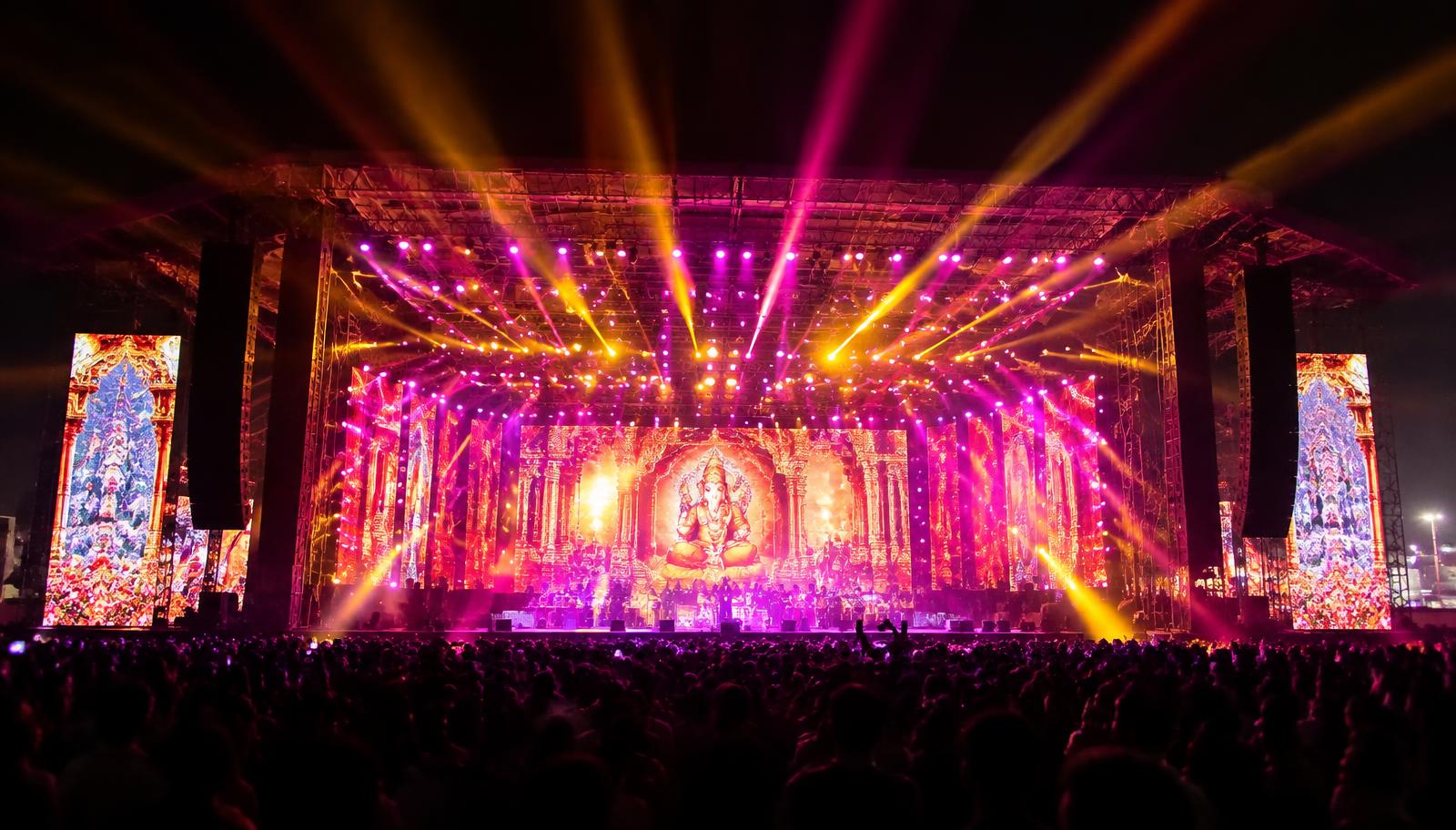
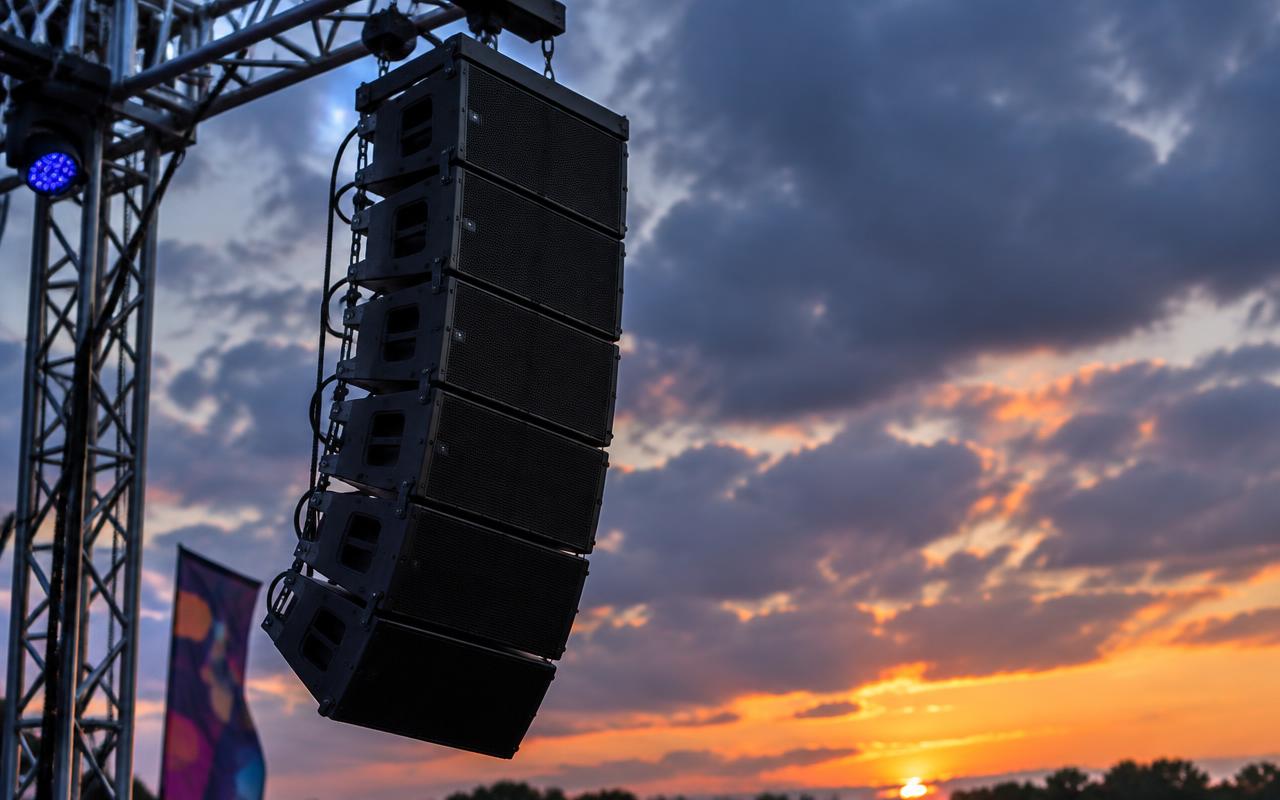
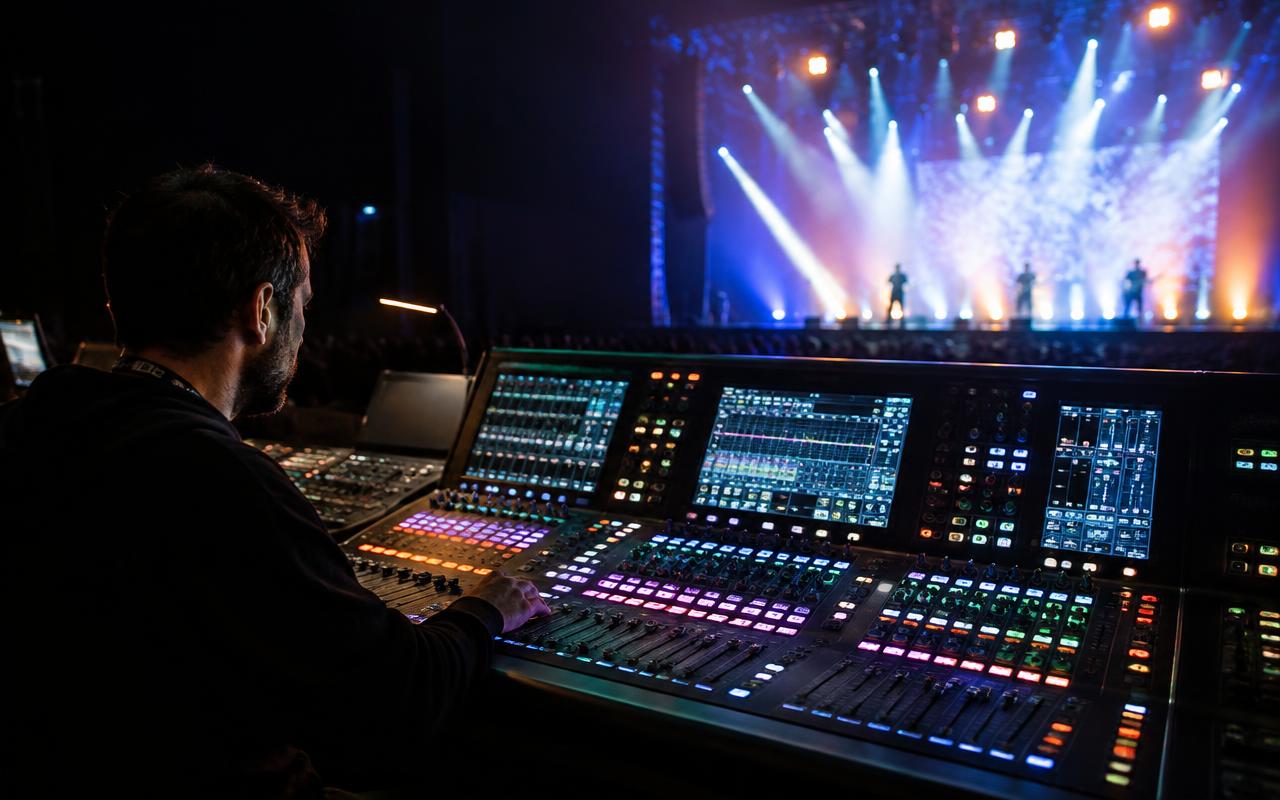
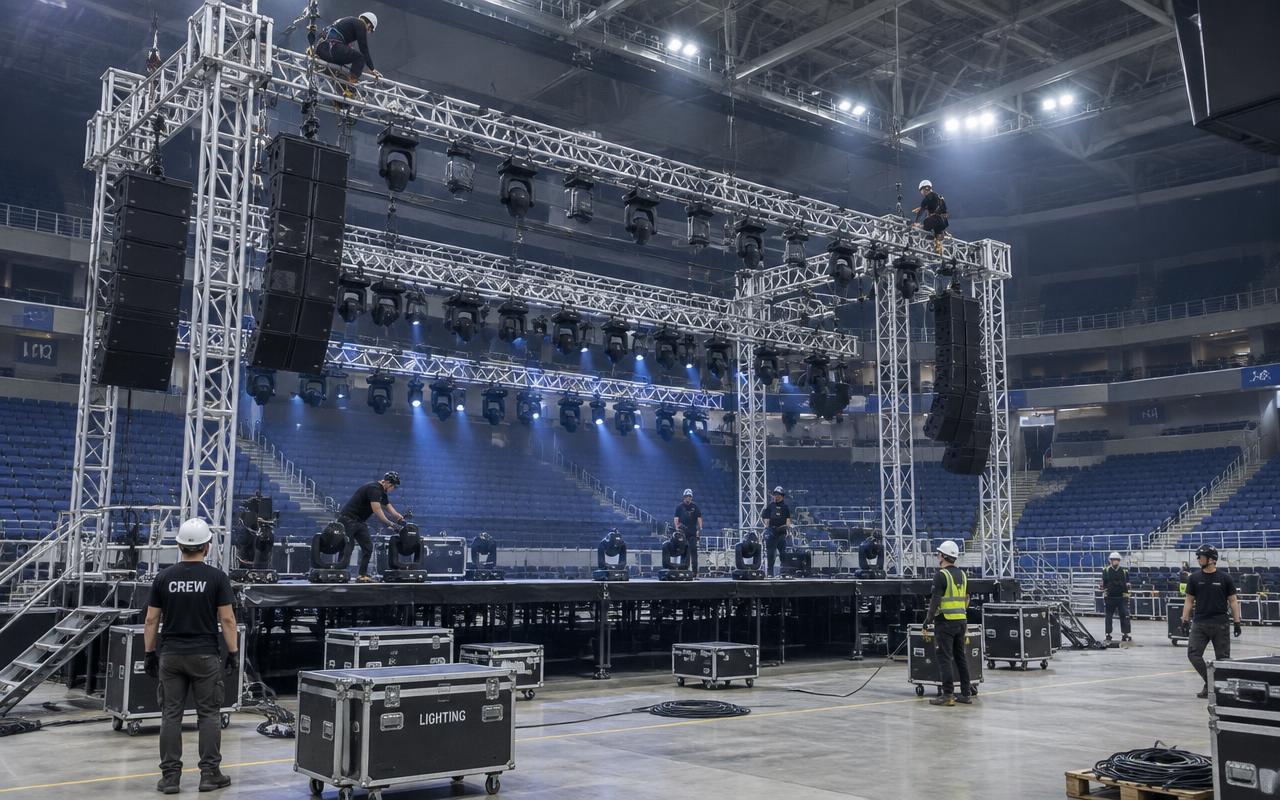
Artist-rider compliant concert production — line arrays, monitor world, massive LED and lighting rigs, stage, roof and rigging.
- Lead time
- 8 weeks out
- Coverage
- 90+ Indian cities
- Crew
- In-house, show-caller led
Key takeaway
Producing concerts & live shows well
A concert begins with the rider, not the ground plan. The artist's technical rider specifies the PA, the front-of-house and monitor consoles, the microphone list, the backline, riser sizes and the number of in-ear channels, and the advance conversation with the tour manager is where you establish what is supplied exactly, what is substituted and what is genuinely unavailable in the country. Get every substitution approved in writing weeks ahead, because a console swap discovered at soundcheck costs you the headline act's goodwill and sometimes the show.
Coverage and crowd safety are engineered together. An open ground for fifteen thousand people needs array prediction in software before anything is hung, delay towers time-aligned to the main hangs so the back of the field hears one arrival rather than two, and a sound-pressure plan that respects the curfew and the neighbours at the boundary. The barricade line, the front-of-stage pit, the crowd-lighting state the security team needs to see faces, and the exit routes that must stay clear of cable runs are all production decisions, not afterthoughts.
Then there is the clock. Load-in, rigging, system tune, support soundcheck, headline line check, doors, two support acts, a thirty-minute changeover and a curfew that the police will enforce leaves no slack anywhere. Rolling risers with the backline pre-wired, split monitor positions, a labelled and tested stage multicore and a stage manager who runs changeovers like a drill are what keep the night on schedule. Everything that can be pre-built on a riser should be pre-built on a riser.
What great concerts & live shows need
- Rider-compliant PA & backline
- Monitor world & IEMs
- Stage roof & rigging
- LED walls & lighting show
What you will be judged on afterwards
- The headline act's engineers walked into a stage and a rig that matched the approved rider without argument.
- The last row of the field heard the same show as the pit, in time and without a slapback echo.
- The set started and finished on the clock, so the curfew was never breached and the licence stayed clean.
- Nobody was injured at the barricade and the security team could see the crowd throughout.
- Changeovers between acts stayed inside their window, so no act lost stage time.
Run of show
A typical concerts & live shows schedule
| Time | Moment | What AV is doing |
|---|---|---|
| T−2 days | Ground build and rigging | Stage, roof and ground support erected with load calculations signed off, motors and arrays flown, delay tower positions pegged. |
| 06:00 | Load-in | PA, consoles, backline and lighting loaded through a single marshalled route; stage multicore run, labelled and continuity tested. |
| 11:00 | System tune | Main hangs and subs aligned, delay towers time-aligned and level-matched, measurements taken at the boundary against the agreed limit. |
| 14:00 | Support soundcheck | Support acts checked on their own console files, lines patched to the shared stage box, monitor mixes stored and recalled. |
| 16:00 | Headline line check | Full input list verified channel by channel with the tour engineers, in-ear packs issued and RF coordinated across all users. |
| 18:00 | Doors | Walk-in music at a controlled level, crowd-lighting state live for the security team, LED on holding content. |
| 20:30 | Changeover to headline | Rolling risers out and in, pre-wired backline connected, monitor world reset to stored scene, five-minute line check behind the drape. |
| 21:00 | Headline set to curfew | Full show programming, pyro or effect cues on the lighting desk, SPL logged throughout, hard stop respected without negotiation on stage. |
Scope
Concerts & Live Shows scope levels
Up to 2,000 guests: compact line array with subs, a digital front-of-house and monitor console, wedges or a small in-ear package, a modest moving-light rig and a decked stage.
5,000 – 10,000 guests: full line-array hangs with ground-stacked subs, separate monitor world, roofed stage with certified rigging, LED wall, a designed light show and barricade.
15,000 – 25,000 guests: multiple hangs plus time-aligned delay towers, large-format LED and IMAG, 150-plus fixture lighting rig, full generator redundancy and a touring-standard stage.
Multi-stage or 40,000-plus capacity with rider-compliant kit per stage, full rigging engineering, broadcast integration and a crew working rotating shifts across a multi-day build.
Services
Recommended production stack
Timeline
Planning milestones
- 8 weeks out
Rider received and advanced
Technical rider reviewed line by line, availability checked, substitutions proposed and the stage plot and input list agreed.
- 6 weeks out
System design and rigging engineering
Array prediction for the actual ground, roof and ground-support drawings, load calculations and barricade layout issued.
- 4 weeks out
Permissions and limits
Noise limit, curfew, crowd capacity and effect clearances confirmed so the SPL plan and set times are designed around real numbers.
- 2 weeks out
Substitutions closed out
Written acceptance from the tour manager on every item not supplied exactly as specified, plus the show file for pre-loading.
- T−2 days to T−1 day
Build and tune
Structure up, arrays flown, system tuned and measured, stage multicore tested, changeover drill rehearsed with the stage manager.
- T+1 day
Strike and reload
Overnight or next-morning derig to the ground's handover condition, with structural elements down first.
Risk control
What goes wrong, and how we stop it
What can go wrong
How we prevent it
- What can go wrong
A rider substitution is rejected by the touring engineer on the day.
How we prevent itClose out every substitution in writing during the advance, naming the exact model offered, and get the tour manager's acceptance before the kit leaves the warehouse.
- What can go wrong
The visiting monitor engineer arrives with a console file your desk cannot load.
How we prevent itConfirm console model and firmware version in the advance, ask for the show file a week early, and test-load it in the warehouse so patching differences are found before load-in.
- What can go wrong
Delay towers are mistimed and the back of the field hears a double arrival.
How we prevent itTime-align with measurement rather than by estimate, verify at several points on the field with a measurement rig, and re-check after any array trim change.
- What can go wrong
Stage power hum or a ground loop appears once lighting comes up.
How we prevent itRun audio and lighting from separate distribution with a single star earth point, isolate dimmer and LED fixture feeds, and test the full rig at show levels during the tune rather than at soundcheck.
- What can go wrong
Crowd pressure builds dangerously at the front-of-stage barricade.
How we prevent itSpecify a pit with a working width, brief a barrier crew with water and extraction routes, keep a crowd-lighting state available on a single button, and agree a stop-show protocol with security in advance.
- What can go wrong
Weather forces a call on an outdoor roof mid-show.
How we prevent itHold wind-load limits from the structural engineer in writing, nominate who makes the call, and rehearse a show-stop sequence that lowers arrays and clears the stage in a known order.
Process
How we deliver
01
Brief & recce
We visit the venue, map power and rigging, and understand your show flow.
02
Design & quote
CAD plans, 3D previews and an itemised quote within 24 hours.
03
Build & rehearse
Load-in, system tuning, content checks and full technical rehearsal.
04
Show & strike
Show-caller-led execution, then a quick, clean load-out.
Cities
Concerts & Live Shows AV across India
Tier 1 metros
Tier 2 cities
Covering 89 cities with our own inventory and touring crew.
FAQ