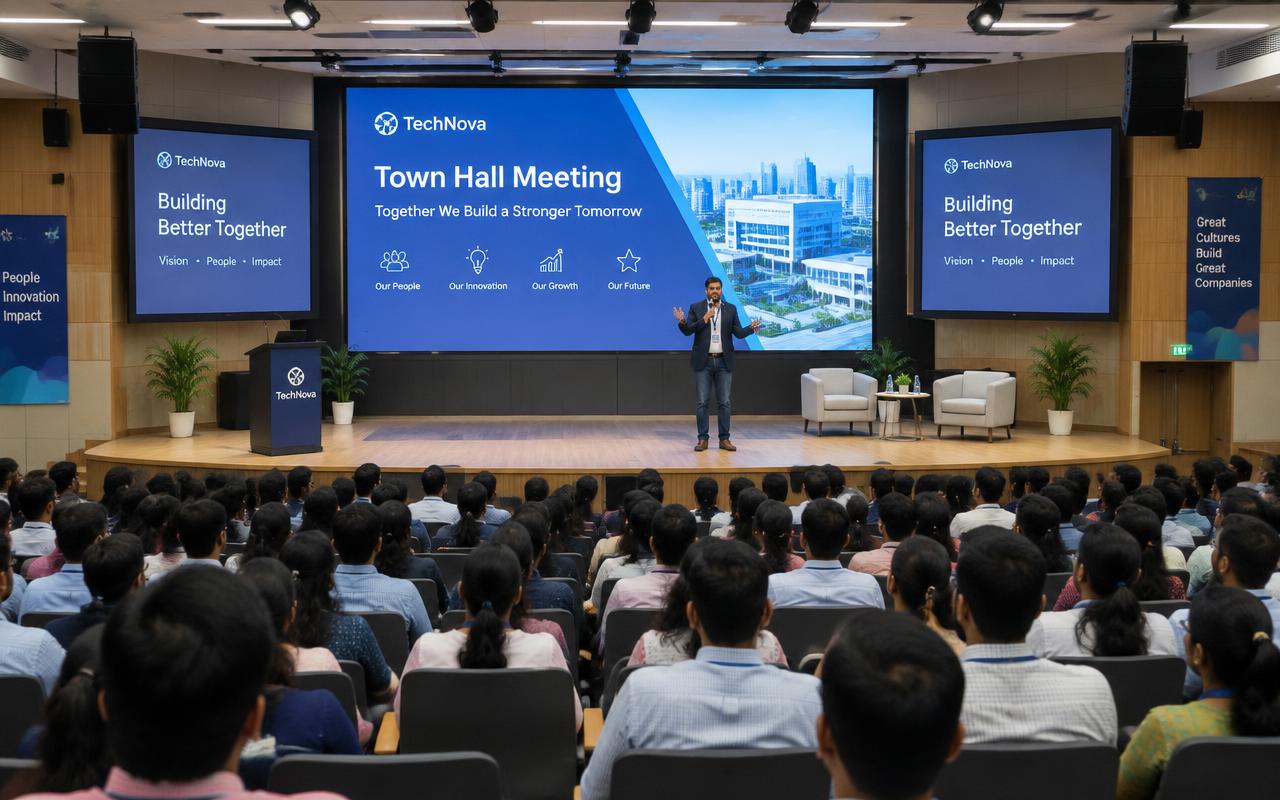
Event production
Town Halls & AGMs done right.
Leadership town halls and shareholder meetings that look polished in the room and online, with hybrid Q&A and secure streaming.
- Lead time
- 6 weeks out
- Coverage
- 90+ Indian cities
- Crew
- In-house, show-caller led
Key takeaway
Producing town halls & AGMs well
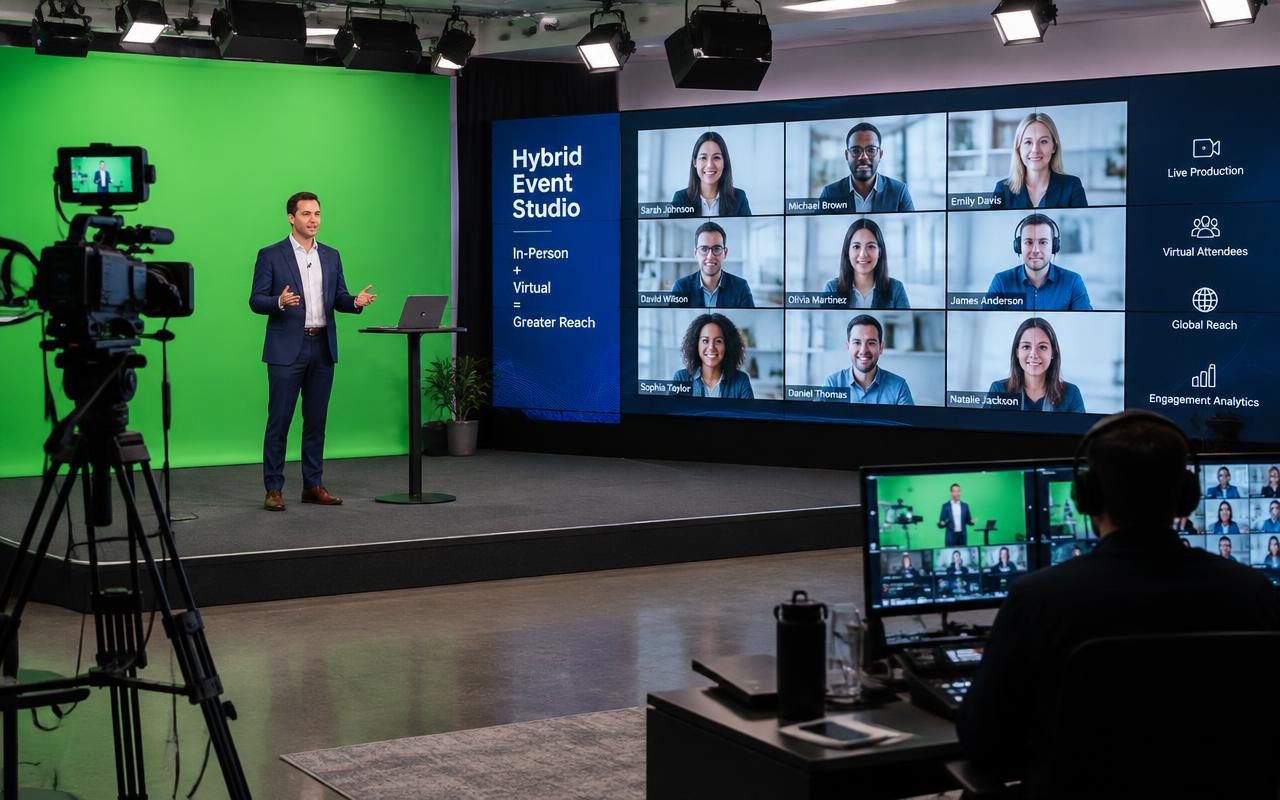
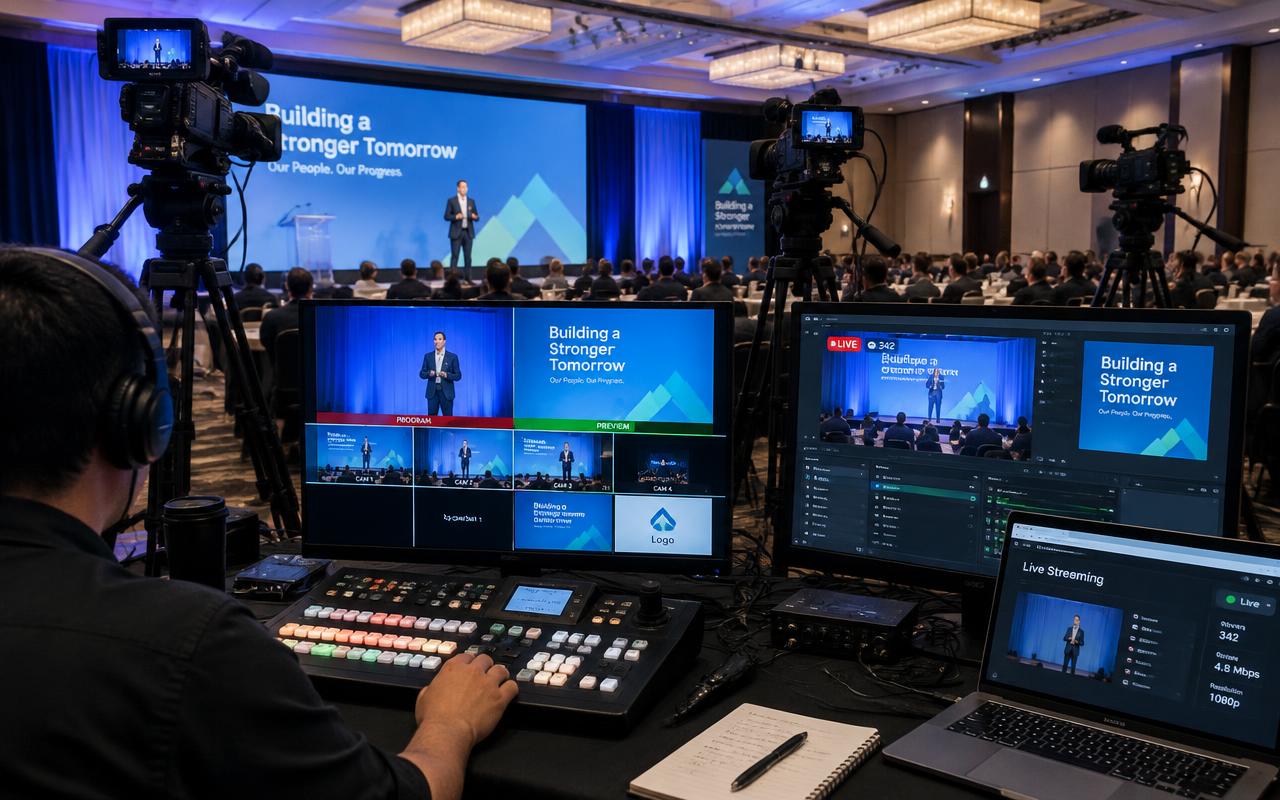
A town hall or annual general meeting should be designed for the people who are not in the room, because they are usually the majority. That means the camera plan, not the stage look, is the primary design: a framing that reads on a laptop, lighting flat enough that nobody looks tired on camera, and a stream mix built from console direct outs so remote attendees hear a clean programme rather than an open room. Moderated question handling has to work symmetrically, pulling questions from the floor and from the platform chat into one queue the chair can see.
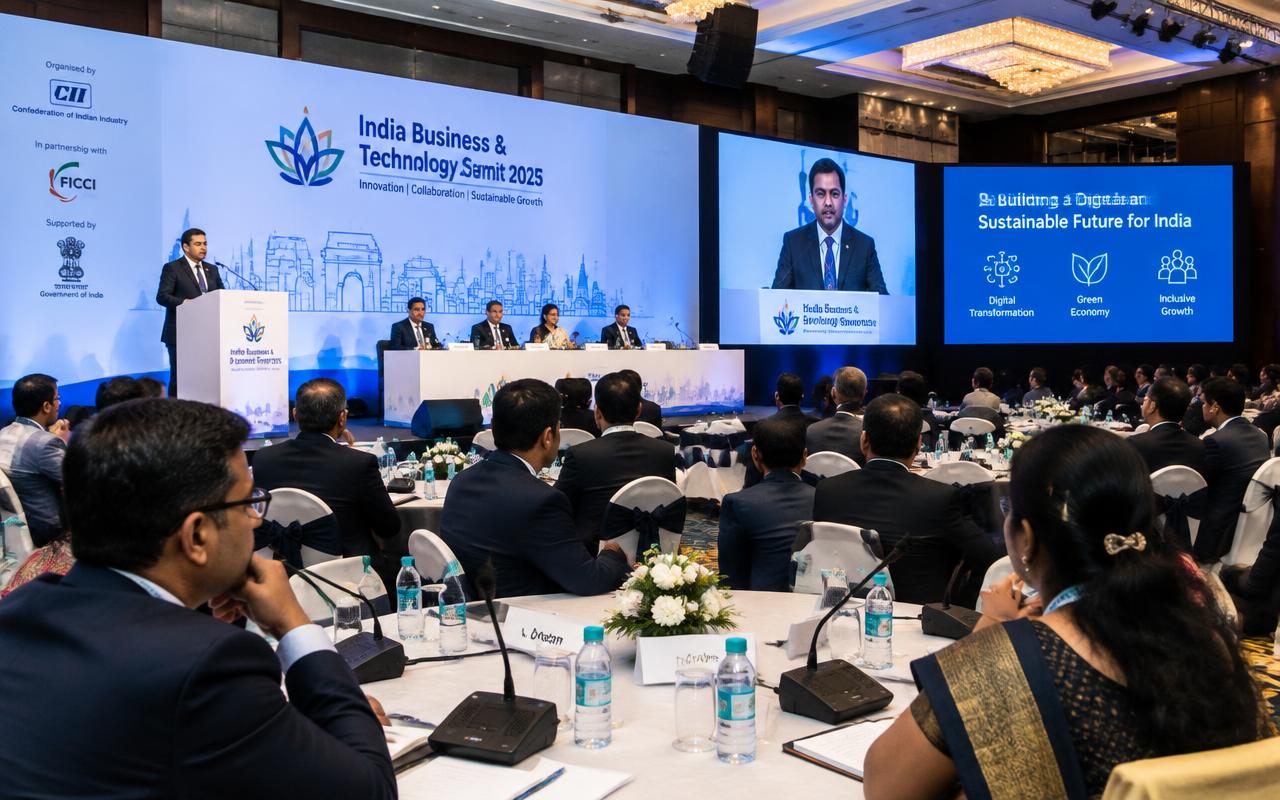
An AGM adds governance obligations that change the technical brief. Resolutions have to be displayed accurately and in order, voting and quorum arrangements may require a scrutiniser with their own view, the recording often forms part of the official record, and the stream usually has to be access-controlled so it cannot be redistributed. All of that means a verified content pack signed off by the company secretary, a recording that starts before the chair speaks and runs unbroken to the close, and a clear chain of custody for the file afterwards.
The third requirement is candour, and AV either supports it or quietly suppresses it. Employees and shareholders notice when a difficult question is inaudible, when the microphone reaches the questioner late or when the stream cuts to a slide at the wrong moment. Put two briefed runners in the aisles, keep the camera on the questioner, let the answer run, and give leadership confidence monitors and a visible clock so they can speak plainly to time rather than reading anxiously from a script.
What great town halls & AGMs need
- Hybrid streaming
- Q&A mic runners
- Confidence monitors
- Secure private streams
What you will be judged on afterwards
- Remote attendees heard every question from the floor as clearly as the people sitting next to the questioner.
- No resolution or result was displayed out of order or in an unapproved version.
- The recording is complete from before the chair's first word to after the close, and is clean enough to serve as the record.
- The stream did not drop, and nobody had to be told to refresh the page.
- Leadership finished the agenda with real time left for questions, and difficult questions were answered on camera rather than lost.
Run of show
A typical town halls & AGMs schedule
| Time | Moment | What AV is doing |
|---|---|---|
| T−1 day | Hybrid rehearsal | Full stream path tested end to end on the real platform, camera framing reviewed on a laptop, Q&A queue tool exercised with test questions. |
| T−3 hrs | Content verification | Final resolution and results slides checked against the company secretary's signed pack, order confirmed, recording start checked. |
| T−1 hr | Remote speaker test | Each remote participant dialled in from their actual location and device, return feed and audio levels confirmed, backup dial-in path issued. |
| 10:00 | Doors and stream pre-roll | Room audio live, stream opened with a holding card and joining instructions, access control verified against the attendee list. |
| 10:15 | Leadership address | Camera on the speaker with slide inserts, confidence monitor and clock live backstage, stream mix monitored on the platform itself. |
| 10:50 | Results and resolutions | Slides advanced strictly to the verified order, recording confirmed running, scrutiniser's view provided where required. |
| 11:10 | Hybrid Q&A | Two briefed runners in the aisles, camera follows the questioner, chat questions fed to the chair in one merged moderated queue. |
| 11:45 | Close and handover | Stream closed cleanly after the chair's final words, recording stopped, file verified for length and audio and handed over under a logged chain of custody. |
Scope
Town Halls & AGMs scope levels
A single room up to 200 with a stream: clean speech audio, four mics, a screen or LED for slides, two cameras, a switched stream with lower thirds and a recording.
A 300 – 600 seat auditorium: three or four cameras, dedicated stream mix, remote speaker integration with return feeds, moderated Q&A tooling, confidence monitors and bonded connectivity.
Access-controlled private streaming, verified content workflow, scrutiniser and voting support, redundant encoders and connectivity, four-camera coverage and an archival recording to specification.
Several locations joined live with two-way video, interpretation or captioning channels, a virtual studio for remote leadership, engagement analytics and full end-to-end redundancy.
Services
Recommended production stack
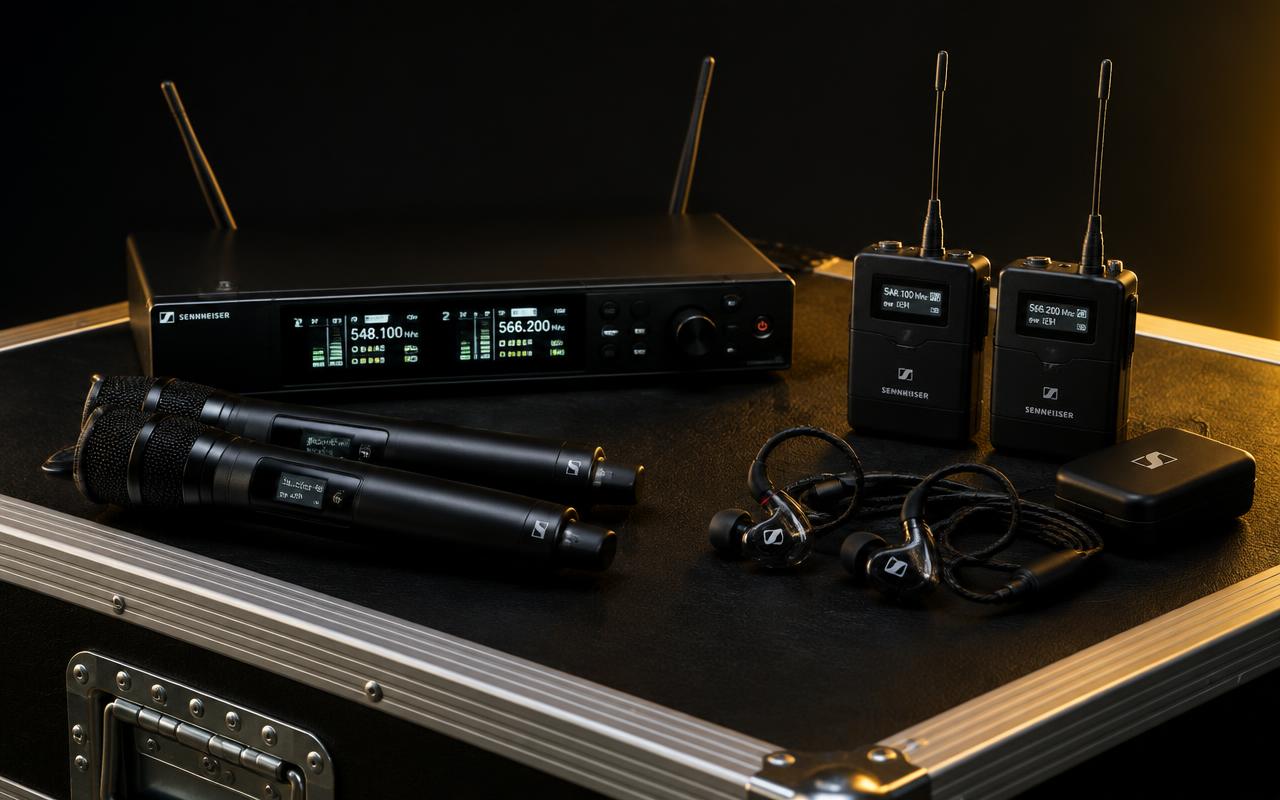
Timeline
Planning milestones
- 6 weeks out
Audience and platform decision
Expected in-room versus remote split, platform choice and access-control requirement agreed, since they drive the whole technical design.
- 4 weeks out
IT and network testing
Platform tested from inside the corporate network, venue connectivity assessed, bonded or leased-line requirement confirmed with the IT team.
- 3 weeks out
Governance content workflow
Resolution and results slide pack, approval route, recording specification and chain of custody agreed with the company secretary or legal team.
- 2 weeks out
Q&A and moderation plan
Question routing, moderation rules, runner briefing and the chair's view of the queue defined and documented.
- T−1 day
Hybrid rehearsal
Full end-to-end run on the real platform with remote participants joining from their real locations, and camera framing reviewed on a laptop screen.
- T+1 day
Recording handover
Verified recording delivered in the agreed format under a logged handover, with analytics and attendance data where required.
Risk control
What goes wrong, and how we stop it
What can go wrong
How we prevent it
- What can go wrong
A question from the floor is inaudible to the remote audience.
How we prevent itRoute roving microphones into the stream mix explicitly, brief two runners with assigned aisles, and instruct the chair to repeat each question before answering so the record is unambiguous.
- What can go wrong
A remote speaker's home connection degrades mid-address.
How we prevent itTest from their actual location and device the day before, issue a telephone dial-in fallback for audio, and hold a pre-recorded version of their segment where the content is critical.
- What can go wrong
A private stream link is forwarded outside the intended audience.
How we prevent itUse single-use or account-based access tied to the attendee list, disable public discovery, watermark the stream where sensitivity warrants it, and monitor concurrent viewer counts against the expected number.
- What can go wrong
The platform chat floods and the chair loses the thread.
How we prevent itStaff a moderator who merges chat and floor questions into one prioritised queue visible to the chair, with a written rule on how questions are selected so the process is seen to be fair.
- What can go wrong
The recording is missing the opening minutes or has unusable audio.
How we prevent itStart recording ten minutes before doors, record a second copy from a different point in the chain, and have an operator confirm file length and audio on both before the crew stands down.
- What can go wrong
Employees on a corporate network cannot reach the streaming platform.
How we prevent itTest the platform from inside the corporate network with the IT team weeks ahead, confirm firewall and bandwidth allowances, and provide an alternative internal distribution path for locked-down sites.
Process
How we deliver
01
Brief & recce
We visit the venue, map power and rigging, and understand your show flow.
02
Design & quote
CAD plans, 3D previews and an itemised quote within 24 hours.
03
Build & rehearse
Load-in, system tuning, content checks and full technical rehearsal.
04
Show & strike
Show-caller-led execution, then a quick, clean load-out.
Cities
Town Halls & AGMs AV across India
Tier 1 metros
Tier 2 cities
Covering 89 cities with our own inventory and touring crew.
FAQ