Event production
College Fests done right.
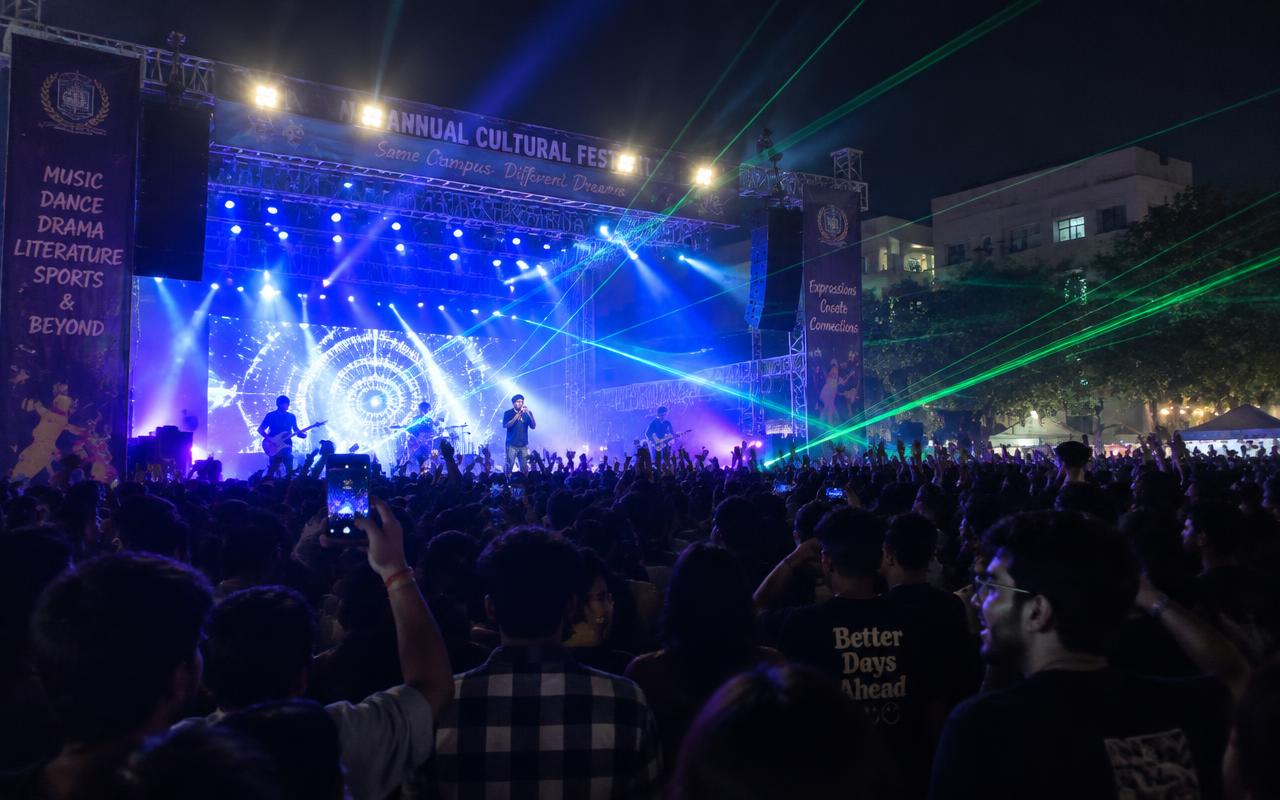
Pro-show production for India's biggest campus fests — headline artist riders, crowd-safe barricades and massive light shows.
- Lead time
- 8 weeks out
- Coverage
- 90+ Indian cities
- Crew
- In-house, show-caller led
Key takeaway
Producing college fests well
A college fest runs on a budget that was raised, not allocated, and is decided by a committee that changes every year. The way to protect both the show and the students is a written scope with named quantities, a single student point of contact with authority, and clear payment milestones tied to build stages. Scope the rig to the ground and the realistic crowd rather than to the poster, and be explicit about what is not included, because the gap between what a sponsorship deck promised and what the budget buys is where fests get into trouble two days before the pro-show.
Crowd safety is the part that actually matters. A campus ground holding eight to fifteen thousand students needs a barricade line with a working front-of-stage pit, delay towers so the back of the field hears the set rather than an echo, a crowd-lighting state the security team can call for in one button, clear exit routes that cables do not cross, and an agreed stop-show protocol. Sound-pressure limits near hostels, examination blocks and residential neighbours are real and enforced, so they belong in the system design rather than in a conversation at eleven at night.
Pro-show night is a turnaround exercise. Three or four student and opening acts feeding into one headliner, with a hard campus stop, means changeovers of twenty to thirty minutes with no room to lose any. Rolling risers with pre-wired backline, stored console scenes per act, a split monitor position and a stage manager running the move as a drill are what hold it together. The headline artist's rider frequently lands seventy-two hours out, so build the advance process early and treat the rider as a document to be negotiated rather than received.
What great college fests need
- Artist rider fulfilment
- Concert PA for 10,000+
- Beam & laser shows
- Stage and barricades
What you will be judged on afterwards
- The headline set started and finished on the permitted time, so the college kept its clearance for next year.
- Nobody was injured at the barricade and security had light on the crowd whenever they asked for it.
- Students at the back of the ground heard a real mix rather than a distant echo.
- The committee stayed inside the budget they raised, with no surprise additions on show day.
- The phone footage that circulated afterwards made the fest look bigger than it cost.
Run of show
A typical college fests schedule
| Time | Moment | What AV is doing |
|---|---|---|
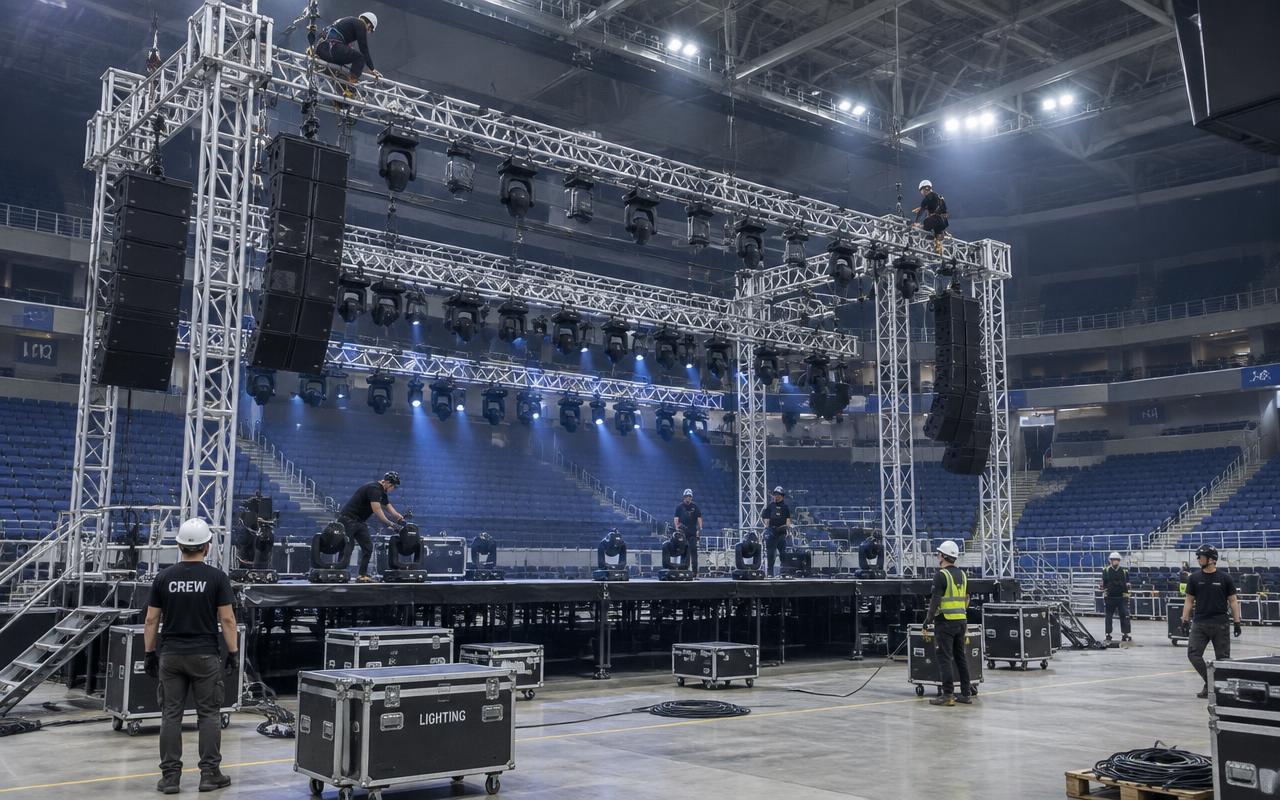
| T−2 days | Ground build | Stage, roof and ground support up with load calculations, barricade line set with security, delay tower positions pegged and power routed. |
| T−1 day | Rig and programme | Arrays flown and tuned, lighting rig focused and the show programmed, LED built and content loaded, campus boundary levels measured. |
| 08:00 | Day events on the main stage | Speech-level audio and basic wash for competitions, with the pro-show rig protected and the stage surface covered. |
| 16:00 | Stage reset for pro-show | Day-event kit struck, backline placed on rolling risers and pre-wired, stage plot checked against the rider. |
| 17:30 | Line check | Full input list verified with each act, monitor scenes stored per act, radio and in-ear frequencies coordinated across all users. |
| 19:00 | Doors and opening acts | Crowd lighting live for security, walk-in level controlled, first acts run from stored scenes with a drilled changeover between them. |
| 21:30 | Headline changeover | Risers rolled, pre-wired backline connected, monitor world recalled, five-minute line check behind a drape with the clock visible to all. |
| 22:00 | Headline set to hard stop | Full programmed show, SPL logged, lighting and LED cues run, set ends on the permitted time without negotiation from the stage. |
Scope
College Fests scope levels
Day events plus a modest evening show: compact PA for up to 2,000, four radio mics, a basic moving-light rig, a decked stage and a small LED backdrop.
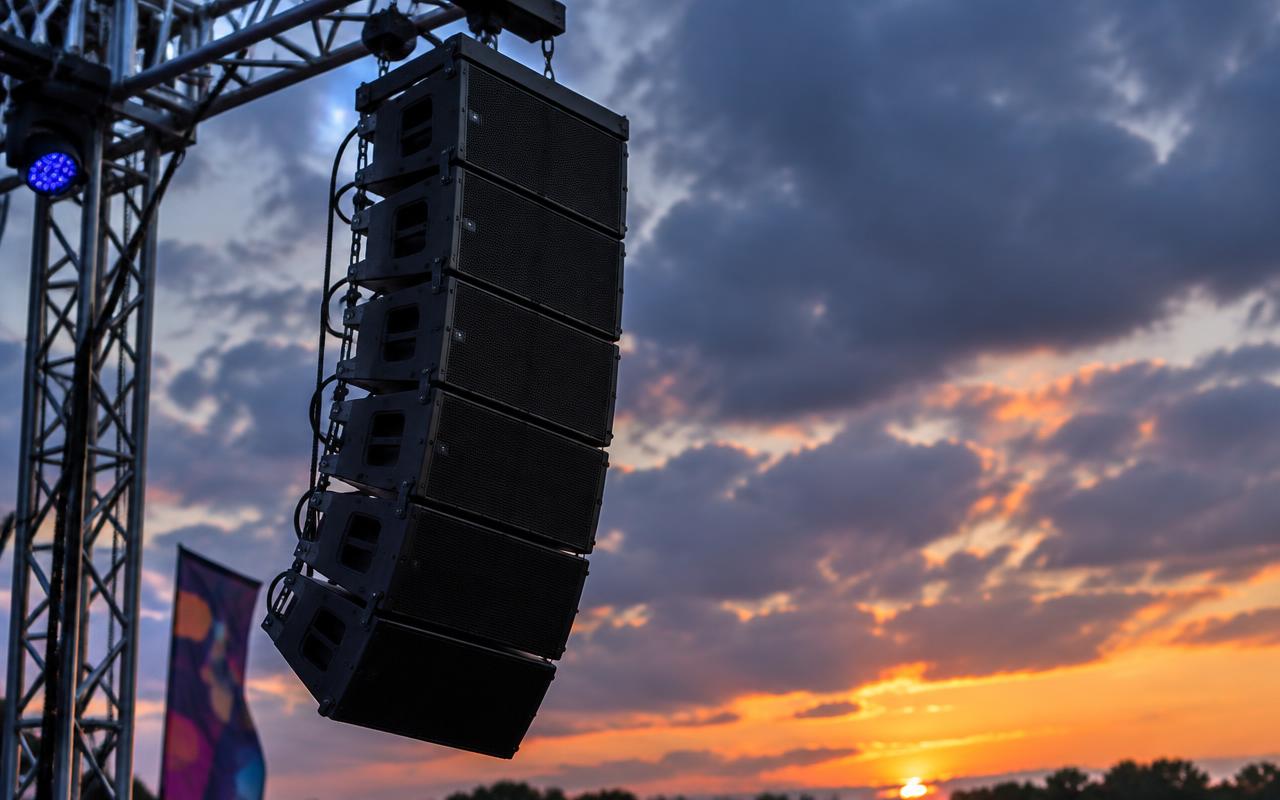
A 5,000-capacity ground: line-array PA with subs, separate monitor position, roofed stage with certified rigging, barricade, a programmed light show and an LED wall.
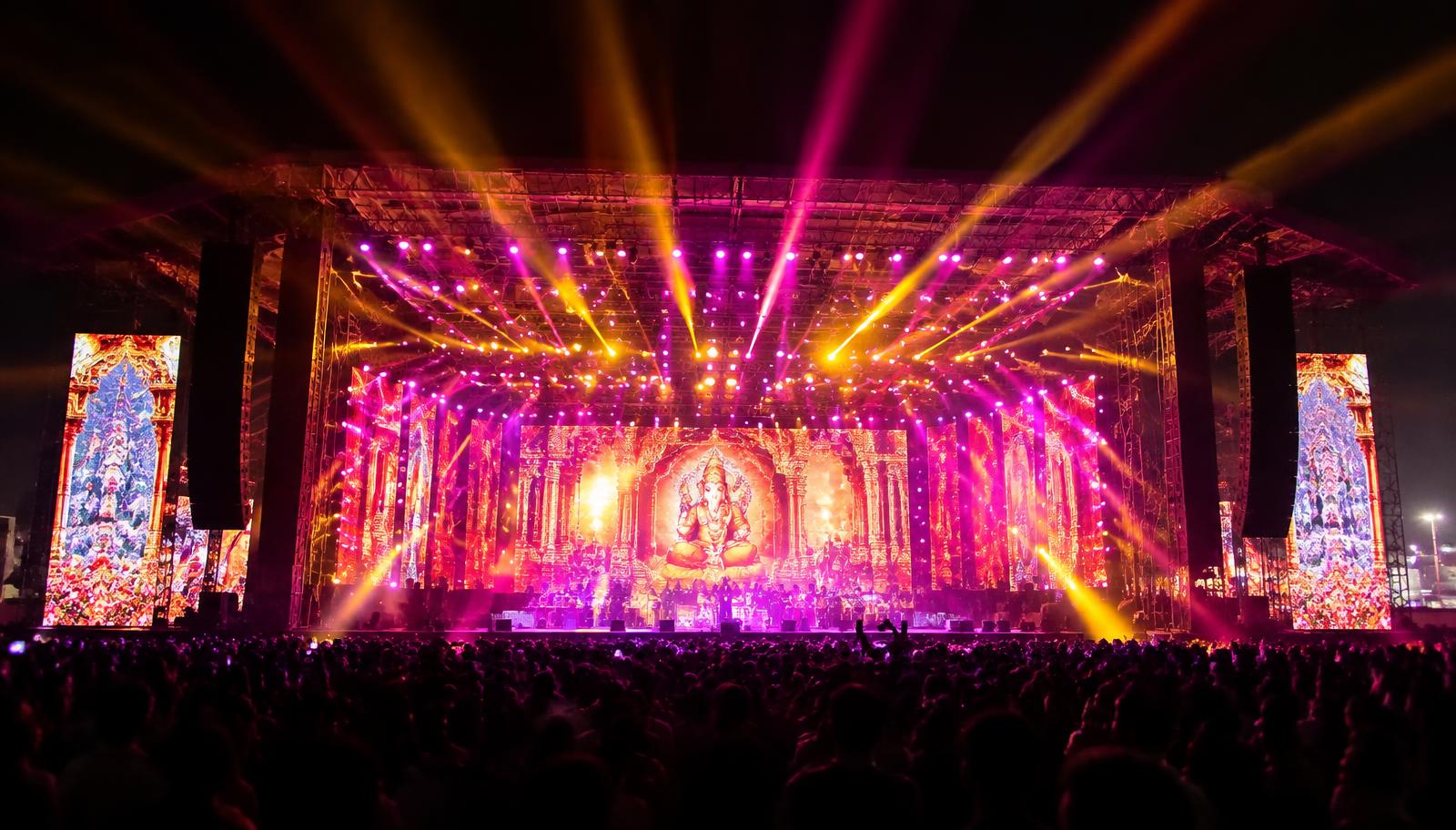
10,000-plus crowd: full hangs with a delay ring, rider-grade consoles and backline, large LED with IMAG, a 100-plus fixture rig with beams and lasers, and generator redundancy.
Multi-day, multi-stage fest with an arena-scale pro-show night, rider compliance for a touring act, full crowd-safety infrastructure and a crew on rotating shifts.
Services
Recommended production stack
Timeline
Planning milestones
- 8 weeks out
Scope and budget agreed
Ground, crowd estimate, stage size and quantities written down with inclusions, exclusions and payment milestones signed by the committee.
- 6 weeks out
Campus permissions
Police intimation, crowd and capacity clearance, loudspeaker permission with its end time, and the administration's own conditions obtained.
- 4 weeks out
Artist advance
Rider reviewed, substitutions proposed and accepted in writing, stage plot and input list issued to the ground design.
- 3 weeks out
Site design and safety plan
Array prediction on the actual ground, barricade and exit layout, generator placement, cable routes clear of crowd paths.
- T−2 to T−1 day
Build and programme
Structure, arrays, lighting and LED complete; show programmed, boundary levels measured, changeover drill rehearsed.
- T+1 day
Strike and ground handover
Overnight or next-morning derig, ground returned to the condition the college signed for, with turf and surfaces inspected together.
Risk control
What goes wrong, and how we stop it
What can go wrong
How we prevent it
- What can go wrong
The artist rider arrives forty-eight hours out specifying a console not in the city.
How we prevent itStart the advance as soon as the act is confirmed, propose substitutions in writing immediately, and build the budget with a named alternative already priced so a swap is a decision rather than a crisis.
- What can go wrong
Day competitions damage or disorganise the pro-show stage.
How we prevent itCover the stage surface, keep the pro-show backline and consoles off the deck until the afternoon reset, and schedule a hard changeover with the committee rather than letting events run late into it.
- What can go wrong
The campus hard stop arrives mid-set and nobody on stage respects it.
How we prevent itGet the permitted end time in writing, print it on the cue sheet, brief the artist management in the advance, and give the stage manager authority to run a play-off at the agreed minute.
- What can go wrong
Crowd surge builds at the front-of-stage barricade.
How we prevent itSpecify a pit with real working width, staff it with a barrier crew carrying water and an extraction route, keep a one-button crowd-lighting state, and agree a stop-show protocol with campus security beforehand.
- What can go wrong
Campus electrical supply cannot carry a concert rig.
How we prevent itMeasure what is actually available at the recce, hire sized silent generators parked at the ground's edge with a changeover panel, and keep audio on separate clean distribution from the lighting feed.
- What can go wrong
The committee adds scope after a sponsor signs late.
How we prevent itIssue a written scope with quantities and a clear change-order process, price additions as variations rather than absorbing them, and give the committee one person who can approve changes.
Process
How we deliver
01
Brief & recce
We visit the venue, map power and rigging, and understand your show flow.
02
Design & quote
CAD plans, 3D previews and an itemised quote within 24 hours.
03
Build & rehearse
Load-in, system tuning, content checks and full technical rehearsal.
04
Show & strike
Show-caller-led execution, then a quick, clean load-out.
Cities
College Fests AV across India
Tier 1 metros
Tier 2 cities
Covering 89 cities with our own inventory and touring crew.
FAQ