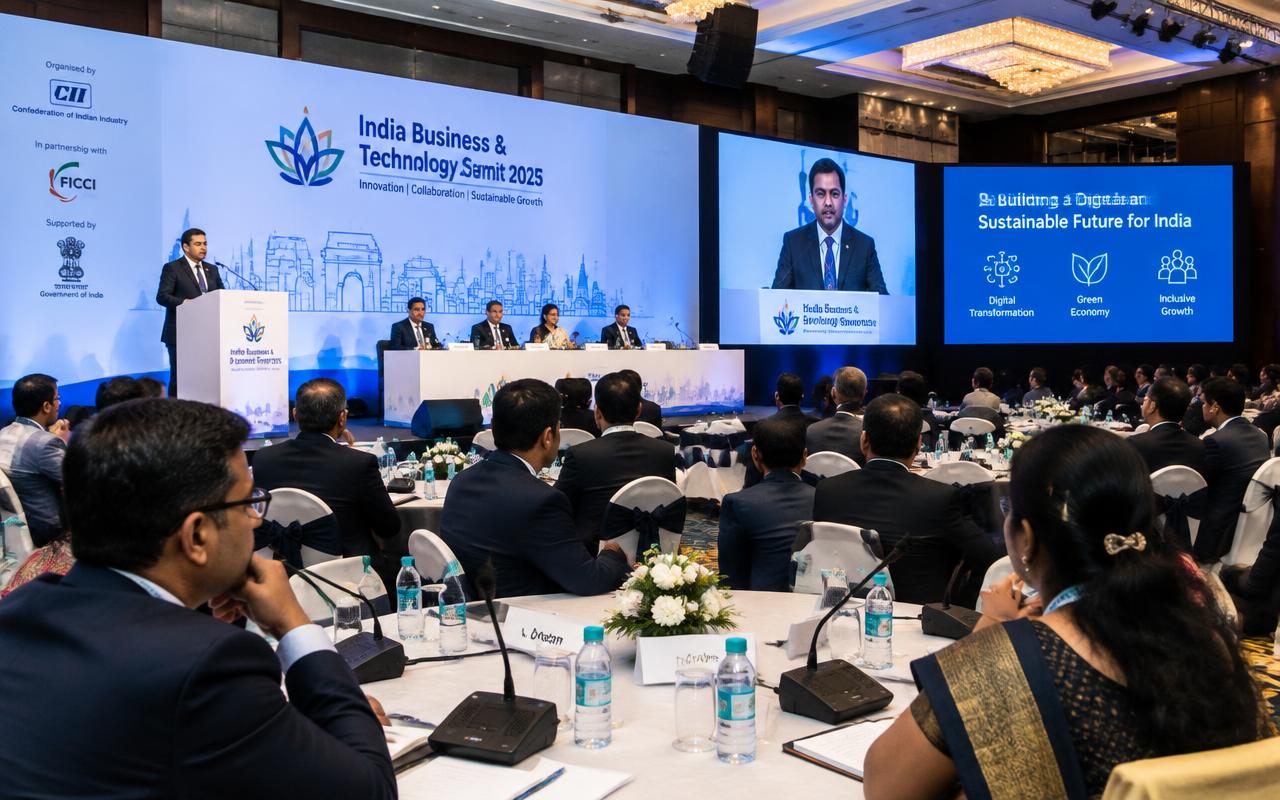
Event production
Corporate Conferences done right.
Summits, dealer meets and leadership conferences that run to the second, with crisp audio, big-screen content and flawless speaker support.
- Lead time
- 8 weeks out
- Coverage
- 90+ Indian cities
- Crew
- In-house, show-caller led
Key takeaway
Producing corporate conferences well
A corporate conference is won or lost in the week before it opens. Every deck has to arrive on a published deadline, be converted to a single house template at the correct aspect ratio, and live on one presentation machine with a mirrored backup, never on fifteen visiting laptops. Build a master content order that matches the run of show exactly, name every file by session and speaker, and rehearse embedded videos separately because that is where audio routing quietly fails. A show-caller working from a printed cue sheet then drives the room rather than reacting to it.
Changeover time is the other half of the discipline. A keynote becoming a five-person panel means new furniture, five lapel mics checked and labelled, a different lighting state and a video source change, and the audience watches all of it unless you cover the move with a stinger and a rehearsed stage-management routine. Allow ninety seconds, run it twice at rehearsal, and keep a second set of mics pre-fitted backstage. Breakout sessions multiply the problem, so every room gets its own technician, its own RF block and its own copy of the content.
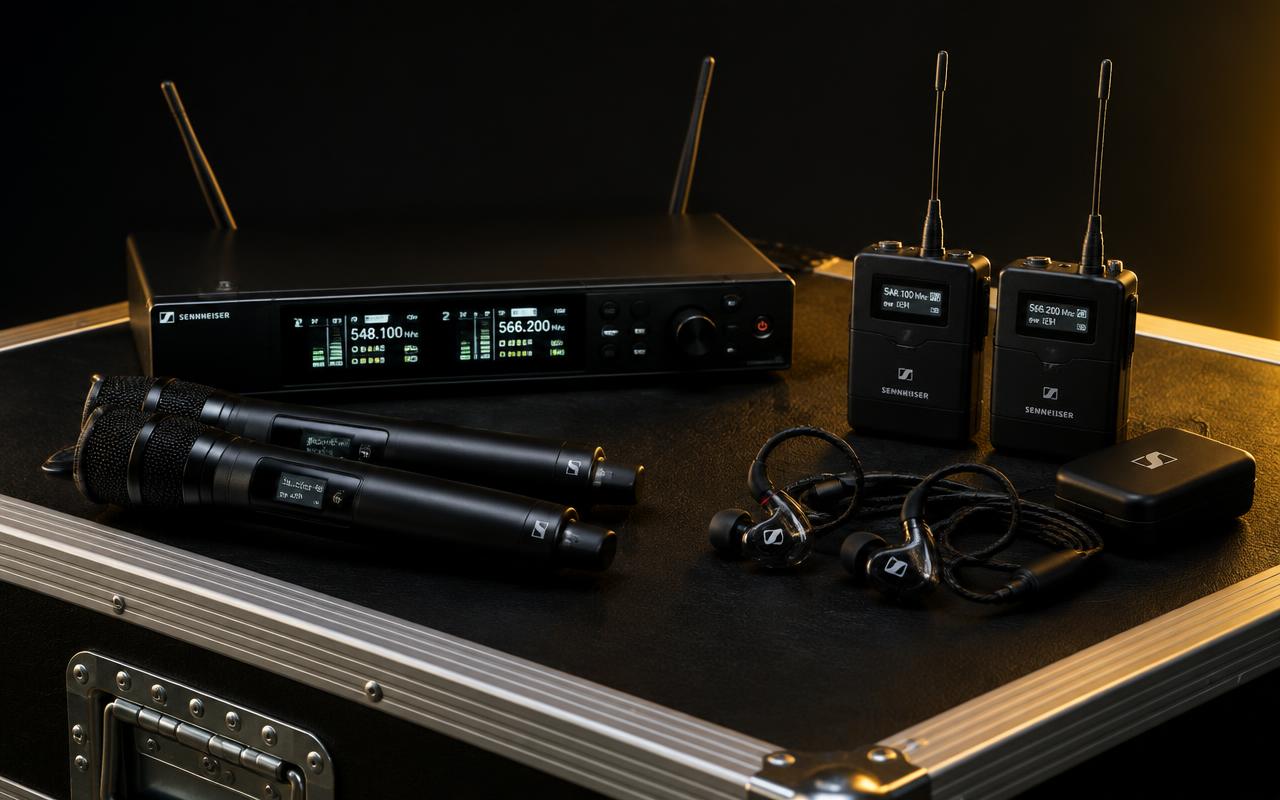
Audio comes third in most briefs and first in every post-event complaint. Hotel ballrooms are wide, low and carpeted, with pillars and audible air handling, so coverage needs distributed fills rather than one loud pair at the proscenium. Delegate microphones for a dealer meet, roving mics for Q&A with a disciplined operator, and a stream mix that is not simply the room mix are three separate line items, not one. If sessions are being recorded for internal reuse, the recording mix deserves its own engineer and its own monitoring position.
What great corporate conferences need
- Delegate mics & confidence monitors
- LED walls with presentation switching
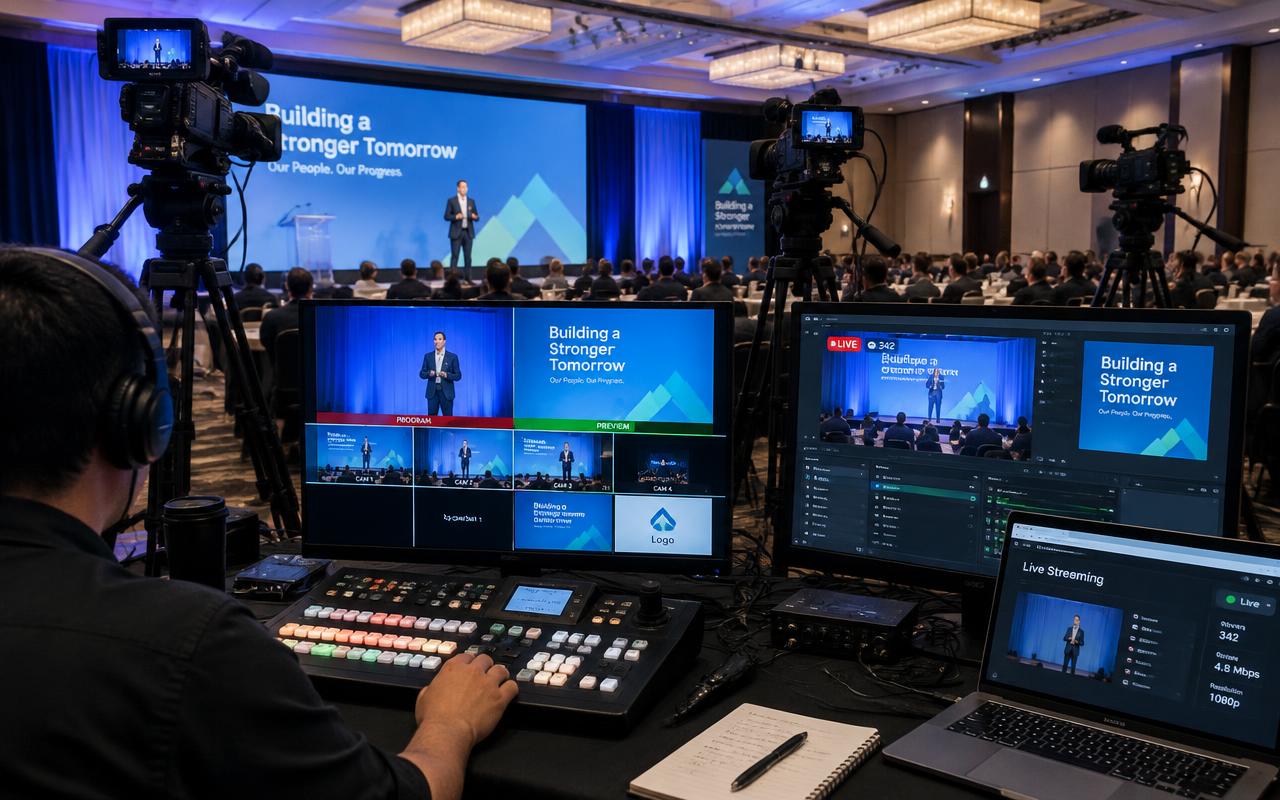
- Live streaming for remote teams
- Show-caller and stage manager
What you will be judged on afterwards
- Every speaker finished inside their allotted slot and the day ended at the time printed on the invitation.
- No slide, video or logo appeared on screen in the wrong order, the wrong version or the wrong aspect ratio.
- Delegates in the last row heard the panel without straining, and audience questions were audible to the whole hall.
- The recording is clean enough that the marketing and training teams actually reuse the sessions afterwards.
- No member of leadership had to hunt for a microphone, a clicker or a technician while standing on stage.
Run of show
A typical corporate conferences schedule
| Time | Moment | What AV is doing |
|---|---|---|
| T−1 day | Technical rehearsal | Full system check, all received content ingested, speaker walk-throughs and a timed run of the opening block. |
| T−4 hrs | Content lock and comms check | Final deck versions loaded, playback and backup machines matched file for file, show-caller comms tested to every position. |
| T−90 min | Speaker ready room | Lapel mics fitted and labelled by name, RF scan reconfirmed, confidence monitor and countdown timer repeated backstage. |
| 09:00 | Registration and doors | Ambient bed and holding loop on the main screen, foyer displays live with the agenda and wayfinding. |
| 09:30 | Opening and keynote | Opening film, house-light cue, IMAG cut to the speaker, timer running, stream opened on a thirty-second pre-roll. |
| 11:15 | Panel changeover | Stinger covers the stage reset, five pre-fitted mics brought live, lighting state changes to a flat panel wash. |
| 14:00 | Breakout sessions | Each room technician takes local content, local recording and a return comms feed to main control. |
| 17:30 | Plenary close | Closing film and announcement cue, stream ended cleanly, recordings copied and handed over the same evening. |
Scope
Corporate Conferences scope levels
One hall up to 300 delegates: compact line-array PA, four wireless mics, a 16:9 LED wall or large-format projection, a simple stage wash, presentation switching, one technician and a show-caller.
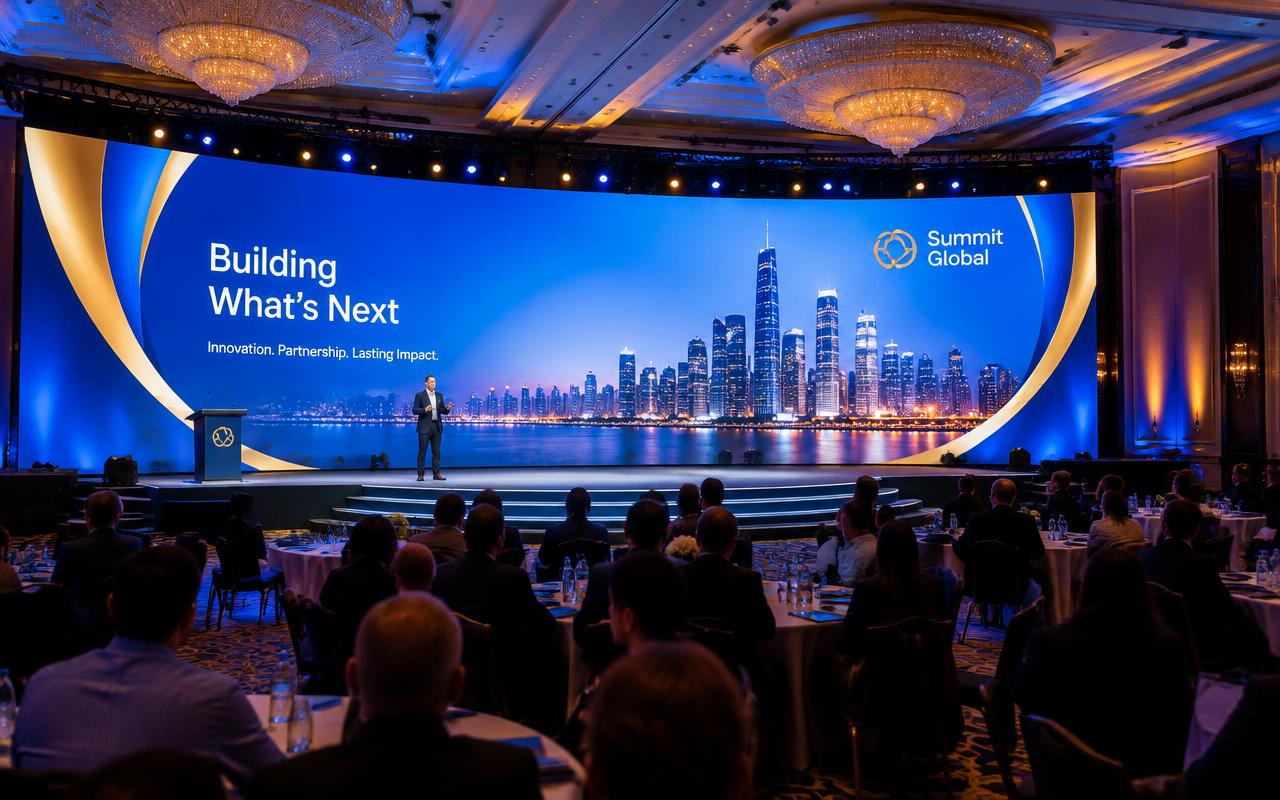
A 500 – 800 delegate hall: wider LED with IMAG side screens, full panel and delegate mic complement, designed stage lighting, two-camera IMAG, a recorded stream and a dedicated content operator.
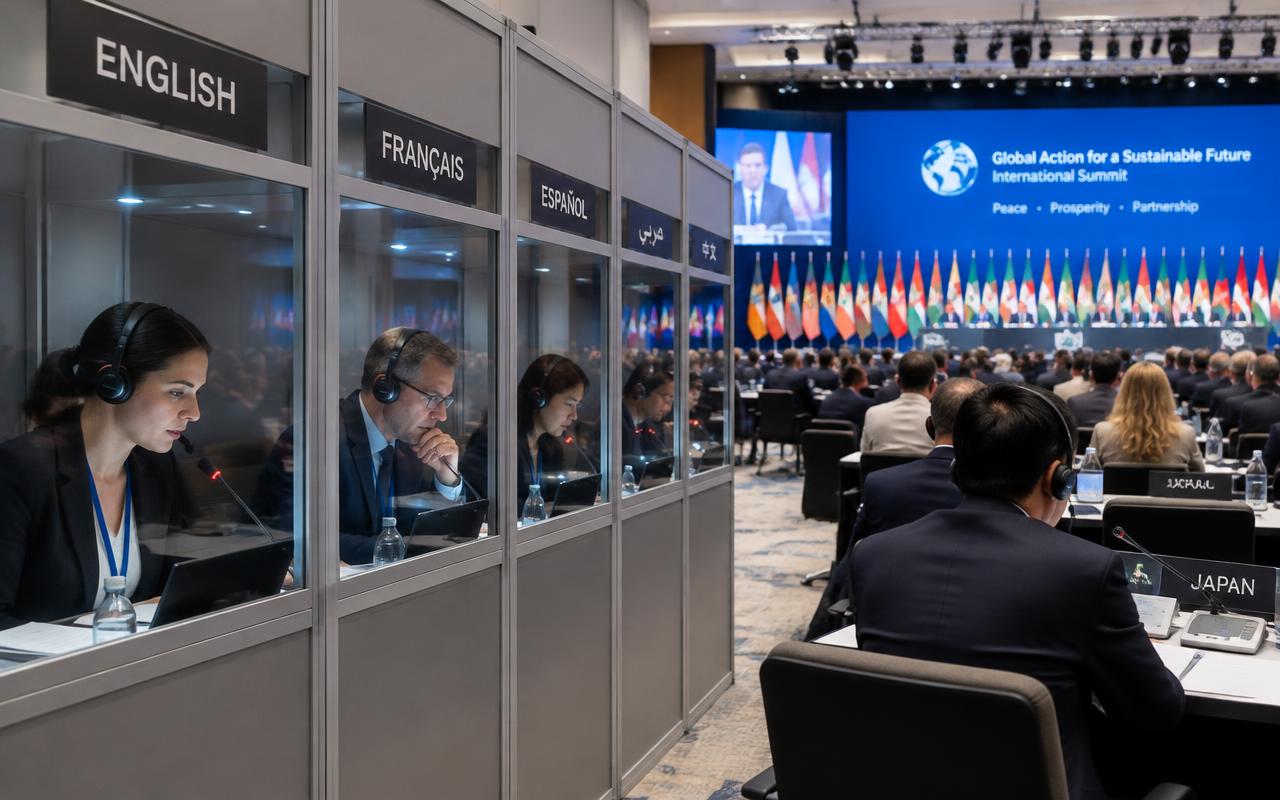
Custom-shaped LED set with previsualised lighting design, four-camera IMAG and broadcast-grade streaming, two-language interpretation, confidence and timer systems, and a full show-management team.
Two or three days with a plenary plus four to six independently crewed breakout rooms, exhibition foyer AV, a hybrid studio for remote speakers and same-day highlight edits.
Services
Recommended production stack
Timeline
Planning milestones
- 8 weeks out
Run of show lock
Session order, speaker list, durations and the house slide template agreed so the AV design has something fixed to solve.
- 6 weeks out
Recce and technical design
Rigging points, ceiling height, power, sightlines and dock access surveyed; screen and audio design issued as drawings.
- 3 weeks out
Content pipeline opens
Template circulated to every speaker with a hard submission date plus aspect-ratio, font and video-codec guidance.
- 1 week out
Deck freeze and dry run
Everything received is ingested and run end to end; missing decks escalated to the organising committee by speaker name.
- T−1 day
Technical rehearsal
Build complete, speakers walked through, cue sheet printed and distributed to every crew position.
- T+2 days
Handover
Session recordings, stream analytics and final content files delivered in the agreed format.
Risk control
What goes wrong, and how we stop it
What can go wrong
How we prevent it
- What can go wrong
The chief executive rewrites their deck twenty minutes before walking on.
How we prevent itRun a watched hot-folder with a second operator whose only job is late versions: ingest, check fonts and embedded media, and play the new file once on the backup machine before it goes anywhere near the screen.
- What can go wrong
A visiting speaker insists on presenting from their own laptop.
How we prevent itAllow it, but only through a pre-tested scaler with the right adaptor and a confirmed output resolution, and keep a copy of their file parked on the house machine as the fallback path.
- What can go wrong
Breakout rooms interfere with each other on radio microphones.
How we prevent itScan the venue RF environment at the recce, allocate fixed frequency blocks per room in writing, and use coordinated digital systems rather than whatever happens to be clear on the morning.
- What can go wrong
Q&A collapses because two roving mics ring or nobody can find the questioner.
How we prevent itBrief two runners with assigned aisles, gate the roving channels at the desk, and have the show-caller put the camera and a light on the questioner before the microphone is opened.
- What can go wrong
The remote audience hears a muddy open room mic and drifts away.
How we prevent itBuild the stream mix from console direct outs with its own engineer, and monitor it on the actual platform rather than trusting the meters on the desk.
- What can go wrong
Hotel air handling or an adjacent banquet bleeds into the hall.
How we prevent itRaise it at the recce, get engineering settings and neighbouring banquet timings agreed in writing, and design coverage with distributed fills so you are not fighting noise with volume.
Process
How we deliver
01
Brief & recce
We visit the venue, map power and rigging, and understand your show flow.
02
Design & quote
CAD plans, 3D previews and an itemised quote within 24 hours.
03
Build & rehearse
Load-in, system tuning, content checks and full technical rehearsal.
04
Show & strike
Show-caller-led execution, then a quick, clean load-out.
Cities
Corporate Conferences AV across India
Tier 1 metros
Tier 2 cities
Covering 89 cities with our own inventory and touring crew.
FAQ