Event production · Mumbai, Maharashtra
Corporate Conferences AV in Mumbai
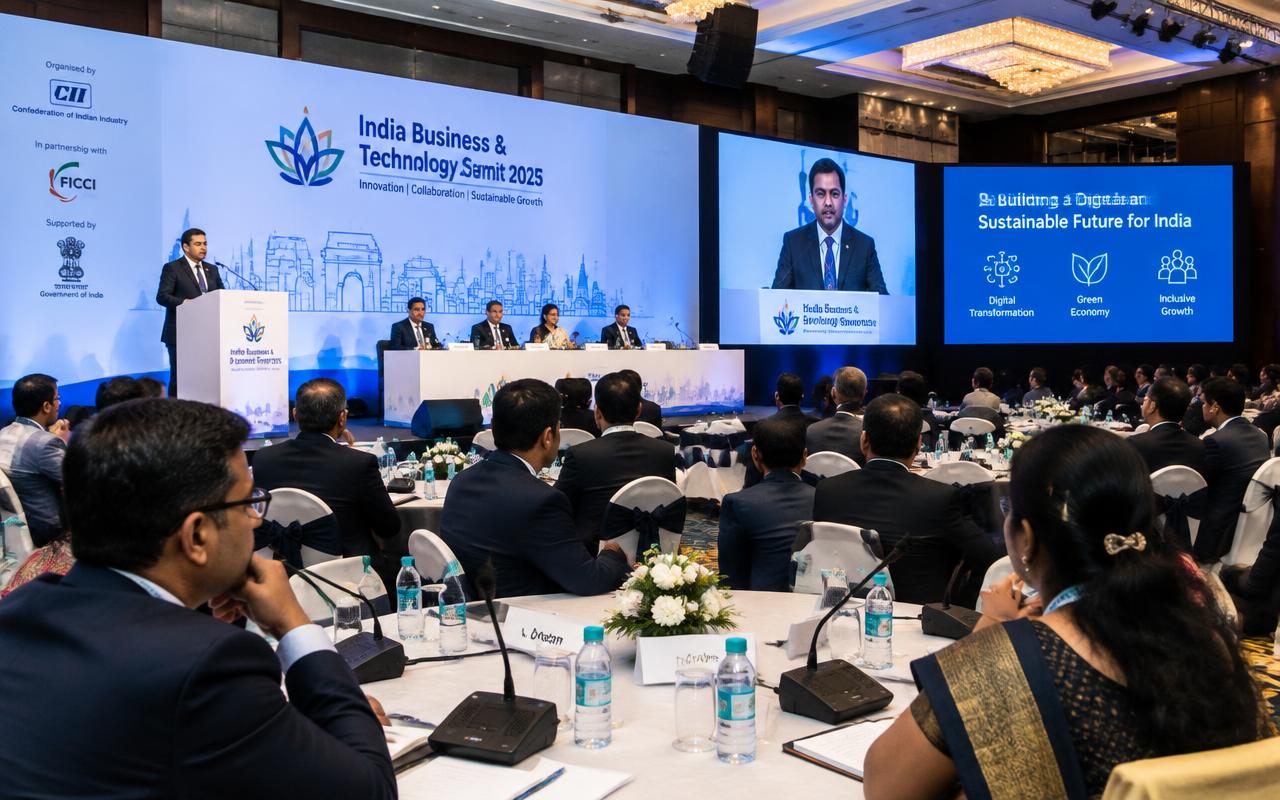
Mumbai's AV spend is driven by BFSI and asset-management calendars out of BKC and Lower Parel, the film and OTT business in Andheri-Goregaon, and the advertising and pharma head offices that sit between them. The result is a market that buys quarterly results events, film and music launches, and award nights in the same week, with the wedding circuit at Juhu and BKC layered on top from November. Prime AV Solutions produces the corporate conferences end of that calendar — delegate mics & confidence monitors, LED walls with presentation switching, live streaming for remote teams — with one crew owning the whole stack.
- Lead time
- 8 weeks out
- Peak season
- Oct–Mar
- Coverage
- Mumbai & Maharashtra
Key takeaway
Complete AV for corporate conferences in Mumbai
A corporate conference is won or lost in the week before it opens. Every deck has to arrive on a published deadline, be converted to a single house template at the correct aspect ratio, and live on one presentation machine with a mirrored backup, never on fifteen visiting laptops. Build a master content order that matches the run of show exactly, name every file by session and speaker, and rehearse embedded videos separately because that is where audio routing quietly fails. A show-caller working from a printed cue sheet then drives the room rather than reacting to it.
Conference rooms are designed for banquets rather than sightlines, so ceiling height, pillar positions and the ballroom's width-to-depth ratio dictate the screen design. In Mumbai we work at Jio World Convention Centre, NSCI Dome, Taj Lands End and venues across Bandra Kurla Complex, Andheri, Juhu, Powai, Worli.
Changeover time is the other half of the discipline. A keynote becoming a five-person panel means new furniture, five lapel mics checked and labelled, a different lighting state and a video source change, and the audience watches all of it unless you cover the move with a stinger and a rehearsed stage-management routine. Allow ninety seconds, run it twice at rehearsal, and keep a second set of mics pre-fitted backstage. Breakout sessions multiply the problem, so every room gets its own technician, its own RF block and its own copy of the content.
What your event needs
- Delegate mics & confidence monitors
- LED walls with presentation switching
- Live streaming for remote teams
- Show-caller and stage manager
Why Mumbai organisers choose Prime AV
- Crews and trucks positioned for fast load-in at Taj Lands End and venues in Juhu and Powai.
- Build the stream mix from console direct outs with its own engineer, and monitor it on the actual platform rather than trusting the meters on the desk.
- A standing Mumbai client base across corporate conferences and bfsi results or investor events and product and brand launches for consumer and pharma clients, so the rig is specified from experience rather than a catalogue.
- Working knowledge of Maharashtra venue rules, power sanctions and permission timelines.
What you will be judged on afterwards
- Every speaker finished inside their allotted slot and the day ended at the time printed on the invitation.
- No slide, video or logo appeared on screen in the wrong order, the wrong version or the wrong aspect ratio.
- Delegates in the last row heard the panel without straining, and audience questions were audible to the whole hall.
- The recording is clean enough that the marketing and training teams actually reuse the sessions afterwards.
- No member of leadership had to hunt for a microphone, a clicker or a technician while standing on stage.
Local conditions
Producing corporate conferences in Mumbai
Weather & the rig
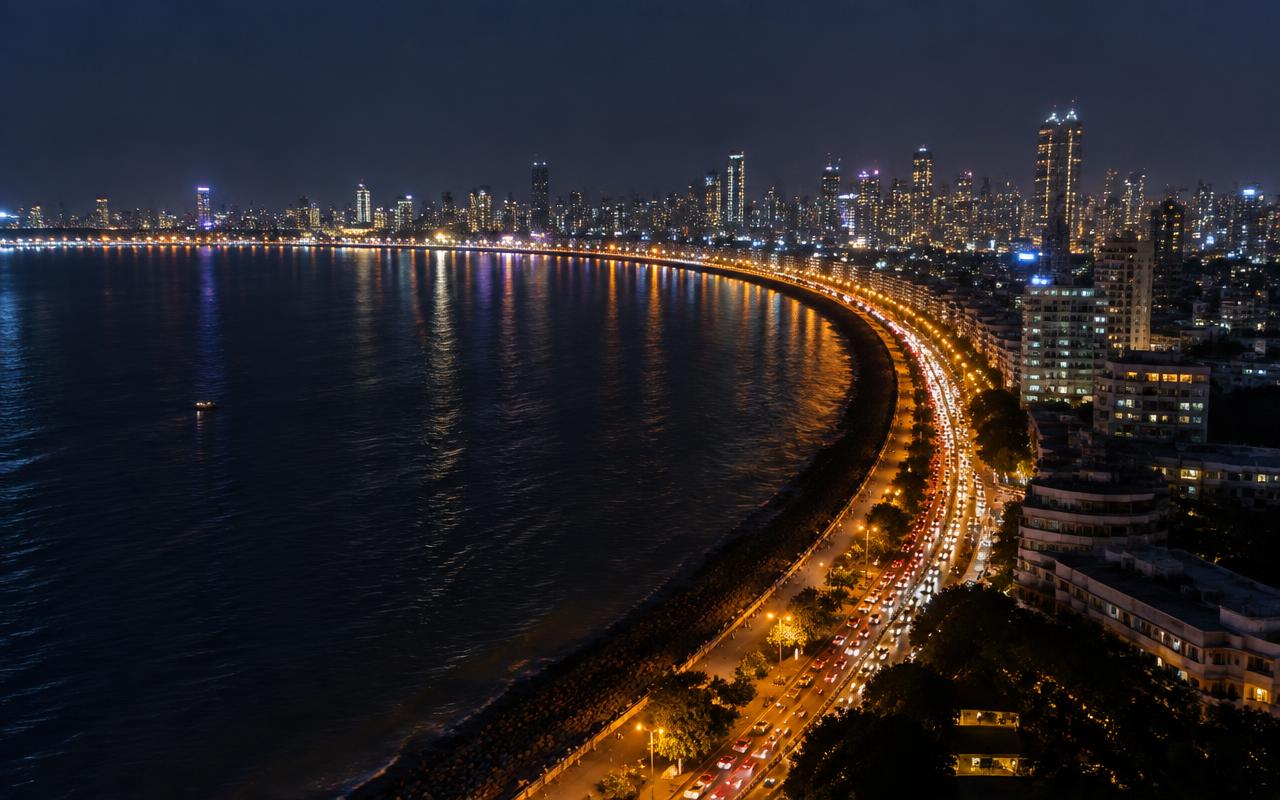
A conference is an indoor event with an outdoor arrival, so heat, humidity and rain decide how long delegates queue at registration and how hard the hall's cooling has to fight a full lighting rig. The salt aerosol off the Arabian Sea is the quiet killer here: XLR and SpeakOn pins green over within a season, truss pins and shackles pit, and anything left on a Worli or Juhu rooftop needs rinsing and drying before it goes back in the case. Relative humidity sits in the eighties from June to September, so desiccant in flight cases and warm-up time for consoles carried from an air-conditioned truck into a humid hall are planning items, not housekeeping. Jun–Sep monsoon, when the city takes well over 2,000mm and a single cell can drop 100mm in a morning; any outdoor rig in that window needs hard cover, bunded distro and a signed strike authority.
Power & redundancy
Conference AV draws modestly but tolerates nothing, because a two-second dip reboots a media server mid-keynote, which makes clean switched redundancy the requirement rather than raw capacity. Supply from Adani Electricity, Tata Power and BEST is among the most reliable urban grids in India, so indoor venues genuinely run on house power with a DG only on the show-critical path. Five-star ballrooms typically have a few hundred kVA of usable sanctioned load, which a concert-spec rig will still exceed. Open-ground work at BKC is fully generated, and Maharashtra's noise rules make acoustically enclosed sets the only option inside city limits.
Permits & noise rules
Conferences seldom need public-event clearance, but hotel rigging approvals, fire-load sign-off and the noise rules governing any evening reception still apply locally. Ground and temporary-structure permission comes from the relevant BMC ward office with a fire NOC, while amplified sound and public-performance licensing sits with the Mumbai Police Licensing Department under the Bombay Police Act. The Supreme Court's 10pm cut-off on outdoor loudspeakers is applied, the Maharashtra Noise Pollution Rules define silence zones around the city's many hospitals, and the state's festival relaxation nights are notified rather than assumed. Drone work is effectively closed over most of the western suburbs because CSMIA at Sahar and the Juhu aerodrome together blanket Andheri, Vile Parle, Juhu and BKC in restricted airspace on the DGCA map.
Load-in & access
Conference kit usually arrives in one or two trucks, and the entire build plan depends on reaching a working hotel's loading bay in the gap between banquets. Multi-axle goods vehicles are kept off the main arterials through the working day, which pushes almost every load-in into an 11pm to 6am window and makes crew shift planning the real schedule risk. BKC venues have working docks; South Mumbai and the older hotels offer a kerbside drop and a service lift. Trailers coming down the Western Express Highway should clear Dahisar before the morning restriction, and the Sea Link and Coastal Road have their own vehicle-class limits that a 32-ft truck cannot use.
Season & booking
Ganesh Chaturthi's ten days in August or September take the city's trucks, bamboo, trussing and labour simultaneously and close processional routes for immersion. Navratri and Diwali follow, the Mumbai Marathon shuts the south in January, IPL fixtures at Wankhede lock the surrounding roads, and December runs a collision of corporate year-end events and wedding muhurats. Peak demand runs Oct–Mar.
Crew & dispatch
Own Mumbai base with warehousing in the Andheri-Goregaon industrial belt, which puts crew, spares and a replacement amplifier inside an hour of most venues in the city.
What it costs here
The most expensive crew and cartage market in India — organised stage labour rates, warehouse rent and night-shift loading all sit in the number — so the same specification costs meaningfully more to deliver here than in a tier-2 city. The offset is that nothing travels, so there is no transit, accommodation or spares-contingency line at all.
Local expectations
Agency and client-side teams here work to a tech script and expect a cue-to-cue rehearsal, which means the production schedule has to protect rehearsal time rather than treat it as float. Film and award work runs the other way entirely, with cues called from the floor and running orders changing during the show, so the console operator needs authority to improvise. Bilingual Hindi and Marathi compering is standard for public-facing events, and the wedding circuit here expects concert-grade sangeet sound in a ballroom.
Run of show
A typical corporate conferences schedule
| Time | Moment | What AV is doing |
|---|---|---|
| T−1 day | Technical rehearsal | Full system check, all received content ingested, speaker walk-throughs and a timed run of the opening block. |
| T−4 hrs | Content lock and comms check | Final deck versions loaded, playback and backup machines matched file for file, show-caller comms tested to every position. |
| T−90 min | Speaker ready room | Lapel mics fitted and labelled by name, RF scan reconfirmed, confidence monitor and countdown timer repeated backstage. |
| 09:00 | Registration and doors | Ambient bed and holding loop on the main screen, foyer displays live with the agenda and wayfinding. |
| 09:30 | Opening and keynote | Opening film, house-light cue, IMAG cut to the speaker, timer running, stream opened on a thirty-second pre-roll. |
| 11:15 | Panel changeover | Stinger covers the stage reset, five pre-fitted mics brought live, lighting state changes to a flat panel wash. |
| 14:00 | Breakout sessions | Each room technician takes local content, local recording and a return comms feed to main control. |
| 17:30 | Plenary close | Closing film and announcement cue, stream ended cleanly, recordings copied and handed over the same evening. |
Audio comes third in most briefs and first in every post-event complaint. Hotel ballrooms are wide, low and carpeted, with pillars and audible air handling, so coverage needs distributed fills rather than one loud pair at the proscenium. Delegate microphones for a dealer meet, roving mics for Q&A with a disciplined operator, and a stream mix that is not simply the room mix are three separate line items, not one. If sessions are being recorded for internal reuse, the recording mix deserves its own engineer and its own monitoring position.
Scope
Corporate Conferences scope levels in Mumbai
One hall up to 300 delegates: compact line-array PA, four wireless mics, a 16:9 LED wall or large-format projection, a simple stage wash, presentation switching, one technician and a show-caller.
A 500 – 800 delegate hall: wider LED with IMAG side screens, full panel and delegate mic complement, designed stage lighting, two-camera IMAG, a recorded stream and a dedicated content operator.
Custom-shaped LED set with previsualised lighting design, four-camera IMAG and broadcast-grade streaming, two-language interpretation, confidence and timer systems, and a full show-management team.
Two or three days with a plenary plus four to six independently crewed breakout rooms, exhibition foyer AV, a hybrid studio for remote speakers and same-day highlight edits.
The most expensive crew and cartage market in India — organised stage labour rates, warehouse rent and night-shift loading all sit in the number — so the same specification costs meaningfully more to deliver here than in a tier-2 city. The offset is that nothing travels, so there is no transit, accommodation or spares-contingency line at all.
Venues
Where corporate conferences happen in Mumbai
| Venue | Capacity | Production note |
|---|---|---|
| Jio World Convention Centre | Up to 16,000 across the Convention Halls, with a 2,000-seat Grand Theatre | The only venue in the city with a proper engineered rigging grid, generous clear height and a real truck dock, so it is the default when a design needs genuine point loads overhead rather than ground support. |
| NSCI Dome | Around 8,000 in concert configuration at Worli | The dome roof is not a rigging structure in any useful sense, so audio and lighting go on ground-support towers; sightline loss from those towers has to be designed in at ticketing stage, not discovered at focus. |
| Taj Lands End | Around 1,000 banquet across the ballroom and pre-function areas | Ballroom ceiling clearance is modest and nothing hangs from the slab, so LED walls sit on ground support and the rig height has to clear seated sightlines without fouling the chandeliers. |
| MMRDA Grounds, BKC | Tens of thousands on open ground across multiple plots | Entirely temporary infrastructure on hard standing: all power is generated, the sea breeze off Mahim creek sets the wind rating for any LED above six metres, and the residential towers across the road make the sound curfew enforceable by complaint. |
| Grand Hyatt Mumbai Residency Ballroom | Around 1,500 banquet in the main ballroom | Load-in is through a basement service route with a height restriction, so trussing and LED cabinets must be sized to the lift rather than to the design. |
Demand
What Mumbai books most
Mumbai event mix
- Corporate conferences and BFSI results or investor events
- Product and brand launches for consumer and pharma clients
- Award shows, film promotions and music launches
- Large weddings and sangeets at BKC, Juhu and Worli
- Trade exhibitions and dealer conventions
- Live concerts and ticketed arena shows
Services
Recommended production stack
Conference AV Setup
End-to-end conference AV: delegate mic systems, confidence monitors, presentation switching, speaker timers and a show-caller who keeps it on time.
LED Wall Rental
Indoor P2.6/P3.9 and outdoor P4.8 LED walls in any size or shape — curved, cubes, floor LED and kinetic panels — powered by Novastar processing.
Live Streaming & Webcasting
Multi-camera live streaming to YouTube, LinkedIn, Zoom or private portals with graphics, bonded internet and a backup encoder on every show.
Simultaneous Interpretation Systems
ISO-standard interpretation booths, infrared receivers and multi-language channels for international summits and government delegations.
Wireless Microphones & IEMs
Shure Axient and Sennheiser Digital 6000 microphones with RF coordination, so speeches and performances never drop — even in RF-crowded venues.
Timeline
Planning milestones
- 8 weeks out
Run of show lock
Session order, speaker list, durations and the house slide template agreed so the AV design has something fixed to solve.
- 6 weeks out
Recce and technical design
Rigging points, ceiling height, power, sightlines and dock access surveyed; screen and audio design issued as drawings.
- 3 weeks out
Content pipeline opens
Template circulated to every speaker with a hard submission date plus aspect-ratio, font and video-codec guidance.
- 1 week out
Deck freeze and dry run
Everything received is ingested and run end to end; missing decks escalated to the organising committee by speaker name.
- T−1 day
Technical rehearsal
Build complete, speakers walked through, cue sheet printed and distributed to every crew position.
- T+2 days
Handover
Session recordings, stream analytics and final content files delivered in the agreed format.
Risk control
What goes wrong, and how we stop it
What can go wrong
How we prevent it
- What can go wrong
The remote audience hears a muddy open room mic and drifts away.
How we prevent itBuild the stream mix from console direct outs with its own engineer, and monitor it on the actual platform rather than trusting the meters on the desk.
- What can go wrong
Hotel air handling or an adjacent banquet bleeds into the hall.
How we prevent itRaise it at the recce, get engineering settings and neighbouring banquet timings agreed in writing, and design coverage with distributed fills so you are not fighting noise with volume.
- What can go wrong
The chief executive rewrites their deck twenty minutes before walking on.
How we prevent itRun a watched hot-folder with a second operator whose only job is late versions: ingest, check fonts and embedded media, and play the new file once on the backup machine before it goes anywhere near the screen.
- What can go wrong
A visiting speaker insists on presenting from their own laptop.
How we prevent itAllow it, but only through a pre-tested scaler with the right adaptor and a confirmed output resolution, and keep a copy of their file parked on the house machine as the fallback path.
Process
From brief to standing ovation
01
Brief & recce
We visit the venue, map power and rigging, and understand your show flow.
02
Design & quote
CAD plans, 3D previews and an itemised quote within 24 hours.
03
Build & rehearse
Load-in, system tuning, content checks and full technical rehearsal.
04
Show & strike
Show-caller-led execution, then a quick, clean load-out.
FAQ
Corporate Conferences AV in Mumbai: FAQs
Other events in Mumbai
Corporate Conferences AV in nearby cities
Services in Mumbai
Areas we cover in Mumbai