Enterprise
Event technology, under one contract.
LED video, live streaming, hybrid production, interpretation, conference AV and broadcast — specified together, cued together, and owned by one technical team.
- Disciplines
- 6
- Coverage
- 90+ Indian cities
- Contract
- Single technical owner
- Response
- Itemised quote in 24 hrs
Key takeaway
What enterprise buyers are actually specifying
Enterprise event technology is an integration problem before it is an equipment problem. A results day, a global town hall and a dealer convention each need the same underlying stack — a screen the back row can read, audio that survives a hybrid feed, a stream that does not drop, and a cue list every department fires from — but they fail in different places, and almost always at a handover between vendors rather than inside any one of them.
The useful question is not which brand of switcher is on the truck. It is who owns the signal path end to end: who guarantees that the presentation leaving a laptop reaches the LED wall, the broadcast encoder and the interpretation booth in sync, and who makes the call when one of those three drops forty seconds before a CEO walks on. A single technical contract answers that question. Three separate vendors leave it open.
What follows is the stack we actually deploy for enterprise clients, the specification language to hold a vendor to, and the failure modes that are worth designing against in advance rather than discovering in the room.
What a single technical contract gives you
- One signal path owned end to end, from presenter laptop to LED, stream and interpretation feed
- One timecoded cue list that every department fires from
- A named producer and show-caller who hold the go/no-go on the night
- Redundancy decided at design stage and costed, not promised in conversation
- A single technical drawing, load plan and power plan issued before build
- One escalation path when something fails during the show
The stack
Six disciplines, one technical owner
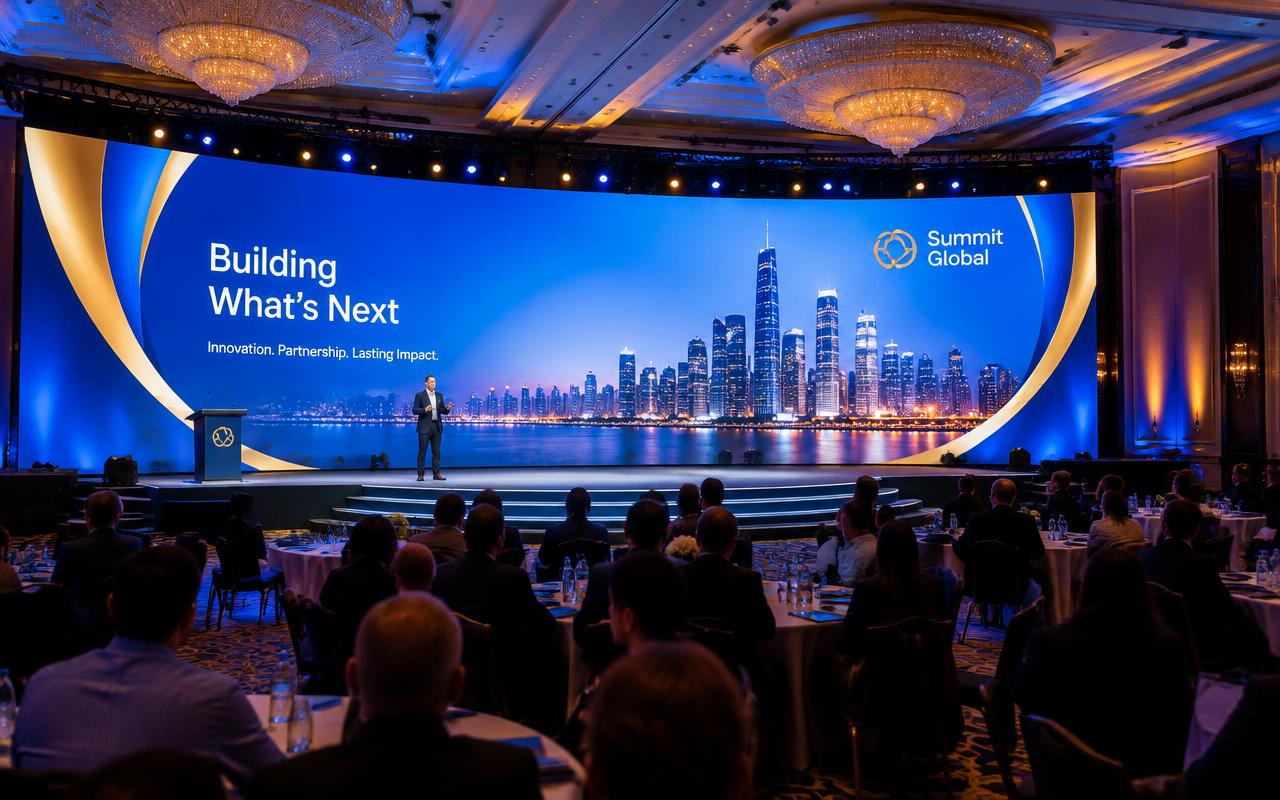
LED Wall Rental
Indoor P2.6/P3.9 and outdoor P4.8 LED walls in any size or shape — curved, cubes, floor LED and kinetic panels — powered by Novastar processing.
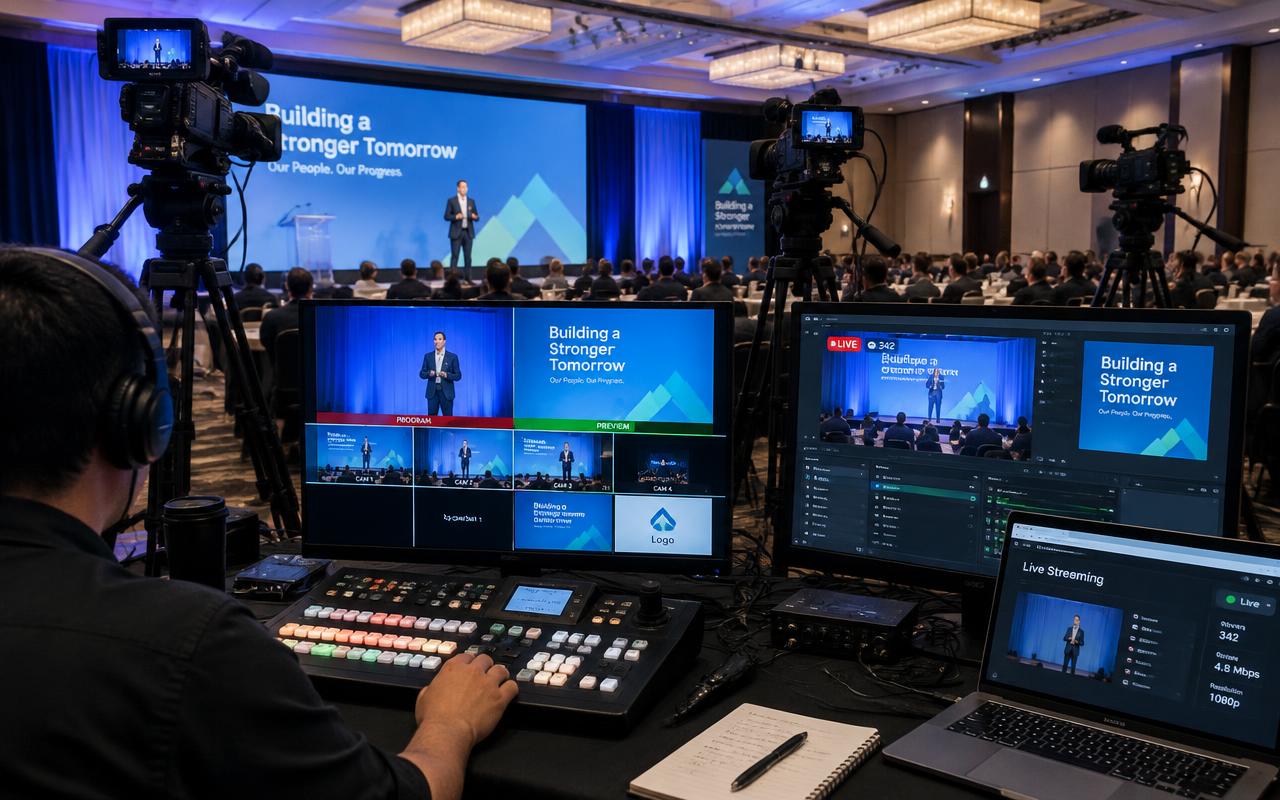
Live Streaming & Webcasting
Multi-camera live streaming to YouTube, LinkedIn, Zoom or private portals with graphics, bonded internet and a backup encoder on every show.
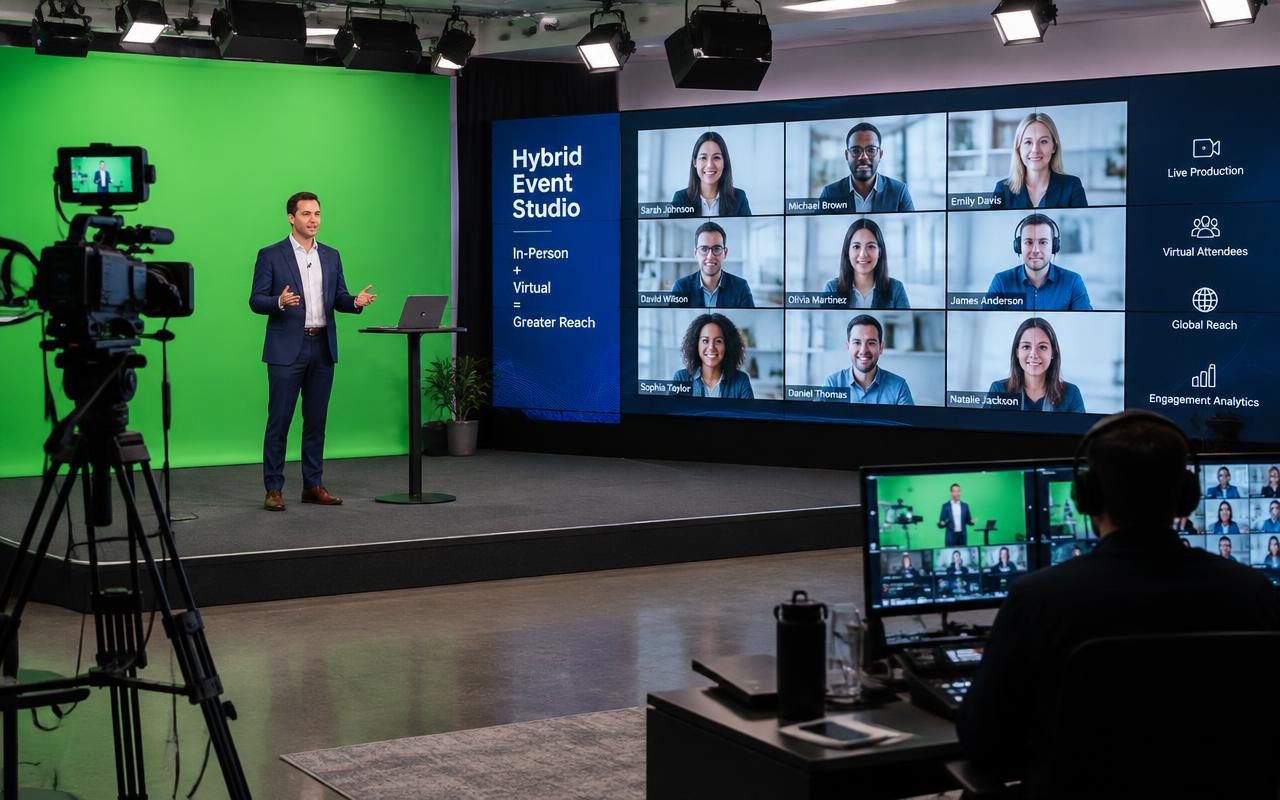
Hybrid Event Production
Studios and on-site setups that put remote speakers on stage and in-room audiences online, with return feeds, Q&A and engagement tools.
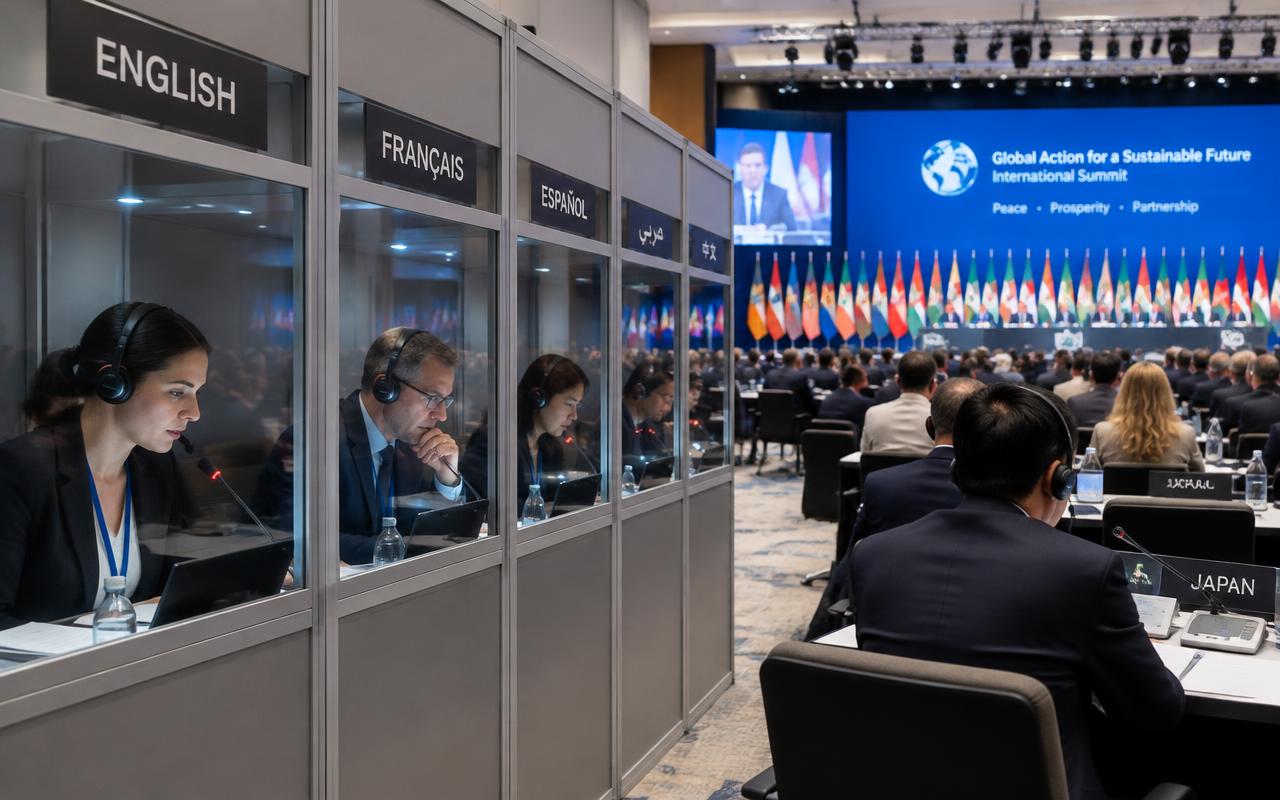
Simultaneous Interpretation Systems
ISO-standard interpretation booths, infrared receivers and multi-language channels for international summits and government delegations.
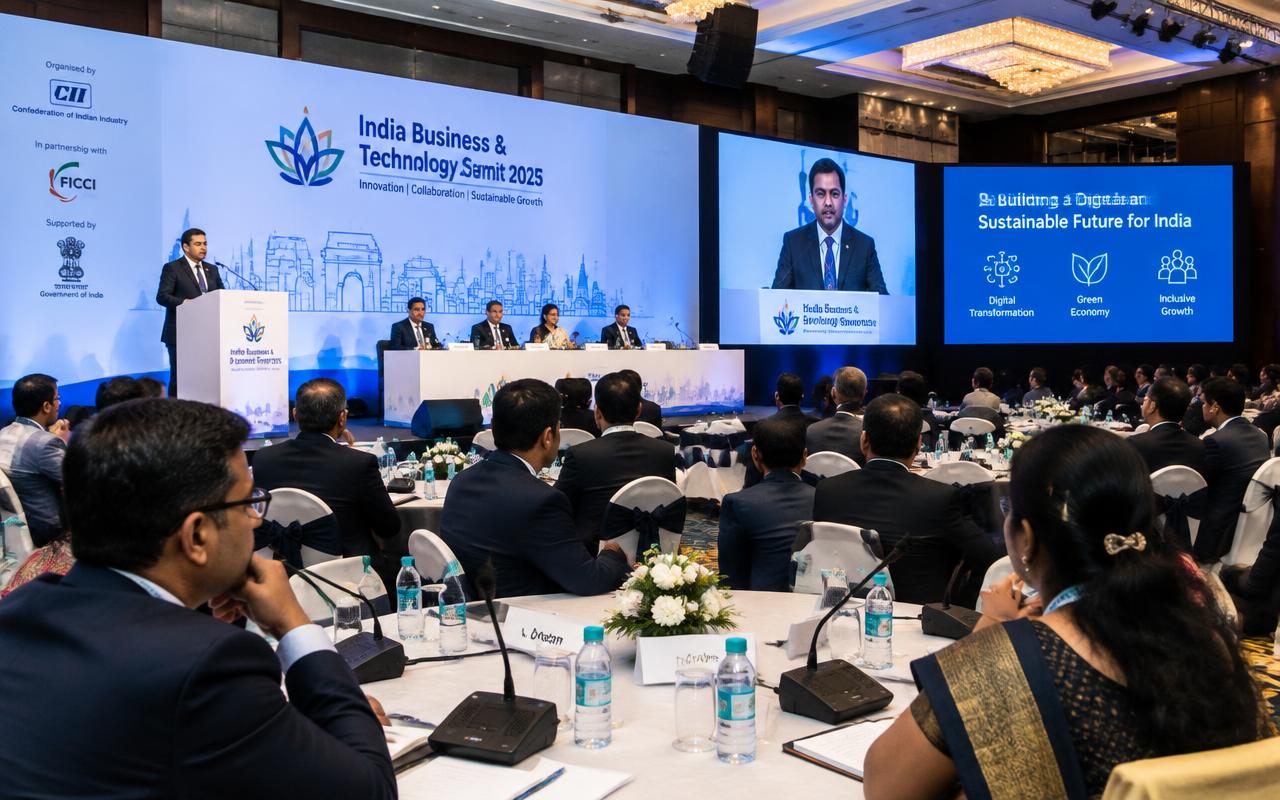
Conference AV Setup
End-to-end conference AV: delegate mic systems, confidence monitors, presentation switching, speaker timers and a show-caller who keeps it on time.
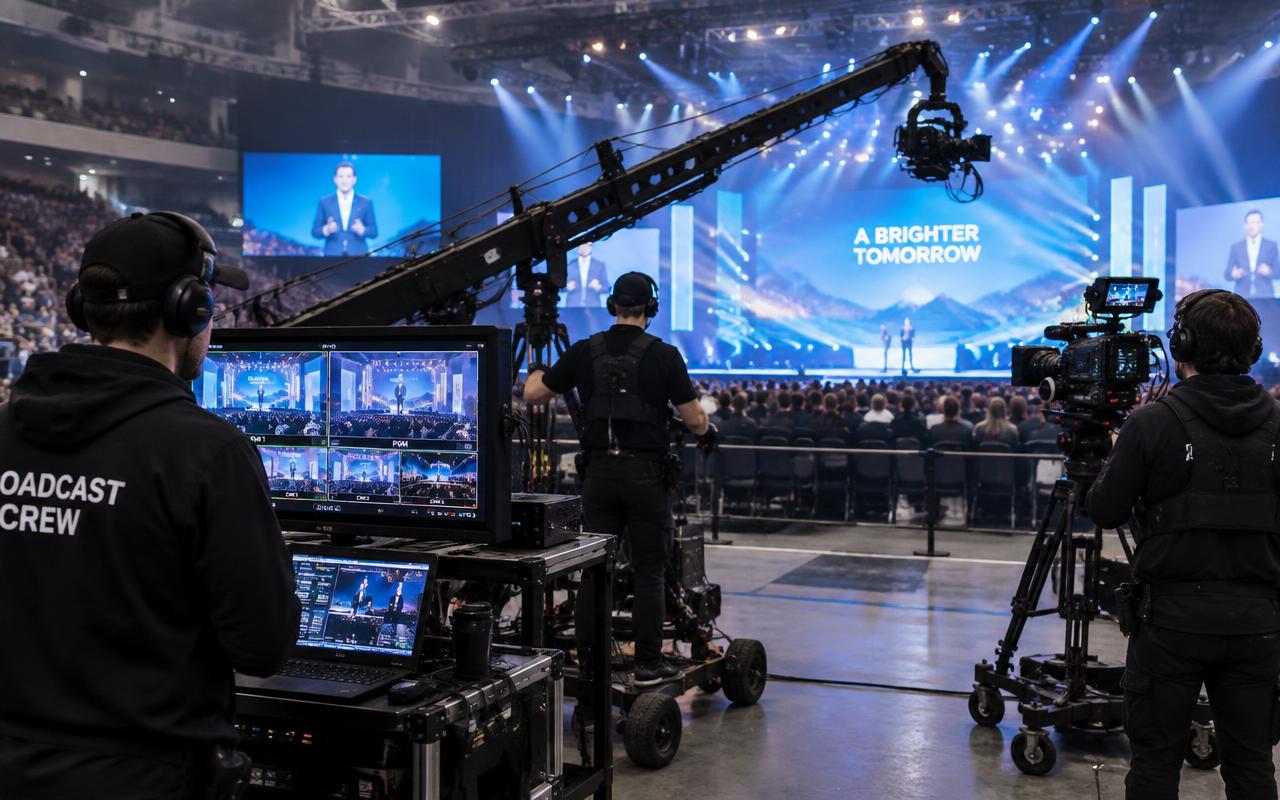
Broadcast & Multi-Camera
Broadcast-grade cameras, jibs, PTZs and OB-style control for IMAG, TV feeds and post-event films that capture every moment.
LED Wall Rental
- P1.9 to P4.8 pixel pitch
- Curved, corner, floor & ceiling LED
- Novastar & Brompton processing
Event Live Streaming
- 3–12 camera productions
- vMix / TriCaster switching
- Bonded 4G/5G + leased line
Hybrid Event Production
- Virtual studio & green screen
- Remote speaker integration
- Interactive Q&A and polls
Interpretation Equipment
- ISO 4043 booths
- Bosch Integrus IR systems
- Up to 16 language channels
Conference AV Services
- Bosch & Shure delegate systems
- Confidence monitors & timers
- Presentation & video switching
Multi-Camera Broadcast
- Sony & Blackmagic broadcast cameras
- Jib cranes, sliders & PTZ
- OB-style production control
Specification
The language to hold a vendor to
Ask for these on the quote, named by model and quantity. A supplier who answers in categories rather than specifications is quoting a different event from the one you are buying.
| Specification | Detail |
|---|---|
| LED Wall Rental: Pixel pitch range | P1.9 – P4.8 indoor, P4.8 – P10 outdoor |
| LED Wall Rental: Viewing distance rule | Minimum comfortable distance in metres ≈ pixel pitch in mm |
| Event Live Streaming: Switching | vMix, NewTek TriCaster or Blackmagic ATEM with graphics and playback |
| Event Live Streaming: Camera count | 3 – 12 sources including PTZ, manned cameras and presentation feeds |
| Hybrid Event Production: Production approach | Designed for camera first, with the in-room experience layered on top |
| Hybrid Event Production: Remote contribution | Zoom, Teams or a dedicated contribution platform into the switcher |
| Interpretation Equipment: Mobile booth standard | ISO 4043: approximately 1.6 x 1.6 x 2.0 m for two interpreters, insulated and ventilated |
| Interpretation Equipment: Built-in booth standard | ISO 2603 for permanently installed booths |
| Conference AV Services: Delegate systems | Bosch DICENTIS and CCS 1000 D, Shure Microflex Complete with request-to-speak |
| Conference AV Services: Speech intelligibility target | STI of approximately 0.5 or better across the seating area |
| Multi-Camera Broadcast: Camera classes | Sony HDC and HXC system cameras, Blackmagic URSA Broadcast, large-sensor cinema bodies |
| Multi-Camera Broadcast: Genlock | Tri-level sync distributed to every source so cuts are frame-clean |
Crew
Who is actually in the room
- LED technician
Builds the panel grid, maps the canvas to native resolution and chases any dead panel, card or ribbon on sight.
- Media server operator
Runs disguise or Resolume, holds the content timeline against timecode and keeps a hot backup machine mirrored.
- Technical producer
Owns the stream plan, the destinations, the platform settings and the escalation path if a platform itself fails.
- Vision mixer
Cuts the programme live with stream-appropriate framing and pacing, and holds the graphics and playback cues.
- Hybrid producer
Owns both running orders and decides what the online audience sees whenever the room does something that does not translate.
- Remote contributor wrangler
Pre-tests every remote speaker, holds their green room on the call and gets them to air on cue without the room noticing.
- Interpretation technician
Builds and tests booths, consoles and radiators, verifies every channel and relay path, and sits within reach of the booths all session.
- Audio engineer
Provides the clean direct feed to every booth and keeps floor audio free of the room reverberation that makes interpreting exhausting.
- Technical producer
Owns the AV plan against the agenda, coordinates every department and is the client's single point of contact on site.
- Show caller
Calls walk-ons, slide hand-offs, video rolls and breaks from a cue-marked running order on headset comms.
- Director
Calls the cut live from the running order, gives frame instructions to operators and decides what the audience sees at every moment.
- Vision engineer
Shades every camera from the rack so six sources match, and owns genlock, colour and signal integrity across the chain.
Failure modes
What we design against in advance
What can go wrong
How we prevent it
- What can go wrong
The wall looks flawless to the eye but shows rolling bands on every camera.
How we prevent itRun panels at 3,840 Hz or higher and lock ShutterSync and genlock to the camera chain, then verify through the actual cameras before the show, not at rehearsal.
- What can go wrong
The venue Wi-Fi tested fine at 9 am and collapses when two thousand delegates arrive.
How we prevent itThe stream never runs on shared Wi-Fi. A wired leased line is primary, bonded cellular across multiple carriers is the backup, and the failover is proved by physically pulling the primary path during the build.
- What can go wrong
A remote speaker hears themselves delayed, stumbles and loses the thread entirely.
How we prevent itEvery remote contributor gets a true mix-minus return that excludes their own voice, built and proved on the actual path during the contributor test rather than on the day.
- What can go wrong
Infrared coverage drops behind a pillar or under a balcony and a block of delegates hears silence.
How we prevent itRadiator placement is calculated against the seating plan and then physically walked with a receiver at build, with an extra radiator held for the shadow that is always discovered.
- What can go wrong
A speaker arrives at the podium with an unseen deck on their own laptop two minutes before their slot.
How we prevent itA wireless presentation system is live on the switcher as a permanent input, and the operator holds a laptop input already tested so the switch is a cut rather than a rebuild.
- What can go wrong
Cameras are not genlocked and every cut shows a frame of tearing on the IMAG screens.
How we prevent itTri-level sync is distributed to every source and verified at the switcher during the build, because the fault is invisible on a single camera and obvious on every cut.
Process
How we deliver
01
Brief & recce
We visit the venue, map power and rigging, and understand your show flow.
02
Design & quote
CAD plans, 3D previews and an itemised quote within 24 hours.
03
Build & rehearse
Load-in, system tuning, content checks and full technical rehearsal.
04
Show & strike
Show-caller-led execution, then a quick, clean load-out.
Coverage
Enterprise event technology by city
Tier 1 metros
Tier 2 cities
Prime AV Solutions produces enterprise events in 90+ Indian cities with owned inventory and touring crew.
FAQ