Key takeaway
Key takeaways
- Exact models, not categories, on the equipment list
- Spares for anything that would stop the show
- Power sanction plus generator changeover confirmed
- One named show-caller holding the cue sheet
Wireless Microphones & IEMs: pre-show checklist
Equipment & specification
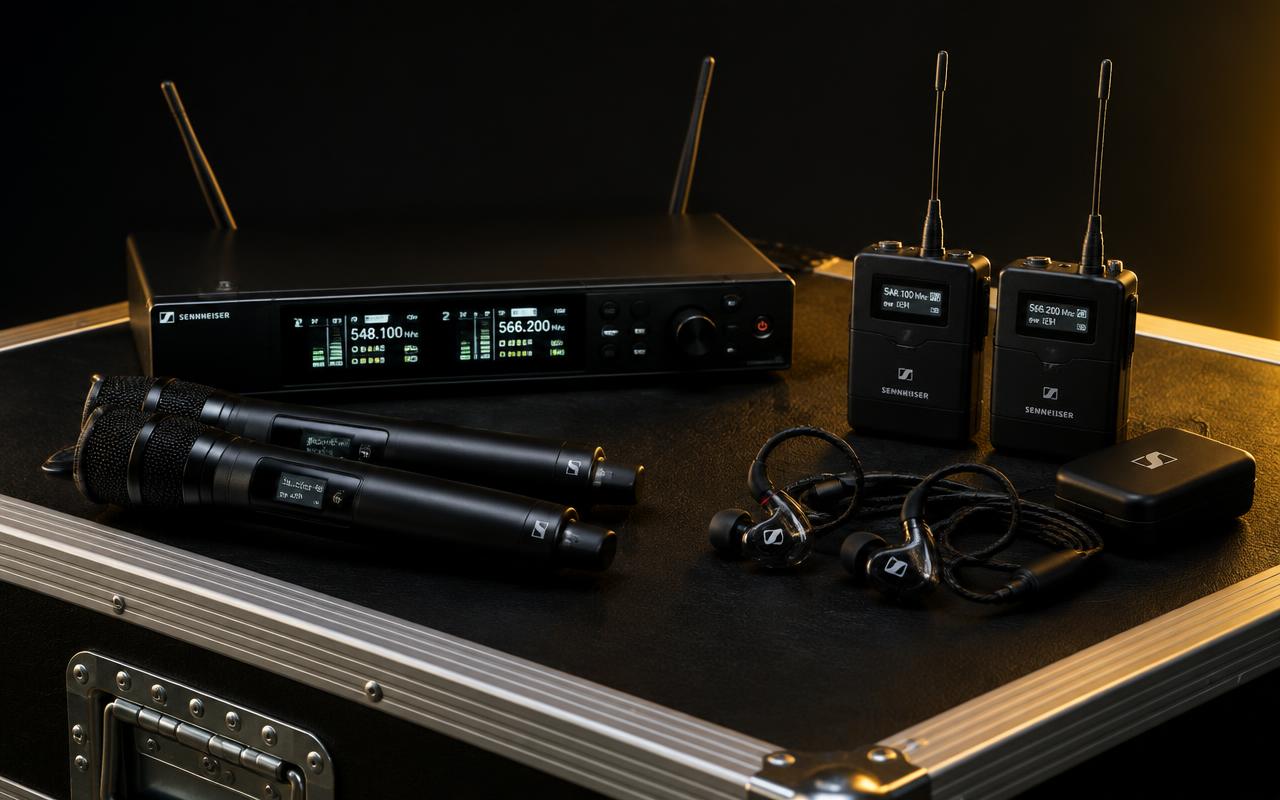
- Systems confirmed: Shure Axient Digital AD4Q, Sennheiser Digital 6000 / EM 6000
- Coordination software confirmed: Shure Wireless Workbench, Sennheiser Wireless Systems Manager
- Spectrum confirmed: UHF television bands under WPC licensing, with narrowing available headroom
- Scan practice confirmed: Full RF scan at load-in and again at the show hour with the venue populated
- Frequency diversity confirmed: Critical channels transmitting on two frequencies simultaneously on Axient
- Itemised list naming exact models, not categories
- Spares for mics, cables, processors and any single point of failure
Power & safety
- Venue sanctioned load confirmed in writing against the rig's draw
- Silent generator sized with automatic changeover
- Earthing check completed and logged
- Rigging certification and load calculations signed off
- Cable covers on every walkway and crowd line
People
- RF coordinator named and briefed
- Microphone technician named and briefed
- IEM technician named and briefed
- Antenna and systems technician named and briefed
- Monitoring operator named and briefed
Timings
- Load-in slot agreed with the venue in writing
- Sound check and line check scheduled
- Full technical rehearsal booked with real presenters and real content
- Venue curfew and strike window confirmed
Content & handover
- RF scan record from load-in and from the populated venue
- Coordinated frequency plan with intermodulation analysis and reserve channels
- Microphone allocation chart naming every wearer and channel
- Antenna placement drawing with distribution topology
- All video, audio and slides delivered 72 hours ahead in the agreed format
What this checklist is protecting you from
What can go wrong
How we prevent it
- What can go wrong
RF dropouts when the venue fills with phones and the press arrives.
How we prevent itFull RF scan at load-in, coordinated frequencies across all Axient channels, and two spare clean frequencies held in reserve.
- What can go wrong
A press or broadcast crew arrives with their own wireless on frequencies nobody coordinated.
How we prevent itA single shared frequency plan is published for the whole site, and arriving crews are allocated bands at accreditation rather than allowed to scan for themselves.
- What can go wrong
Antennas mounted behind an LED wall or beside dimmer racks pick up broadband noise.
How we prevent itAntennas are placed at height with line of sight to the performance area and routed well clear of LED panels, dimmers and LED fixtures on low-loss cable.
- What can go wrong
A lavalier on a heavy jacket or a sari rustles through every speech.
How we prevent itMounting is planned per outfit — vampire clips, tape positions and cable dressing agreed at fitting — and for critical speakers we recommend a headset boom instead.
- What can go wrong
A transmitter battery dies mid-performance because packs were not managed per channel.
How we prevent itFresh batteries per performance block, remote battery telemetry watched by a monitoring operator, and a dressed spare pack on a reserve frequency ready to hand over.
- What can go wrong
Intermodulation between IEM transmitters and microphone receivers creates a fault nobody can explain.
How we prevent itIEMs and microphones are coordinated in a single frequency plan with intermodulation analysis, and IEM antennas are sited away from the receive antennas to limit blocking.
Want this tailored to your event?
Get an itemised quote from Prime AV Solutions within 24 hours — call +91 93093 80958 or WhatsApp our producers.
Published 20 February 2026 by the Prime AV Solutions production team.