Key takeaway
Key takeaways
- Exact models, not categories, on the equipment list
- Spares for anything that would stop the show
- Power sanction plus generator changeover confirmed
- One named show-caller holding the cue sheet
Simultaneous Interpretation Systems: pre-show checklist
Equipment & specification
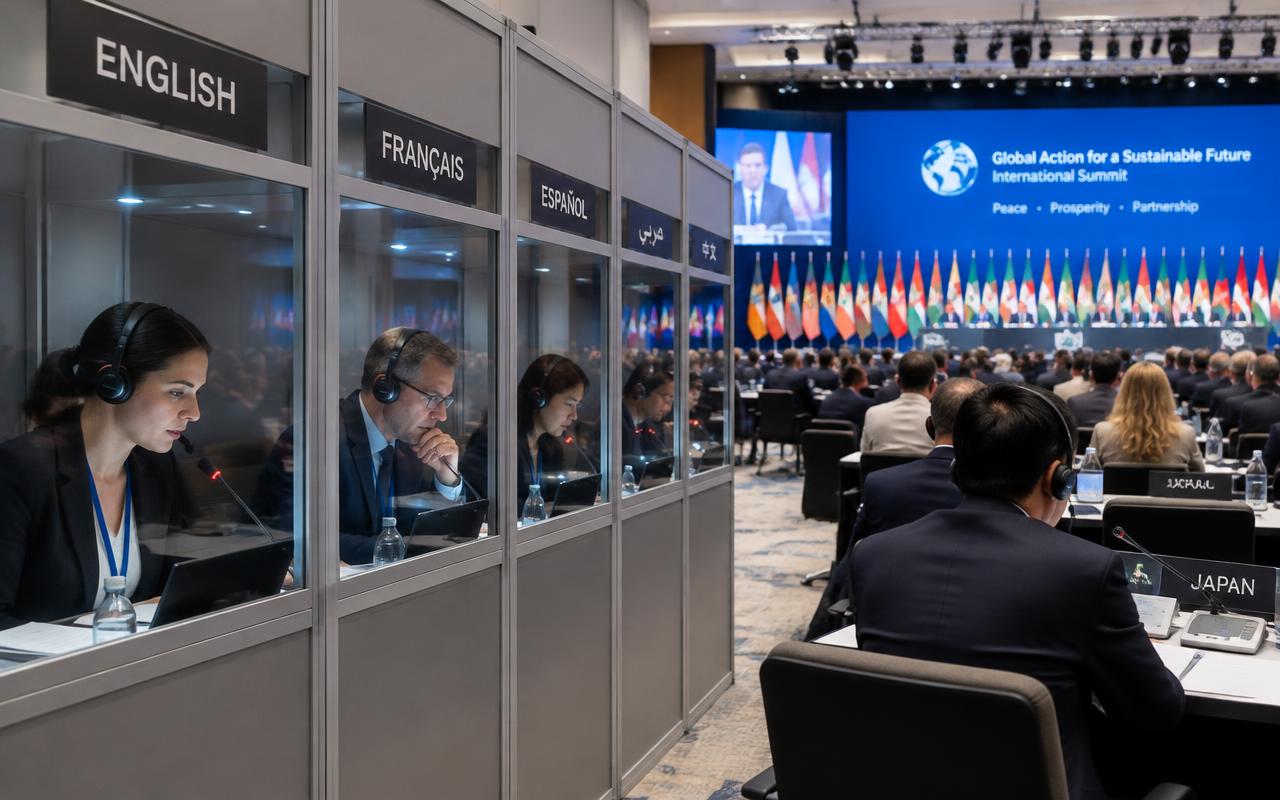
- Mobile booth standard confirmed: ISO 4043: approximately 1.6 x 1.6 x 2.0 m for two interpreters, insulated and ventilated
- Built-in booth standard confirmed: ISO 2603 for permanently installed booths
- Equipment standard confirmed: ISO 20109 for interpreter consoles, microphones and headphones
- Distribution confirmed: Bosch Integrus infrared, confidential because it does not pass through walls
- Channel capacity confirmed: Up to 16 language channels plus the floor channel on a typical deployment
- Itemised list naming exact models, not categories
- Spares for mics, cables, processors and any single point of failure
Power & safety
- Venue sanctioned load confirmed in writing against the rig's draw
- Silent generator sized with automatic changeover
- Earthing check completed and logged
- Rigging certification and load calculations signed off
- Cable covers on every walkway and crowd line
People
- Interpretation technician named and briefed
- Audio engineer named and briefed
- Receiver desk crew named and briefed
- Interpretation manager named and briefed
- Booth builder named and briefed
Timings
- Load-in slot agreed with the venue in writing
- Sound check and line check scheduled
- Full technical rehearsal booked with real presenters and real content
- Venue curfew and strike window confirmed
Content & handover
- Booth layout drawing showing sightlines to speaker and screen
- Radiator coverage plan with shadowed areas identified and resolved
- Channel allocation map including every relay routing path
- Interpreter briefing pack as distributed, with the technical glossary
- All video, audio and slides delivered 72 hours ahead in the agreed format
What this checklist is protecting you from
What can go wrong
How we prevent it
- What can go wrong
Infrared coverage drops behind a pillar or under a balcony and a block of delegates hears silence.
How we prevent itRadiator placement is calculated against the seating plan and then physically walked with a receiver at build, with an extra radiator held for the shadow that is always discovered.
- What can go wrong
A single interpreter is booked per language to save cost and quality collapses after half an hour.
How we prevent itWe quote two interpreters per booth per language as standard and explain why — sustained simultaneous interpretation beyond roughly thirty minutes is not reliably accurate.
- What can go wrong
Interpreters receive a room microphone feed full of reverberation and struggle to hear the speaker.
How we prevent itEvery booth takes a clean direct feed from the audio console, and the engineer monitors that feed on headphones rather than assuming it is right.
- What can go wrong
A speaker reads from a prepared script at full speed and interpretation falls behind.
How we prevent itScripts and slides go to interpreters at T-2 weeks, and the chair is briefed to remind speakers that they are being interpreted, which is the single most effective intervention available.
- What can go wrong
Certain LED and plasma lighting radiates in the infrared band and corrupts channel reception.
How we prevent itCarrier frequencies are selected to avoid the interference band and a reception test is run with the full event lighting rig live, not with house lights only.
- What can go wrong
Receivers go missing because they were handed out without reconciliation.
How we prevent itIssue against delegate identification, a count at every break, and a documented reconciliation at session end — at a thousand units the loss rate without this is material.
Want this tailored to your event?
Get an itemised quote from Prime AV Solutions within 24 hours — call +91 93093 80958 or WhatsApp our producers.
Published 9 April 2026 by the Prime AV Solutions production team.