Key takeaway
Key takeaways
- Exact models, not categories, on the equipment list
- Spares for anything that would stop the show
- Power sanction plus generator changeover confirmed
- One named show-caller holding the cue sheet
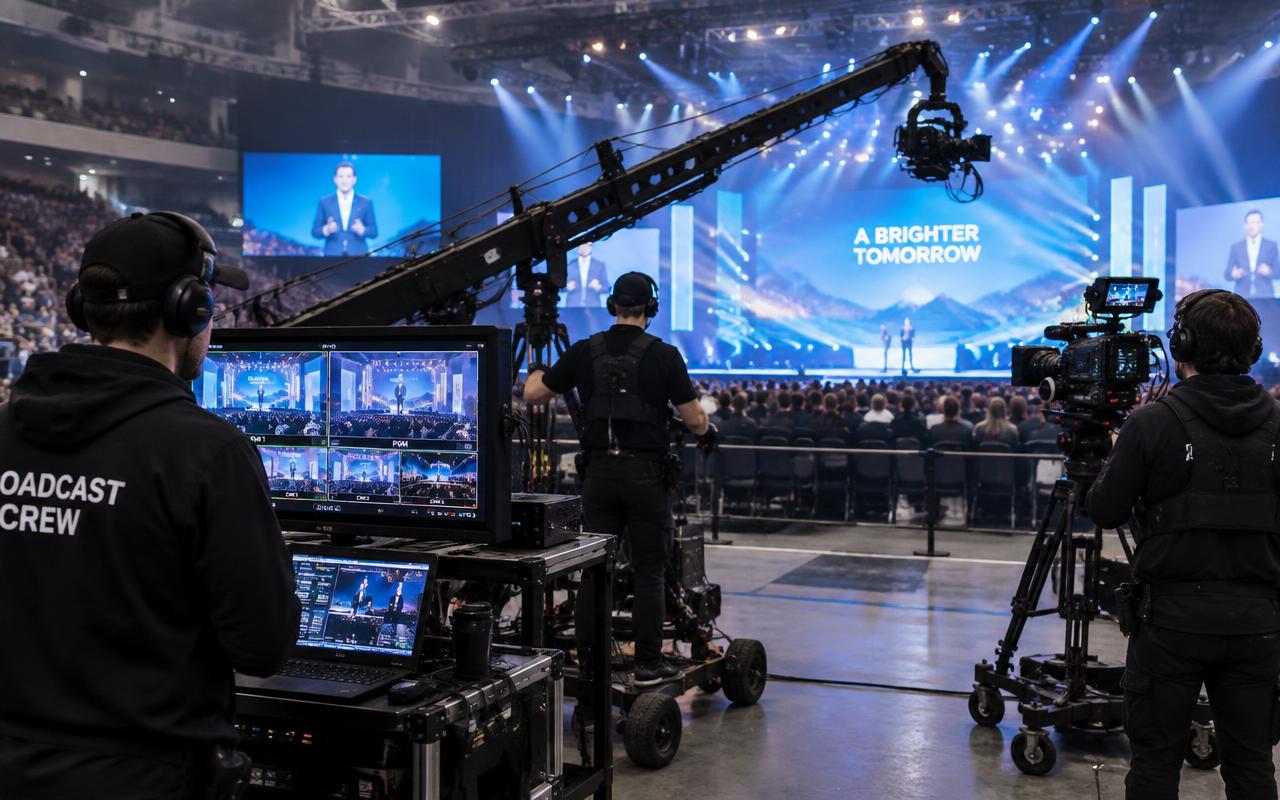
Broadcast & Multi-Camera: pre-show checklist
Equipment & specification
- Camera classes confirmed: Sony HDC and HXC system cameras, Blackmagic URSA Broadcast, large-sensor cinema bodies
- Genlock confirmed: Tri-level sync distributed to every source so cuts are frame-clean
- Signal transport confirmed: 12G-SDI on coax for short runs, SMPTE fibre or triax for long camera positions
- Camera control confirmed: CCU and RCP shading of iris, black level and matrix from the rack position
- Switchers confirmed: Ross Carbonite, Blackmagic ATEM Constellation, Sony production switchers
- Itemised list naming exact models, not categories
- Spares for mics, cables, processors and any single point of failure
Power & safety
- Venue sanctioned load confirmed in writing against the rig's draw
- Silent generator sized with automatic changeover
- Earthing check completed and logged
- Rigging certification and load calculations signed off
- Cable covers on every walkway and crowd line
People
- Director named and briefed
- Vision engineer named and briefed
- Camera operators named and briefed
- Jib and specialist operators named and briefed
- Replay operator named and briefed
- On-site editor named and briefed
Timings
- Load-in slot agreed with the venue in writing
- Sound check and line check scheduled
- Full technical rehearsal booked with real presenters and real content
- Venue curfew and strike window confirmed
Content & handover
- Camera plan drawing with every position and lens package
- Signal flow and output map including genlock distribution
- Programme cut recording at full quality
- Isolated camera recordings for every position
- All video, audio and slides delivered 72 hours ahead in the agreed format
What this checklist is protecting you from
What can go wrong
How we prevent it
- What can go wrong
Cameras are not genlocked and every cut shows a frame of tearing on the IMAG screens.
How we prevent itTri-level sync is distributed to every source and verified at the switcher during the build, because the fault is invisible on a single camera and obvious on every cut.
- What can go wrong
Six cameras each have a different colour balance and the cut looks like six different events.
How we prevent itEvery camera is shaded from the rack by a vision engineer under the actual stage lighting, and the match is re-checked after any significant lighting change.
- What can go wrong
The director loses contact with a camera operator at the critical moment.
How we prevent itA proper intercom system with per-position talkback and a tested backup channel, plus wired comms on fixed positions rather than relying on wireless packs throughout.
- What can go wrong
The post team receives only the programme cut and cannot build the film the client expected.
How we prevent itEvery camera records an isolated feed as standard, and the delivery specification — including ISOs, clean feed and audio stems — is confirmed in writing at T-2 weeks.
- What can go wrong
Media cards are cleared before the offload is verified and footage is lost irrecoverably.
How we prevent itOffload is checksummed and verified against the source before any card is reformatted, with a second copy on separate media before the trucks leave.
- What can go wrong
Stage lighting is designed for the room and leaves presenters too contrasty to shade usably.
How we prevent itKey levels and colour temperature are agreed with the lighting designer during design and verified under camera at rehearsal, with the rig balanced for camera.
Want this tailored to your event?
Get an itemised quote from Prime AV Solutions within 24 hours — call +91 93093 80958 or WhatsApp our producers.
Published 4 March 2026 by the Prime AV Solutions production team.