Key takeaway
Key takeaways
- Higher-resolution LED where cameras push in
- One timecoded cue list across departments
- Hybrid reach designed in, not bolted on
- One spectacle moment, properly funded
What is actually changing
The ceremony functions are an intelligibility problem dressed as a decor problem. A priest facing away from the guests, live shehnai or dhol, a mandap full of soft fabric and six hundred relatives talking is a hard audio environment, and the answer is discreet close microphones on the priest and the couple, distributed small speakers through the seating rather than loud stacks at the front, and a live camera feed to screens so the back rows see the varmala rather than the back of a head. Light it warm and high in colour rendering, because the wedding film is what the family actually keeps.
What each level includes
One evening, up to 400 guests: clean distributed PA, four wireless mics, decor-matched uplighting and wash, a modest LED backdrop and a playback operator.
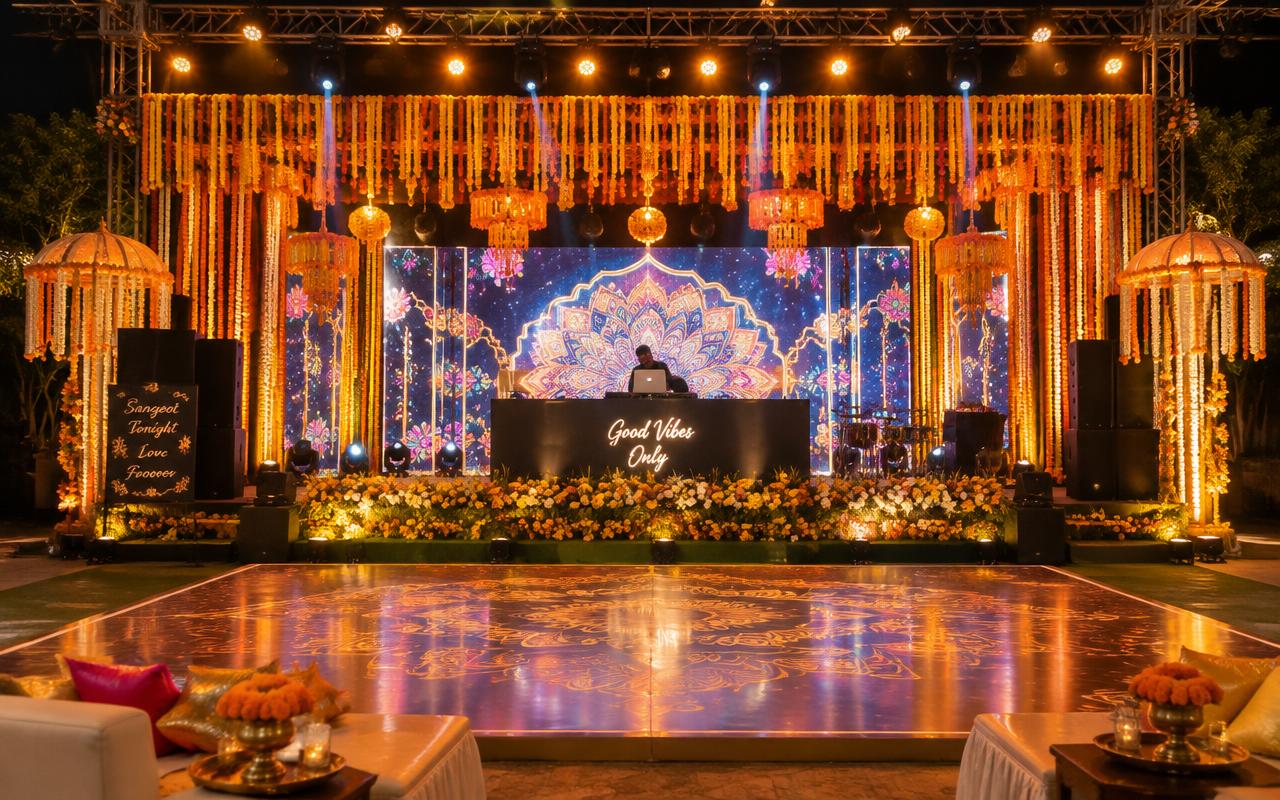
Two functions with separate setups: sangeet stage with LED and a programmed moving-light rig, DJ system for the after-set, reception speech system and live camera feed to screens.
Four to five functions with overnight changeovers, designed lighting per function, large LED for the sangeet, ceremony audio with discreet mics, two-camera live feed and a show-caller for the sangeet.
Everything above plus a projection-mapped façade or mandap, a drone light show finale, custom stage fabrication and a dedicated content and lighting design team across the week.
What to ignore
Technology that does not survive contact with a run of show — anything needing a perfect network, an app download or an unrehearsed audience action — rarely earns its budget. Get an itemised quote from Prime AV Solutions within 24 hours — call +91 93093 80958 or WhatsApp our producers.
Published 16 December 2025 by the Prime AV Solutions production team.