Key takeaway
Key takeaways
- Higher-resolution LED where cameras push in
- One timecoded cue list across departments
- Hybrid reach designed in, not bolted on
- One spectacle moment, properly funded
What is actually changing
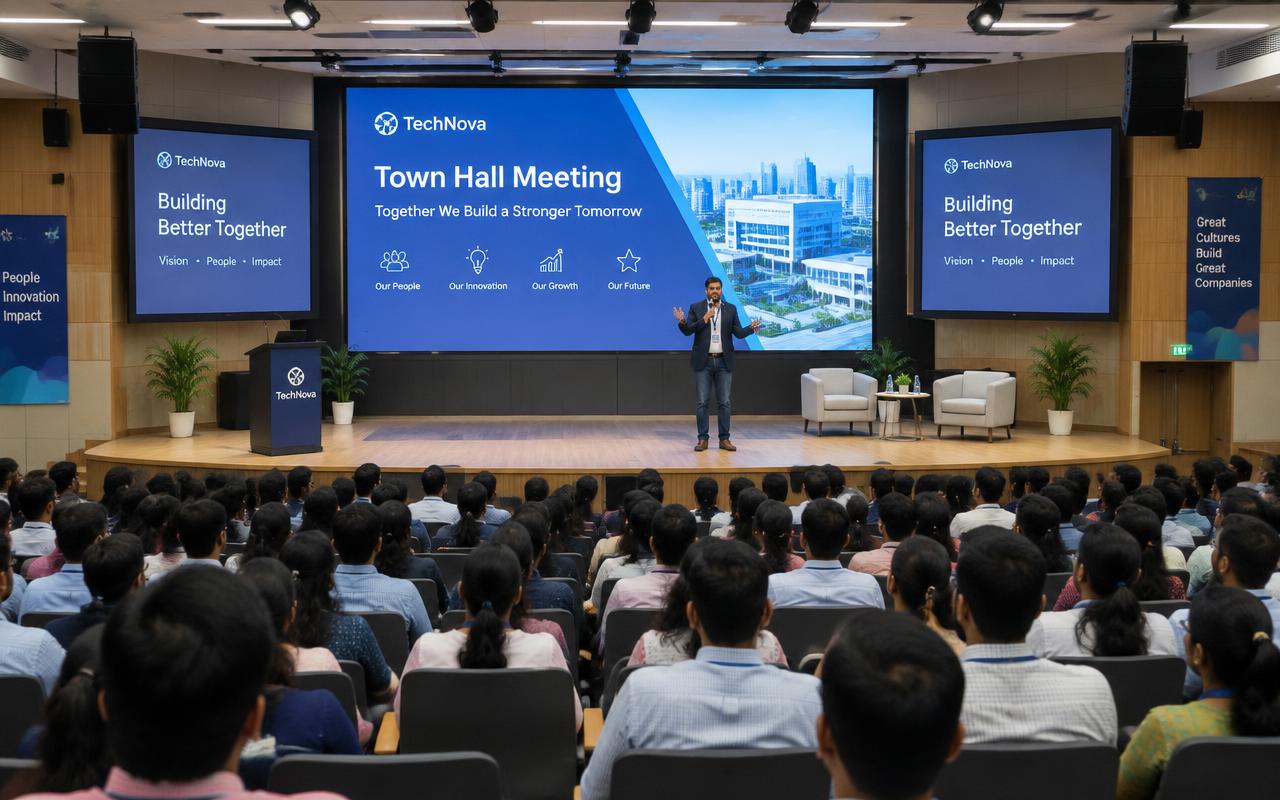
The third requirement is candour, and AV either supports it or quietly suppresses it. Employees and shareholders notice when a difficult question is inaudible, when the microphone reaches the questioner late or when the stream cuts to a slide at the wrong moment. Put two briefed runners in the aisles, keep the camera on the questioner, let the answer run, and give leadership confidence monitors and a visible clock so they can speak plainly to time rather than reading anxiously from a script.
What each level includes
A single room up to 200 with a stream: clean speech audio, four mics, a screen or LED for slides, two cameras, a switched stream with lower thirds and a recording.
A 300 – 600 seat auditorium: three or four cameras, dedicated stream mix, remote speaker integration with return feeds, moderated Q&A tooling, confidence monitors and bonded connectivity.
Access-controlled private streaming, verified content workflow, scrutiniser and voting support, redundant encoders and connectivity, four-camera coverage and an archival recording to specification.
Several locations joined live with two-way video, interpretation or captioning channels, a virtual studio for remote leadership, engagement analytics and full end-to-end redundancy.
What to ignore
Technology that does not survive contact with a run of show — anything needing a perfect network, an app download or an unrehearsed audience action — rarely earns its budget. Get an itemised quote from Prime AV Solutions within 24 hours — call +91 93093 80958 or WhatsApp our producers.
Published 18 September 2026 by the Prime AV Solutions production team.