Visual · Tiruchirappalli, Tamil Nadu
LED Screen Rental in Tiruchirappalli
Prime AV Solutions runs LED screen rental across Tiruchirappalli and the rest of Tamil Nadu. Served from our Chennai base, 330 km at about six hours, with a Madurai crew pool 140 km south as the faster response for Srirangam work and Coimbatore as the alternate for structures and spares. Every project is specified and quoted to its own brief.
- Lead time
- From 4 weeks
- Peak season
- Nov–Feb
- Coverage
- Tiruchirappalli & Tamil Nadu
Key takeaway
LED Screen Rental for Tiruchirappalli’s biggest events
IMAG — image magnification — exists for one reason: so the person in row forty can read a face. The brief is visibility and legibility, not scenic design. Screen size comes from the furthest viewer: a usable rule is that text height on screen should be at least one fiftieth of the viewing distance for comfortable reading, which pushes side screens on a long ground to six metres wide and upward. Standard 16:9 formats are the right choice here, because content is a live camera cut and a presentation deck, both of which already live in that aspect and should never be letterboxed or stretched to fit a creative canvas.
IMAG lives or dies on sightlines, so balcony overhangs, lighting-rig positions and the shape of the seating decide where screens can hang and how many you need. In Tiruchirappalli that plays out at venues like Sangam Hotel, Kalaiarangam, Anna Stadium, and across Thillai Nagar, Cantonment, Srirangam, KK Nagar.
Delay screens handle depth. Beyond roughly 70 to 80 metres from the stage, a main screen is too small to read regardless of how bright it is, so we place additional screens down the audience on their own structures. These need their own power, their own signal path — usually fibre or a long-haul SDI run rather than copper HDMI — and a decision about whether to delay the video to match the delayed audio at that position. For speech-led events we generally keep video aligned to the audio arriving at that spot, because lip-sync error reads as a fault far faster than absolute latency does.
What’s included
- Side IMAG screens
- Outdoor daylight-bright screens
- Video switching & playback
- Mobile LED trucks
Equipment we carry
Why Tiruchirappalli chooses Prime AV
- Crews and trucks positioned for fast load-in at Srirangam mandapams and temple-adjacent halls and venues in KK Nagar and Woraiyur.
- Each screen position gets its own video delay, measured against the audio arrival time at that exact spot during the build.
- Switcher input and output map with the full signal route
- Working knowledge of Tamil Nadu venue rules, power sanctions and permission timelines.
Local conditions
Producing LED screen rental in Tiruchirappalli
Weather & the rig
An IMAG screen has to stay readable in whatever light the sky provides, so sun path across the actual show hours and the brightness specification are decided together. Trichy is consistently one of the hottest cities in Tamil Nadu, with April to June at 40–42°C and a dry interior heat that stresses amplifier racks and makes any daytime outdoor rehearsal unproductive. The Cauvery and Kollidam either side of the city raise overnight humidity sharply even in the dry months, so expect heavy dew on an open rig by morning. The north-east monsoon in October–December is the wet period, arriving as short violent evening downpours. April–June is the heat peak and unworkable outdoors by day; October–December north-east monsoon downpours make open-ground builds a gamble. November–February is the booking season, with January around Pongal the busiest.
Power & redundancy
Delay and outdoor screen positions sit far from the main distribution, each needing its own stable feed, which usually means a satellite generator rather than a long cable run. TANGEDCO supply into the industrial belt is firm because BHEL and the ordnance units demand it, but civic venues and mandapams run on small sanctioned loads and old distribution boards that should not be trusted with a modern LED and lighting load. The generator trade here is unusually competent for a tier-2 city thanks to the engineering industry, so good silent sets, proper changeover panels and qualified operators are genuinely available locally.
Permits & noise rules
Large outdoor screens draw attention from traffic and nearby residents, so siting, mounting and light spill typically need clearance alongside the event permission itself. Tiruchirappalli City Corporation issues ground and pandal permissions, the city police license assembly, and the Tamil Nadu noise rules with the 10 pm amplified-sound limit are enforced — strictly so around Srirangam, where the temple administration's own conditions on sound and timing take precedence. Trichy International Airport sits close to the southern edge of the city, which makes drone operations in much of the urban area a DGCA clearance matter against a live approach corridor, and the Rockfort and Srirangam heritage structures rule out fixings and heat-generating fixtures nearby.
Load-in & access
Delay positions and mobile LED trucks need vehicle access deep into the audience area before the crowd arrives, which makes gate widths and ground conditions the real constraint. The city itself is straightforward — major highways converge here and the Cantonment and bypass venues take full trucks. Srirangam is the exception: the temple town's prakaram streets take only small tempos, pilgrim footfall is constant, and the practical load-in is a hand-carry shuttle in the early hours. The Cauvery bridges are the chokepoints between the two halves of the city, so build travel time into any split call.
Season & booking
Vaikunta Ekadasi in December–January opens the Paramapadha Vasal at Srirangam and fills the temple town completely; the Chithirai and Panguni temple festivals and the local car festivals each lock sound and lighting stock. Pongal in mid-January is the homecoming and wedding peak. Aadi and Purattasi are inauspicious for weddings, and NIT's festival season takes February and March dates. Peak demand runs Nov–Feb.
Crew & dispatch
Served from our Chennai base, 330 km at about six hours, with a Madurai crew pool 140 km south as the faster response for Srirangam work and Coimbatore as the alternate for structures and spares. Load-in support covers KK Nagar, Woraiyur and the rest of the city.
What it costs here
A disciplined, documentation-driven market on the industrial side — PSU and ordnance work goes through formal tendering with specification sheets and GST-clean paperwork, and margins are thin but payment is certain. NRI wedding budgets are the opposite: generous, decided quickly, and benchmarked against what the family saw in Singapore or Dubai rather than against local rates.
Local expectations
Srirangam and Rockfort weddings follow Vaishnava convention closely, with muhurat windows often before dawn, nadaswaram and thavil ensembles that need gentle acoustic support rather than reinforcement, and Sanskrit and Tamil liturgy that must be audible to the whole hall without sounding amplified. Industrial functions are formal and hierarchical — the dais order matters, long-service felicitations need many roving mics, and Tamil and English bilingual content is expected throughout.
Specification
LED Screen Rental: technical specification
| Specification | Detail |
|---|---|
| Typical pitch | P2.6 – P3.9 indoor IMAG, P4.8 – P10 outdoor and delay positions |
| Legibility rule | On-screen text height at least 1/50th of the furthest viewing distance |
| Standard formats | 16:9 at 1920 x 1080 or 3840 x 2160 native, avoiding non-standard canvases |
| Delay screen spacing | Additional positions beyond 70 – 80 m of audience depth |
| Outdoor brightness | 5,000 nits minimum for daylight, 7,500 nits in direct sun |
| Switching | Barco E2/E3, Roland or ATEM with scaling handled once at the switcher |
| Long-haul signal | Fibre or 12G-SDI to delay positions, never long copper HDMI |
| Lip-sync handling | Video delayed to match audio arrival at each screen position |
| Mobile LED | Trailer-mounted 15 – 40 sq m daylight screens, hydraulic deploy in under two hours |
The switching layer is what distinguishes a working IMAG setup from a wall with a camera plugged in. A video switcher takes camera inputs, presentation machines, playback and remote feeds, and produces a programme cut plus separate outputs for the screens, the stage confidence monitors and any stream. Scaling is handled once, cleanly, at the switcher rather than panel-side. For outdoor daylight, screens need 5,000 nits or more, and mobile LED trucks are often the fastest way to deliver a large daylight-bright surface on a site with no rigging and a short build window.
Sizing
What size rig does your event actually need?
| Scale | Guests | Recommended setup |
|---|---|---|
| Seminar room | 100 – 300 | One 4 m x 2.25 m screen at P2.6, furthest viewer under 20 m |
| Conference hall | 500 – 1,200 | 6 m x 3.4 m centre plus two 3 m side IMAG screens, four-input switcher |
| Arena floor | 2,000 – 8,000 | Two 8 m x 4.5 m side screens at P3.9, flown, four-camera IMAG |
| Open ground | 10,000 – 25,000 | Two 10 m main screens at 5,000+ nits plus two delay positions at 80 m and 160 m |
| Stadium screening | 30,000 – 50,000+ | Four daylight screens or mobile LED trucks on the bowl perimeter, fibre fed |
Scope
LED Screen Rental scope tiers in Tiruchirappalli
Single IMAG Screen
Conferences and AGMs up to 800 seats
- One 6 m x 3.4 m 16:9 screen at P3.9, ground-stacked
- Switcher with two camera inputs and two presentation machines
- Confidence monitor feed for the stage
- Vision mixer operator and an LED technician
- Spare panels, cards and a backup playback machine
Side Screen Pair
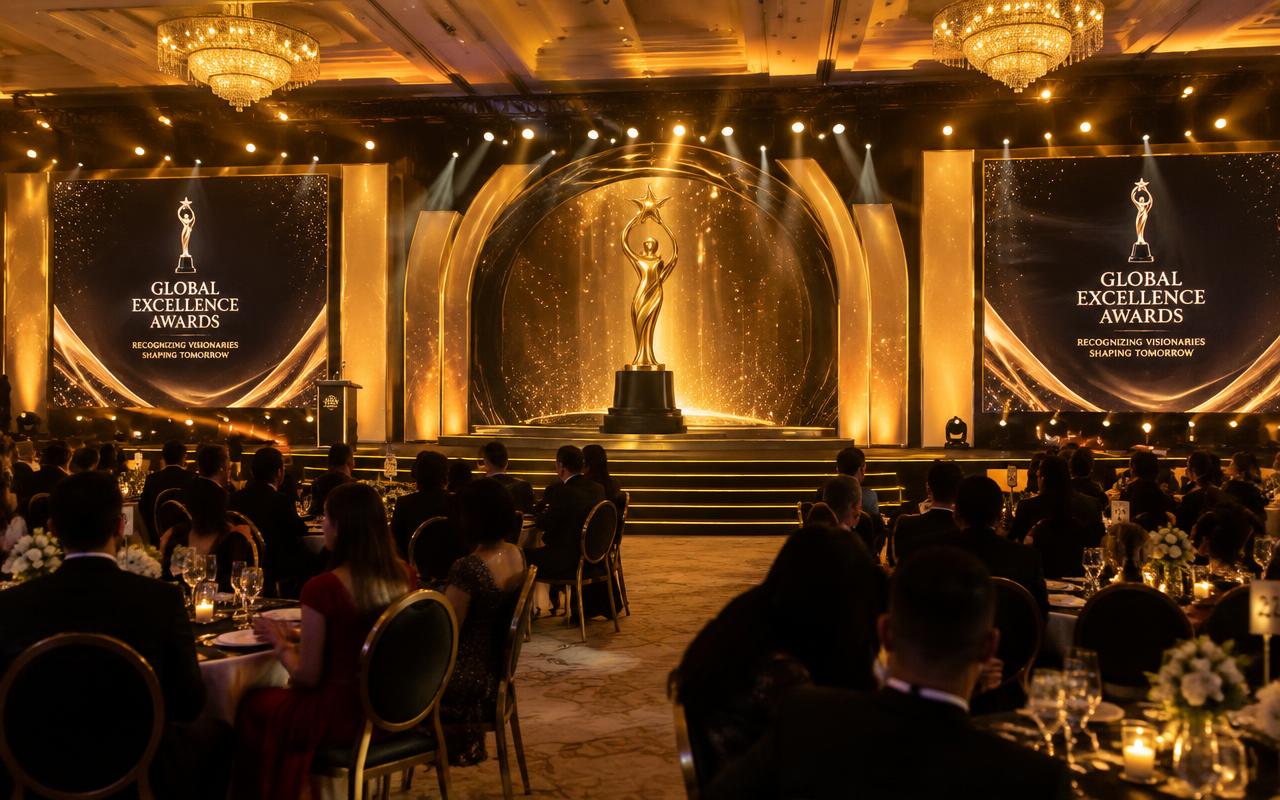
Large conferences, concerts and award nights, 1,500 – 6,000 guests
- Two flanking IMAG screens plus a centre presentation surface
- Multi-input switcher with programme, screen and stream outputs
- Three to four camera inputs with IMAG cutting
- Independent scaling per output so the stage feed stays clean
- Vision mixer, LED technician, rigger and a camera liaison
Daylight & Delay Array
Outdoor grounds, sports screenings and mass gatherings, 10,000 – 50,000+
- Main daylight-bright screens plus two to four delay positions
- Fibre signal distribution with redundancy to each position
- Per-position video delay matched to the audio arrival time
- Mobile LED trucks where rigging or build time is restricted
- Crew per position plus a central vision control
A disciplined, documentation-driven market on the industrial side — PSU and ordnance work goes through formal tendering with specification sheets and GST-clean paperwork, and margins are thin but payment is certain. NRI wedding budgets are the opposite: generous, decided quickly, and benchmarked against what the family saw in Singapore or Dubai rather than against local rates.
Venues
Where we work in Tiruchirappalli
| Venue | Capacity | Production note |
|---|---|---|
| Sangam Hotel | 600–1,200 across the banquet halls and lawn | The city's long-standing business hotel, centrally placed on Collector's Office Road, which means the dock is small and trucks cannot stand — unload in rotation and park out on the Cantonment side. |
| Kalaiarangam | Around 1,000 seated | A civic performance hall with a fixed proscenium, limited grid capacity and a hard reflective rear wall; touring rigs need a supplementary power feed and a delay solution for the balcony. |
| Anna Stadium | 15,000-plus in an open layout | A municipal athletics ground with no rigging, no usable show power and a track surface that must be fully protected — all loads sit on ply and spreaders, and the generator compound goes outside the perimeter. |
| Srirangam mandapams and temple-adjacent halls | 800–3,000 depending on the hall | Inside the temple town, where the concentric prakaram streets are narrow and crowded, vehicles are restricted, and the Ranganathaswamy administration governs timings, sound levels and anything visible from the gopuram approaches. |
| Thillai Nagar and bypass convention centres | 1,000–2,000 seated | The practical choice for large receptions, with decent three-phase provision, though the surrounding residential density makes the 10 pm limit a live constraint rather than a formality. |
Crew
Who turns up on show day
- Vision mixer
Cuts the IMAG programme live from cameras and presentation sources, and protects the stage feed from screen-side changes.
- LED technician
Builds and maps each screen, verifies brightness against ambient light and holds spares for every position.
- Signal engineer
Runs fibre or SDI to every screen and delay position, proves the paths and sets per-position video delay.
- Presentation operator
Receives, versions and cues decks and video, and keeps a mirrored backup machine one slide behind.
- Delay position technician
Builds, powers and monitors a remote screen, and holds position in case signal or power drops.
What you receive
- Sightline study showing screen sizes against furthest viewer distances
- Switcher input and output map with the full signal route
- Presentation standards document for every presenter
- Per-position video delay sheet matched to audio arrival times
- Brightness and colour match record across all screen positions
- Programme recording of the IMAG cut as actually shown
Timeline
From enquiry to load-out
- T-4 weeks
Sightline study
Furthest-viewer distance and audience spread set screen sizes, positions and whether delay screens are needed.
- T-3 weeks
Signal plan
Switcher input list, output map, cable route and fibre requirement drawn for every screen position.
- T-2 weeks
Content standards issued
Deck aspect ratio, safe title area, minimum font size and frame rate sent to every presenter and the content team.
- Show day −1
Build and signal proving
Screens built, every signal path tested end to end, per-position delay set and brightness matched across positions.
- Show day, T-4 hours
Rehearsal
Camera IMAG rehearsed, deck transitions walked through, backup playback machine proved under a live switch.
- Show day to +4 hours
Show and strike
Operated live with spares on hand; delay positions struck first because they are furthest from the trucks.
Risk control
What goes wrong, and how we stop it
What can go wrong
How we prevent it
- What can go wrong
IMAG video arrives before the delayed audio at a far position and lip-sync looks broken.
How we prevent itEach screen position gets its own video delay, measured against the audio arrival time at that exact spot during the build.
- What can go wrong
A long copper HDMI run to a delay screen works at build and drops out when the sun hits the cable.
How we prevent itAnything beyond about 20 m runs on fibre or 12G-SDI with a tested redundant path, and copper HDMI stays inside the rack.
- What can go wrong
The outdoor screen is unreadable by mid-afternoon because it was specified at indoor brightness.
How we prevent itDaylight positions are specified at 5,000 nits minimum, 7,500 in direct sun, and we check the sun path for the actual show hours at the survey stage.
- What can go wrong
The backup playback machine is a slide behind when the primary fails during a live cut.
How we prevent itMirrored machines are advanced together by the operator and tested with a live failover during rehearsal, not assumed to work.
Honest comparison
Is this the right choice for your event?
- A mobile LED truck instead of a built screenOur verdict
For a short build window, a site with no rigging, or a one-day outdoor screening, the truck is faster and often cheaper all-in. Built screens win on size flexibility, positioning and on looking like part of a set.
- Projection screens instead of LED for IMAGOur verdict
In a darkened hall with controlled ambient light, projection delivers a larger image per rupee and is perfectly adequate. In any lit room, outdoors, or where a presenter stands near the surface, LED is the only reliable answer.
- One large centre screen instead of a side screen pairOur verdict
A centre screen is cheaper and simpler, and right when the content is a deck. For IMAG it fights the stage for attention and leaves the flanks with poor sightlines — side screens serve a wide audience better.
Demand
What Tiruchirappalli books most
Tiruchirappalli event mix
- Engineering, PSU and ordnance vendor and safety functions
- NRI-funded weddings around the Srirangam temple calendar
- NIT and private college cultural festivals and convocations
- Industrial trade exhibitions and machinery displays
- Temple-precinct devotional and discourse programmes
- Hospital and medical association conferences
Ideal for
Events we power with LED screen rental in Tiruchirappalli
Process
From brief to standing ovation
01
Brief & recce
We visit the venue, map power and rigging, and understand your show flow.
02
Design & quote
CAD plans, 3D previews and an itemised quote within 24 hours.
03
Build & rehearse
Load-in, system tuning, content checks and full technical rehearsal.
04
Show & strike
Show-caller-led execution, then a quick, clean load-out.
FAQ
LED Screen Rental in Tiruchirappalli: FAQs
More services in Tiruchirappalli
LED Screen Rental in nearby cities
Areas we cover in Tiruchirappalli
Events in Tiruchirappalli