Visual · Salem, Tamil Nadu
LED Screen Rental in Salem
Prime AV Solutions runs LED screen rental across Salem and the rest of Tamil Nadu. Served from our Bengaluru depot, 190 km on NH-44 at about three and a half hours, with Coimbatore 160 km west as the alternate for spares and additional crew; local labour and tent structure hired in Salem. Every project is specified and quoted to its own brief.
- Lead time
- From 4 weeks
- Peak season
- Nov–Feb
- Coverage
- Salem & Tamil Nadu
Key takeaway
LED Screen Rental for Salem’s biggest events
IMAG — image magnification — exists for one reason: so the person in row forty can read a face. The brief is visibility and legibility, not scenic design. Screen size comes from the furthest viewer: a usable rule is that text height on screen should be at least one fiftieth of the viewing distance for comfortable reading, which pushes side screens on a long ground to six metres wide and upward. Standard 16:9 formats are the right choice here, because content is a live camera cut and a presentation deck, both of which already live in that aspect and should never be letterboxed or stretched to fit a creative canvas.
IMAG lives or dies on sightlines, so balcony overhangs, lighting-rig positions and the shape of the seating decide where screens can hang and how many you need. In Salem that plays out at venues like Radisson Salem, Hotel Cenneys Gateway, Fairlands grounds, and across Fairlands, Hasthampatti, Alagapuram, Five Roads.
Delay screens handle depth. Beyond roughly 70 to 80 metres from the stage, a main screen is too small to read regardless of how bright it is, so we place additional screens down the audience on their own structures. These need their own power, their own signal path — usually fibre or a long-haul SDI run rather than copper HDMI — and a decision about whether to delay the video to match the delayed audio at that position. For speech-led events we generally keep video aligned to the audio arriving at that spot, because lip-sync error reads as a fault far faster than absolute latency does.
What’s included
- Side IMAG screens
- Outdoor daylight-bright screens
- Video switching & playback
- Mobile LED trucks
Equipment we carry
Why Salem chooses Prime AV
- Crews and trucks positioned for fast load-in at Yercaud hill resorts and the Lake Forest properties and venues in Five Roads and Omalur Road.
- Presentation standards go out at T-2 weeks with aspect ratio, safe area and minimum font size, and we re-format decks on site rather than show something nobody can read.
- Sightline study showing screen sizes against furthest viewer distances
- Working knowledge of Tamil Nadu venue rules, power sanctions and permission timelines.
Local conditions
Producing LED screen rental in Salem
Weather & the rig
An IMAG screen has to stay readable in whatever light the sky provides, so sun path across the actual show hours and the brightness specification are decided together. Salem sits in a basin ringed by the Shevaroy and Kanjamalai hills, which traps heat — April to June routinely reaches 38–40°C with still, dusty air that gives fan-cooled fixtures no relief. The hills themselves are a different climate entirely, so a Yercaud offsite in the same week can be fifteen degrees cooler with hill mist that fogs lenses and soaks exposed gear overnight. The north-east monsoon in October–December brings the main rainfall as evening cells. April–June basin heat makes daytime outdoor work impractical, and October–December north-east monsoon showers are unpredictable enough to need a tent fallback for anything on open ground. November to February is the booking season; the Yercaud summer festival in May takes hill-venue availability.
Power & redundancy
Delay and outdoor screen positions sit far from the main distribution, each needing its own stable feed, which usually means a satellite generator rather than a long cable run. TANGEDCO supply into the industrial belt is firm because the steel and engineering units require it, and the township venues are genuinely reliable. Commercial and open-ground venues are a different matter, with modest sanctioned loads and distribution boards that should not be asked to carry a modern show, so DG covers show load. The local generator and electrical trade is competent thanks to the engineering ancillary cluster, which makes sourcing good plant and qualified operators easier here than in most cities of this size.
Permits & noise rules
Large outdoor screens draw attention from traffic and nearby residents, so siting, mounting and light spill typically need clearance alongside the event permission itself. Salem City Municipal Corporation issues ground and pandal permissions, the city police license assembly and traffic, and the Tamil Nadu noise rules with the 10 pm outdoor amplified-sound limit apply. Salem airport handles limited traffic but its zone still governs drone clearance on the southern side of the city. Yercaud sits within a hill-station and reserve-forest administration where structures, amplified sound and night-time operation attract additional conditions, and forest department permission is a real requirement rather than a formality.
Load-in & access
Delay positions and mobile LED trucks need vehicle access deep into the audience area before the crowd arrives, which makes gate widths and ground conditions the real constraint. Salem is a major road junction where NH-44 and NH-544 meet, so inbound freight is easy and the bypass venues take full trucks. Two constraints matter: the old city around Shevapet and the Five Roads area is congested and tempo-only through the day, and the Yercaud ghat is a hard physical limit on vehicle length that has defeated more than one touring rig. Plant and township jobs run entirely on security-approved windows.
Season & booking
The Yercaud summer festival in May books out the hill properties. Tharamangalam and local temple car festivals, Pongal in January with the associated homecoming weddings, Aadi and Purattasi as inauspicious months, and the Navaratri and Deepavali lighting demand shape the local year. College festival season in February–March draws student-event inventory; Chithirai and Thai wedding muhurats drive the peak booking weeks. Peak demand runs Nov–Feb.
Crew & dispatch
Served from our Bengaluru depot, 190 km on NH-44 at about three and a half hours, with Coimbatore 160 km west as the alternate for spares and additional crew; local labour and tent structure hired in Salem. Load-in support covers Five Roads, Omalur Road and the rest of the city.
What it costs here
Industrial clients are precise and comparative — they tender, they read specifications, and they pay on terms, which makes them good business at thin margins. The wedding market is value-conscious and benchmarked against local mandap contractors. Yercaud offsites carry a justified handling premium because of the ghat transfer and the extra day of labour it costs.
Local expectations
Tamil wedding convention governs the social work: pre-dawn muhurat timings, nadaswaram and thavil that must be supported acoustically rather than amplified hard, and an evening reception wanting a bright saturated look. Industrial functions are hierarchical and formal, with a fixed dais order, long-service and safety felicitations needing multiple roving mics, and Tamil and English bilingual content expected on screen throughout.
Specification
LED Screen Rental: technical specification
| Specification | Detail |
|---|---|
| Typical pitch | P2.6 – P3.9 indoor IMAG, P4.8 – P10 outdoor and delay positions |
| Legibility rule | On-screen text height at least 1/50th of the furthest viewing distance |
| Standard formats | 16:9 at 1920 x 1080 or 3840 x 2160 native, avoiding non-standard canvases |
| Delay screen spacing | Additional positions beyond 70 – 80 m of audience depth |
| Outdoor brightness | 5,000 nits minimum for daylight, 7,500 nits in direct sun |
| Switching | Barco E2/E3, Roland or ATEM with scaling handled once at the switcher |
| Long-haul signal | Fibre or 12G-SDI to delay positions, never long copper HDMI |
| Lip-sync handling | Video delayed to match audio arrival at each screen position |
| Mobile LED | Trailer-mounted 15 – 40 sq m daylight screens, hydraulic deploy in under two hours |
The switching layer is what distinguishes a working IMAG setup from a wall with a camera plugged in. A video switcher takes camera inputs, presentation machines, playback and remote feeds, and produces a programme cut plus separate outputs for the screens, the stage confidence monitors and any stream. Scaling is handled once, cleanly, at the switcher rather than panel-side. For outdoor daylight, screens need 5,000 nits or more, and mobile LED trucks are often the fastest way to deliver a large daylight-bright surface on a site with no rigging and a short build window.
Sizing
What size rig does your event actually need?
| Scale | Guests | Recommended setup |
|---|---|---|
| Seminar room | 100 – 300 | One 4 m x 2.25 m screen at P2.6, furthest viewer under 20 m |
| Conference hall | 500 – 1,200 | 6 m x 3.4 m centre plus two 3 m side IMAG screens, four-input switcher |
| Arena floor | 2,000 – 8,000 | Two 8 m x 4.5 m side screens at P3.9, flown, four-camera IMAG |
| Open ground | 10,000 – 25,000 | Two 10 m main screens at 5,000+ nits plus two delay positions at 80 m and 160 m |
| Stadium screening | 30,000 – 50,000+ | Four daylight screens or mobile LED trucks on the bowl perimeter, fibre fed |
Scope
LED Screen Rental scope tiers in Salem
Single IMAG Screen
Conferences and AGMs up to 800 seats
- One 6 m x 3.4 m 16:9 screen at P3.9, ground-stacked
- Switcher with two camera inputs and two presentation machines
- Confidence monitor feed for the stage
- Vision mixer operator and an LED technician
- Spare panels, cards and a backup playback machine
Side Screen Pair
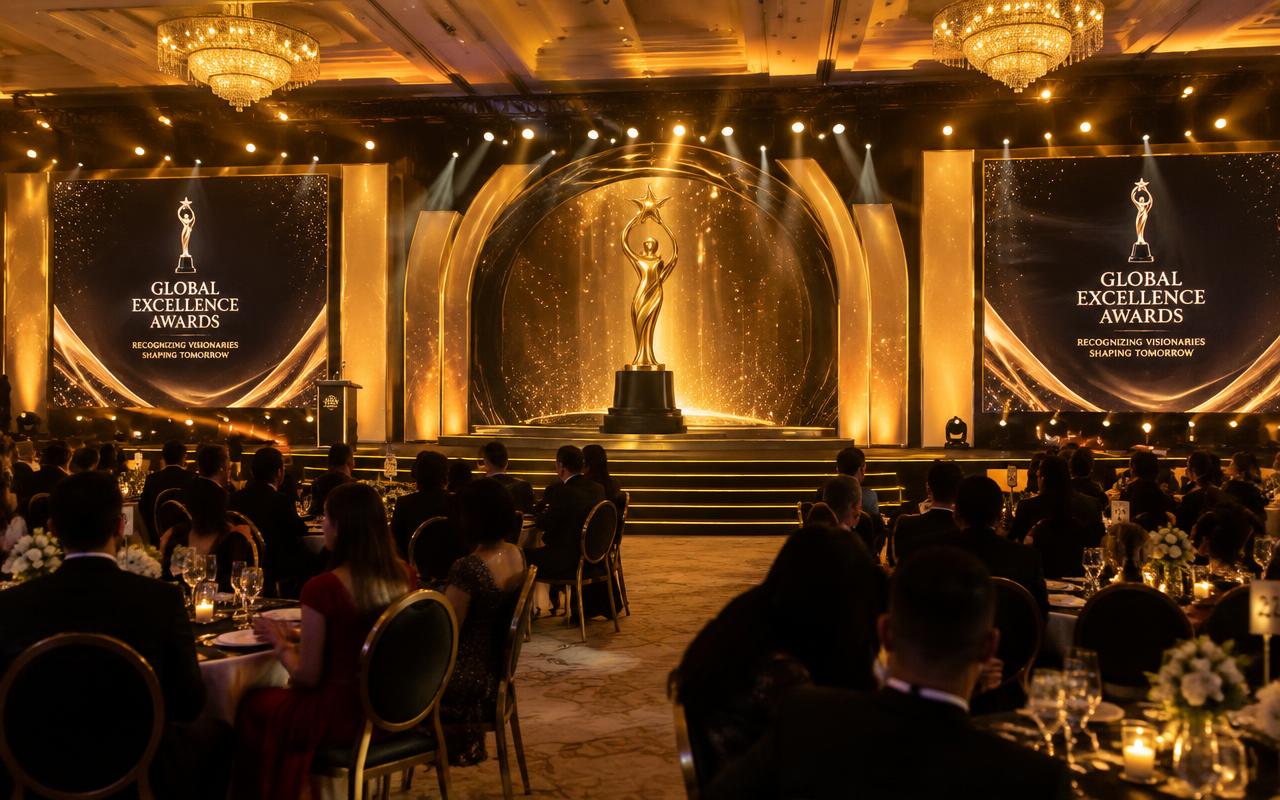
Large conferences, concerts and award nights, 1,500 – 6,000 guests
- Two flanking IMAG screens plus a centre presentation surface
- Multi-input switcher with programme, screen and stream outputs
- Three to four camera inputs with IMAG cutting
- Independent scaling per output so the stage feed stays clean
- Vision mixer, LED technician, rigger and a camera liaison
Daylight & Delay Array
Outdoor grounds, sports screenings and mass gatherings, 10,000 – 50,000+
- Main daylight-bright screens plus two to four delay positions
- Fibre signal distribution with redundancy to each position
- Per-position video delay matched to the audio arrival time
- Mobile LED trucks where rigging or build time is restricted
- Crew per position plus a central vision control
Industrial clients are precise and comparative — they tender, they read specifications, and they pay on terms, which makes them good business at thin margins. The wedding market is value-conscious and benchmarked against local mandap contractors. Yercaud offsites carry a justified handling premium because of the ghat transfer and the extra day of labour it costs.
Venues
Where we work in Salem
| Venue | Capacity | Production note |
|---|---|---|
| Radisson Salem | Around 700 in the ballroom, 1,200 with pre-function and lawn | The city's best-equipped venue with a proper dock, though the ballroom grid is rated for conference loads only; the surrounding residential layout makes outdoor sound after 22:00 a problem rather than a negotiation. |
| Hotel Cenneys Gateway | 500–1,000 across the banquet floors | Centrally located and well used for trade meets, but the approach is through congested Omalur Road traffic and the goods lift sets a hard limit on cabinet and rack sizes. |
| Fairlands grounds | 1,500–4,000 across the open ground and adjoining halls | The main open venue for large receptions and exhibitions, with workable truck access but no house power of consequence and a hard, dusty surface that needs matting and watering through the dry months. |
| Yercaud hill resorts and the Lake Forest properties | 150–500 for offsites and intimate functions | The ghat road up from Salem has around twenty hairpin bends with a strict length limit, so nothing beyond a small truck or tempo can reach the top — plan a transfer at the base and carry the rig up in stages. |
| Steel plant township auditoria and community halls | 600–1,500 seated | Plant-managed spaces with reliable power but full industrial security protocol — gate passes, vehicle manifests and equipment lists submitted days ahead, and no deviation from the approved load-in schedule. |
Crew
Who turns up on show day
- Vision mixer
Cuts the IMAG programme live from cameras and presentation sources, and protects the stage feed from screen-side changes.
- LED technician
Builds and maps each screen, verifies brightness against ambient light and holds spares for every position.
- Signal engineer
Runs fibre or SDI to every screen and delay position, proves the paths and sets per-position video delay.
- Presentation operator
Receives, versions and cues decks and video, and keeps a mirrored backup machine one slide behind.
- Delay position technician
Builds, powers and monitors a remote screen, and holds position in case signal or power drops.
What you receive
- Sightline study showing screen sizes against furthest viewer distances
- Switcher input and output map with the full signal route
- Presentation standards document for every presenter
- Per-position video delay sheet matched to audio arrival times
- Brightness and colour match record across all screen positions
- Programme recording of the IMAG cut as actually shown
Timeline
From enquiry to load-out
- T-4 weeks
Sightline study
Furthest-viewer distance and audience spread set screen sizes, positions and whether delay screens are needed.
- T-3 weeks
Signal plan
Switcher input list, output map, cable route and fibre requirement drawn for every screen position.
- T-2 weeks
Content standards issued
Deck aspect ratio, safe title area, minimum font size and frame rate sent to every presenter and the content team.
- Show day −1
Build and signal proving
Screens built, every signal path tested end to end, per-position delay set and brightness matched across positions.
- Show day, T-4 hours
Rehearsal
Camera IMAG rehearsed, deck transitions walked through, backup playback machine proved under a live switch.
- Show day to +4 hours
Show and strike
Operated live with spares on hand; delay positions struck first because they are furthest from the trucks.
Risk control
What goes wrong, and how we stop it
What can go wrong
How we prevent it
- What can go wrong
A presenter's deck is 4:3 or uses 12 pt body text and is illegible from row twenty.
How we prevent itPresentation standards go out at T-2 weeks with aspect ratio, safe area and minimum font size, and we re-format decks on site rather than show something nobody can read.
- What can go wrong
IMAG video arrives before the delayed audio at a far position and lip-sync looks broken.
How we prevent itEach screen position gets its own video delay, measured against the audio arrival time at that exact spot during the build.
- What can go wrong
A long copper HDMI run to a delay screen works at build and drops out when the sun hits the cable.
How we prevent itAnything beyond about 20 m runs on fibre or 12G-SDI with a tested redundant path, and copper HDMI stays inside the rack.
- What can go wrong
The outdoor screen is unreadable by mid-afternoon because it was specified at indoor brightness.
How we prevent itDaylight positions are specified at 5,000 nits minimum, 7,500 in direct sun, and we check the sun path for the actual show hours at the survey stage.
Honest comparison
Is this the right choice for your event?
- Projection screens instead of LED for IMAGOur verdict
In a darkened hall with controlled ambient light, projection delivers a larger image per rupee and is perfectly adequate. In any lit room, outdoors, or where a presenter stands near the surface, LED is the only reliable answer.
- One large centre screen instead of a side screen pairOur verdict
A centre screen is cheaper and simpler, and right when the content is a deck. For IMAG it fights the stage for attention and leaves the flanks with poor sightlines — side screens serve a wide audience better.
- Adding delay screens versus making the main screens biggerOur verdict
Bigger main screens help up to a point, then the limiting factor becomes angular size at distance. Past 70 to 80 metres a delay position is cheaper and far more effective than another two metres of main screen width.
Demand
What Salem books most
Salem event mix
- Steel, stainless and engineering dealer and vendor meets
- Weddings and receptions at the Fairlands and bypass venues
- Sago, poultry and textile trade association conventions
- Engineering and medical college festivals and convocations
- Corporate offsites at the Yercaud hill properties
- Temple-calendar cultural and devotional programmes
Ideal for
Events we power with LED screen rental in Salem
Process
From brief to standing ovation
01
Brief & recce
We visit the venue, map power and rigging, and understand your show flow.
02
Design & quote
CAD plans, 3D previews and an itemised quote within 24 hours.
03
Build & rehearse
Load-in, system tuning, content checks and full technical rehearsal.
04
Show & strike
Show-caller-led execution, then a quick, clean load-out.
FAQ
LED Screen Rental in Salem: FAQs
More services in Salem
LED Screen Rental in nearby cities
Areas we cover in Salem
Events in Salem