Visual · Faridabad, Delhi NCR
LED Screen Rental in Faridabad
The gap between adequate and excellent LED screen rental in Faridabad is usually preparation: dhbvn supply in the industrial sectors is comparatively strong with large sanctioned loads at factory venues, which makes plant-site events straightforward. the neharpar lawns and the older sectors see summer rostering and voltage swing, so dg with a stabiliser is standard for any lawn build, and haryana's pollution-control norms push cpcb-compliant canopied sets, and a recce that finds the venue's real constraints before quote stage.
- Lead time
- From 4 weeks
- Peak season
- Oct–Mar
- Coverage
- Faridabad & Delhi NCR
Key takeaway
LED Screen Rental for Faridabad’s biggest events
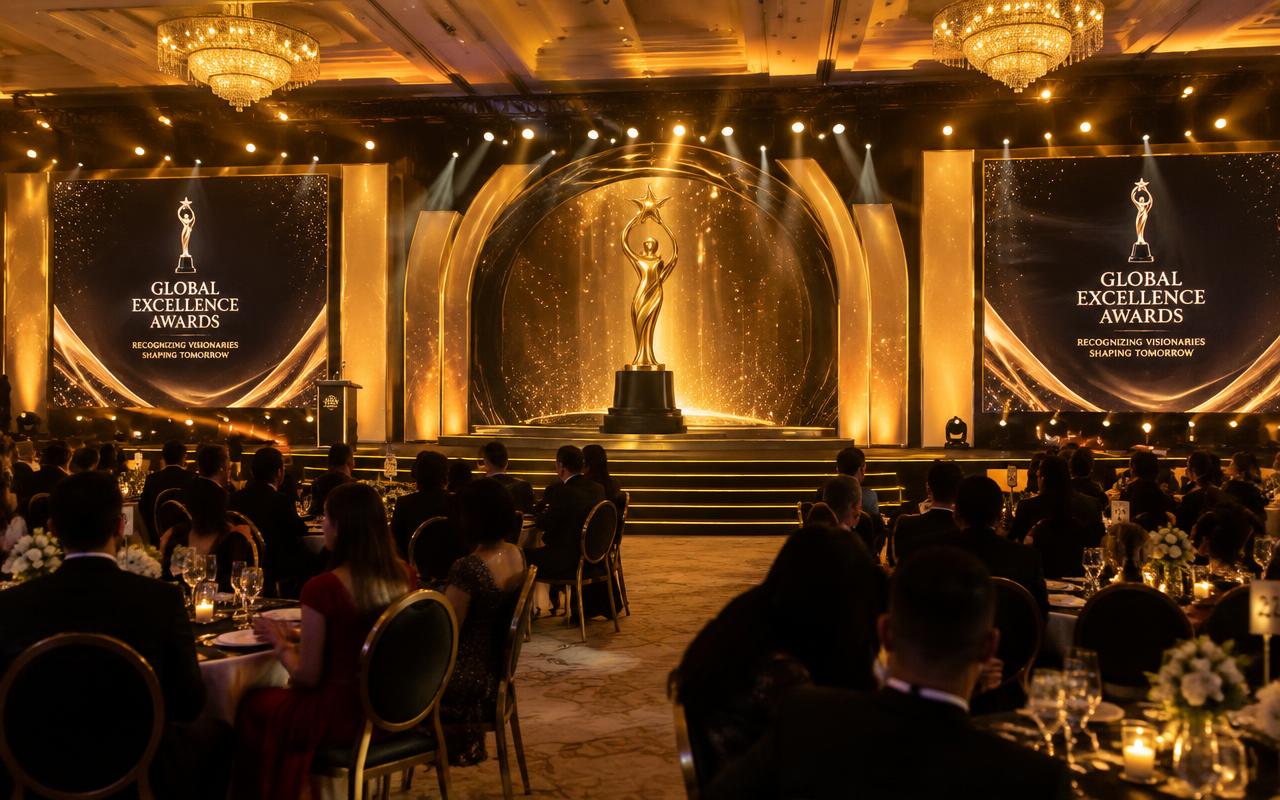
IMAG — image magnification — exists for one reason: so the person in row forty can read a face. The brief is visibility and legibility, not scenic design. Screen size comes from the furthest viewer: a usable rule is that text height on screen should be at least one fiftieth of the viewing distance for comfortable reading, which pushes side screens on a long ground to six metres wide and upward. Standard 16:9 formats are the right choice here, because content is a live camera cut and a presentation deck, both of which already live in that aspect and should never be letterboxed or stretched to fit a creative canvas.
IMAG lives or dies on sightlines, so balcony overhangs, lighting-rig positions and the shape of the seating decide where screens can hang and how many you need. In Faridabad that plays out at venues like Surajkund Mela Grounds, Radisson Blu Faridabad, Vivanta Surajkund, and across Sector 15, Surajkund, Neharpar, NIT.
Delay screens handle depth. Beyond roughly 70 to 80 metres from the stage, a main screen is too small to read regardless of how bright it is, so we place additional screens down the audience on their own structures. These need their own power, their own signal path — usually fibre or a long-haul SDI run rather than copper HDMI — and a decision about whether to delay the video to match the delayed audio at that position. For speech-led events we generally keep video aligned to the audio arriving at that spot, because lip-sync error reads as a fault far faster than absolute latency does.
What’s included
- Side IMAG screens
- Outdoor daylight-bright screens
- Video switching & playback
- Mobile LED trucks
Equipment we carry
Why Faridabad chooses Prime AV
- Crews and trucks positioned for fast load-in at Neharpar and Sector 15 banquet belt and venues in Ballabhgarh and Sector 15.
- Presentation standards go out at T-2 weeks with aspect ratio, safe area and minimum font size, and we re-format decks on site rather than show something nobody can read.
- Sightline study showing screen sizes against furthest viewer distances
- Working knowledge of Delhi NCR venue rules, power sanctions and permission timelines.
Local conditions
Producing LED screen rental in Faridabad
Weather & the rig
An IMAG screen has to stay readable in whatever light the sky provides, so sun path across the actual show hours and the brightness specification are decided together. Faridabad shares Delhi's extremes with an industrial overlay. Apr–Jun runs 44–46°C with Aravalli ridge dust, Jul–Aug cloudbursts waterlog the Mathura Road and Badkhal underpasses, and Nov–Jan regularly posts among the worst air-quality readings in the NCR — which means projection contrast, haze effects and drone visibility all degrade together, and outdoor crew need masks on a bad week rather than as a gesture. Apr–Jun heat; Jul–Aug waterlogging; and the December-to-March mela window if the brief needs the Surajkund grounds.
Power & redundancy
Delay and outdoor screen positions sit far from the main distribution, each needing its own stable feed, which usually means a satellite generator rather than a long cable run. DHBVN supply in the industrial sectors is comparatively strong with large sanctioned loads at factory venues, which makes plant-site events straightforward. The Neharpar lawns and the older sectors see summer rostering and voltage swing, so DG with a stabiliser is standard for any lawn build, and Haryana's pollution-control norms push CPCB-compliant canopied sets.
Permits & noise rules
Large outdoor screens draw attention from traffic and nearby residents, so siting, mounting and light spill typically need clearance alongside the event permission itself. Municipal Corporation Faridabad for the licence, temporary-structure permission and fire NOC, the Faridabad Police Commissionerate for the public-performance and loudspeaker licence, and HSPCB noise rules with the 10 pm cut-off. Haryana Tourism Corporation is the controlling authority for Surajkund and the Raja Nahar Singh precinct, and nothing happens there without it. The Haryana Forest Department and the Aravalli notification genuinely restrict ground works, lighting spill and vehicle movement around Surajkund and Badkhal. Faridabad sits inside IGI's controlled airspace and close to Hindon, so drone permissions are a Digital Sky exercise and commonly refused for evening shows.
Load-in & access
Delay positions and mobile LED trucks need vehicle access deep into the audience area before the crowd arrives, which makes gate widths and ground conditions the real constraint. Faridabad is well placed — NH-19 runs through it, the metro follows Mathura Road, and Delhi's Okhla and Mohan Cooperative warehouses are 30–45 minutes from most venues, while the Eastern Peripheral Expressway lets trucks from the west bypass Delhi entirely. The frictions are the Badarpur border, Mathura Road's daytime heavy-vehicle restrictions pushing load-ins to 10 pm–7 am, and the single-carriageway Surajkund approach that jams solid on every mela weekend.
Season & booking
The Surajkund International Crafts Mela runs through the first half of February, with the build starting in December and the strike running into March — it is the district's largest AV engagement and it commits the grounds, the local labour pool and the Haryana Tourism machinery for a quarter of the year. Around it sit the Nov–Feb wedding grid, Diwali dealer and partner nights for the component belt, Haryana Day on 1 November, and the Delhi-season spillover when NCR venues are full. Peak demand runs Oct–Mar.
Crew & dispatch
Own NCR base with warehouse stock 30–45 minutes away via Mathura Road or the Eastern Peripheral; mela-scale builds stage on site for weeks with a dedicated crew rather than running day trips from Delhi. Load-in support covers Ballabhgarh, Sector 15 and the rest of the city.
What it costs here
A harder market than Gurugram across the same border — industrial clients buy on specification and price, and the wedding market exists precisely because it undercuts south Delhi. The money is in the mela and in long-run Haryana Tourism engagements, which are tendered, documented and slow to settle but large in scope and reliably annual.
Local expectations
Two registers that do not mix. Surajkund work is deliberately traditional — folk performance on the Chaupal, acoustic instruments, earthy palettes and a brief that resists LED and modern truss on sight. The wedding and corporate side is Haryanvi and Delhi-influenced: Hindi-first scripting, loud and confident sangeet production, ragini and folk performers who need acoustic space, and a wedding entry sequence treated as the headline cue of the evening.
Specification
LED Screen Rental: technical specification
| Specification | Detail |
|---|---|
| Typical pitch | P2.6 – P3.9 indoor IMAG, P4.8 – P10 outdoor and delay positions |
| Legibility rule | On-screen text height at least 1/50th of the furthest viewing distance |
| Standard formats | 16:9 at 1920 x 1080 or 3840 x 2160 native, avoiding non-standard canvases |
| Delay screen spacing | Additional positions beyond 70 – 80 m of audience depth |
| Outdoor brightness | 5,000 nits minimum for daylight, 7,500 nits in direct sun |
| Switching | Barco E2/E3, Roland or ATEM with scaling handled once at the switcher |
| Long-haul signal | Fibre or 12G-SDI to delay positions, never long copper HDMI |
| Lip-sync handling | Video delayed to match audio arrival at each screen position |
| Mobile LED | Trailer-mounted 15 – 40 sq m daylight screens, hydraulic deploy in under two hours |
The switching layer is what distinguishes a working IMAG setup from a wall with a camera plugged in. A video switcher takes camera inputs, presentation machines, playback and remote feeds, and produces a programme cut plus separate outputs for the screens, the stage confidence monitors and any stream. Scaling is handled once, cleanly, at the switcher rather than panel-side. For outdoor daylight, screens need 5,000 nits or more, and mobile LED trucks are often the fastest way to deliver a large daylight-bright surface on a site with no rigging and a short build window.
Sizing
What size rig does your event actually need?
| Scale | Guests | Recommended setup |
|---|---|---|
| Seminar room | 100 – 300 | One 4 m x 2.25 m screen at P2.6, furthest viewer under 20 m |
| Conference hall | 500 – 1,200 | 6 m x 3.4 m centre plus two 3 m side IMAG screens, four-input switcher |
| Arena floor | 2,000 – 8,000 | Two 8 m x 4.5 m side screens at P3.9, flown, four-camera IMAG |
| Open ground | 10,000 – 25,000 | Two 10 m main screens at 5,000+ nits plus two delay positions at 80 m and 160 m |
| Stadium screening | 30,000 – 50,000+ | Four daylight screens or mobile LED trucks on the bowl perimeter, fibre fed |
Scope
LED Screen Rental scope tiers in Faridabad
Single IMAG Screen
Conferences and AGMs up to 800 seats
- One 6 m x 3.4 m 16:9 screen at P3.9, ground-stacked
- Switcher with two camera inputs and two presentation machines
- Confidence monitor feed for the stage
- Vision mixer operator and an LED technician
- Spare panels, cards and a backup playback machine
Side Screen Pair
Large conferences, concerts and award nights, 1,500 – 6,000 guests
- Two flanking IMAG screens plus a centre presentation surface
- Multi-input switcher with programme, screen and stream outputs
- Three to four camera inputs with IMAG cutting
- Independent scaling per output so the stage feed stays clean
- Vision mixer, LED technician, rigger and a camera liaison
Daylight & Delay Array
Outdoor grounds, sports screenings and mass gatherings, 10,000 – 50,000+
- Main daylight-bright screens plus two to four delay positions
- Fibre signal distribution with redundancy to each position
- Per-position video delay matched to the audio arrival time
- Mobile LED trucks where rigging or build time is restricted
- Crew per position plus a central vision control
A harder market than Gurugram across the same border — industrial clients buy on specification and price, and the wedding market exists precisely because it undercuts south Delhi. The money is in the mela and in long-run Haryana Tourism engagements, which are tendered, documented and slow to settle but large in scope and reliably annual.
Venues
Where we work in Faridabad
| Venue | Capacity | Production note |
|---|---|---|
| Surajkund Mela Grounds | Up to 50,000 across the mela grounds and Chaupal amphitheatre | This is Haryana Tourism Corporation land run entirely on the state's terms: the February mela build locks it from December into March, the Chaupal stage comes with its own in-house technical setup, and a mandated rustic aesthetic rules out most modern staging. The ground is undulating Aravalli terrain with very little hard-standing. |
| Radisson Blu Faridabad | Up to 1,200 across a pillarless ballroom and lawns | The city's main conference hotel on Mathura Road, with a basement dock and by some margin the cleanest power in Faridabad — the default when a corporate conference cannot risk the local grid. |
| Vivanta Surajkund | Up to 800 across terraced lawns and banquet space | Aravalli-edge resort where the lawns step down the slope, so a continuous truss build is slow and awkward; a single access road limits vehicle movement, and the surrounding ridge forest brings Forest Department sensitivity about spill light and sound. |
| Raja Nahar Singh Palace, Ballabgarh | Up to 700 across courtyards and lawns | A Haryana Tourism heritage property where the fabric governs the design — no fixings to the masonry, courtyards with no rigging capability, limited power, and a booking process that runs through the corporation rather than a venue manager. |
| Neharpar and Sector 15 banquet belt | 800–3,000 across halls and lawns | The volume wedding stock: open approach on the Neharpar side but minimal sanctioned capacity, so DG with a stabiliser is default, and the ongoing construction belt means relentless dust through the dry months. |
Crew
Who turns up on show day
- Vision mixer
Cuts the IMAG programme live from cameras and presentation sources, and protects the stage feed from screen-side changes.
- LED technician
Builds and maps each screen, verifies brightness against ambient light and holds spares for every position.
- Signal engineer
Runs fibre or SDI to every screen and delay position, proves the paths and sets per-position video delay.
- Presentation operator
Receives, versions and cues decks and video, and keeps a mirrored backup machine one slide behind.
- Delay position technician
Builds, powers and monitors a remote screen, and holds position in case signal or power drops.
What you receive
- Sightline study showing screen sizes against furthest viewer distances
- Switcher input and output map with the full signal route
- Presentation standards document for every presenter
- Per-position video delay sheet matched to audio arrival times
- Brightness and colour match record across all screen positions
- Programme recording of the IMAG cut as actually shown
Timeline
From enquiry to load-out
- T-4 weeks
Sightline study
Furthest-viewer distance and audience spread set screen sizes, positions and whether delay screens are needed.
- T-3 weeks
Signal plan
Switcher input list, output map, cable route and fibre requirement drawn for every screen position.
- T-2 weeks
Content standards issued
Deck aspect ratio, safe title area, minimum font size and frame rate sent to every presenter and the content team.
- Show day −1
Build and signal proving
Screens built, every signal path tested end to end, per-position delay set and brightness matched across positions.
- Show day, T-4 hours
Rehearsal
Camera IMAG rehearsed, deck transitions walked through, backup playback machine proved under a live switch.
- Show day to +4 hours
Show and strike
Operated live with spares on hand; delay positions struck first because they are furthest from the trucks.
Risk control
What goes wrong, and how we stop it
What can go wrong
How we prevent it
- What can go wrong
A presenter's deck is 4:3 or uses 12 pt body text and is illegible from row twenty.
How we prevent itPresentation standards go out at T-2 weeks with aspect ratio, safe area and minimum font size, and we re-format decks on site rather than show something nobody can read.
- What can go wrong
IMAG video arrives before the delayed audio at a far position and lip-sync looks broken.
How we prevent itEach screen position gets its own video delay, measured against the audio arrival time at that exact spot during the build.
- What can go wrong
A long copper HDMI run to a delay screen works at build and drops out when the sun hits the cable.
How we prevent itAnything beyond about 20 m runs on fibre or 12G-SDI with a tested redundant path, and copper HDMI stays inside the rack.
- What can go wrong
The outdoor screen is unreadable by mid-afternoon because it was specified at indoor brightness.
How we prevent itDaylight positions are specified at 5,000 nits minimum, 7,500 in direct sun, and we check the sun path for the actual show hours at the survey stage.
Honest comparison
Is this the right choice for your event?
- Projection screens instead of LED for IMAGOur verdict
In a darkened hall with controlled ambient light, projection delivers a larger image per rupee and is perfectly adequate. In any lit room, outdoors, or where a presenter stands near the surface, LED is the only reliable answer.
- One large centre screen instead of a side screen pairOur verdict
A centre screen is cheaper and simpler, and right when the content is a deck. For IMAG it fights the stage for attention and leaves the flanks with poor sightlines — side screens serve a wide audience better.
- Adding delay screens versus making the main screens biggerOur verdict
Bigger main screens help up to a point, then the limiting factor becomes angular size at distance. Past 70 to 80 metres a delay position is cheaper and far more effective than another two metres of main screen width.
Demand
What Faridabad books most
Faridabad event mix
- Surajkund Mela and Haryana Tourism cultural production
- Auto-component and engineering industry conferences and dealer meets
- Community weddings in the Neharpar and Sector 15 banquet belt
- Diwali partner and channel nights for the industrial belt
- Civic, district and Haryana Day functions
- School and college events across the sectors
Ideal for
Events we power with LED screen rental in Faridabad
Process
From brief to standing ovation
01
Brief & recce
We visit the venue, map power and rigging, and understand your show flow.
02
Design & quote
CAD plans, 3D previews and an itemised quote within 24 hours.
03
Build & rehearse
Load-in, system tuning, content checks and full technical rehearsal.
04
Show & strike
Show-caller-led execution, then a quick, clean load-out.
FAQ
LED Screen Rental in Faridabad: FAQs
More services in Faridabad
LED Screen Rental in nearby cities
Areas we cover in Faridabad
Events in Faridabad