Event production · Faridabad, Delhi NCR
Fashion Shows AV in Faridabad
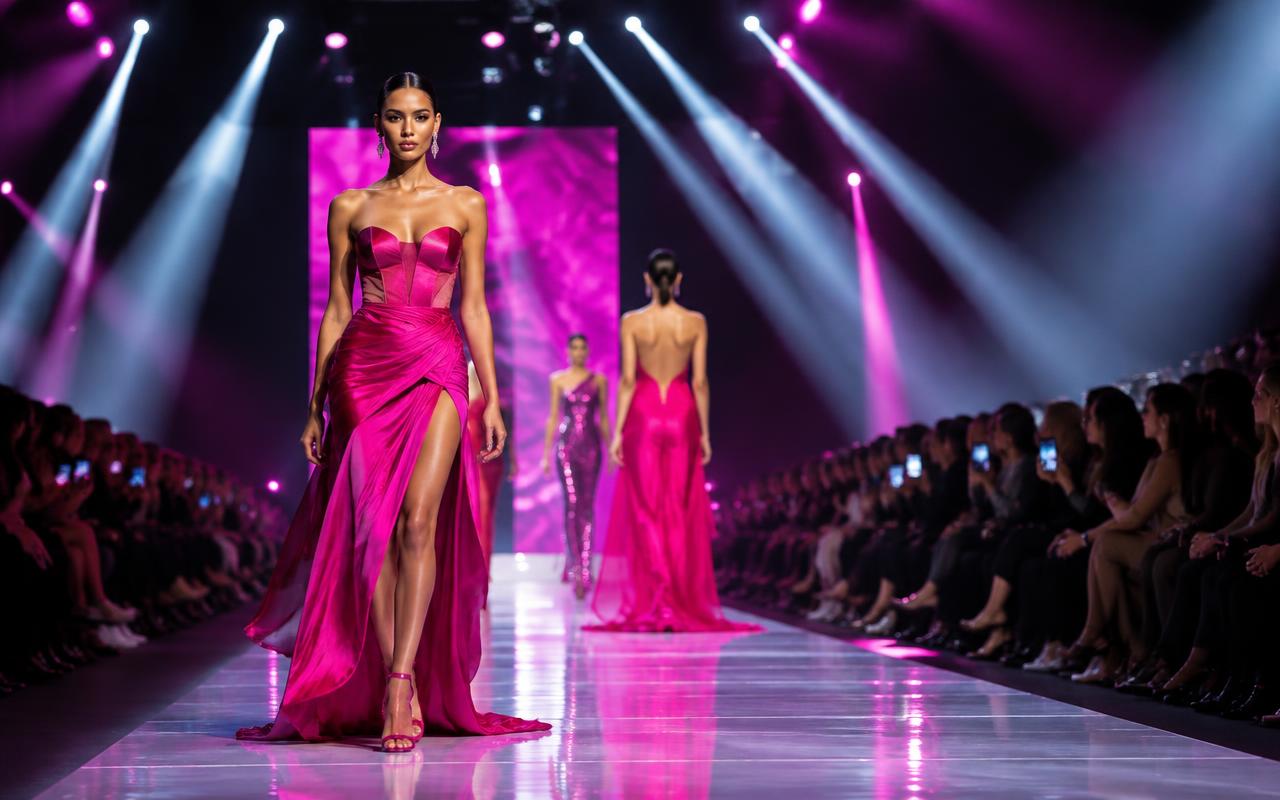
Faridabad is Haryana's oldest industrial city — a dense belt of auto components, tractors, tyres and engineering SMEs from Ballabgarh up to Sector 20 — and it owns Surajkund, whose February crafts mela is the single largest production engagement in the district. The Neharpar expansion adds a value wedding market that south Delhi families cross the border to use. Prime AV Solutions produces the fashion shows end of that calendar — ramp lighting design, LED backdrops, punchy runway sound — with one crew owning the whole stack.
- Lead time
- 5 weeks out
- Peak season
- Oct–Mar
- Coverage
- Faridabad & Delhi NCR
Key takeaway
Complete AV for fashion shows in Faridabad
Runway lighting is a colour-rendering problem disguised as a design one. Garments are bought and photographed under your light, so the front wash needs a high colour-rendering index, a consistent colour temperature along the entire ramp and enough level for a photographer at the end of the runway to shoot at a sensible shutter. Shadowing across the face is the thing to avoid: light from front and slightly above at a repeatable angle, add back light to separate the model from the backdrop, and resist the temptation to put colour anywhere that touches skin or fabric.
Ramp length, ceiling height and where the photographers' pit can physically sit are decided by the room long before the lighting plot is drawn. In Faridabad we work at Surajkund Mela Grounds, Radisson Blu Faridabad, Vivanta Surajkund and venues across Sector 15, Surajkund, Neharpar, NIT, Ballabhgarh.
The show is twelve minutes long and takes six hours to rehearse. That time goes into the line-up order, the music edit and the timing of each exit, because once the first model walks there is no stopping. Lock the music as a timecoded edit, cue the lighting states to it, and rehearse with the actual walk speed rather than an assumed one. Expect the designer to reorder the sequence backstage an hour before doors, so the cue structure should be built around looks and segments rather than around individual model numbers.
What your event needs
- Ramp lighting design
- LED backdrops
- Punchy runway sound
- Media camera positions
Why Faridabad organisers choose Prime AV
- Crews and trucks positioned for fast load-in at Vivanta Surajkund and venues in Neharpar and NIT.
- Build the show as timecoded segments rather than one monolithic cue stack, keep the music operator and the lighting operator on a shared cue sheet, and run the new edit once before doors even if that delays doors by ten minutes.
- A standing Faridabad client base across surajkund mela and haryana tourism cultural production and auto-component and engineering industry conferences and dealer meets, so the rig is specified from experience rather than a catalogue.
- Working knowledge of Delhi NCR venue rules, power sanctions and permission timelines.
What you will be judged on afterwards
- Garment colour in the published photographs matched what the designer saw in the studio.
- Every model's face was evenly lit along the whole ramp, with no dark patch and no hot spot.
- The show ran as one unbroken twelve-minute piece with no visible cue hesitation.
- The front row could see the runway past the photographers' pit without leaning.
- The designer could reorder the line-up an hour before doors without the show having to be rebuilt.
Local conditions
Producing fashion shows in Faridabad
Weather & the rig
A ramp show is built indoors for controlled light, but humidity and heat reach the models, the garments and a room carrying a dense lighting rig. Faridabad shares Delhi's extremes with an industrial overlay. Apr–Jun runs 44–46°C with Aravalli ridge dust, Jul–Aug cloudbursts waterlog the Mathura Road and Badkhal underpasses, and Nov–Jan regularly posts among the worst air-quality readings in the NCR — which means projection contrast, haze effects and drone visibility all degrade together, and outdoor crew need masks on a bad week rather than as a gesture. Apr–Jun heat; Jul–Aug waterlogging; and the December-to-March mela window if the brief needs the Surajkund grounds.
Power & redundancy
A runway rig is lighting-heavy and sensitive to flicker on camera, so stable, clean supply matters far more than headroom. DHBVN supply in the industrial sectors is comparatively strong with large sanctioned loads at factory venues, which makes plant-site events straightforward. The Neharpar lawns and the older sectors see summer rostering and voltage swing, so DG with a stabiliser is standard for any lawn build, and Haryana's pollution-control norms push CPCB-compliant canopied sets.
Permits & noise rules
Fashion shows usually sit inside a hotel or studio venue, so rigging, fire-load and late-night approvals come through the venue layered over local rules. Municipal Corporation Faridabad for the licence, temporary-structure permission and fire NOC, the Faridabad Police Commissionerate for the public-performance and loudspeaker licence, and HSPCB noise rules with the 10 pm cut-off. Haryana Tourism Corporation is the controlling authority for Surajkund and the Raja Nahar Singh precinct, and nothing happens there without it. The Haryana Forest Department and the Aravalli notification genuinely restrict ground works, lighting spill and vehicle movement around Surajkund and Badkhal. Faridabad sits inside IGI's controlled airspace and close to Hindon, so drone permissions are a Digital Sky exercise and commonly refused for evening shows.
Load-in & access
Ramp decking, truss and a full lighting rig arrive the day before and strike the same night, which makes dock access and lift size the whole plan. Faridabad is well placed — NH-19 runs through it, the metro follows Mathura Road, and Delhi's Okhla and Mohan Cooperative warehouses are 30–45 minutes from most venues, while the Eastern Peripheral Expressway lets trucks from the west bypass Delhi entirely. The frictions are the Badarpur border, Mathura Road's daytime heavy-vehicle restrictions pushing load-ins to 10 pm–7 am, and the single-carriageway Surajkund approach that jams solid on every mela weekend.
Season & booking
The Surajkund International Crafts Mela runs through the first half of February, with the build starting in December and the strike running into March — it is the district's largest AV engagement and it commits the grounds, the local labour pool and the Haryana Tourism machinery for a quarter of the year. Around it sit the Nov–Feb wedding grid, Diwali dealer and partner nights for the component belt, Haryana Day on 1 November, and the Delhi-season spillover when NCR venues are full. Peak demand runs Oct–Mar.
Crew & dispatch
Own NCR base with warehouse stock 30–45 minutes away via Mathura Road or the Eastern Peripheral; mela-scale builds stage on site for weeks with a dedicated crew rather than running day trips from Delhi.
What it costs here
A harder market than Gurugram across the same border — industrial clients buy on specification and price, and the wedding market exists precisely because it undercuts south Delhi. The money is in the mela and in long-run Haryana Tourism engagements, which are tendered, documented and slow to settle but large in scope and reliably annual.
Local expectations
Two registers that do not mix. Surajkund work is deliberately traditional — folk performance on the Chaupal, acoustic instruments, earthy palettes and a brief that resists LED and modern truss on sight. The wedding and corporate side is Haryanvi and Delhi-influenced: Hindi-first scripting, loud and confident sangeet production, ragini and folk performers who need acoustic space, and a wedding entry sequence treated as the headline cue of the evening.
Run of show
A typical fashion shows schedule
| Time | Moment | What AV is doing |
|---|---|---|
| T−1 day | Ramp and rig build | Ramp decked, levelled and surfaced; truss and lighting rig up; backdrop or LED built and content mapped. |
| T−8 hrs | Lighting focus | Front wash focused for even colour along the full ramp length, colour temperature matched fixture to fixture, back light and pit angle set with a stand-in. |
| T−5 hrs | Music and cue build | Final edit loaded as a timecoded track, lighting states cued to it, segment markers set so the designer can reorder without rebuilding the show. |
| T−2 hrs | Model walk-through | Full run with real walk speed and real garments, backstage comms and ramp monitor tested, photographer test shots reviewed on camera. |
| 18:30 | Doors | Pre-show lighting state, ambient bed along the ramp, backdrop on a holding loop, pit confirmed clear and taped. |
| 19:00 | Show starts | House to show state in one cue, music from timecode, lighting segments follow the line-up, no live improvisation once the first model walks. |
| 19:12 | Finale | Full ramp level for the group walk, backdrop to the designer's finale content, cameras locked wide for the full line. |
| 19:20 | Designer bow and press | House light up to a photography-usable level, audio to interview mode, backdrop to the brand frame for press shots. |
The build itself is unforgiving in two directions. The ramp must be stiff, level and quiet under heels, with a surface that does not reflect the front light into the cameras and a height that still gives the seated front row a sightline past the photographers' pit. Audio needs even coverage along the full length rather than two loud boxes at the top, because guests sit within arm's reach of the runway. Backstage needs a music and comms feed, a monitor showing the ramp, and a dresser area lit well enough to check a garment before it walks.
Scope
Fashion Shows scope levels in Faridabad
A hotel or studio ramp up to 20 metres: high-CRI front wash, back light, a clean distributed audio line along the ramp, playback and a fabric or printed backdrop.
Designed lighting plot with moving fixtures and programmed segments, LED backdrop with content, ramp decking and skirting, timecoded playback and a lighting operator on cue.
Multiple shows per day on a shared rig, custom ramp geometry, large LED, haze and effects, a camera position for the house film and a resident crew across the schedule.
Custom set fabrication, projection or kinetic elements, a full broadcast or streaming package, dedicated lighting design with previsualisation and a multi-day build.
A harder market than Gurugram across the same border — industrial clients buy on specification and price, and the wedding market exists precisely because it undercuts south Delhi. The money is in the mela and in long-run Haryana Tourism engagements, which are tendered, documented and slow to settle but large in scope and reliably annual.
Venues
Where fashion shows happen in Faridabad
| Venue | Capacity | Production note |
|---|---|---|
| Surajkund Mela Grounds | Up to 50,000 across the mela grounds and Chaupal amphitheatre | This is Haryana Tourism Corporation land run entirely on the state's terms: the February mela build locks it from December into March, the Chaupal stage comes with its own in-house technical setup, and a mandated rustic aesthetic rules out most modern staging. The ground is undulating Aravalli terrain with very little hard-standing. |
| Radisson Blu Faridabad | Up to 1,200 across a pillarless ballroom and lawns | The city's main conference hotel on Mathura Road, with a basement dock and by some margin the cleanest power in Faridabad — the default when a corporate conference cannot risk the local grid. |
| Vivanta Surajkund | Up to 800 across terraced lawns and banquet space | Aravalli-edge resort where the lawns step down the slope, so a continuous truss build is slow and awkward; a single access road limits vehicle movement, and the surrounding ridge forest brings Forest Department sensitivity about spill light and sound. |
| Raja Nahar Singh Palace, Ballabgarh | Up to 700 across courtyards and lawns | A Haryana Tourism heritage property where the fabric governs the design — no fixings to the masonry, courtyards with no rigging capability, limited power, and a booking process that runs through the corporation rather than a venue manager. |
| Neharpar and Sector 15 banquet belt | 800–3,000 across halls and lawns | The volume wedding stock: open approach on the Neharpar side but minimal sanctioned capacity, so DG with a stabiliser is default, and the ongoing construction belt means relentless dust through the dry months. |
Demand
What Faridabad books most
Faridabad event mix
- Surajkund Mela and Haryana Tourism cultural production
- Auto-component and engineering industry conferences and dealer meets
- Community weddings in the Neharpar and Sector 15 banquet belt
- Diwali partner and channel nights for the industrial belt
- Civic, district and Haryana Day functions
- School and college events across the sectors
Services
Recommended production stack
Stage Lighting Design
Lighting designers who build looks, cue every moment and run grandMA3 consoles — from elegant gala washes to high-energy concert shows.
LED Wall Rental
Indoor P2.6/P3.9 and outdoor P4.8 LED walls in any size or shape — curved, cubes, floor LED and kinetic panels — powered by Novastar processing.
Concert Sound Systems
Concert-grade PA built around L-Acoustics, d&b and JBL VTX class line arrays, tuned by system engineers for even coverage from front row to last.
Broadcast & Multi-Camera
Broadcast-grade cameras, jibs, PTZs and OB-style control for IMAG, TV feeds and post-event films that capture every moment.
Timeline
Planning milestones
- 5 weeks out
Ramp geometry and seating plan
Ramp length, width, height, pit position and seat rows fixed, because they determine the lighting angles and the audio layout.
- 3 weeks out
Lighting design
Plot drawn with colour temperature, colour rendering and angles specified, previsualised where the set is complex, and rigging requirements issued.
- 2 weeks out
Content and music brief
Backdrop canvas map issued to the content team, music direction agreed with the designer and a draft edit received for cue building.
- 3 days out
Final edit and line-up
Timecoded music edit delivered, line-up by look and segment received so the cue structure can be built to survive reordering.
- T−1 day to T−2 hrs
Build, focus and rehearsal
Ramp and rig complete, focus with a stand-in, camera tests reviewed, then a full walk-through at real pace with garments.
- Same night
Strike
Rapid derig after press, with ramp decking and lighting down to the venue's handover time.
Risk control
What goes wrong, and how we stop it
What can go wrong
How we prevent it
- What can go wrong
The music edit changes an hour before doors.
How we prevent itBuild the show as timecoded segments rather than one monolithic cue stack, keep the music operator and the lighting operator on a shared cue sheet, and run the new edit once before doors even if that delays doors by ten minutes.
- What can go wrong
The designer reorders the line-up backstage mid-show.
How we prevent itCue lighting to segments and looks rather than to model numbers, keep a backstage comms line to the dresser area, and have the show-caller confirm each change back verbally before it happens.
- What can go wrong
The ramp flexes or a heel catches on the surface.
How we prevent itSpecify stiffened decking with a tested span, screw and level every joint, choose a matte non-slip surface that does not bounce front light, and walk the finished ramp in heels during focus.
- What can go wrong
Photographers' flash fights the lighting design or blinds the models.
How we prevent itSet a front-light level high enough that the pit can shoot without flash, brief the pit at the door, and keep the final finale state at a consistent level so exposure does not change between looks.
Process
From brief to standing ovation
01
Brief & recce
We visit the venue, map power and rigging, and understand your show flow.
02
Design & quote
CAD plans, 3D previews and an itemised quote within 24 hours.
03
Build & rehearse
Load-in, system tuning, content checks and full technical rehearsal.
04
Show & strike
Show-caller-led execution, then a quick, clean load-out.
FAQ
Fashion Shows AV in Faridabad: FAQs
Other events in Faridabad
Fashion Shows AV in nearby cities
Services in Faridabad
Areas we cover in Faridabad