Event production · Aligarh, Uttar Pradesh
Government & Public Events AV in Aligarh
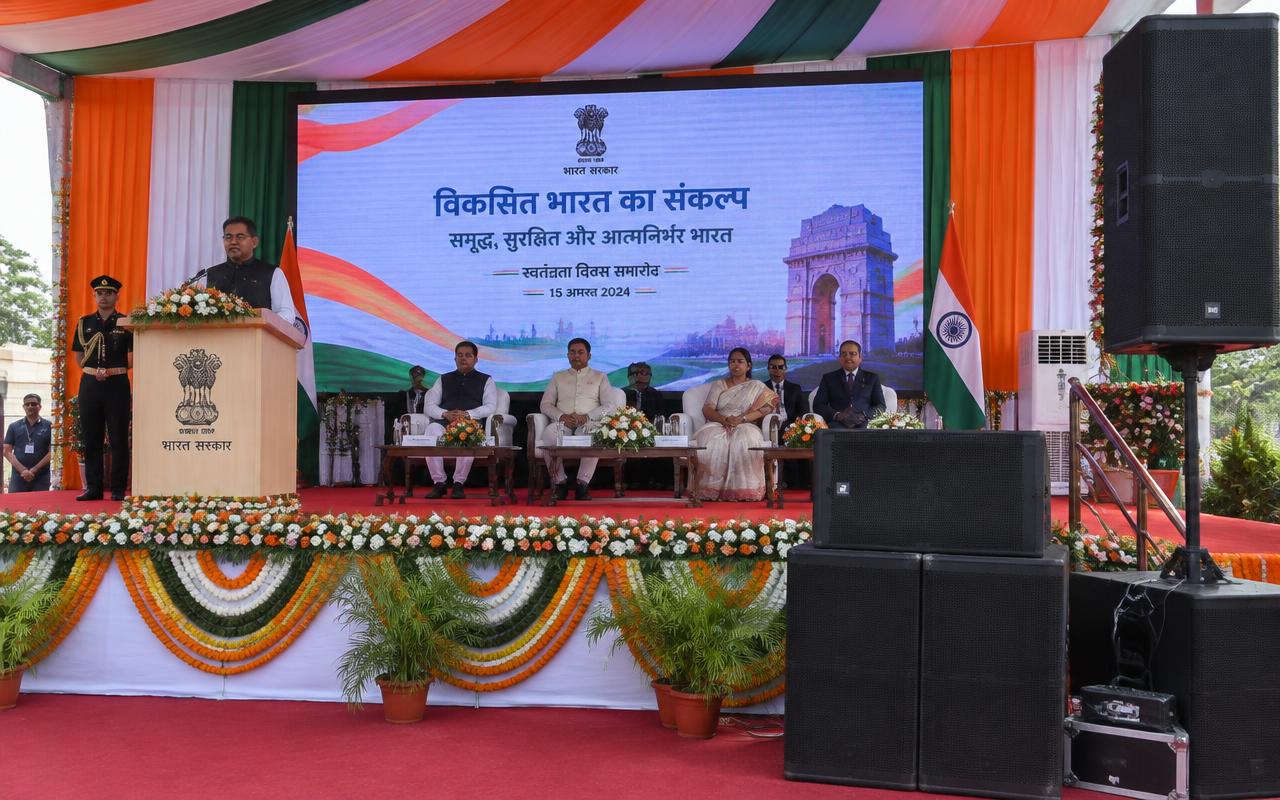
Two things define Aligarh: the university and the lock. Aligarh Muslim University drives a whole institutional calendar of convocations, Sir Syed Day, seminars and alumni gatherings in its historic halls, while Tala Nagri's lock and hardware cluster — one of India's oldest manufacturing clusters — generates buyer delegations, export meets and trade displays. The private wedding market along Ramghat Road rides on both. Prime AV Solutions produces the government & public events end of that calendar — protocol-aware crew, redundant PA & power, large public screens — with one crew owning the whole stack.
- Lead time
- 6 weeks out
- Peak season
- Oct–Feb
- Coverage
- Aligarh & Uttar Pradesh
Key takeaway
Complete AV for government & public events in Aligarh
A government function is a protocol exercise before it is a production. The order of the dais, who is addressed and in what sequence, where the national flag stands, when the anthem is played and how the arrival is received are all decided by the protocol office, and the production has to serve that order precisely rather than propose its own. Everything freezes earlier than on a commercial show: seating charts, speaker sequence, scripts and the anthem cue are confirmed days ahead, and the crew works from a cue sheet countersigned by the nodal officer.
Maidans, civic auditoriums and government grounds come with protocol seating, security sightlines and screening gates that shape the entire layout before AV is drawn. In Aligarh we work at AMU Kennedy Hall, Hotel Grand Shivaay, Ramghat Road lawns and venues across Ramghat Road, Civil Lines, Marris Road, Sasni Gate, Quarsi.
Redundancy is the second principle, and it is not a precaution here but the baseline. A function in front of a dais does not get a second attempt, so the design carries a duplicate signal chain from microphone to loudspeaker, a hot-spare podium microphone open and mixed at all times, mirrored playback for the anthem and any film, and two generators on automatic changeover with the venue supply as a third leg. Every redundant path is tested under load at rehearsal, not merely connected and assumed.
What your event needs
- Protocol-aware crew
- Redundant PA & power
- Large public screens
- Interpretation for delegations
Why Aligarh organisers choose Prime AV
- Crews and trucks positioned for fast load-in at AMU Kennedy Hall and venues in Ramghat Road and Civil Lines.
- Submit the crew list, identity documents and vehicle details well before the deadline, nominate a cleared deputy for every critical position, and keep the list short and fixed rather than adding names late.
- A standing Aligarh client base across university convocations, sir syed day and academic seminars and lock and hardware export buyer meets and trade displays, so the rig is specified from experience rather than a catalogue.
- Working knowledge of Uttar Pradesh venue rules, power sanctions and permission timelines.
What you will be judged on afterwards
- The arrival and the national anthem ran exactly to the protocol office's order, with no music or cue out of place.
- Every dignitary was clearly audible from the podium and on the press feed, with no dropout in front of the dais.
- The public seated beyond the enclosures could both hear the addresses and see them on screen.
- Press and broadcast received a usable clean feed and left without needing to re-record anything.
- Delegations followed the proceedings on their own language channel, and accessible seating had a clear screen sightline.
Local conditions
Producing government & public events in Aligarh
Weather & the rig
Public functions are fixed to a date of significance and usually held in the open under a shamiana, so the dais, the screens and a seated public meet the season head-on. Western Uttar Pradesh extremes apply: a dusty, dry April to June reaching 43–45°C with pre-monsoon dust squalls that will tear an unballasted banner, a July–September monsoon that waterlogs the unsurfaced lawn venues, and a December–January cold wave with fog thick enough to delay a morning soundcheck and ruin an outdoor projection plan. The dust is the persistent engineering problem — filters, covers and cleaning schedules on every job. April–June heat and dust storms make outdoor work unviable, and July–September monsoon turns the lawn circuit to mud. The AMU examination and vacation calendar also closes campus venues for long stretches, so confirm academic dates before promising anything. October–March is the season.
Power & redundancy
A function in front of a dais is designed for zero visible failure, which makes dual generators on automatic changeover the baseline rather than a contingency. UPPCL supply is intermittent and the city's distribution network is overloaded, so generator provision is the default rather than the contingency. Campus venues run on university supply that is protected but not generous, and the lawn circuit draws from connections sized for lighting and nothing more. Expect to bring everything: two sets, a changeover panel, and an isolated feed for consoles and media servers.
Permits & noise rules
Clearances run through the district administration, the police and the venue's nodal officer together, and nothing loads in until all three are aligned on the same plan. The Aligarh Nagar Nigam handles ground and pandal permissions, the district magistrate and senior superintendent of police license assembly, and the Uttar Pradesh noise rules with the 10 pm outdoor amplified-sound limit apply. Campus events are a separate and sometimes slower track through the AMU registrar and proctor, with student-body politics occasionally affecting approvals. There is no commercial airport here, which simplifies the drone question, but district permission and police intimation are still required and student gatherings attract additional scrutiny.
Load-in & access
Vehicles and crew need prior clearance and must be inside the cordon well before a lockdown hour that is not negotiable for any reason. No airport and no expressway exit directly into the city, so everything arrives by road on NH-34 or across from the Yamuna Expressway, roughly three hours from Delhi. Inside the city, the Dodhpur, Marris Road and Centre Point stretches are slow all day and the old city around Shah Jamal is tempo-only. Campus load-in has to work around teaching hours and pedestrian routes, which in practice means an evening and overnight call.
Season & booking
Sir Syed Day on 17 October is the fixed point of the academic year and the single biggest production date in the city, with alumni gatherings around it. AMU convocation, the examination season and summer vacation each close campus venues at predictable times. Ramzan, Eid and the Numaish-style winter trade fairs, plus the Nov–Feb wedding and walima run, fill the rest. Peak demand runs Oct–Feb.
Crew & dispatch
Dispatched from our Delhi depot, 130 km via the Yamuna Expressway and NH-34 at about three hours, which makes same-day turnarounds genuinely possible; local labour and tent structure hired in Aligarh, with Agra 85 km away as the nearer source for additional staging.
What it costs here
A low-price market with two exceptions. University work is budget-bound and procedurally slow, and tent-house competition keeps the wedding reference price very low. Export buyer meets, however, are judged by overseas visitors and the hardware exporters will spend to avoid embarrassment, and alumni endowment functions are funded by a diaspora with metro expectations.
Local expectations
Campus ceremony here is formal and tradition-heavy: academic procession order, the university tarana, Urdu and English oratory that must be intelligible in a difficult room, and an audience that includes senior alumni who notice when a microphone fails. Wedding and walima production is decor-forward with a strong preference for warm lighting and a restrained approach to effects, and qawwali and ghazal sets are common enough that a proper vocal and harmonium reinforcement chain earns its keep.
Run of show
A typical government & public events schedule
| Time | Moment | What AV is doing |
|---|---|---|
| T−4 days | Site build | Stage, dais, shamiana, screen supports and delay positions erected; generators placed, earthed and tested; cable routes kept clear of all access and evacuation paths. |
| T−2 days | Crew clearance and access | Final crew list and vehicle details submitted; passes issued; equipment inventory logged with the security detail at the gate. |
| T−1 day | Full rehearsal with protocol | Complete run with the protocol team including arrival, anthem, speaker sequence and departure; every redundant path tested under load; cue sheet countersigned. |
| T−6 hrs | Anti-sabotage check and lockdown | Venue swept and sealed; nothing enters afterwards, so all testing, spares placement and crew positioning is completed before this hour. |
| T−90 min | Crew in position | Operators at consoles inside the cordon, comms checked on a closed channel, podium and dais microphones verified with the hot spare live. |
| 10:00 | Guest seating | Instrumental bed at a restrained level, screens on the event frame, announcement channel ready for seating and protocol instructions. |
| 10:30 | Arrival and national anthem | Music stopped cleanly, anthem played from the primary machine with the mirror armed, cameras framed wide on the dais, no cuts during the anthem. |
| 11:30 | Addresses and inauguration | Podium microphone with hot spare, interpretation channels live, screens on the speaker and the plaque or inauguration point, clean feed to the press enclosure. |
Reach and inclusion complete the brief. A public function may seat a few hundred under a shamiana and gather several thousand beyond it, so large screens and delay positions carry the event to people who cannot see the dais. Visiting delegations need interpretation booths and receivers; accessible seating needs a direct screen sightline; announcements and screen text often need a regional language alongside English and Hindi; and the press and broadcast enclosure needs a clean programme feed delivered to an agreed standard rather than a microphone pointed at a speaker.
Scope
Government & Public Events scope levels in Aligarh
A hall or small ground function: redundant speech PA with a hot-spare podium microphone, a screen, dais lighting, playback for the anthem and a generator on changeover.
A public function for several thousand: line-array mains with a delay position, two large screens with camera feed, duplicated signal chain, dual generators and a press feed.
A large maidan event: multiple hangs and delay rings, screen clusters, full duplicate chain and power, interpretation for delegations, three or four cameras and a broadcast-standard clean feed.
A major ceremony or multi-day summit: zoned coverage across a very large ground, multi-language interpretation, a drone or ceremonial finale where permitted, and complete end-to-end redundancy with a multi-day build.
A low-price market with two exceptions. University work is budget-bound and procedurally slow, and tent-house competition keeps the wedding reference price very low. Export buyer meets, however, are judged by overseas visitors and the hardware exporters will spend to avoid embarrassment, and alumni endowment functions are funded by a diaspora with metro expectations.
Venues
Where government & public events happen in Aligarh
| Venue | Capacity | Production note |
|---|---|---|
| AMU Kennedy Hall | Around 1,200 seated in the hall, with lawn overflow | A colonial-era university auditorium: a fixed stage, a low grid with no usable rigging capacity, and a reverberant masonry shell that demands a point-source design with delays rather than a large flown system. Every element needs the university's proctorial and engineering office clearance. |
| Hotel Grand Shivaay | 500–900 across hall and lawn | The city's most dependable commercial venue, but it sits on a congested stretch where the police will not permit a truck to stand, so delivery is a timed rotation. |
| Ramghat Road lawns | 800–2,500 across the lawn and marriage-hall belt | The default wedding ground, with rudimentary single-phase or light three-phase connections and no drainage, so a late shower leaves standing water around cable runs and dimmer positions. |
| AMU Strachey Hall and the Victoria Gate quadrangles | 400–1,500 depending on configuration | Protected heritage architecture where fixings are forbidden outright and temporary structures must be ground-supported and kept clear of the facades; load-in routes cross pedestrian campus paths that cannot be blocked during teaching hours. |
| Tala Nagri industrial exhibition grounds | 2,000–6,000 in a trade-fair layout | Industrial estate ground with good truck access and real three-phase capacity nearby, but a dusty unsurfaced site that needs matting for buyer walkways and daily cleaning on everything fan-cooled. |
Demand
What Aligarh books most
Aligarh event mix
- University convocations, Sir Syed Day and academic seminars
- Lock and hardware export buyer meets and trade displays
- Weddings and walima receptions on the Ramghat Road lawn circuit
- Alumni association gatherings and endowment functions
- Political rallies and student-body events
- School and coaching-sector annual functions
Services
Recommended production stack
Line Array Systems
Flown line array systems designed in prediction software for outdoor grounds, convention halls and arenas of 1,000 to 50,000 guests.
LED Screen Rental
Large-format LED screens and IMAG side screens with switching, so every guest sees speakers, performers and content in crisp detail.
Simultaneous Interpretation Systems
ISO-standard interpretation booths, infrared receivers and multi-language channels for international summits and government delegations.
Drone Light Shows
Choreographed drone light shows with 100 to 1,000+ drones that paint logos, names and stories across the night sky — with all permissions handled.
Timeline
Planning milestones
- 6 weeks out
Site survey with the nodal officer
Ground layout, enclosure plan, security sightlines, power availability and permitted structure positions walked and recorded in writing.
- 4 weeks out
Protocol and seating plan
Dais order, speaker sequence, anthem and arrival choreography, flag position and enclosure allocations received from the protocol office.
- 3 weeks out
Crew list for security clearance
Names, identity documents and vehicle details submitted; cleared deputies nominated for every critical operating position.
- 2 weeks out
Redundancy design sign-off
Duplicate signal chain, hot-spare microphone scheme, mirrored playback and dual-generator changeover approved by the client's technical officer.
- T−1 day
Rehearsal and lockdown preparation
Full protocol rehearsal, every redundant path tested under load, spares placed inside the cordon and the cue sheet countersigned.
- T+1 day
Strike and site handover
Derig after the cordon lifts, inventory reconciled with the security detail, and the ground handed back in its surveyed condition.
Risk control
What goes wrong, and how we stop it
What can go wrong
How we prevent it
- What can go wrong
Crew passes are not cleared in time and technicians cannot enter.
How we prevent itSubmit the crew list, identity documents and vehicle details well before the deadline, nominate a cleared deputy for every critical position, and keep the list short and fixed rather than adding names late.
- What can go wrong
The venue locks down hours before the function and nothing further can be brought in.
How we prevent itTreat the lockdown hour as the real deadline: complete all testing, place every spare inside the cordon, and station crew at each position before the sweep rather than planning to walk back out.
- What can go wrong
The podium microphone becomes a single point of failure.
How we prevent itRun a second microphone on the podium, permanently open and mixed low on a separate wireless system and separate receiver, so a failure is inaudible to the audience rather than a visible pause.
- What can go wrong
The public crowd substantially exceeds the enclosure estimate.
How we prevent itDesign coverage with an overflow zone, pre-plan one additional delay position and screen that can be added in a day, and agree with the administration how the overflow area is served and marshalled.
Process
From brief to standing ovation
01
Brief & recce
We visit the venue, map power and rigging, and understand your show flow.
02
Design & quote
CAD plans, 3D previews and an itemised quote within 24 hours.
03
Build & rehearse
Load-in, system tuning, content checks and full technical rehearsal.
04
Show & strike
Show-caller-led execution, then a quick, clean load-out.
FAQ
Government & Public Events AV in Aligarh: FAQs
Other events in Aligarh
Government & Public Events AV in nearby cities
Services in Aligarh
Areas we cover in Aligarh