Event production · Prayagraj, Uttar Pradesh
Government & Public Events AV in Prayagraj
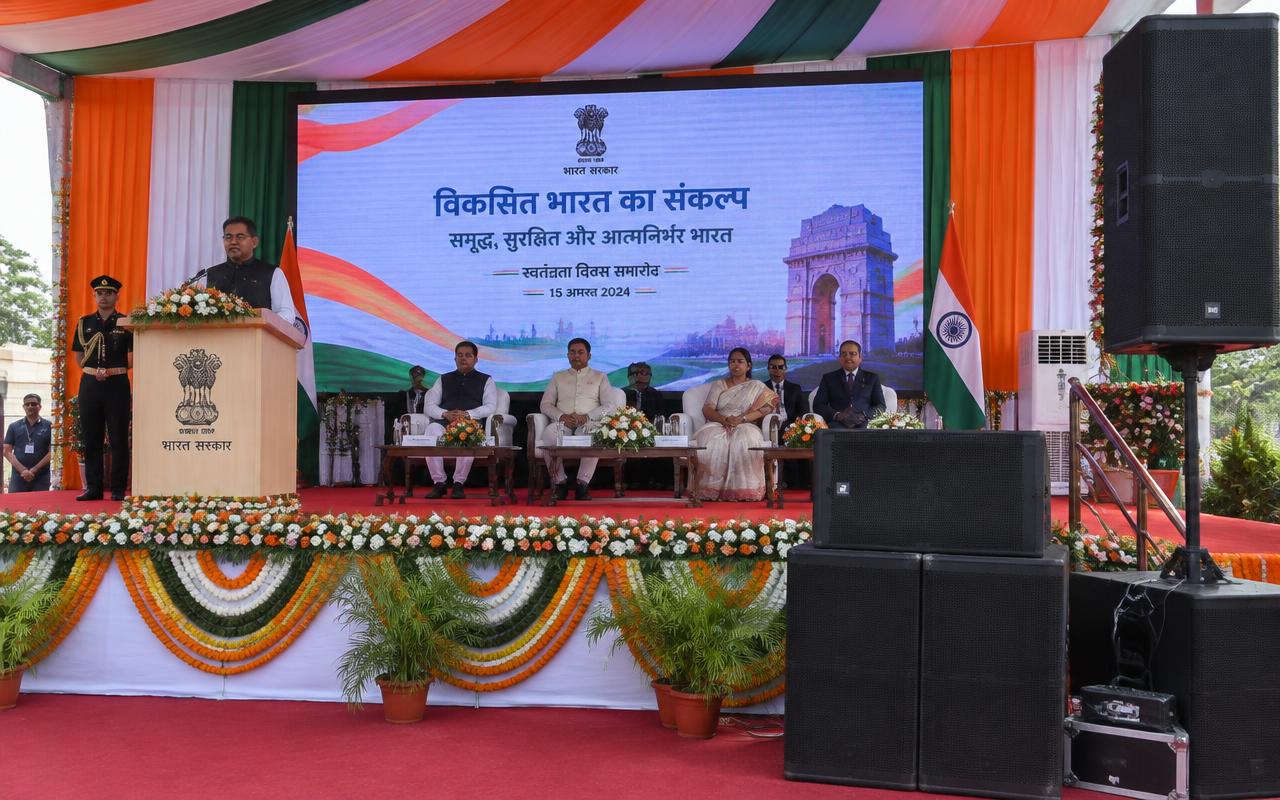
No other city in India has a production economy built around a river that reclaims the venue every monsoon. The Magh Mela comes annually and the Kumbh on its cycle, turning the Sangam floodplain into the largest temporary deployment of public-address infrastructure anywhere. Around that sit the High Court bench and legal profession, a very large coaching sector, and Allahabad University's calendar. Prime AV Solutions produces the government & public events end of that calendar — protocol-aware crew, redundant PA & power, large public screens — with one crew owning the whole stack.
- Lead time
- 6 weeks out
- Peak season
- Oct–Feb
- Coverage
- Prayagraj & Uttar Pradesh
Key takeaway
Complete AV for government & public events in Prayagraj
A government function is a protocol exercise before it is a production. The order of the dais, who is addressed and in what sequence, where the national flag stands, when the anthem is played and how the arrival is received are all decided by the protocol office, and the production has to serve that order precisely rather than propose its own. Everything freezes earlier than on a commercial show: seating charts, speaker sequence, scripts and the anthem cue are confirmed days ahead, and the crew works from a cue sheet countersigned by the nodal officer.
Maidans, civic auditoriums and government grounds come with protocol seating, security sightlines and screening gates that shape the entire layout before AV is drawn. In Prayagraj we work at Kumbh Mela grounds, Hotel Kanha Shyam, Triveni Sangam and venues across Civil Lines, George Town, Katra, Jhunsi, Naini.
Redundancy is the second principle, and it is not a precaution here but the baseline. A function in front of a dais does not get a second attempt, so the design carries a duplicate signal chain from microphone to loudspeaker, a hot-spare podium microphone open and mixed at all times, mirrored playback for the anthem and any film, and two generators on automatic changeover with the venue supply as a third leg. Every redundant path is tested under load at rehearsal, not merely connected and assumed.
What your event needs
- Protocol-aware crew
- Redundant PA & power
- Large public screens
- Interpretation for delegations
Why Prayagraj organisers choose Prime AV
- Crews and trucks positioned for fast load-in at Triveni Sangam and venues in Katra and Jhunsi.
- Treat the lockdown hour as the real deadline: complete all testing, place every spare inside the cordon, and station crew at each position before the sweep rather than planning to walk back out.
- A standing Prayagraj client base across religious mega-events on the sangam floodplain and government and administrative functions, so the rig is specified from experience rather than a catalogue.
- Working knowledge of Uttar Pradesh venue rules, power sanctions and permission timelines.
What you will be judged on afterwards
- The arrival and the national anthem ran exactly to the protocol office's order, with no music or cue out of place.
- Every dignitary was clearly audible from the podium and on the press feed, with no dropout in front of the dais.
- The public seated beyond the enclosures could both hear the addresses and see them on screen.
- Press and broadcast received a usable clean feed and left without needing to re-record anything.
- Delegations followed the proceedings on their own language channel, and accessible seating had a clear screen sightline.
Local conditions
Producing government & public events in Prayagraj
Weather & the rig
Public functions are fixed to a date of significance and usually held in the open under a shamiana, so the dais, the screens and a seated public meet the season head-on. The Sangam floodplain is the coldest and foggiest production environment in the Hindi belt — January minima of 4–6°C with river fog holding past ten in the morning, which means the Magh Mela is built and operated in conditions where projection is futile, cable ends stay wet all night and crew shift patterns have to account for genuine cold injury risk. May and June on open sand exceed 45°C with no shade anywhere on the ground. The monsoon puts the entire mela footprint under water. Jun–Oct absolutely for the Sangam ground, because the rivers physically occupy it; the floodplain only becomes workable from around November once the water recedes and the sand has been graded.
Power & redundancy
A function in front of a dais is designed for zero visible failure, which makes dual generators on automatic changeover the baseline rather than a contingency. UPPCL supply in the city is interruption-prone, and on the mela ground power is a purpose-built temporary network that the administration and UPPCL erect each season with allocated feeds per sector. Working inside that allocation, rather than specifying freely, is the real constraint — a design that needs more than the sector was granted does not get built. DG backup remains mandatory on any show-critical path, with UPPCB acoustic norms applying.
Permits & noise rules
Clearances run through the district administration, the police and the venue's nodal officer together, and nothing loads in until all three are aligned on the same plan. The Mela Adhikari and the district administration hold effective authority over everything on the mela ground, from camp allotment to structure to sound, and that route supersedes the usual municipal process entirely. In the city, Prayagraj Nagar Nigam handles ground and structure permission and the Police Commissionerate licenses loudspeakers, with UPPCB's standards and the 10pm cut applying and religious-event relaxations granted by the administration rather than claimed. Drone flying over the mela is restricted and operated by the police for crowd surveillance, so private aerial work needs specific clearance.
Load-in & access
Vehicles and crew need prior clearance and must be inside the cordon well before a lockdown hour that is not negotiable for any reason. The expressway network brings Delhi within ten to eleven hours and Lucknow within four, but during Mela season the entire city runs under a one-way and vehicle-restriction plan that the administration publishes and revises daily, so kit movement is scheduled against that plan rather than against the call sheet. The final approach to a sector camp is over graded sand where only small vehicles and tractors operate, and the pontoon bridges carry weight limits that exclude heavy trucks outright.
Season & booking
Magh Mela runs every January and February, with Ardh Kumbh and Maha Kumbh on their cycle — the 2025 Maha Kumbh being the recent reference point for scale. On the principal snan dates, and Mauni Amavasya above all, crowd numbers peak and all vehicle movement in the city stops. The November to February wedding season runs alongside, competing for the same local labour. Peak demand runs Oct–Feb.
Crew & dispatch
Reached from Delhi NCR in ten to eleven hours or from Lucknow in four, with Lucknow the practical forward base for Mela deployments; local labour is abundant during Mela season but every regional contractor is already committed, so crew have to be brought in and housed.
What it costs here
Mela work is administration-contracted and runs on scale and endurance rather than premium specification — long deployments, hard conditions and robust, serviceable kit. City-side corporate and wedding work is modest and price-sensitive, with the travel loading from Lucknow or Delhi made explicit.
Local expectations
Religious events here are about reach and intelligibility for crowds measured in lakhs, which makes a distributed delay-tower PA, multilingual announcements and integration with the administration's own crowd-management broadcasts the core of the design. Akhara and sant protocol governs stage access and seating order, and the hierarchy must be reflected in the run of show. Hindi with Sanskrit liturgical content, and a working assumption throughout that the audience is on foot, in the cold, and standing for hours.
Run of show
A typical government & public events schedule
| Time | Moment | What AV is doing |
|---|---|---|
| T−4 days | Site build | Stage, dais, shamiana, screen supports and delay positions erected; generators placed, earthed and tested; cable routes kept clear of all access and evacuation paths. |
| T−2 days | Crew clearance and access | Final crew list and vehicle details submitted; passes issued; equipment inventory logged with the security detail at the gate. |
| T−1 day | Full rehearsal with protocol | Complete run with the protocol team including arrival, anthem, speaker sequence and departure; every redundant path tested under load; cue sheet countersigned. |
| T−6 hrs | Anti-sabotage check and lockdown | Venue swept and sealed; nothing enters afterwards, so all testing, spares placement and crew positioning is completed before this hour. |
| T−90 min | Crew in position | Operators at consoles inside the cordon, comms checked on a closed channel, podium and dais microphones verified with the hot spare live. |
| 10:00 | Guest seating | Instrumental bed at a restrained level, screens on the event frame, announcement channel ready for seating and protocol instructions. |
| 10:30 | Arrival and national anthem | Music stopped cleanly, anthem played from the primary machine with the mirror armed, cameras framed wide on the dais, no cuts during the anthem. |
| 11:30 | Addresses and inauguration | Podium microphone with hot spare, interpretation channels live, screens on the speaker and the plaque or inauguration point, clean feed to the press enclosure. |
Reach and inclusion complete the brief. A public function may seat a few hundred under a shamiana and gather several thousand beyond it, so large screens and delay positions carry the event to people who cannot see the dais. Visiting delegations need interpretation booths and receivers; accessible seating needs a direct screen sightline; announcements and screen text often need a regional language alongside English and Hindi; and the press and broadcast enclosure needs a clean programme feed delivered to an agreed standard rather than a microphone pointed at a speaker.
Scope
Government & Public Events scope levels in Prayagraj
A hall or small ground function: redundant speech PA with a hot-spare podium microphone, a screen, dais lighting, playback for the anthem and a generator on changeover.
A public function for several thousand: line-array mains with a delay position, two large screens with camera feed, duplicated signal chain, dual generators and a press feed.
A large maidan event: multiple hangs and delay rings, screen clusters, full duplicate chain and power, interpretation for delegations, three or four cameras and a broadcast-standard clean feed.
A major ceremony or multi-day summit: zoned coverage across a very large ground, multi-language interpretation, a drone or ceremonial finale where permitted, and complete end-to-end redundancy with a multi-day build.
Mela work is administration-contracted and runs on scale and endurance rather than premium specification — long deployments, hard conditions and robust, serviceable kit. City-side corporate and wedding work is modest and price-sensitive, with the travel loading from Lucknow or Delhi made explicit.
Venues
Where government & public events happen in Prayagraj
| Venue | Capacity | Production note |
|---|---|---|
| Kumbh Mela grounds | Crores across a temporary city of sectors, camps and pontoon bridges | Tower bases sit on plated sand, the PA is a sector-level distributed delay design rather than anything stage-centred, power comes from administration-allocated feeds per sector, and every element has to be demountable before the river returns. |
| Hotel Kanha Shyam | Several hundred across banquet halls at Civil Lines | The city's established business hotel with a tight urban service approach, so trucks unload in sequence overnight and kit is broken down to lift dimensions. |
| Triveni Sangam | Lakh-plus on sand and water at the confluence, with no fixed limit | No permanent infrastructure of any kind: access is controlled entirely by the Mela or district administration, the ground is graded sand, and the river level sets the usable footprint week by week. |
| Madan Mohan Malviya Stadium | Several thousand in the bowl | A municipal stadium used for public events and fairs, with no roof rigging and a generated power supply, where the surface needs protection boarding under any tower. |
| Senate Hall, Allahabad University | Around 800 seated | A heritage academic hall with university approvals, restrictions on fixings to historic fabric, and a load-in route through a campus gate that sets the vehicle size. |
Demand
What Prayagraj books most
Prayagraj event mix
- Religious mega-events on the Sangam floodplain
- Government and administrative functions
- Academic, legal-profession and institutional conferences
- Weddings through the Nov–Feb window
- Exhibitions and public fairs
- Coaching and education-sector seminars
Services
Recommended production stack
Line Array Systems
Flown line array systems designed in prediction software for outdoor grounds, convention halls and arenas of 1,000 to 50,000 guests.
LED Screen Rental
Large-format LED screens and IMAG side screens with switching, so every guest sees speakers, performers and content in crisp detail.
Simultaneous Interpretation Systems
ISO-standard interpretation booths, infrared receivers and multi-language channels for international summits and government delegations.
Drone Light Shows
Choreographed drone light shows with 100 to 1,000+ drones that paint logos, names and stories across the night sky — with all permissions handled.
Timeline
Planning milestones
- 6 weeks out
Site survey with the nodal officer
Ground layout, enclosure plan, security sightlines, power availability and permitted structure positions walked and recorded in writing.
- 4 weeks out
Protocol and seating plan
Dais order, speaker sequence, anthem and arrival choreography, flag position and enclosure allocations received from the protocol office.
- 3 weeks out
Crew list for security clearance
Names, identity documents and vehicle details submitted; cleared deputies nominated for every critical operating position.
- 2 weeks out
Redundancy design sign-off
Duplicate signal chain, hot-spare microphone scheme, mirrored playback and dual-generator changeover approved by the client's technical officer.
- T−1 day
Rehearsal and lockdown preparation
Full protocol rehearsal, every redundant path tested under load, spares placed inside the cordon and the cue sheet countersigned.
- T+1 day
Strike and site handover
Derig after the cordon lifts, inventory reconciled with the security detail, and the ground handed back in its surveyed condition.
Risk control
What goes wrong, and how we stop it
What can go wrong
How we prevent it
- What can go wrong
The venue locks down hours before the function and nothing further can be brought in.
How we prevent itTreat the lockdown hour as the real deadline: complete all testing, place every spare inside the cordon, and station crew at each position before the sweep rather than planning to walk back out.
- What can go wrong
The podium microphone becomes a single point of failure.
How we prevent itRun a second microphone on the podium, permanently open and mixed low on a separate wireless system and separate receiver, so a failure is inaudible to the audience rather than a visible pause.
- What can go wrong
The public crowd substantially exceeds the enclosure estimate.
How we prevent itDesign coverage with an overflow zone, pre-plan one additional delay position and screen that can be added in a day, and agree with the administration how the overflow area is served and marshalled.
- What can go wrong
Interpretation channels or receivers are unallocated on the day.
How we prevent itConfirm delegation languages and head counts in advance, number receivers against a distribution and collection register at the entry point, and brief the protocol team on which channel carries which language.
Process
From brief to standing ovation
01
Brief & recce
We visit the venue, map power and rigging, and understand your show flow.
02
Design & quote
CAD plans, 3D previews and an itemised quote within 24 hours.
03
Build & rehearse
Load-in, system tuning, content checks and full technical rehearsal.
04
Show & strike
Show-caller-led execution, then a quick, clean load-out.
FAQ
Government & Public Events AV in Prayagraj: FAQs
Other events in Prayagraj
Government & Public Events AV in nearby cities
Services in Prayagraj
Areas we cover in Prayagraj