Event production · Prayagraj, Uttar Pradesh
Sports Events & Ceremonies AV in Prayagraj
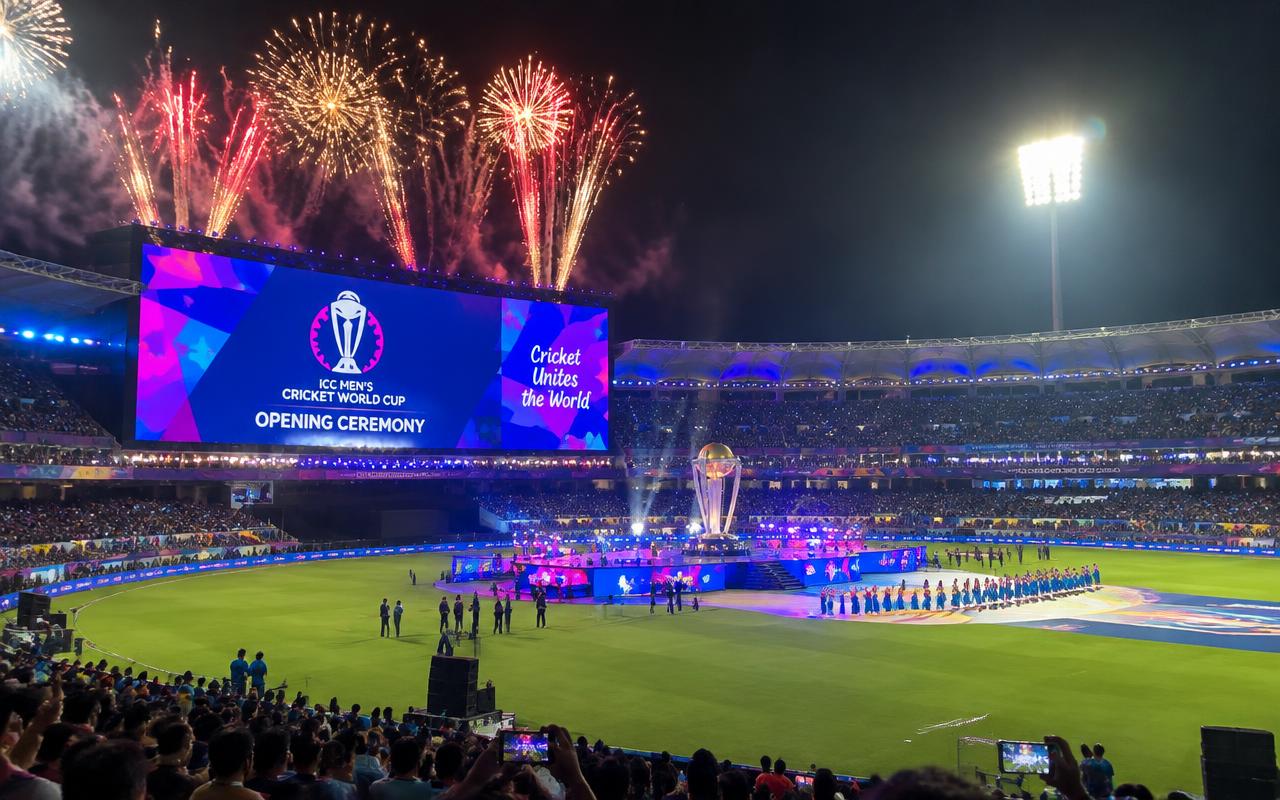
No other city in India has a production economy built around a river that reclaims the venue every monsoon. The Magh Mela comes annually and the Kumbh on its cycle, turning the Sangam floodplain into the largest temporary deployment of public-address infrastructure anywhere. Around that sit the High Court bench and legal profession, a very large coaching sector, and Allahabad University's calendar. Prime AV Solutions produces the sports events & ceremonies end of that calendar — stadium-scale PA, giant outdoor LED, opening ceremony shows — with one crew owning the whole stack.
- Lead time
- 8 weeks out
- Peak season
- Oct–Feb
- Coverage
- Prayagraj & Uttar Pradesh
Key takeaway
Complete AV for sports events & ceremonies in Prayagraj
Stadium audio is a public-address problem first and an entertainment system second. Announcements have to be intelligible to a crowd generating ninety-odd decibels of its own noise, across tiers with wildly different distances and plenty of hard reflective concrete, which means distributed coverage aimed tier by tier rather than a central cluster turned up. Build the system so the announcer always takes priority over the music feed through a hardware override, and verify intelligibility in a full stadium rather than an empty one, because an empty bowl tells you almost nothing useful.
Stadium geometry decides screen placement, speaker hangs per tier and where a stage can stand without a wheel touching the playing surface. In Prayagraj we work at Kumbh Mela grounds, Hotel Kanha Shyam, Triveni Sangam and venues across Civil Lines, George Town, Katra, Jhunsi, Naini.
Ceremonies are a build-window exercise on somebody else's playing surface. The groundsman controls the pitch, the fixture list controls the calendar, and you may have six hours between the end of pitch preparation and the first guests, often with a rule that no wheeled vehicle crosses the turf. The answer is a modular ceremony rig carried on boards, pre-assembled sections, cable routes laid on protective matting around the boundary, pitch-side distribution boxes placed before covers come off, and a strike plan that clears the surface before the officials inspect it.
What your event needs
- Stadium-scale PA
- Giant outdoor LED
- Opening ceremony shows
- Broadcast feeds
Why Prayagraj organisers choose Prime AV
- Crews and trucks positioned for fast load-in at Triveni Sangam and venues in Katra and Jhunsi.
- Route everything around the boundary on matting, obtain the safety officer's sign-off on the cable plan before build, and use wireless or pre-installed venue infrastructure for anything that would otherwise cross a gangway.
- A standing Prayagraj client base across religious mega-events on the sangam floodplain and government and administrative functions, so the rig is specified from experience rather than a catalogue.
- Working knowledge of Uttar Pradesh venue rules, power sanctions and permission timelines.
What you will be judged on afterwards
- Safety and in-play announcements were intelligible in every tier with the stadium full.
- The ceremony came on and off the playing surface inside its window, and the groundsman passed the pitch.
- Replays and the match clock on the big screens stayed in step with what the crowd was watching live.
- The broadcaster received the agreed clean feeds at the agreed reference without a single dropout.
- No cable, box or structure left a mark on the surface or sat in a crowd escape route.
Local conditions
Producing sports events & ceremonies in Prayagraj
Weather & the rig
Stadium work is entirely open to the sky, so the ceremony rig, the screens and a seated crowd all take the conditions exactly as they come. The Sangam floodplain is the coldest and foggiest production environment in the Hindi belt — January minima of 4–6°C with river fog holding past ten in the morning, which means the Magh Mela is built and operated in conditions where projection is futile, cable ends stay wet all night and crew shift patterns have to account for genuine cold injury risk. May and June on open sand exceed 45°C with no shade anywhere on the ground. The monsoon puts the entire mela footprint under water. Jun–Oct absolutely for the Sangam ground, because the rivers physically occupy it; the floodplain only becomes workable from around November once the water recedes and the sand has been graded.
Power & redundancy
Stadiums have power but almost never where a pitch-side ceremony needs it, so temporary distribution around the boundary with generator backup carries the show. UPPCL supply in the city is interruption-prone, and on the mela ground power is a purpose-built temporary network that the administration and UPPCL erect each season with allocated feeds per sector. Working inside that allocation, rather than specifying freely, is the real constraint — a design that needs more than the sector was granted does not get built. DG backup remains mandatory on any show-critical path, with UPPCB acoustic norms applying.
Permits & noise rules
Match-day events sit under the stadium authority's rules, a police crowd plan and separate clearance for any pyrotechnic or drone element, all on a fixture date that cannot move. The Mela Adhikari and the district administration hold effective authority over everything on the mela ground, from camp allotment to structure to sound, and that route supersedes the usual municipal process entirely. In the city, Prayagraj Nagar Nigam handles ground and structure permission and the Police Commissionerate licenses loudspeakers, with UPPCB's standards and the 10pm cut applying and religious-event relaxations granted by the administration rather than claimed. Drone flying over the mela is restricted and operated by the police for crowd surveillance, so private aerial work needs specific clearance.
Load-in & access
Build windows are dictated by the fixture list and the groundsman, so everything loads in, moves on boards and strikes around play rather than around the production. The expressway network brings Delhi within ten to eleven hours and Lucknow within four, but during Mela season the entire city runs under a one-way and vehicle-restriction plan that the administration publishes and revises daily, so kit movement is scheduled against that plan rather than against the call sheet. The final approach to a sector camp is over graded sand where only small vehicles and tractors operate, and the pontoon bridges carry weight limits that exclude heavy trucks outright.
Season & booking
Magh Mela runs every January and February, with Ardh Kumbh and Maha Kumbh on their cycle — the 2025 Maha Kumbh being the recent reference point for scale. On the principal snan dates, and Mauni Amavasya above all, crowd numbers peak and all vehicle movement in the city stops. The November to February wedding season runs alongside, competing for the same local labour. Peak demand runs Oct–Feb.
Crew & dispatch
Reached from Delhi NCR in ten to eleven hours or from Lucknow in four, with Lucknow the practical forward base for Mela deployments; local labour is abundant during Mela season but every regional contractor is already committed, so crew have to be brought in and housed.
What it costs here
Mela work is administration-contracted and runs on scale and endurance rather than premium specification — long deployments, hard conditions and robust, serviceable kit. City-side corporate and wedding work is modest and price-sensitive, with the travel loading from Lucknow or Delhi made explicit.
Local expectations
Religious events here are about reach and intelligibility for crowds measured in lakhs, which makes a distributed delay-tower PA, multilingual announcements and integration with the administration's own crowd-management broadcasts the core of the design. Akhara and sant protocol governs stage access and seating order, and the hierarchy must be reflected in the run of show. Hindi with Sanskrit liturgical content, and a working assumption throughout that the audience is on foot, in the cold, and standing for hours.
Run of show
A typical sports events & ceremonies schedule
| Time | Moment | What AV is doing |
|---|---|---|
| T−3 days | Screen and PA build | Giant screens erected on engineered supports, distributed speaker positions hung or stacked per tier, cable routes matted around the boundary. |
| T−1 day | Integration and rehearsal | Broadcast feed points tested with matched reference, scoring and clock integration verified, ceremony rehearsed with stand-ins on the boards. |
| T−5 hrs | Announcement and music check | Announcer override tested from every position, music bed levels set per tier, emergency message script read through with the venue safety officer. |
| 16:00 | Gates open | Walk-in music at measured level per tier, welcome and safety messages on a timed rotation, screens on sponsor and wayfinding content. |
| 17:30 | Fan engagement | Crowd cameras cut to the big screens, competitions run from the announcer position, audio follows the active zone rather than running flat everywhere. |
| 18:30 | Opening ceremony | Ceremony rig live on the boards, performance audio taken by a second engineer, lighting and effects cued, broadcast taking the clean programme feed. |
| 19:00 | Match start | Ceremony struck off the surface inside the agreed window, screens switch to match feed with replays, announcer on priority for all in-play messaging. |
| 22:15 | Presentation | Podium placed and lit, radio mics on an allocated block, screens on the presentation cut, recording closed and feeds reconciled with the broadcaster. |
Broadcast integration is where sports events differ most from other live work. The host broadcaster owns the match feed and the timing, and your giant screens, replay and ceremony coverage have to interface with that cleanly: agreed feed points, matched reference and frame rate, a clear understanding of who supplies replays and with what delay, and a scoring and clock integration that does not drift. Fan-park screens elsewhere in the city then take a distributed feed with their own audio, their own power and their own crowd plan.
Scope
Sports Events & Ceremonies scope levels in Prayagraj
Match-night overlay at a mid-size stadium: distributed PA supplement, announcer position, one large screen or LED panel set, playback and a show-caller.
An opening or closing ceremony on the field of play: modular stage on boards, performance-grade PA, programmed lighting rig, LED, pitch-side power and a rehearsal day.
Multi-match delivery with giant screens, full stadium PA supplement, broadcast feed integration, replay to screens and a resident crew across the fixture window.
A large opening ceremony with drone or pyrotechnic finale, multi-zone audio across the bowl, broadcast-grade camera package, full generator redundancy and a multi-day build.
Mela work is administration-contracted and runs on scale and endurance rather than premium specification — long deployments, hard conditions and robust, serviceable kit. City-side corporate and wedding work is modest and price-sensitive, with the travel loading from Lucknow or Delhi made explicit.
Venues
Where sports events & ceremonies happen in Prayagraj
| Venue | Capacity | Production note |
|---|---|---|
| Kumbh Mela grounds | Crores across a temporary city of sectors, camps and pontoon bridges | Tower bases sit on plated sand, the PA is a sector-level distributed delay design rather than anything stage-centred, power comes from administration-allocated feeds per sector, and every element has to be demountable before the river returns. |
| Hotel Kanha Shyam | Several hundred across banquet halls at Civil Lines | The city's established business hotel with a tight urban service approach, so trucks unload in sequence overnight and kit is broken down to lift dimensions. |
| Triveni Sangam | Lakh-plus on sand and water at the confluence, with no fixed limit | No permanent infrastructure of any kind: access is controlled entirely by the Mela or district administration, the ground is graded sand, and the river level sets the usable footprint week by week. |
| Madan Mohan Malviya Stadium | Several thousand in the bowl | A municipal stadium used for public events and fairs, with no roof rigging and a generated power supply, where the surface needs protection boarding under any tower. |
| Senate Hall, Allahabad University | Around 800 seated | A heritage academic hall with university approvals, restrictions on fixings to historic fabric, and a load-in route through a campus gate that sets the vehicle size. |
Demand
What Prayagraj books most
Prayagraj event mix
- Religious mega-events on the Sangam floodplain
- Government and administrative functions
- Academic, legal-profession and institutional conferences
- Weddings through the Nov–Feb window
- Exhibitions and public fairs
- Coaching and education-sector seminars
Services
Recommended production stack
Line Array Systems
Flown line array systems designed in prediction software for outdoor grounds, convention halls and arenas of 1,000 to 50,000 guests.
LED Screen Rental
Large-format LED screens and IMAG side screens with switching, so every guest sees speakers, performers and content in crisp detail.
Drone Light Shows
Choreographed drone light shows with 100 to 1,000+ drones that paint logos, names and stories across the night sky — with all permissions handled.
Broadcast & Multi-Camera
Broadcast-grade cameras, jibs, PTZs and OB-style control for IMAG, TV feeds and post-event films that capture every moment.
Timeline
Planning milestones
- 8 weeks out
Fixture and access plan
Match date, pitch-preparation schedule, build and strike windows and the surface protection method agreed with the venue and groundsman.
- 6 weeks out
Audio and screen design
Tier-by-tier coverage modelled, screen positions fixed against sightlines and support engineering, announcer override architecture specified.
- 4 weeks out
Broadcast interface agreed
Feed points, reference and frame rate, replay responsibility, clock and scoring integration documented with the host broadcaster.
- 3 weeks out
Ceremony design and safety sign-off
Modular rig drawings, cable plan, effect clearances and crowd-safety review completed with the venue safety officer.
- T−3 to T−1 day
Build, integration and rehearsal
Screens and PA installed and tested, broadcast integration proven, ceremony rehearsed with timed move-in and strike drills.
- Immediately post event
Strike and surface handover
Ceremony off the surface first, full derig to the venue deadline, and a joint pitch and stand inspection before sign-off.
Risk control
What goes wrong, and how we stop it
What can go wrong
How we prevent it
- What can go wrong
Cable runs cross the field of play or a crowd escape route.
How we prevent itRoute everything around the boundary on matting, obtain the safety officer's sign-off on the cable plan before build, and use wireless or pre-installed venue infrastructure for anything that would otherwise cross a gangway.
- What can go wrong
Weather forces a call in an open bowl with a flown rig.
How we prevent itHold written wind-load limits for every flown element, nominate the decision-maker jointly with the venue, and rehearse a sequence that lowers and secures the rig without crossing the surface.
- What can go wrong
Ground staff refuse to allow loading across the playing surface.
How we prevent itAgree the surface protection method and the exact route at the recce with the groundsman in writing, design a modular rig that moves on boards and trolleys, and budget the labour for hand-carrying rather than assuming vehicle access.
- What can go wrong
The ceremony build window collides with pitch preparation.
How we prevent itBuild the schedule jointly with the venue and the match officials, pre-assemble everything possible outside the bowl, and rehearse the move-in and strike as timed drills with a counted crew.
Process
From brief to standing ovation
01
Brief & recce
We visit the venue, map power and rigging, and understand your show flow.
02
Design & quote
CAD plans, 3D previews and an itemised quote within 24 hours.
03
Build & rehearse
Load-in, system tuning, content checks and full technical rehearsal.
04
Show & strike
Show-caller-led execution, then a quick, clean load-out.
FAQ
Sports Events & Ceremonies AV in Prayagraj: FAQs
Other events in Prayagraj
Sports Events & Ceremonies AV in nearby cities
Services in Prayagraj
Areas we cover in Prayagraj