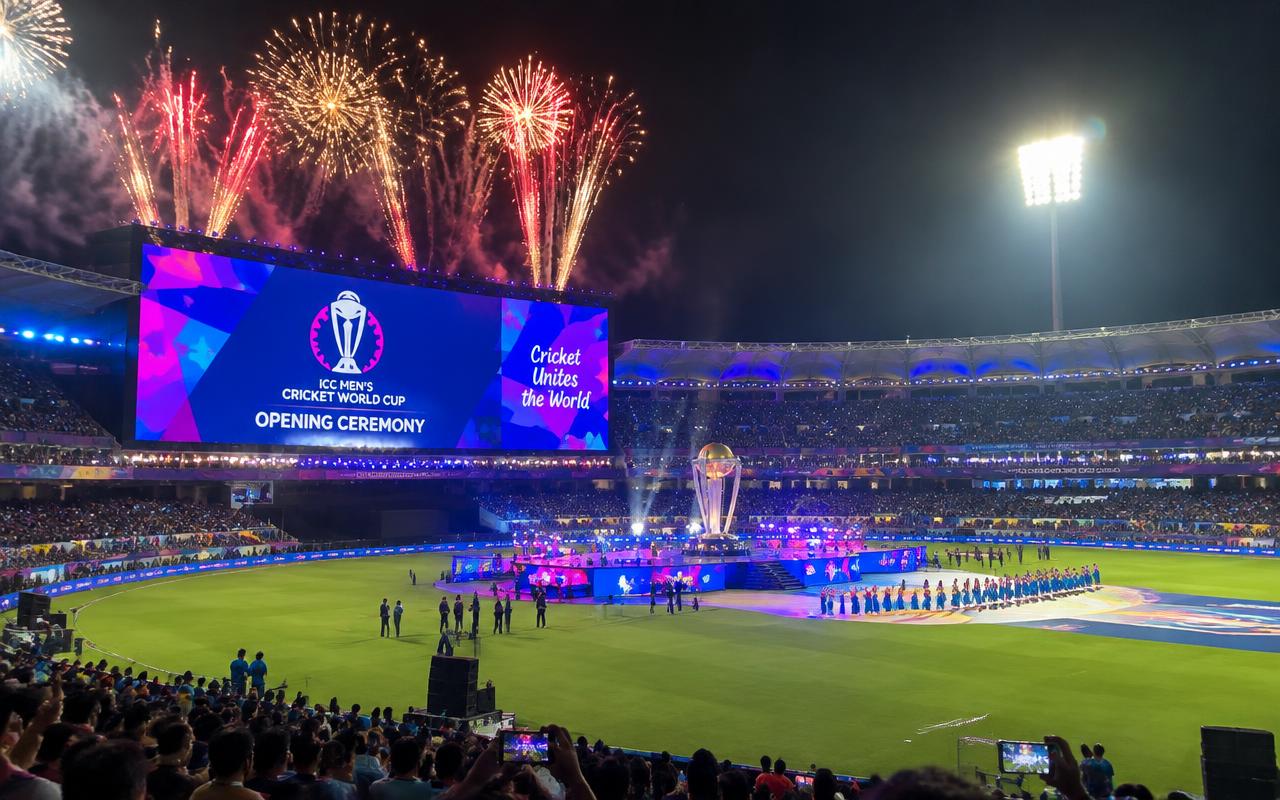
Key takeaway
Key takeaways
- Ground staff refuse to allow loading across the playing surface
- The ceremony build window collides with pitch preparation
- Crowd noise masks announcements when it matters most
- Big-screen replays drift out of sync with the live action
What goes wrong, and the fix
What can go wrong
How we prevent it
- What can go wrong
Ground staff refuse to allow loading across the playing surface.
How we prevent itAgree the surface protection method and the exact route at the recce with the groundsman in writing, design a modular rig that moves on boards and trolleys, and budget the labour for hand-carrying rather than assuming vehicle access.
- What can go wrong
The ceremony build window collides with pitch preparation.
How we prevent itBuild the schedule jointly with the venue and the match officials, pre-assemble everything possible outside the bowl, and rehearse the move-in and strike as timed drills with a counted crew.
- What can go wrong
Crowd noise masks announcements when it matters most.
How we prevent itSpecify distributed coverage aimed tier by tier with a hardware announcer override above the music feed, and verify intelligibility with the stadium full rather than signing it off in an empty bowl.
- What can go wrong
Big-screen replays drift out of sync with the live action.
How we prevent itLock to the broadcaster's reference and frame rate, agree in writing who supplies replays and at what delay, and keep a dedicated operator on the screen feed rather than running it from the announcer position.
- What can go wrong
Cable runs cross the field of play or a crowd escape route.
How we prevent itRoute everything around the boundary on matting, obtain the safety officer's sign-off on the cable plan before build, and use wireless or pre-installed venue infrastructure for anything that would otherwise cross a gangway.
- What can go wrong
Weather forces a call in an open bowl with a flown rig.
How we prevent itHold written wind-load limits for every flown element, nominate the decision-maker jointly with the venue, and rehearse a sequence that lowers and secures the rig without crossing the surface.
When to decide each one
- 8 weeks out
Fixture and access plan
Match date, pitch-preparation schedule, build and strike windows and the surface protection method agreed with the venue and groundsman.
- 6 weeks out
Audio and screen design
Tier-by-tier coverage modelled, screen positions fixed against sightlines and support engineering, announcer override architecture specified.
- 4 weeks out
Broadcast interface agreed
Feed points, reference and frame rate, replay responsibility, clock and scoring integration documented with the host broadcaster.
- 3 weeks out
Ceremony design and safety sign-off
Modular rig drawings, cable plan, effect clearances and crowd-safety review completed with the venue safety officer.
- T−3 to T−1 day
Build, integration and rehearsal
Screens and PA installed and tested, broadcast integration proven, ceremony rehearsed with timed move-in and strike drills.
- Immediately post event
Strike and surface handover
Ceremony off the surface first, full derig to the venue deadline, and a joint pitch and stand inspection before sign-off.
The pattern underneath
Almost every failure above is a decision taken too late rather than a technical limit. Broadcast integration is where sports events differ most from other live work. The host broadcaster owns the match feed and the timing, and your giant screens, replay and ceremony coverage have to interface with that cleanly: agreed feed points, matched reference and frame rate, a clear understanding of who supplies replays and with what delay, and a scoring and clock integration that does not drift. Fan-park screens elsewhere in the city then take a distributed feed with their own audio, their own power and their own crowd plan. Get an itemised quote from Prime AV Solutions within 24 hours — call +91 93093 80958 or WhatsApp our producers.
Published 9 October 2025 by the Prime AV Solutions production team.