Key takeaway
Key takeaways
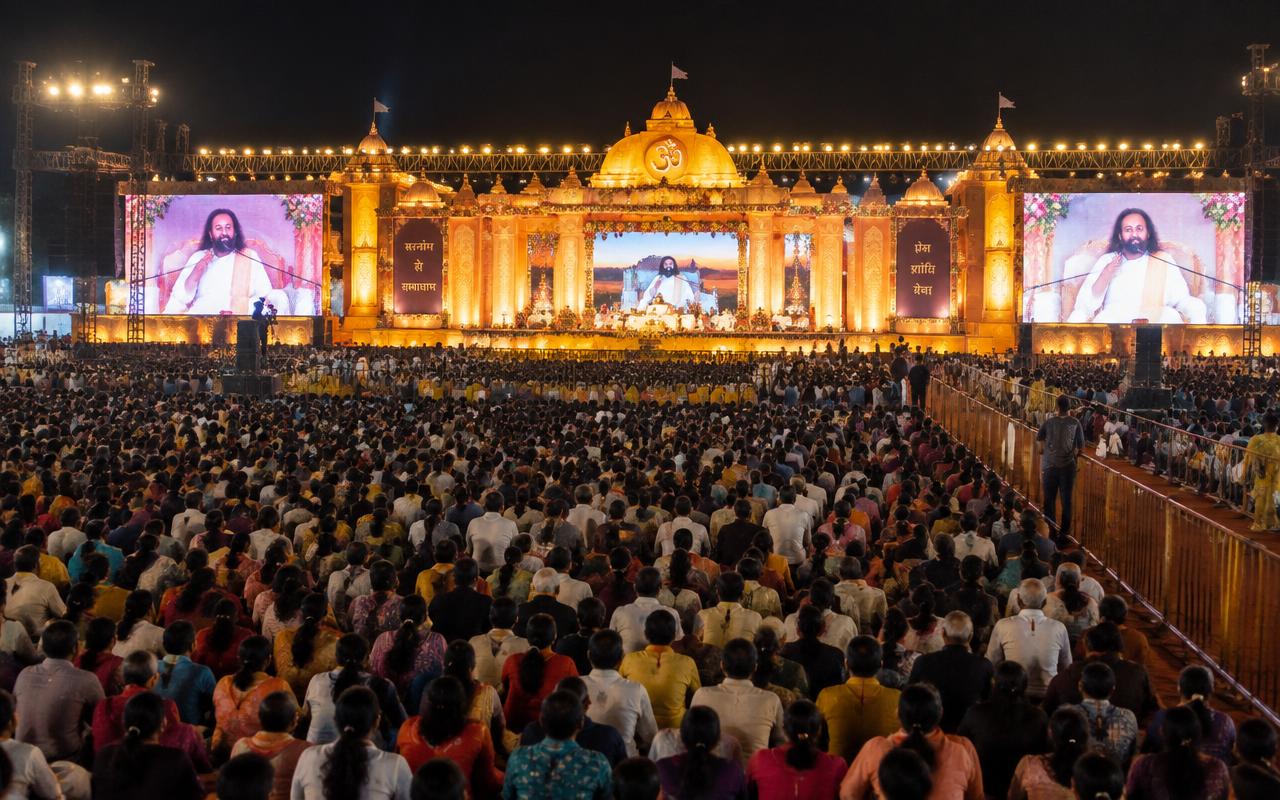
- Delay towers are timed by estimate and the rear of the ground hears a double arrival
- Microphone technique varies widely between speakers and singers across a long day
- Feedback builds as roving microphones move through an open congregation
- A multi-day event has no window in which to repair a failure
What goes wrong, and the fix
What can go wrong
How we prevent it
- What can go wrong
Delay towers are timed by estimate and the rear of the ground hears a double arrival.
How we prevent itTime-align with measurement at the tower and at listening positions on the ground, re-check after any trim change, and verify intelligibility by walking the field with a talkback feed rather than music.
- What can go wrong
Microphone technique varies widely between speakers and singers across a long day.
How we prevent itUse close microphones chosen for the voice rather than general-purpose handhelds, keep a hot spare permanently open on the dais, and keep one engineer on speech for the full session rather than rotating mid-discourse.
- What can go wrong
Feedback builds as roving microphones move through an open congregation.
How we prevent itLimit roving channels, gate and ring out each one against the actual rig, brief volunteers on holding distance, and keep roving mics out of the coverage lobes of the nearest delay tower.
- What can go wrong
A multi-day event has no window in which to repair a failure.
How we prevent itDuplicate the signal chain from console to amplifier, keep a mirrored playback and stream encoder armed, and run two generators on automatic changeover so maintenance happens on a standby leg.
- What can go wrong
The stream drops during the most-watched ritual of the day.
How we prevent itBond multiple connectivity paths, keep a second encoder live on a parallel route, monitor the published stream rather than the local output, and staff the stream position through every aarti.
- What can go wrong
The crowd substantially exceeds the estimate given at planning stage.
How we prevent itDesign coverage with a growth zone and pre-plan an additional delay position and screen that can be deployed in a day, and agree with the organisers how overflow seating is lit and served.
When to decide each one
- 8 weeks out
Scale and schedule confirmed
Expected congregation, number of days, daily ritual timings and the ground layout agreed so coverage and crew rotation can be designed.
- 6 weeks out
Coverage design
Array prediction on the actual ground plan, delay positions and screen locations fixed against seated sightlines at low eye level.
- 4 weeks out
Approvals and crowd plan
Ground allotment, loudspeaker and crowd permissions, medical and fire plan, and announcement protocol agreed with the local administration.
- 3 weeks out
Stream and language plan
Platform, connectivity paths, commentary or translation channels and archive recording specification confirmed with the organisation.
- T−3 to T−1 day
Build, tune and brief
Structures, towers, screens and power complete; system measured across the ground; volunteers and camera crew briefed on restrictions.
- Each night
Daily handover
Recordings backed up, generator and fuel check, overnight watch arrangement and a morning pre-flight before the first aarti.
The pattern underneath
Almost every failure above is a decision taken too late rather than a technical limit. Continuity and reach are the third pillar. Multi-day events run from before dawn until late evening with no gap in which to repair anything, so amplification, processing and playback are duplicated and power runs on redundant generators with automatic changeover. A large share of the congregation is watching the stream, often from abroad, which makes a stable encoder path, a regional-language commentary channel and an archive recording part of the core specification. Announcements for lost persons, medical help and crowd flow need a priority path over the music feed. Get an itemised quote from Prime AV Solutions within 24 hours — call +91 93093 80958 or WhatsApp our producers.
Published 2 November 2025 by the Prime AV Solutions production team.