Key takeaway
Key takeaways
- T-4 weeks: Channel count and use plan
- T-2 weeks: Preliminary coordination
- Show day −1: Venue scan
- Show day, T-2 hours: Populated re-scan
How wireless microphones & IEMs is actually delivered
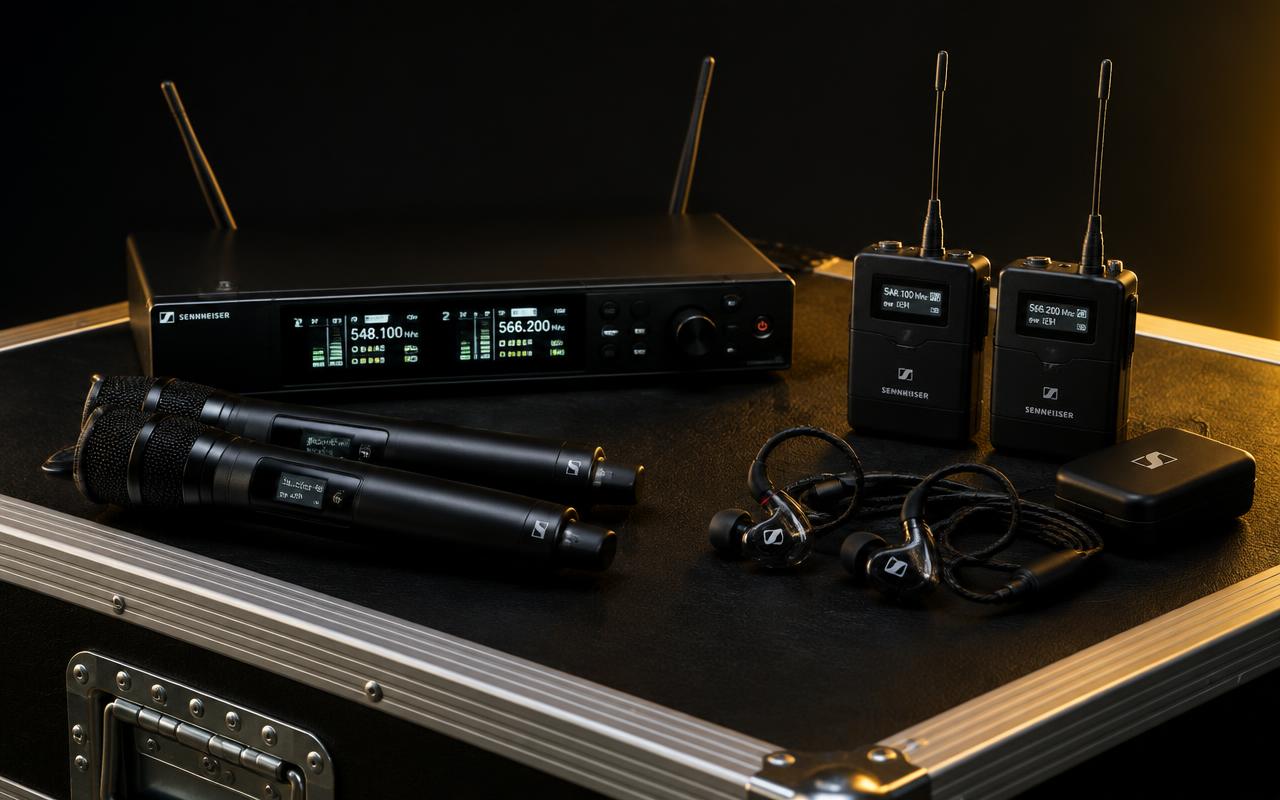
Wireless audio is a spectrum management problem wearing an audio costume. Every microphone and in-ear monitor transmitter occupies a frequency, and frequencies have to be chosen so that no two combine to produce an intermodulation product landing on a third. That calculation is done in software — Shure Wireless Workbench or Sennheiser's Wireless Systems Manager — against a scan of the actual venue taken at the actual time of day, because the UHF environment at 9 am in an empty hall bears little resemblance to the same room at 7 pm with press, broadcast trucks and two thousand phones in it. India's usable wireless microphone spectrum sits largely in the UHF television bands under WPC licensing, and that headroom is narrowing, which makes coordination more necessary rather than less.
From enquiry to load-out
- T-4 weeks
Channel count and use plan
Every speaker, performer, IEM and comms channel listed, because the plan is built on the total count, not on the microphone count.
- T-2 weeks
Preliminary coordination
A frequency plan built from known local spectrum conditions, with equipment allocated to bands and reserves set aside.
- Show day −1
Venue scan
Full RF scan of the venue, antennas placed and aimed, and the plan refined against what the scan actually shows.
- Show day, T-2 hours
Populated re-scan
A second scan with the venue filling, press arriving and broadcast equipment live, and frequencies moved if needed.
- Show day, T-90 minutes
Fitting and line check
Every lavalier and headset fitted and checked on the wearer, packs labelled, batteries fresh and the allocation chart confirmed.
- Show day to +2 hours
Show and handback
Channels monitored throughout with spares dressed and live, then packs collected, counted and reconciled.
Who is on site
- RF coordinator
Scans the spectrum, builds the frequency plan including intermodulation checks, and holds reserve frequencies through the show.
- Microphone technician
Fits lavaliers and headsets, manages the handover of handhelds between presenters and swaps a failing pack silently.
- IEM technician
Fits and tests ear pieces, manages packs and batteries per performer and watches for blocking at the IEM antennas.
- Antenna and systems technician
Places and aims antennas, builds the distribution and keeps RF cabling clear of LED walls and dimmer runs.
- Monitoring operator
Watches remote RF and battery telemetry for every channel and intervenes before a dropout becomes audible.
What you should receive
Deliverables
- RF scan record from load-in and from the populated venue
- Coordinated frequency plan with intermodulation analysis and reserve channels
- Microphone allocation chart naming every wearer and channel
- Antenna placement drawing with distribution topology
- Battery and pack management log for the event
- Channel health report noting any dropout, interference or intervention
What we plan around
What can go wrong
How we prevent it
- What can go wrong
RF dropouts when the venue fills with phones and the press arrives.
How we prevent itFull RF scan at load-in, coordinated frequencies across all Axient channels, and two spare clean frequencies held in reserve.
- What can go wrong
A press or broadcast crew arrives with their own wireless on frequencies nobody coordinated.
How we prevent itA single shared frequency plan is published for the whole site, and arriving crews are allocated bands at accreditation rather than allowed to scan for themselves.
- What can go wrong
Antennas mounted behind an LED wall or beside dimmer racks pick up broadband noise.
How we prevent itAntennas are placed at height with line of sight to the performance area and routed well clear of LED panels, dimmers and LED fixtures on low-loss cable.
- What can go wrong
A lavalier on a heavy jacket or a sari rustles through every speech.
How we prevent itMounting is planned per outfit — vampire clips, tape positions and cable dressing agreed at fitting — and for critical speakers we recommend a headset boom instead.
The detail that matters
The hardware choices follow from the risk. Shure Axient Digital and Sennheiser Digital 6000 are specified not because they sound better than cheaper digital systems — the difference is modest — but because of what they do under pressure: wide tuning ranges, frequency diversity where a channel transmits on two frequencies simultaneously, high channel density in a given bandwidth, and remote monitoring so a technician sees a dropout building before it is audible. Antennas matter as much as receivers. Directional paddle or helical antennas aimed at the performance area, mounted at height and away from LED walls and lighting dimmers, routed through an antenna distribution system on low-loss cable, outperform any amount of transmitter power.
Start the conversation
Get an itemised quote from Prime AV Solutions within 24 hours — call +91 93093 80958 or WhatsApp our producers.
Published 22 February 2026 by the Prime AV Solutions production team.