Key takeaway
Key takeaways
- T-3 weeks: Artist spec confirmation
- T-2 weeks: Floor and rig plan
- T-1 week: Content and look build
- Show day: Load-in and tune
How DJ & premium party sound is actually delivered
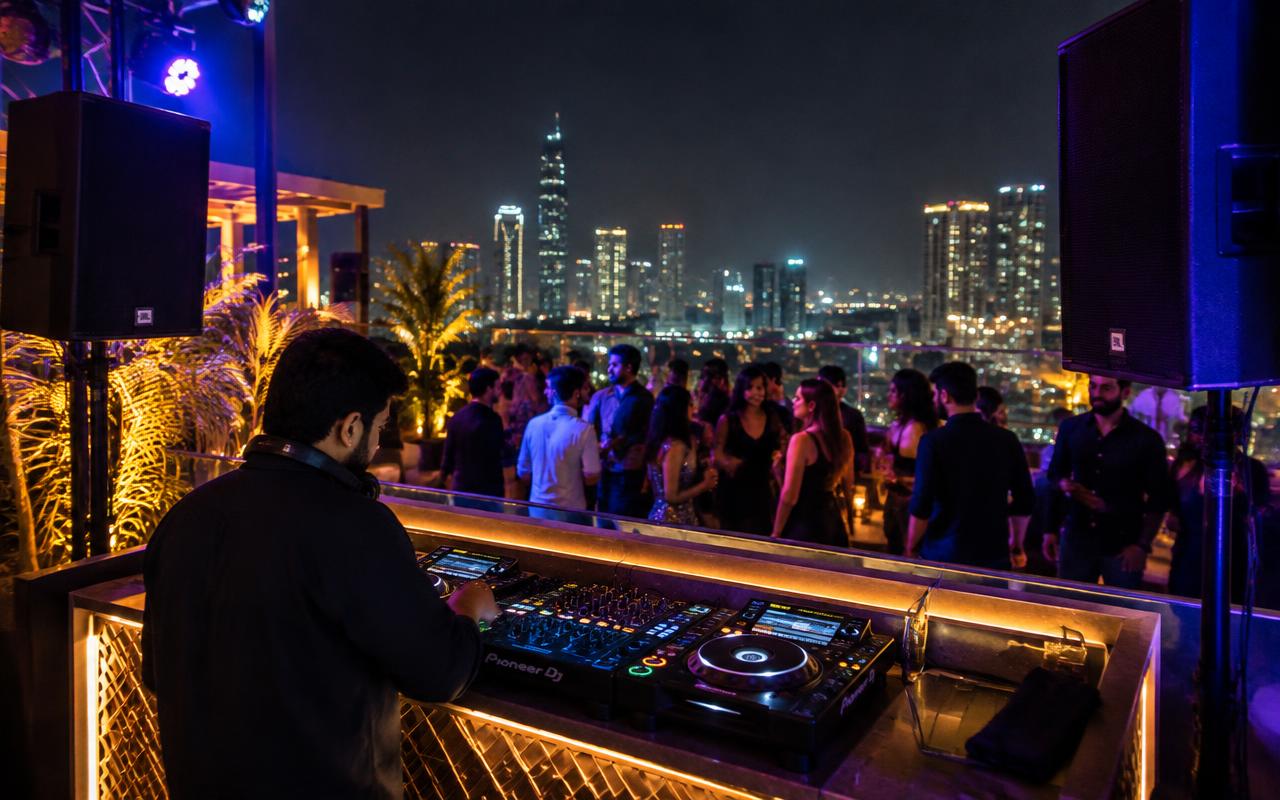
A premium DJ setup is judged on two things: what the DJ feels in the booth and what the dance floor feels in the chest. The booth is built around a Pioneer CDJ-3000 pair or quad with a DJM-A9 or V10 mixer, linked over Pro DJ Link so beat grids, quantise and track loading behave as the artist expects. Booth monitoring is a separate send on its own cabinets, angled at the DJ's ear height and level-matched so they are not mixing against a 20-metre delayed slap from the main system. We supply a laptop stand, a USB hub, RCA and XLR patching for every common controller, and a dedicated power circuit for the booth that nothing else shares.
From enquiry to load-out
- T-3 weeks
Artist spec confirmation
Booth layout, mixer model, monitor preference and any lighting or timecode requirement confirmed with the DJ's team.
- T-2 weeks
Floor and rig plan
Sub positions, top aiming, fixture plot and effects firing positions drawn against the venue layout.
- T-1 week
Content and look build
Booth facade content, LED visuals and the programmed lighting looks are built and reviewed.
- Show day
Load-in and tune
Build, tune the floor for even low frequency, set booth monitoring and walk the laser masking.
- Show day, T-2 hours
Soundcheck and set
Each artist checks their booth, levels are agreed, then the set runs with an operator on lighting throughout.
- Set end +2 hours
Strike
Effects are made safe and gas isolated first, then lighting, then audio, with the booth packed under supervision.
Who is on site
- System engineer
Tunes the floor for even low-frequency coverage and keeps the system clean at target level rather than limiter-bound.
- Booth technician
Builds and tests the DJ booth, hosts each artist through changeover and handles their patching and monitoring.
- Lighting operator
Busks looks against the set, hits drops live, and runs hazer, CO2 and strobe cues to the music.
- Effects technician
Loads and arms CO2 and confetti, monitors gas levels, and keeps firing lines clear of guests and the booth.
- Laser operator
Aims and masks every beam above the audience plane and holds the kill switch for the duration of the set.
What you should receive
Deliverables
- Booth layout drawing with patching and power detail
- Dance-floor coverage plan showing sub positions and top aiming
- Lighting plot with the busking layout and programmed look list
- Effects firing plan with safety exclusion zones marked
- Laser aiming and masking record with the operator's sign-off
- Recorded set audio on request, taken from a dedicated mixer output
What we plan around
What can go wrong
How we prevent it
- What can go wrong
Left-right subwoofer placement creates loud and dead patches across the dance floor.
How we prevent itSubs are centre-clustered or built as a four-box arc, then checked by walking the floor with a meter before doors.
- What can go wrong
The DJ cannot hear the booth monitor over the main system and starts mixing badly.
How we prevent itA dedicated monitor send on its own cabinets at ear height, level-matched at soundcheck with the artist actually standing in the booth.
- What can go wrong
A visiting DJ arrives expecting a mixer model that was never confirmed.
How we prevent itThe booth spec is confirmed in writing at T-3 weeks and a second mixer travels in the truck on any headline night.
- What can go wrong
Laser beams drop into the audience plane as the crowd surges forward.
How we prevent itBeams are masked and aimed above head height at build, the exclusion zone is physically barricaded, and the operator holds a kill switch all set.
The detail that matters
The dance floor is a low-frequency problem. Club-grade subs placed in a left-right pair produce a comb pattern across the floor, so we prefer a centre-clustered block or a four-box arc that gives the whole floor similar energy between 40 and 80 Hz. Tops are flown or pole-mounted above head height and aimed down into the floor rather than across it, which keeps level on the dancers and off the bar and the smoking terrace. Target is 100 to 105 dBA on the floor with the system still clean at that level, which comes from headroom and correct crossover points rather than from pushing limiters.
Start the conversation
Get an itemised quote from Prime AV Solutions within 24 hours — call +91 93093 80958 or WhatsApp our producers.
Published 28 July 2026 by the Prime AV Solutions production team.