Key takeaway
Key takeaways
- T-6 weeks: Agenda and room review
- T-4 weeks: Technical plan issue
- T-2 weeks: Content standards and collection
- Show day −1: Build and intelligibility check
How conference AV setup is actually delivered
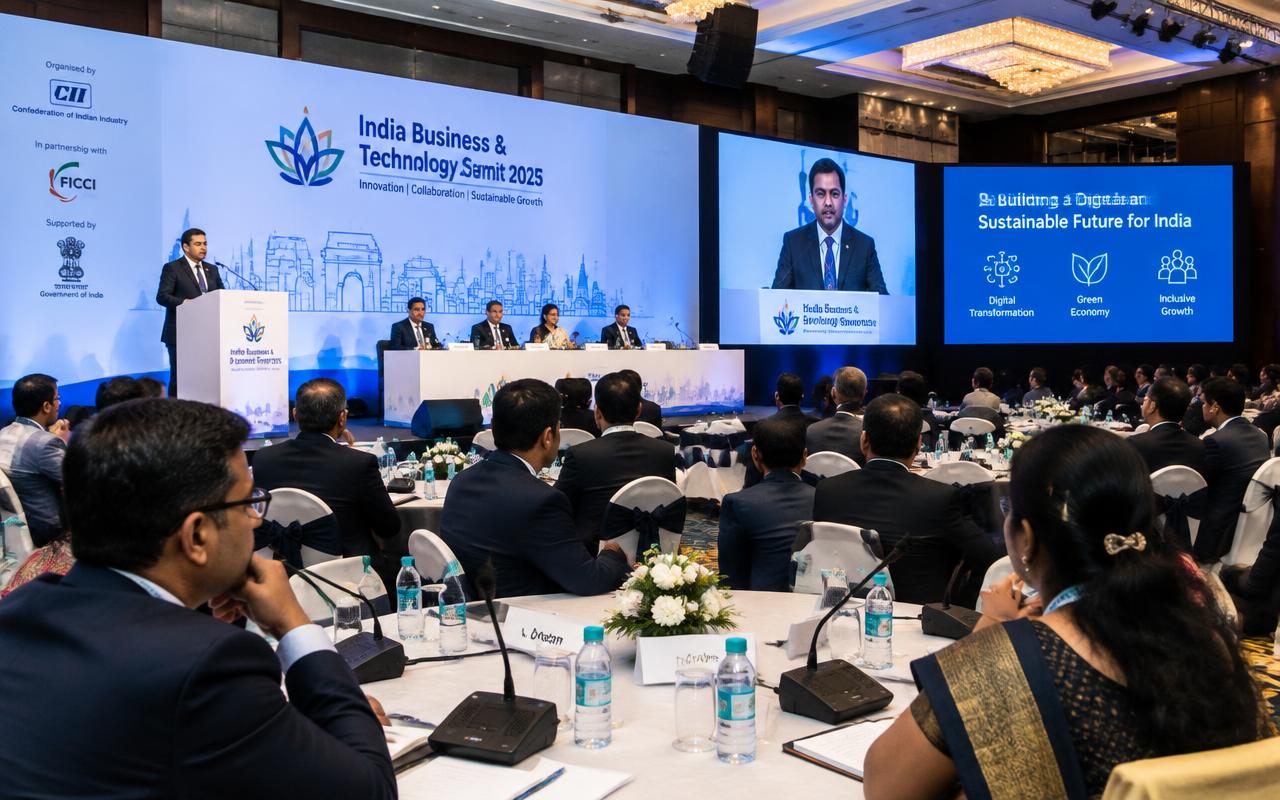
Conference AV is judged on intelligibility and on the clock. Speech reinforcement in a long reflective ballroom is a harder problem than concert sound, because there is no masking music and every reflection smears a consonant. We design for a measurable target — a speech transmission index of around 0.5 or better is where a room stops being tiring — using distributed loudspeakers aimed down into the seating rather than a single loud source, and delayed so sound arrives coherently from the direction of the stage. Delegate microphone systems from Bosch DICENTIS or Shure Microflex Complete handle multi-speaker panels with request-to-speak queueing and automatic mixing to limit open microphones.
From enquiry to load-out
- T-6 weeks
Agenda and room review
The agenda, speaker count, panel formats and room dimensions drive the system design rather than a standard package.
- T-4 weeks
Technical plan issue
Room-by-room equipment plan, screen sizes against sightlines, microphone counts and the comms plan.
- T-2 weeks
Content standards and collection
Presentation standards issued to every speaker and a deck collection deadline enforced with a named owner.
- Show day −1
Build and intelligibility check
Systems built, speech coverage measured and adjusted, every screen path proved and the recording chain tested.
- Show day −1 evening
Speaker rehearsal
Presenters walk the stage, check their deck on the actual screen and use the actual microphone they will wear.
- Day 1 to final day +4 hours
Conference days and strike
Sessions run to the called order, recordings are offloaded and checked nightly, then strike in venue-mandated order.
Who is on site
- Technical producer
Owns the AV plan against the agenda, coordinates every department and is the client's single point of contact on site.
- Show caller
Calls walk-ons, slide hand-offs, video rolls and breaks from a cue-marked running order on headset comms.
- Audio engineer
Mixes speech and panels, manages the delegate system's automatic mixing and holds intelligibility over volume.
- Presentation operator
Collects, versions and cues every deck, advances two mirrored machines and handles late bring-your-own-laptop speakers.
- Vision mixer
Cuts IMAG and content to the screens and protects the stage and stream feeds from screen-side changes.
- Breakout room technician
Runs a room single-handed — microphones, screen, recording and the session clock — with the main hall unavailable to help.
What you should receive
Deliverables
- Room-by-room technical plan with equipment and crew allocation
- Speech coverage and intelligibility measurement for the main hall
- Cue-marked running order used by the show caller
- Presentation standards document and the final versioned deck set
- Session recordings per room with clean programme audio
- Microphone allocation chart naming every speaker and panellist
- Post-event technical report including any session that ran over
What we plan around
What can go wrong
How we prevent it
- What can go wrong
A speaker arrives at the podium with an unseen deck on their own laptop two minutes before their slot.
How we prevent itA wireless presentation system is live on the switcher as a permanent input, and the operator holds a laptop input already tested so the switch is a cut rather than a rebuild.
- What can go wrong
Panel discussions become unintelligible with six microphones open at once.
How we prevent itThe delegate system's automatic mixing gates unused microphones and attenuates for the number of open channels, and the moderator is briefed on request-to-speak before the session.
- What can go wrong
The morning overruns by forty minutes and the afternoon is compressed into chaos.
How we prevent itA stage-only countdown timer and a show caller on comms, with the agreed intervention — a two-minute warning and then a hard wrap cue — agreed with the client in advance.
- What can go wrong
Session recordings are unusable because audio was taken from a camera's on-board microphone.
How we prevent itEvery recording takes a clean programme feed from the audio console, recorded on a separate device, and the first session is checked and reviewed before the second begins.
The detail that matters
The presentation chain is where conferences fail most visibly. Every deck, video and remote feed goes through a switcher with independent outputs for the main screens, the stage confidence monitors, the record feed and the stream, so changing one does not disturb another. Two mirrored presentation machines run in parallel with the operator advancing both, and a wireless presentation system handles the inevitable speaker who arrives with their own laptop five minutes before their slot. Confidence monitors downstage give presenters their current and next slide, and a countdown timer visible only to the stage is what actually keeps a six-speaker morning on schedule.
Start the conversation
Get an itemised quote from Prime AV Solutions within 24 hours — call +91 93093 80958 or WhatsApp our producers.
Published 23 April 2026 by the Prime AV Solutions production team.