Key takeaway
Key takeaways
- Civic function
- District scale
- State function
- Ceremonial scale
What government & public events budgets actually cover
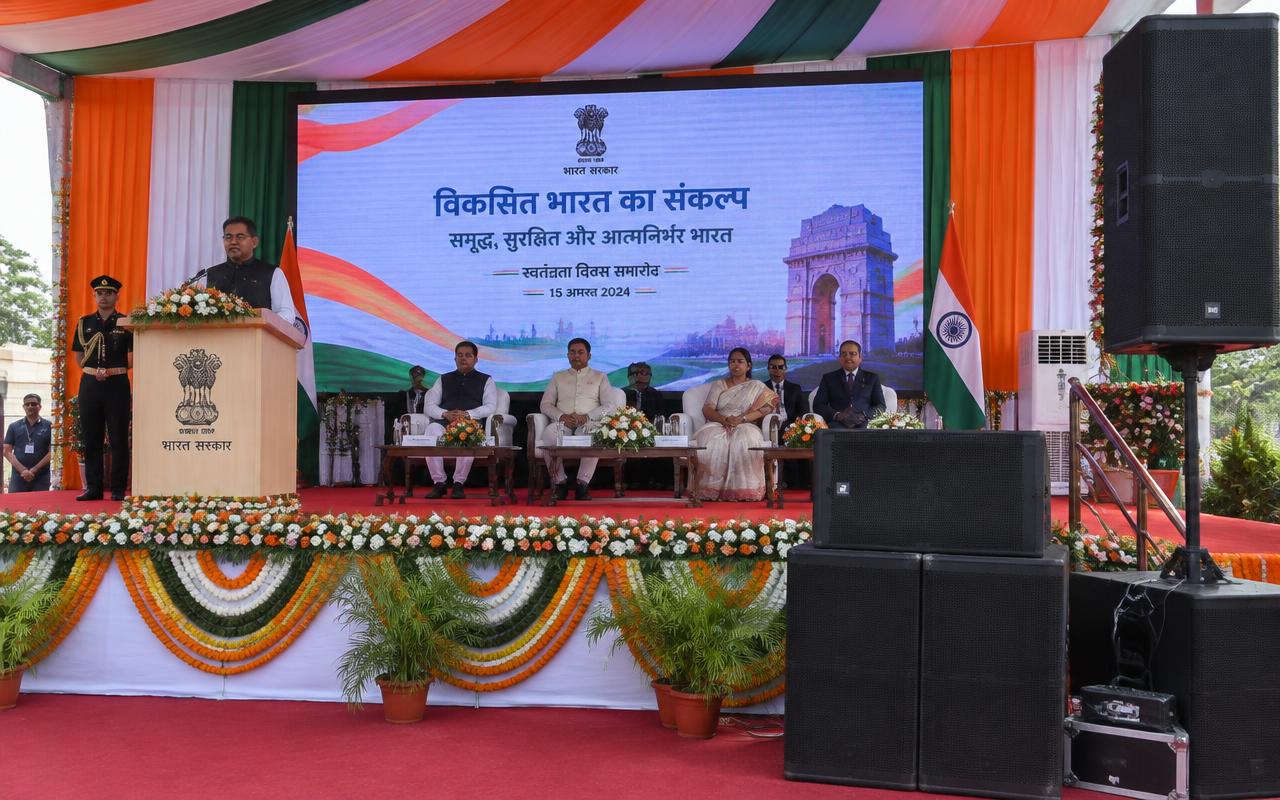
A government function is a protocol exercise before it is a production. The order of the dais, who is addressed and in what sequence, where the national flag stands, when the anthem is played and how the arrival is received are all decided by the protocol office, and the production has to serve that order precisely rather than propose its own. Everything freezes earlier than on a commercial show: seating charts, speaker sequence, scripts and the anthem cue are confirmed days ahead, and the crew works from a cue sheet countersigned by the nodal officer.
Scope levels
A hall or small ground function: redundant speech PA with a hot-spare podium microphone, a screen, dais lighting, playback for the anthem and a generator on changeover.
A public function for several thousand: line-array mains with a delay position, two large screens with camera feed, duplicated signal chain, dual generators and a press feed.
A large maidan event: multiple hangs and delay rings, screen clusters, full duplicate chain and power, interpretation for delegations, three or four cameras and a broadcast-standard clean feed.
A major ceremony or multi-day summit: zoned coverage across a very large ground, multi-language interpretation, a drone or ceremonial finale where permitted, and complete end-to-end redundancy with a multi-day build.
Where scope quietly expands
What can go wrong
How we prevent it
- What can go wrong
The speaker sequence changes after the dignitaries have arrived.
How we prevent itBuild the cue sheet so segments are independent and reorderable, keep the show-caller beside the protocol officer throughout, and have the graphics and screen operator working from live text fields rather than baked video.
- What can go wrong
Crew passes are not cleared in time and technicians cannot enter.
How we prevent itSubmit the crew list, identity documents and vehicle details well before the deadline, nominate a cleared deputy for every critical position, and keep the list short and fixed rather than adding names late.
- What can go wrong
The venue locks down hours before the function and nothing further can be brought in.
How we prevent itTreat the lockdown hour as the real deadline: complete all testing, place every spare inside the cordon, and station crew at each position before the sweep rather than planning to walk back out.
- What can go wrong
The podium microphone becomes a single point of failure.
How we prevent itRun a second microphone on the podium, permanently open and mixed low on a separate wireless system and separate receiver, so a failure is inaudible to the audience rather than a visible pause.
Typical split
Roughly a third sound, a third screens and video, a quarter lighting and staging, and the remainder crew, transport and power. Your scope: protocol-aware crew; redundant PA & power; large public screens; interpretation for delegations. Get an itemised quote from Prime AV Solutions within 24 hours — call +91 93093 80958 or WhatsApp our producers.
Published 16 September 2026 by the Prime AV Solutions production team.