Key takeaway
Key takeaways
- Essential
- Designer show
- Fashion week
- Flagship
What fashion shows budgets actually cover
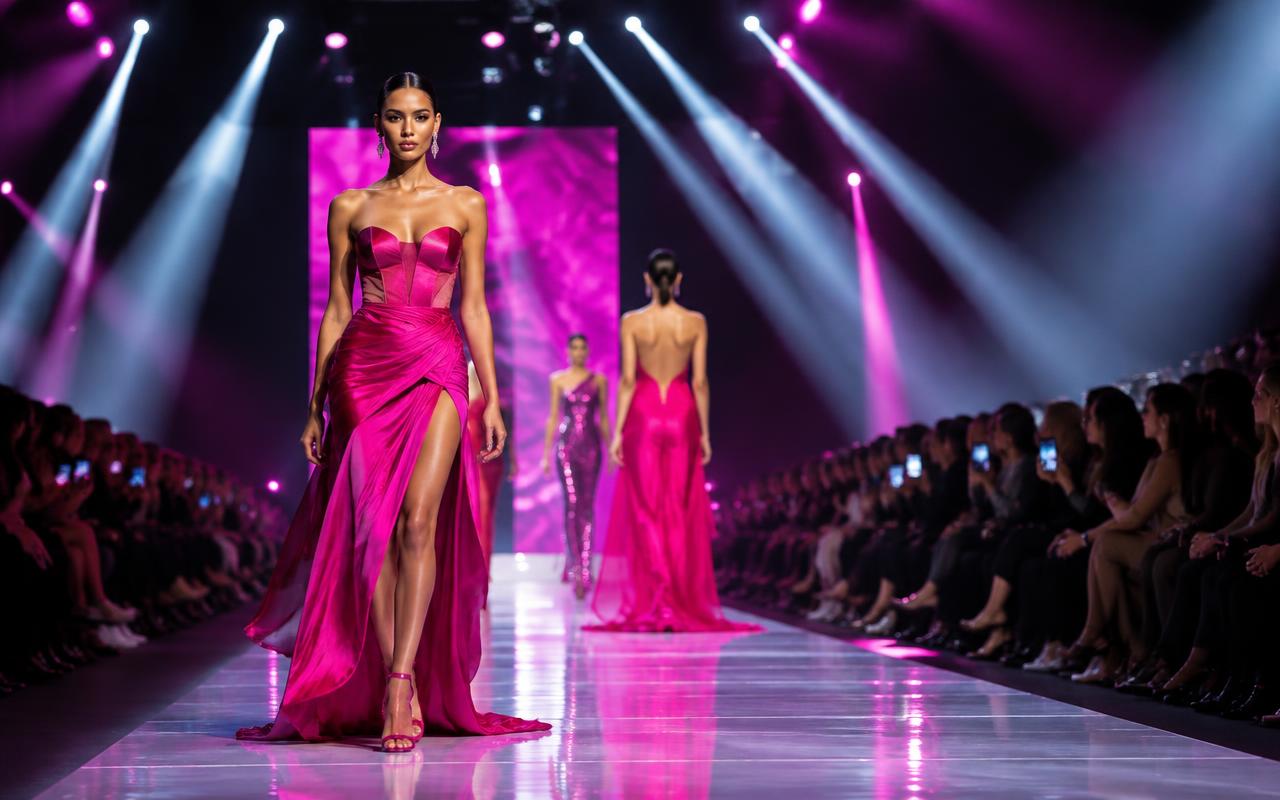
Runway lighting is a colour-rendering problem disguised as a design one. Garments are bought and photographed under your light, so the front wash needs a high colour-rendering index, a consistent colour temperature along the entire ramp and enough level for a photographer at the end of the runway to shoot at a sensible shutter. Shadowing across the face is the thing to avoid: light from front and slightly above at a repeatable angle, add back light to separate the model from the backdrop, and resist the temptation to put colour anywhere that touches skin or fabric.
Scope levels
A hotel or studio ramp up to 20 metres: high-CRI front wash, back light, a clean distributed audio line along the ramp, playback and a fabric or printed backdrop.
Designed lighting plot with moving fixtures and programmed segments, LED backdrop with content, ramp decking and skirting, timecoded playback and a lighting operator on cue.
Multiple shows per day on a shared rig, custom ramp geometry, large LED, haze and effects, a camera position for the house film and a resident crew across the schedule.
Custom set fabrication, projection or kinetic elements, a full broadcast or streaming package, dedicated lighting design with previsualisation and a multi-day build.
Where scope quietly expands
What can go wrong
How we prevent it
- What can go wrong
Front light is too cool or has poor colour rendering and the garments photograph wrong.
How we prevent itSpecify high colour-rendering fixtures at a single agreed colour temperature, test against actual fabric swatches during focus, and review photographer test shots on camera rather than judging by eye.
- What can go wrong
The music edit changes an hour before doors.
How we prevent itBuild the show as timecoded segments rather than one monolithic cue stack, keep the music operator and the lighting operator on a shared cue sheet, and run the new edit once before doors even if that delays doors by ten minutes.
- What can go wrong
The designer reorders the line-up backstage mid-show.
How we prevent itCue lighting to segments and looks rather than to model numbers, keep a backstage comms line to the dresser area, and have the show-caller confirm each change back verbally before it happens.
- What can go wrong
The ramp flexes or a heel catches on the surface.
How we prevent itSpecify stiffened decking with a tested span, screw and level every joint, choose a matte non-slip surface that does not bounce front light, and walk the finished ramp in heels during focus.
Typical split
Roughly a third sound, a third screens and video, a quarter lighting and staging, and the remainder crew, transport and power. Your scope: ramp lighting design; LED backdrops; punchy runway sound; media camera positions. Get an itemised quote from Prime AV Solutions within 24 hours — call +91 93093 80958 or WhatsApp our producers.
Published 27 October 2025 by the Prime AV Solutions production team.