Key takeaway
Key takeaways
- Club scale
- Ground scale
- Arena scale
- Festival scale
What concerts & live shows budgets actually cover
A concert begins with the rider, not the ground plan. The artist's technical rider specifies the PA, the front-of-house and monitor consoles, the microphone list, the backline, riser sizes and the number of in-ear channels, and the advance conversation with the tour manager is where you establish what is supplied exactly, what is substituted and what is genuinely unavailable in the country. Get every substitution approved in writing weeks ahead, because a console swap discovered at soundcheck costs you the headline act's goodwill and sometimes the show.
Scope levels
Up to 2,000 guests: compact line array with subs, a digital front-of-house and monitor console, wedges or a small in-ear package, a modest moving-light rig and a decked stage.
5,000 – 10,000 guests: full line-array hangs with ground-stacked subs, separate monitor world, roofed stage with certified rigging, LED wall, a designed light show and barricade.
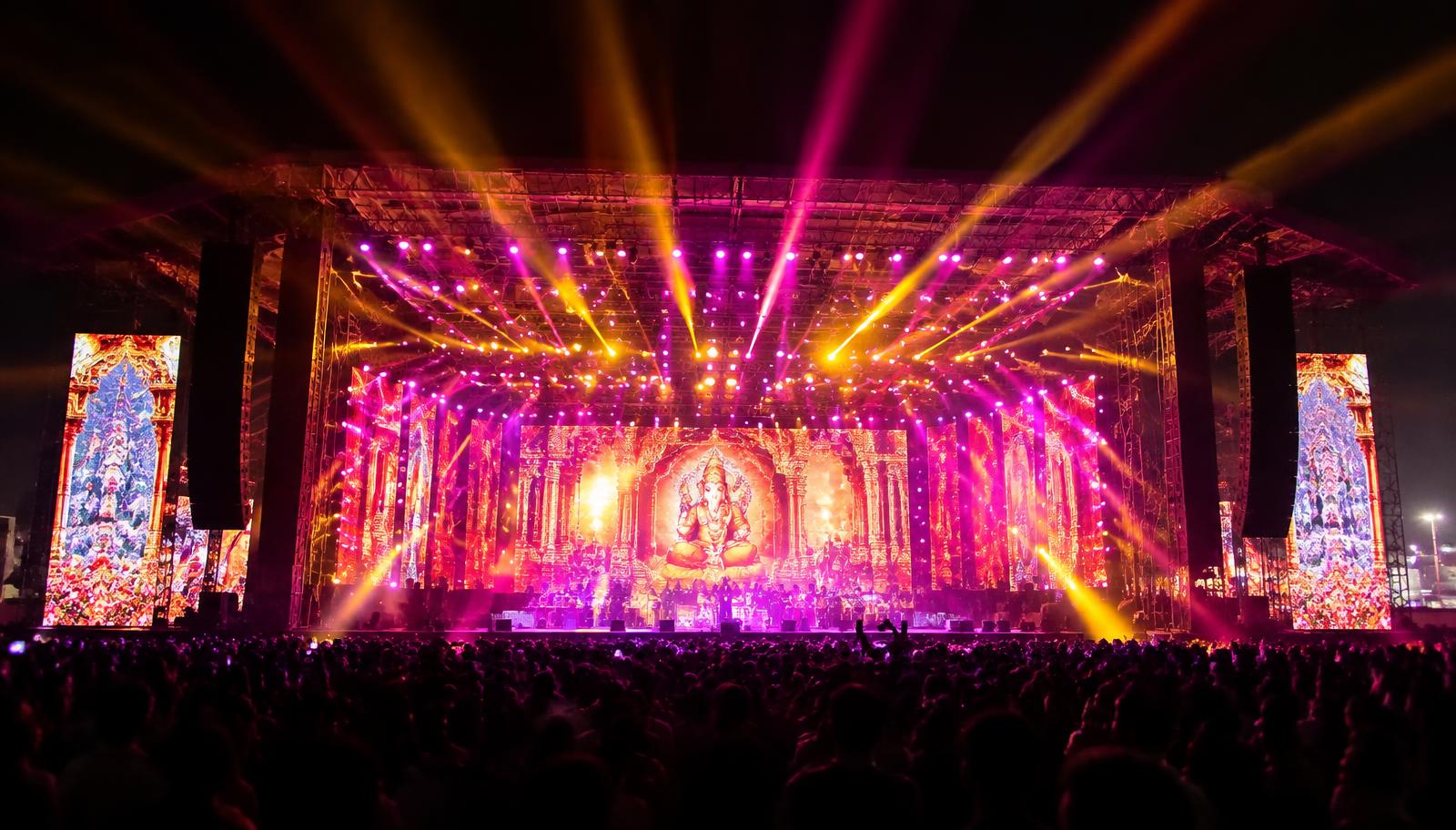
15,000 – 25,000 guests: multiple hangs plus time-aligned delay towers, large-format LED and IMAG, 150-plus fixture lighting rig, full generator redundancy and a touring-standard stage.
Multi-stage or 40,000-plus capacity with rider-compliant kit per stage, full rigging engineering, broadcast integration and a crew working rotating shifts across a multi-day build.
Where scope quietly expands
What can go wrong
How we prevent it
- What can go wrong
A rider substitution is rejected by the touring engineer on the day.
How we prevent itClose out every substitution in writing during the advance, naming the exact model offered, and get the tour manager's acceptance before the kit leaves the warehouse.
- What can go wrong
The visiting monitor engineer arrives with a console file your desk cannot load.
How we prevent itConfirm console model and firmware version in the advance, ask for the show file a week early, and test-load it in the warehouse so patching differences are found before load-in.
- What can go wrong
Delay towers are mistimed and the back of the field hears a double arrival.
How we prevent itTime-align with measurement rather than by estimate, verify at several points on the field with a measurement rig, and re-check after any array trim change.
- What can go wrong
Stage power hum or a ground loop appears once lighting comes up.
How we prevent itRun audio and lighting from separate distribution with a single star earth point, isolate dimmer and LED fixture feeds, and test the full rig at show levels during the tune rather than at soundcheck.
Typical split
Roughly a third sound, a third screens and video, a quarter lighting and staging, and the remainder crew, transport and power. Your scope: rider-compliant PA & backline; monitor world & IEMs; stage roof & rigging; LED walls & lighting show. Get an itemised quote from Prime AV Solutions within 24 hours — call +91 93093 80958 or WhatsApp our producers.
Published 7 January 2026 by the Prime AV Solutions production team.