Key takeaway
Key takeaways
- Campus essential
- Pro-show standard
- Headliner
- Flagship fest
What college fests budgets actually cover
A college fest runs on a budget that was raised, not allocated, and is decided by a committee that changes every year. The way to protect both the show and the students is a written scope with named quantities, a single student point of contact with authority, and clear payment milestones tied to build stages. Scope the rig to the ground and the realistic crowd rather than to the poster, and be explicit about what is not included, because the gap between what a sponsorship deck promised and what the budget buys is where fests get into trouble two days before the pro-show.
Scope levels
Day events plus a modest evening show: compact PA for up to 2,000, four radio mics, a basic moving-light rig, a decked stage and a small LED backdrop.
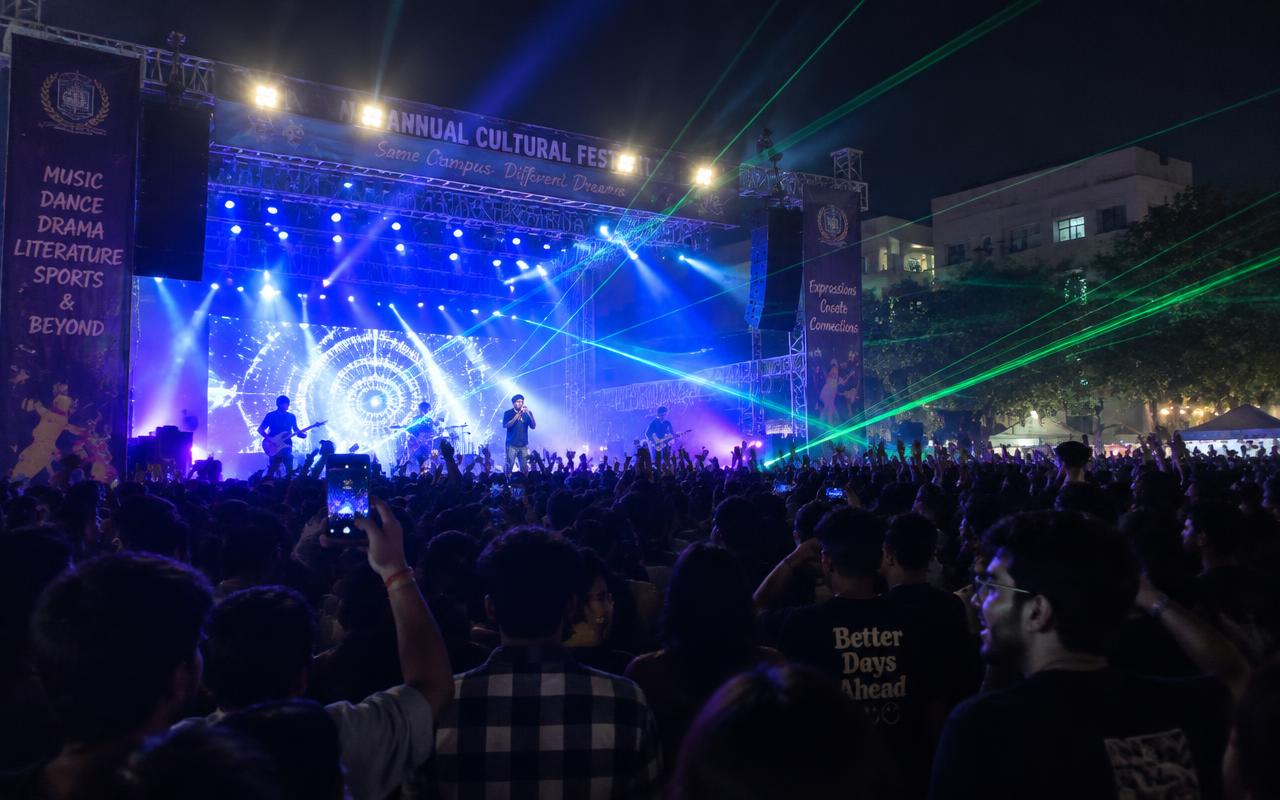
A 5,000-capacity ground: line-array PA with subs, separate monitor position, roofed stage with certified rigging, barricade, a programmed light show and an LED wall.
10,000-plus crowd: full hangs with a delay ring, rider-grade consoles and backline, large LED with IMAG, a 100-plus fixture rig with beams and lasers, and generator redundancy.
Multi-day, multi-stage fest with an arena-scale pro-show night, rider compliance for a touring act, full crowd-safety infrastructure and a crew on rotating shifts.
Where scope quietly expands
What can go wrong
How we prevent it
- What can go wrong
The artist rider arrives forty-eight hours out specifying a console not in the city.
How we prevent itStart the advance as soon as the act is confirmed, propose substitutions in writing immediately, and build the budget with a named alternative already priced so a swap is a decision rather than a crisis.
- What can go wrong
Day competitions damage or disorganise the pro-show stage.
How we prevent itCover the stage surface, keep the pro-show backline and consoles off the deck until the afternoon reset, and schedule a hard changeover with the committee rather than letting events run late into it.
- What can go wrong
The campus hard stop arrives mid-set and nobody on stage respects it.
How we prevent itGet the permitted end time in writing, print it on the cue sheet, brief the artist management in the advance, and give the stage manager authority to run a play-off at the agreed minute.
- What can go wrong
Crowd surge builds at the front-of-stage barricade.
How we prevent itSpecify a pit with real working width, staff it with a barrier crew carrying water and an extraction route, keep a one-button crowd-lighting state, and agree a stop-show protocol with campus security beforehand.
Typical split
Roughly a third sound, a third screens and video, a quarter lighting and staging, and the remainder crew, transport and power. Your scope: artist rider fulfilment; concert PA for 10,000+; beam & laser shows; stage and barricades. Get an itemised quote from Prime AV Solutions within 24 hours — call +91 93093 80958 or WhatsApp our producers.
Published 20 November 2025 by the Prime AV Solutions production team.