Key takeaway
Key takeaways
- Sony & Blackmagic broadcast cameras
- Jib cranes, sliders & PTZ
- OB-style production control
- Same-day highlight edits
Why award shows need a designed system
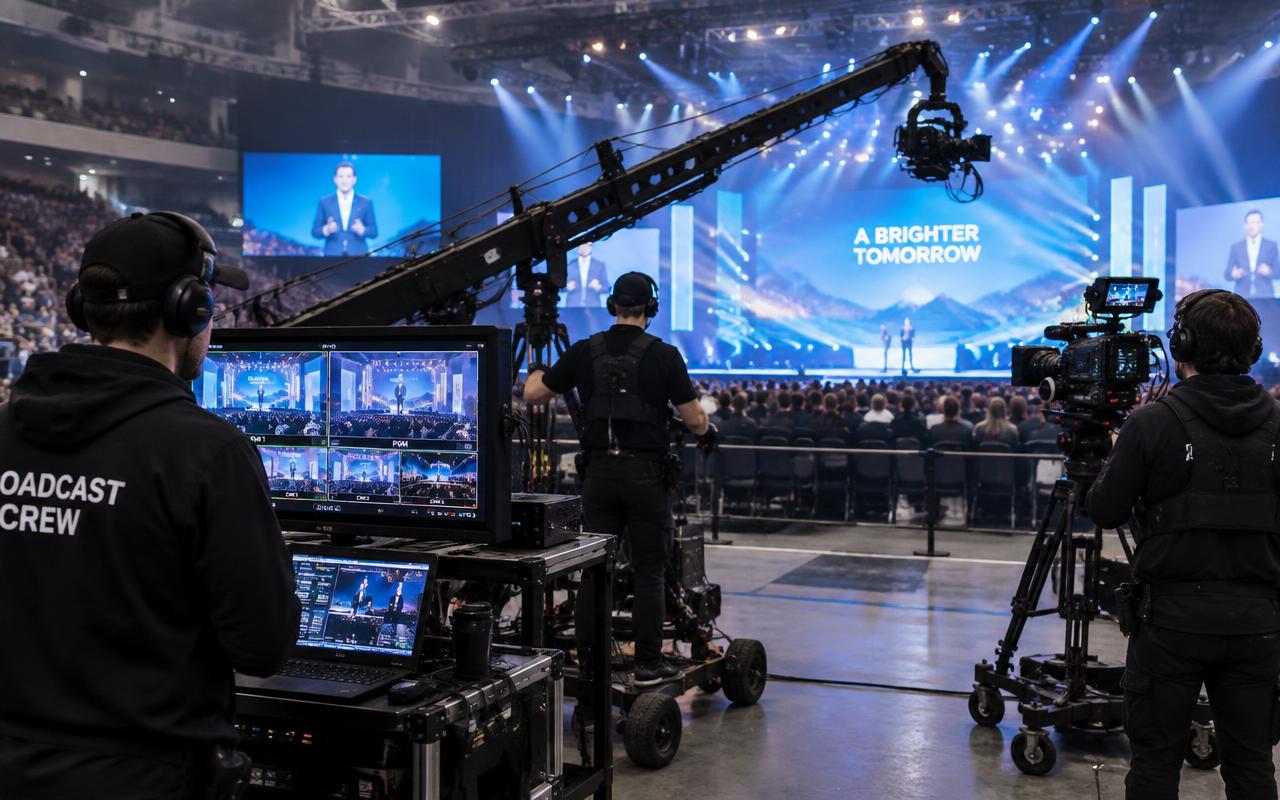
Broadcast-grade cameras, jibs, PTZs and OB-style control for IMAG, TV feeds and post-event films that capture every moment. Multi-camera production is a disciplined signal chain before it is a creative one. Cameras are genlocked to a common reference — tri-level sync for HD and UHD — so that every source is on the same clock and a cut between them is clean rather than a frame of glitch. Signals run on 12G-SDI over coax for short distances and on SMPTE fibre or triax for long camera positions, with camera control units allowing a vision engineer to shade iris, black level and colour matrix remotely from a rack position. That shading is what makes six cameras look like one camera from six angles, which is the difference between a multi-camera production and six separate recordings.
Match the rig to the room
| Scale | Guests | Recommended setup |
|---|---|---|
| Panel session | 100 – 400 | Three cameras: wide lock-off plus two long lenses, single switcher, programme and ISOs |
| Conference plenary | 500 – 1,500 | Four to five cameras with a slider, IMAG programme output, camera shading, ISOs |
| Award night | 1,500 – 4,000 | Six to seven cameras including jib and pit handheld, separate IMAG and stream feeds |
| Concert | 5,000 – 20,000 | Eight to ten cameras with long lenses, jib, pit and on-stage positions, replay |
| Televised production | 20,000+ | Twelve to sixteen cameras, broadcaster spec delivery, EVS replay, matrix intercom |
Specification
| Specification | Detail |
|---|---|
| Camera classes | Sony HDC and HXC system cameras, Blackmagic URSA Broadcast, large-sensor cinema bodies |
| Genlock | Tri-level sync distributed to every source so cuts are frame-clean |
| Signal transport | 12G-SDI on coax for short runs, SMPTE fibre or triax for long camera positions |
| Camera control | CCU and RCP shading of iris, black level and matrix from the rack position |
| Switchers | Ross Carbonite, Blackmagic ATEM Constellation, Sony production switchers |
| Specialist positions | Jib, Steadicam, dolly, slider and PTZ for inaccessible angles |
| Intercom | Riedel or Clear-Com party-line or digital matrix to every operator and the director |
| Recording | Programme cut plus isolated camera ISOs for post-event editing |
| Delivery formats | 1080p50 standard, UHD on request, broadcaster spec for frame rate, colour and loudness |
| On-site edit | Shuttle drive to an edit position for same-day highlight delivery |
Honest alternatives
- A single-camera record instead of a multi-camera productionOur verdict
A well-operated single camera with good audio is a perfectly respectable record of a conference and costs a fraction. It cannot serve IMAG, cannot cut to a reaction, and gives an editor nothing to work with — so it is a record, not a production.
- PTZ cameras instead of manned positionsOur verdict
PTZ units are excellent in positions no operator can occupy and have become genuinely good. They still cannot anticipate action the way an operator does, and a show cut entirely from PTZs looks subtly late throughout. Mix them in; do not build on them alone.
- Cinema cameras instead of broadcast system camerasOur verdict
Large-sensor cinema bodies give a shallower, more filmic look that clients increasingly want. Broadcast system cameras give remote shading, genlock, long cable runs and reliability over a six-hour show. For a live cut to screens, system cameras remain the right tool.
Also suited to
Concerts, Sports events. Get an itemised quote from Prime AV Solutions within 24 hours — call +91 93093 80958 or WhatsApp our producers.
Published 2 March 2026 by the Prime AV Solutions production team.