Event production · Jalandhar, Punjab
Fashion Shows AV in Jalandhar
Jalandhar sits at the centre of Doaba, the most heavily emigrated belt in Punjab, and the NRI economy shapes almost everything: remittance-funded weddings at the palace-style banquet halls on the GT Road and Nakodar Road, visa and immigration expos, and property launches aimed at overseas buyers. Behind that sit the city's own industries — sports goods, hand tools and leather — plus a Punjabi music and broadcast ecosystem that produces real concert demand. Prime AV Solutions produces the fashion shows end of that calendar — ramp lighting design, LED backdrops, punchy runway sound — with one crew owning the whole stack.
- Lead time
- 5 weeks out
- Peak season
- Oct–Mar
- Coverage
- Jalandhar & Punjab
Key takeaway
Complete AV for fashion shows in Jalandhar
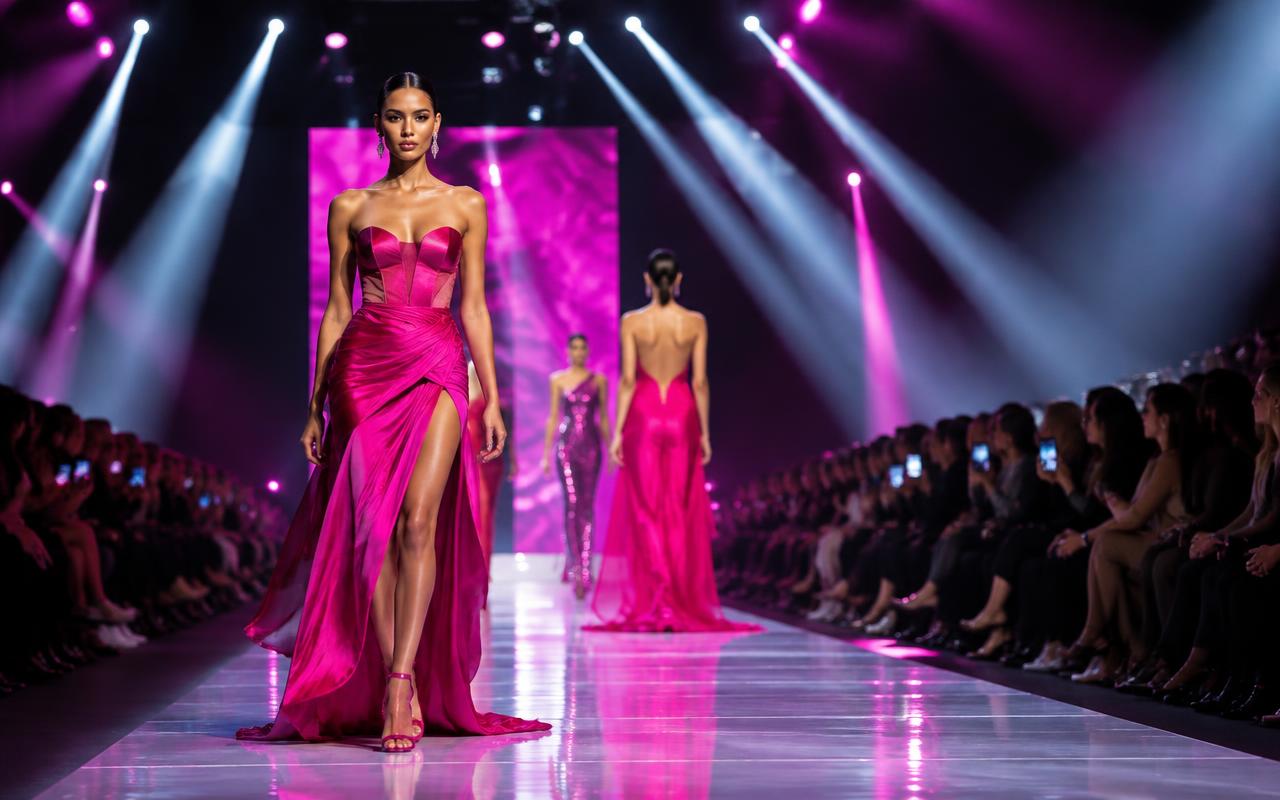
Runway lighting is a colour-rendering problem disguised as a design one. Garments are bought and photographed under your light, so the front wash needs a high colour-rendering index, a consistent colour temperature along the entire ramp and enough level for a photographer at the end of the runway to shoot at a sensible shutter. Shadowing across the face is the thing to avoid: light from front and slightly above at a repeatable angle, add back light to separate the model from the backdrop, and resist the temptation to put colour anywhere that touches skin or fabric.
Ramp length, ceiling height and where the photographers' pit can physically sit are decided by the room long before the lighting plot is drawn. In Jalandhar we work at Radisson Jalandhar, Ramada Jalandhar, PAP Ground and venues across Model Town, GT Road, Civil Lines, Urban Estate, Rama Mandi.
The show is twelve minutes long and takes six hours to rehearse. That time goes into the line-up order, the music edit and the timing of each exit, because once the first model walks there is no stopping. Lock the music as a timecoded edit, cue the lighting states to it, and rehearse with the actual walk speed rather than an assumed one. Expect the designer to reorder the sequence backstage an hour before doors, so the cue structure should be built around looks and segments rather than around individual model numbers.
What your event needs
- Ramp lighting design
- LED backdrops
- Punchy runway sound
- Media camera positions
Why Jalandhar organisers choose Prime AV
- Crews and trucks positioned for fast load-in at Radisson Jalandhar and venues in Model Town and GT Road.
- Cue lighting to segments and looks rather than to model numbers, keep a backstage comms line to the dresser area, and have the show-caller confirm each change back verbally before it happens.
- A standing Jalandhar client base across nri-funded weddings and multi-day sangeet productions and punjabi music concerts, album launches and ticketed shows, so the rig is specified from experience rather than a catalogue.
- Working knowledge of Punjab venue rules, power sanctions and permission timelines.
What you will be judged on afterwards
- Garment colour in the published photographs matched what the designer saw in the studio.
- Every model's face was evenly lit along the whole ramp, with no dark patch and no hot spot.
- The show ran as one unbroken twelve-minute piece with no visible cue hesitation.
- The front row could see the runway past the photographers' pit without leaning.
- The designer could reorder the line-up an hour before doors without the show having to be rebuilt.
Local conditions
Producing fashion shows in Jalandhar
Weather & the rig
A ramp show is built indoors for controlled light, but humidity and heat reach the models, the garments and a room carrying a dense lighting rig. Punjab's winter fog rolls into the Doaba plain from late December through January, cutting visibility sharply and disrupting the very flights that bring NRI families in for the wedding season, so the run of show has to tolerate late arrivals. Summer peaks at 44–45°C in June with a dry dusty wind, the monsoon from late June to September brings heavy spells and the Sutlej and Beas catchments can flood low ground, and February onwards is the pleasant working weather. Late December to January fog creates genuine travel risk for overseas guests, May–June is too hot for daytime outdoor work, and July–September monsoon with occasional catchment flooding rules out open ground. October–November and February–March are the best windows; the NRI wedding peak sits in December and January regardless.
Power & redundancy
A runway rig is lighting-heavy and sensitive to flicker on camera, so stable, clean supply matters far more than headroom. PSPCL supply is better than the Uttar Pradesh comparison but agricultural load management means the surrounding belt still sees interruption, and the marriage palaces, despite their size, sanction loads sized for decorative lighting rather than a concert rig. Every serious job here is generator-backed, and since these are multi-day functions running late, fuel planning and a relief operator for the DG compound matter as much as the set itself.
Permits & noise rules
Fashion shows usually sit inside a hotel or studio venue, so rigging, fire-load and late-night approvals come through the venue layered over local rules. The Jalandhar Municipal Corporation and the district administration handle ground use, the police commissionerate licenses assembly and manages traffic for rallies and congregations, and the Punjab noise rules with the Supreme Court 10 pm limit apply. Enforcement here has a specific local history: the courts and police have acted against marriage-palace noise after midnight, so the practical approach is enclosed venues with sealed openings for the late hours. Drone work needs DGCA clearance and, given the proximity of the international border region, additional police coordination that should not be left late.
Load-in & access
Ramp decking, truss and a full lighting rig arrive the day before and strike the same night, which makes dock access and lift size the whole plan. NH-44 runs through the city, so freight from Delhi or Ludhiana is uncomplicated and the GT Road venues take full container trucks. The constraint is the city core — Model Town, Lajpat Nagar and the old bazaars are congested all day with no truck access, and PAP Ground operations run entirely on police-allotted windows with vehicle manifests submitted in advance. Multi-day wedding builds need a secure on-site compound because the rig stays up for three or four nights.
Season & booking
December and January are the NRI homecoming peak and every decent banquet venue, sound system and lighting rig in Doaba is committed — bookings for these weeks are made six months to a year out. The Harballabh classical sangeet sammelan at Devi Talab takes its December dates, Baisakhi in April and Lohri in January are major, Gurpurab dates bring large kirtan darbars, and the Jalandhar sports goods trade travels to its own fairs in spring. Peak demand runs Oct–Mar.
Crew & dispatch
Trucked from our Delhi depot, 380 km up NH-44 at about six and a half hours, with Ludhiana 60 km away as the practical forward base for crew, structures and barricading during the December peak.
What it costs here
The least price-sensitive wedding market in north India outside the Delhi and Rajasthan destination circuit — a Doaba family funding a daughter's wedding from Canada or the UK will spend on sound, lighting and a filmed deliverable without much argument, and will compare against what relatives booked last season. Industrial and expo work, by contrast, is negotiated tightly on local benchmarks.
Local expectations
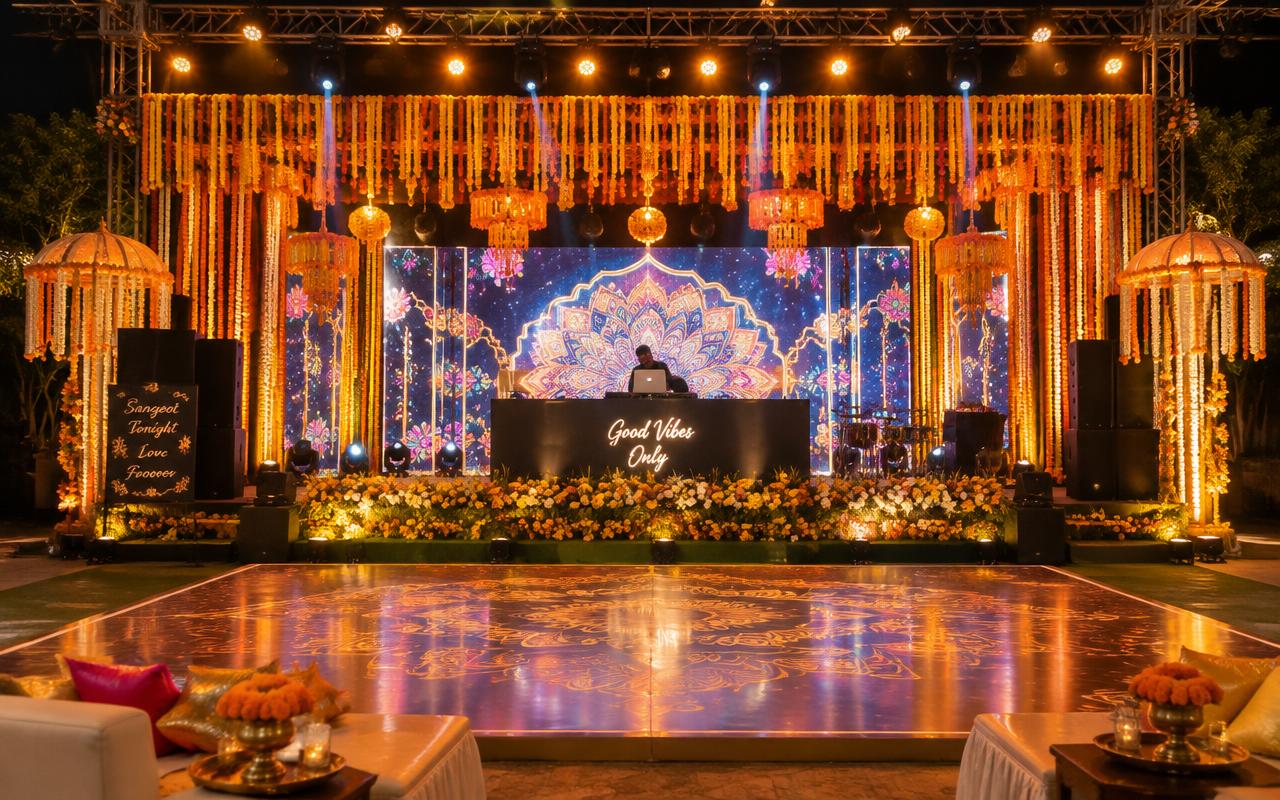
Punjabi production expectations are unambiguous: the sound must be loud, the low end must be felt, dhol and live percussion will join the DJ, and the client genuinely expects the floor to be full at two in the morning. Design for high sustained SPL with headroom rather than a system running at its limit, plan a sangeet and a jaggo across separate nights, and treat the entry sequences as the hero moments. Where the programme is religious, the opposite discipline applies — kirtan needs restraint, clarity and no theatre at all.
Run of show
A typical fashion shows schedule
| Time | Moment | What AV is doing |
|---|---|---|
| T−1 day | Ramp and rig build | Ramp decked, levelled and surfaced; truss and lighting rig up; backdrop or LED built and content mapped. |
| T−8 hrs | Lighting focus | Front wash focused for even colour along the full ramp length, colour temperature matched fixture to fixture, back light and pit angle set with a stand-in. |
| T−5 hrs | Music and cue build | Final edit loaded as a timecoded track, lighting states cued to it, segment markers set so the designer can reorder without rebuilding the show. |
| T−2 hrs | Model walk-through | Full run with real walk speed and real garments, backstage comms and ramp monitor tested, photographer test shots reviewed on camera. |
| 18:30 | Doors | Pre-show lighting state, ambient bed along the ramp, backdrop on a holding loop, pit confirmed clear and taped. |
| 19:00 | Show starts | House to show state in one cue, music from timecode, lighting segments follow the line-up, no live improvisation once the first model walks. |
| 19:12 | Finale | Full ramp level for the group walk, backdrop to the designer's finale content, cameras locked wide for the full line. |
| 19:20 | Designer bow and press | House light up to a photography-usable level, audio to interview mode, backdrop to the brand frame for press shots. |
The build itself is unforgiving in two directions. The ramp must be stiff, level and quiet under heels, with a surface that does not reflect the front light into the cameras and a height that still gives the seated front row a sightline past the photographers' pit. Audio needs even coverage along the full length rather than two loud boxes at the top, because guests sit within arm's reach of the runway. Backstage needs a music and comms feed, a monitor showing the ramp, and a dresser area lit well enough to check a garment before it walks.
Scope
Fashion Shows scope levels in Jalandhar
A hotel or studio ramp up to 20 metres: high-CRI front wash, back light, a clean distributed audio line along the ramp, playback and a fabric or printed backdrop.
Designed lighting plot with moving fixtures and programmed segments, LED backdrop with content, ramp decking and skirting, timecoded playback and a lighting operator on cue.
Multiple shows per day on a shared rig, custom ramp geometry, large LED, haze and effects, a camera position for the house film and a resident crew across the schedule.
Custom set fabrication, projection or kinetic elements, a full broadcast or streaming package, dedicated lighting design with previsualisation and a multi-day build.
The least price-sensitive wedding market in north India outside the Delhi and Rajasthan destination circuit — a Doaba family funding a daughter's wedding from Canada or the UK will spend on sound, lighting and a filmed deliverable without much argument, and will compare against what relatives booked last season. Industrial and expo work, by contrast, is negotiated tightly on local benchmarks.
Venues
Where fashion shows happen in Jalandhar
| Venue | Capacity | Production note |
|---|---|---|
| Radisson Jalandhar | Around 800 in the ballroom, 1,500 with lawn | Solid hotel infrastructure on the GT Road side with a usable dock, but the ballroom is conference-rated for rigging and the lawn sits close enough to guest rooms that late-night sound becomes a management conversation. |
| Ramada Jalandhar | 600–1,200 across banquet and lawn | Convenient for travelling guests, though the service lift and corridor dimensions dictate the maximum LED cabinet and sub size — check before designing the wall. |
| PAP Ground | Tens of thousands in an open congregation or rally layout | Punjab Armed Police land used for very large religious gatherings and rallies, which means security-force control over access, timing and vehicle movement, no permanent power for show load, and a distributed delay-tower design over a vast standing crowd. |
| GT Road and Nakodar Road palace banquet belt | 1,500–4,000 across the larger marriage palaces | Purpose-built for Punjabi weddings with high roofs and decent three-phase, but they are designed for decor rather than acoustics — vast hard volumes with long reverberation that punish an over-powered system. |
| Devi Talab Mandir precinct | 1,000–3,000 for the classical sammelan and festival programming | A temple precinct hosting one of north India's oldest classical music conferences, where night-long recitals need a genuinely musical, low-noise system and discreet structure that respects the religious setting. |
Demand
What Jalandhar books most
Jalandhar event mix
- NRI-funded weddings and multi-day sangeet productions
- Punjabi music concerts, album launches and ticketed shows
- Sports goods and hand tool export and dealer meets
- Immigration, education and property expos for overseas buyers
- Religious congregations and kirtan darbars
- Classical music conferences and civic cultural programmes
Services
Recommended production stack
Stage Lighting Design
Lighting designers who build looks, cue every moment and run grandMA3 consoles — from elegant gala washes to high-energy concert shows.
LED Wall Rental
Indoor P2.6/P3.9 and outdoor P4.8 LED walls in any size or shape — curved, cubes, floor LED and kinetic panels — powered by Novastar processing.
Concert Sound Systems
Concert-grade PA built around L-Acoustics, d&b and JBL VTX class line arrays, tuned by system engineers for even coverage from front row to last.
Broadcast & Multi-Camera
Broadcast-grade cameras, jibs, PTZs and OB-style control for IMAG, TV feeds and post-event films that capture every moment.
Timeline
Planning milestones
- 5 weeks out
Ramp geometry and seating plan
Ramp length, width, height, pit position and seat rows fixed, because they determine the lighting angles and the audio layout.
- 3 weeks out
Lighting design
Plot drawn with colour temperature, colour rendering and angles specified, previsualised where the set is complex, and rigging requirements issued.
- 2 weeks out
Content and music brief
Backdrop canvas map issued to the content team, music direction agreed with the designer and a draft edit received for cue building.
- 3 days out
Final edit and line-up
Timecoded music edit delivered, line-up by look and segment received so the cue structure can be built to survive reordering.
- T−1 day to T−2 hrs
Build, focus and rehearsal
Ramp and rig complete, focus with a stand-in, camera tests reviewed, then a full walk-through at real pace with garments.
- Same night
Strike
Rapid derig after press, with ramp decking and lighting down to the venue's handover time.
Risk control
What goes wrong, and how we stop it
What can go wrong
How we prevent it
- What can go wrong
The designer reorders the line-up backstage mid-show.
How we prevent itCue lighting to segments and looks rather than to model numbers, keep a backstage comms line to the dresser area, and have the show-caller confirm each change back verbally before it happens.
- What can go wrong
The ramp flexes or a heel catches on the surface.
How we prevent itSpecify stiffened decking with a tested span, screw and level every joint, choose a matte non-slip surface that does not bounce front light, and walk the finished ramp in heels during focus.
- What can go wrong
Photographers' flash fights the lighting design or blinds the models.
How we prevent itSet a front-light level high enough that the pit can shoot without flash, brief the pit at the door, and keep the final finale state at a consistent level so exposure does not change between looks.
- What can go wrong
Haze looks beautiful in the room and ruins the photographs.
How we prevent itSet haze density with a camera in the pit rather than from the lighting position, keep it behind the models rather than between them and the pit, and agree the level with the designer and the photographer together.
Process
From brief to standing ovation
01
Brief & recce
We visit the venue, map power and rigging, and understand your show flow.
02
Design & quote
CAD plans, 3D previews and an itemised quote within 24 hours.
03
Build & rehearse
Load-in, system tuning, content checks and full technical rehearsal.
04
Show & strike
Show-caller-led execution, then a quick, clean load-out.
FAQ
Fashion Shows AV in Jalandhar: FAQs
Other events in Jalandhar
Fashion Shows AV in nearby cities
Services in Jalandhar
Areas we cover in Jalandhar