Event production · Goa, Goa
Exhibitions & Trade Shows AV in Goa
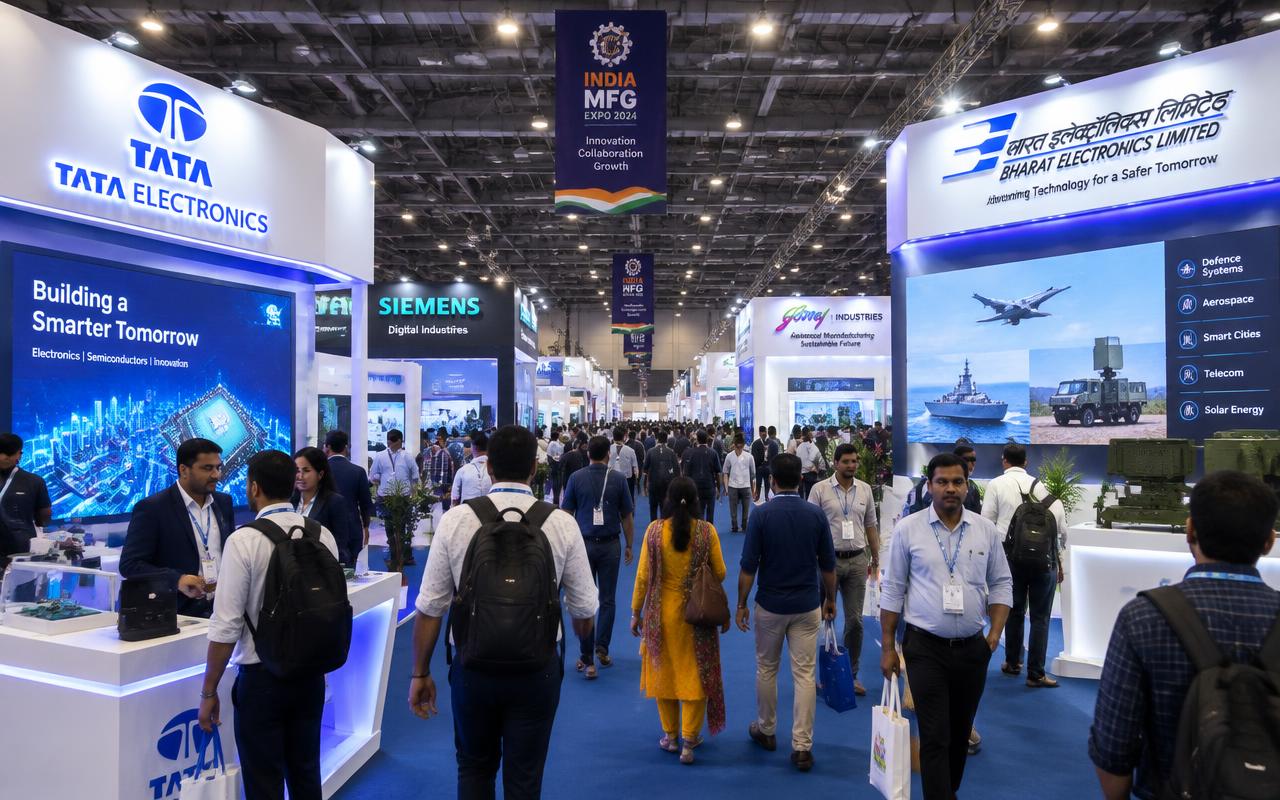
Goa sells two things to the events industry: beachfront destination weddings for Mumbai, Delhi and NRI families, and a December festival-and-nightlife circuit that draws national touring production. Underneath both sits a MICE market at the Bambolim and Dona Paula convention properties and the state's own film and tourism calendar. Prime AV Solutions produces the exhibitions & trade shows end of that calendar — booth LED & touchscreens, keynote stage PA, pavilion lighting — with one crew owning the whole stack.
- Lead time
- 8 weeks out
- Peak season
- Nov–Mar
- Coverage
- Goa & Goa
Key takeaway
Complete AV for exhibitions & trade shows in Goa
An exhibition is a power-distribution problem before it is an audio-visual one. Every booth draws from a shared hall supply through a metered feed ordered weeks in advance from the organiser's appointed electrical contractor, and the single most common cause of a dark booth is a feed ordered at half the load the LED wall and processing actually need. Calculate the draw honestly, order single or three phase deliberately, keep LED processors and media players on their own circuit away from switched lighting, and put a small uninterruptible supply behind anything whose reboot takes four minutes.
Expo centres set the ceiling height, the rigging policy and the booth power you are permitted to order, and the whole design has to live inside those published limits. In Goa we work at Grand Hyatt Goa, Taj Exotica, Dr. SPM Stadium and venues across Panaji, Calangute, Candolim, Vagator, Cavelossim.
The second problem is the build queue. Hundreds of contractors share one marshalling yard, a handful of hall doors and a window of thirty-six to forty-eight hours, and nobody is waiting for you. The way through it is preparation: numbered and labelled flight cases, a loading list in build order, a booked load-in slot, pre-assembled LED panel sets and a crew briefed to finish early rather than to finish on time. Finishing a day ahead buys you the quiet hours to solve content and alignment problems that are impossible to solve in a crowded hall.
What your event needs
- Booth LED & touchscreens
- Keynote stage PA
- Pavilion lighting
- Content playback
Why Goa organisers choose Prime AV
- Crews and trucks positioned for fast load-in at Dr. SPM Stadium and venues in Candolim and Vagator.
- Calculate draw per circuit honestly, order the correct feed from the appointed contractor, balance across phases, and put inrush-heavy LED and lighting on separate protected circuits with their own breakers.
- A standing Goa client base across multi-day beachfront and resort destination weddings and festival, concert and nightlife-circuit production, so the rig is specified from experience rather than a catalogue.
- Working knowledge of Goa venue rules, power sanctions and permission timelines.
What you will be judged on afterwards
- The stand was live and tested before the hall opened on day one, not during the first visitor hour.
- Screens and content ran all three days without a visitor ever seeing a desktop, an error or a black panel.
- The stand team could start, stop and recover the system from a single printed page without calling anybody.
- Neither the organiser nor a neighbouring exhibitor raised a complaint about power draw or audio spill.
- Content read clearly on camera and in photographs taken under hall lighting with the doors open.
Local conditions
Producing exhibitions & trade shows in Goa
Weather & the rig
Expo halls are enormous shells with roller doors open to a loading yard all day, so the outside climate walks straight into the stand and changes how bright the screens need to be. Coastal salt is the engineering problem here. Aerosol off the Arabian Sea pits truss couplers and corrodes connector shells and amplifier heatsinks measurably across a four-day build, which is why coastal rigs get freshwater rinse and contact treatment on strike rather than straight into the truck. Humidity at 85% condenses inside racks overnight, and the afternoon sea breeze of 20–30 km/h is a genuine wind load on flown arrays and shade sails. The Jun–Sep monsoon delivers around 3,000 mm. Jun–Sep monsoon, when beach shacks and temporary beachfront structures come down for the season and no beachfront build is permissible.
Power & redundancy
An exhibition is a power-distribution exercise before it is an AV one, because every booth draws off a shared hall supply where one imbalanced phase takes a whole aisle dark. The Goa Electricity Department's supply is reasonable in the Panaji and Bambolim belt, but the beach-stretch feeders at Candolim, Calangute and Benaulim are thin and sag badly at peak occupancy, so beach venues run entirely on DG. Goa also expects canopied silent sets meeting CPCB norms anywhere near a residential or shack belt, and the panchayats ask about DG placement specifically.
Permits & noise rules
Exhibition work runs on the organiser's rulebook layered over local fire and electrical approvals, and both have to be cleared before a single panel goes up. The binding layer is coastal, not municipal. The Goa Coastal Zone Management Authority's CRZ rules bar permanent structures in the no-development zone and allow temporary beach structures only in the notified season, which is why the beachfront season runs roughly Oct–May. On top of that: Goa Tourism Department event registration, village panchayat NOC — Calangute, Candolim and Anjuna are notoriously particular — Goa Police sound permission, and the High Court of Bombay at Goa's standing orders restricting amplified music on and near beaches after 10 pm, enforced here far more rigorously than in most states. Dabolim is a civil enclave of INS Hansa and Mopa is the new international field, so drone work near either is effectively closed.
Load-in & access
The build is a queue of hundreds of contractors through one marshalling yard in a fixed window, so slotting and case labelling matter more than the equipment itself. Mumbai is 590 km and 11–12 hours by road, which is the standard trucking run; crew often fly and meet the trucks. The last mile is the real work — beachfront venues need tractor or soft-tyre transfer across sand with the build timed against the tide, and the Calangute-to-Candolim village lanes and the Anjuna approach will not accept a 32-ft container at all. Mandovi and Zuari bridge routing adds time between north and south Goa, and a north-south double-venue wedding effectively needs two crews.
Season & booking
Mid-December to early January is a different market: the festival run and the New Year hospitality circuit absorb every truck, generator, rigger and hotel room in the state, and national touring production arrives with its own inventory. IFFI lands in late November at Panaji, Goa Carnival runs four days before Lent in Feb or Mar, Shigmo follows in the spring, and the Oct–May shack season frames everything else. Peak demand runs Nov–Mar.
Crew & dispatch
Trucked from Mumbai, 11–12 hours up the coast, with crew flown in and local labour and rigging hands engaged in Goa; Belagavi is 2.5 hours over the ghat and is a useful source for consumables and backup stock.
What it costs here
The peak-season loading is real and unavoidable — mid-December to early January costs sharply more on crew, trucking and accommodation because the whole state is sold out. Destination weddings budget across three or four days of separate rigs, which is where the value sits. The shoulder months of October and March to May are the genuine value window and worth steering clients towards.
Local expectations
The brief is almost always beach-casual in look and uncompromising in specification — concealed cabling, a white and natural palette, no visible black steel, and speakers that disappear into the design. Sunset timing drives the run of show, so the schedule is built backwards from the actual sunset, not a round number. Expect a multi-day sequence with separate welcome, haldi, sangeet, ceremony and after-party rigs, and Goan Catholic nuptial formats running alongside North Indian destination weddings at the same property.
Run of show
A typical exhibitions & trade shows schedule
| Time | Moment | What AV is doing |
|---|---|---|
| T−48 hrs | Marshalling and load-in slot | Vehicle reports to the yard against a booked slot; cases unloaded in build order and moved to the stand footprint. |
| T−36 hrs | Structure and power | Frames and ground support built, metered feed connected by the appointed contractor, distribution split with LED processing on its own circuit. |
| T−24 hrs | LED and screen build | Panels hung or stacked, processing mapped to the actual pixel canvas, touchscreens and media players installed and cable-managed. |
| T−12 hrs | Content and brightness set | Attract loops and interactive content loaded locally, aspect ratios checked on the real canvas, brightness set with hall doors open. |
| T−2 hrs | Handover to the stand team | Scheduled power-on tested, recovery after a simulated trip verified, one-page operating note left with the stand manager. |
| 10:00 | Hall opens, day one | Attract loops running, a technician on call across the hall, audio level checked against neighbouring stands and the organiser's limit. |
| 12:30 | Keynote stage session | Stage PA and presentation switching live, radio mics on an allocated block clear of other halls, session recorded. |
| 17:00 | Hall closes | Scheduled shutdown, screens powered down, overnight security condition noted and content drives secured. |
Then the rig has to run unattended for nine hours a day, three days running, with a client-facing team that has no technical training. That means a looped playback system that recovers automatically after a power event, scheduled start and shutdown, content held locally rather than streamed, screen brightness set for a hall with open roller doors and daylight at the ends, and a written single-page operating note taped inside the store cupboard. Booth audio needs a deliberately short-throw design so it serves your stand without being the reason your neighbour complains to the organiser.
Scope
Exhibitions & Trade Shows scope levels in Goa
A 3x3 or 4x4 metre stand for three days: an LED wall or large-format screen, a media player with attract-loop playback, a touchscreen and a short-throw audio point.
A larger pavilion with multiple screens or a shaped LED feature, interactive stations, accent lighting, local content management and a technician attending daily.
A hall pavilion with a presentation stage: PA, delegate and radio mics, presentation switching, session recording, and multiple booth screens on a managed content system.
Organiser-side delivery across a full hall: inaugural stage, registration and wayfinding screens, pavilion lighting, multiple session rooms and a floating crew for the run of the show.
The peak-season loading is real and unavoidable — mid-December to early January costs sharply more on crew, trucking and accommodation because the whole state is sold out. Destination weddings budget across three or four days of separate rigs, which is where the value sits. The shoulder months of October and March to May are the genuine value window and worth steering clients towards.
Venues
Where exhibitions & trade shows happen in Goa
| Venue | Capacity | Production note |
|---|---|---|
| Grand Hyatt Goa | Up to 2,500 across convention halls and lagoon-side lawns | The state's largest conference infrastructure with real ballroom spans and a proper dock, but the Bambolim site's lawns face open water, so the afternoon sea breeze loads flown and shade structures and the brackish lagoon air is hard on exposed hardware over a multi-day build. |
| Taj Exotica | Up to 1,200 across lawns and beachfront | Benaulim beachfront where the ceremony sits in the CRZ zone — temporary structures only, no ground anchoring into the beach, tide-window planning for the build, and tractor or soft-tyre transfer to move cases across the sand because no truck will cross it. |
| Dr. SPM Stadium | Roughly 19,000 seated for concert configuration | Goa's principal athletics and football stadium at Bambolim, used for concert-scale shows; it has usable tower positions and field access, but outfield and track protection, Sports Authority of Goa permission and the state's rigidly enforced sound deadline shape the entire show schedule. |
| Taj Fort Aguada | Up to 800 across terraces and the fort-side lawns | Dramatic cliff-and-fort setting on multiple terraces, which means no single continuous build level, steep internal paths that rule out trolleying, and heritage-adjacent conditions on anything fixed to the old walls. |
| Vagator and Anjuna cliff venues | 2,000–8,000 standing depending on the site | The clifftop party sites deliver the atmosphere clients come for, but access is via village lanes that will not take a 32-ft container, the village panchayats at Anjuna and Vagator issue their own NOCs with conditions, and the residential belt makes the 10 pm music cut-off absolute. |
Demand
What Goa books most
Goa event mix
- Multi-day beachfront and resort destination weddings
- Festival, concert and nightlife-circuit production
- Corporate incentive groups and offsites at convention resorts
- New Year and Christmas-fortnight hospitality events
- Film, fashion and brand content shoots
- Goa Carnival, Shigmo and state cultural programmes
Services
Recommended production stack
LED Screen Rental
Large-format LED screens and IMAG side screens with switching, so every guest sees speakers, performers and content in crisp detail.
LED Wall Rental
Indoor P2.6/P3.9 and outdoor P4.8 LED walls in any size or shape — curved, cubes, floor LED and kinetic panels — powered by Novastar processing.
Conference AV Setup
End-to-end conference AV: delegate mic systems, confidence monitors, presentation switching, speaker timers and a show-caller who keeps it on time.
Stage Lighting Design
Lighting designers who build looks, cue every moment and run grandMA3 consoles — from elegant gala washes to high-energy concert shows.
Timeline
Planning milestones
- 8 weeks out
Stand design and power schedule
Screen sizes, canvas shapes and device list fixed, with a written per-circuit load calculation to drive the organiser power order.
- 6 weeks out
Organiser submissions
Power order, structural and rigging declarations, and contractor passes submitted against the organiser's published deadlines.
- 4 weeks out
Content specification issued
Pixel canvas maps, safe areas, resolution, codec and loop duration issued to the content and brand teams.
- 2 weeks out
Content delivery and dry build
Final files received and played on identical processing in the warehouse; LED panel sets pre-assembled and tested.
- T−48 to T−2 hrs
Build and handover
Load-in, structure, power, screens, content and a tested handover to the stand team with a printed operating note.
- Final day, post close
Strike
Derig to the organiser's clearance deadline, with content drives and hired devices reconciled against the manifest.
Risk control
What goes wrong, and how we stop it
What can go wrong
How we prevent it
- What can go wrong
The booth trips and takes a section of the hall's phase with it.
How we prevent itCalculate draw per circuit honestly, order the correct feed from the appointed contractor, balance across phases, and put inrush-heavy LED and lighting on separate protected circuits with their own breakers.
- What can go wrong
The power order is placed at half the real load to save money.
How we prevent itProduce a written load schedule per device at design stage, size the order to measured draw plus headroom, and treat the contractor's feed cost as fixed infrastructure rather than a negotiable line.
- What can go wrong
Content arrives in the wrong aspect for a non-standard LED canvas.
How we prevent itIssue the exact pixel canvas map and safe area to the content team at briefing, and test the real files on the real processing during the build rather than on a laptop.
- What can go wrong
The truck sits in the marshalling queue and the build window shrinks.
How we prevent itBook a load-in slot, load in build order with numbered cases, and send a small advance team to secure the footprint while the vehicle waits its turn.
Process
From brief to standing ovation
01
Brief & recce
We visit the venue, map power and rigging, and understand your show flow.
02
Design & quote
CAD plans, 3D previews and an itemised quote within 24 hours.
03
Build & rehearse
Load-in, system tuning, content checks and full technical rehearsal.
04
Show & strike
Show-caller-led execution, then a quick, clean load-out.
FAQ
Exhibitions & Trade Shows AV in Goa: FAQs
Other events in Goa
Exhibitions & Trade Shows AV in nearby cities
Services in Goa
Areas we cover in Goa