Visual · Belagavi, Karnataka
LED Screen Rental in Belagavi
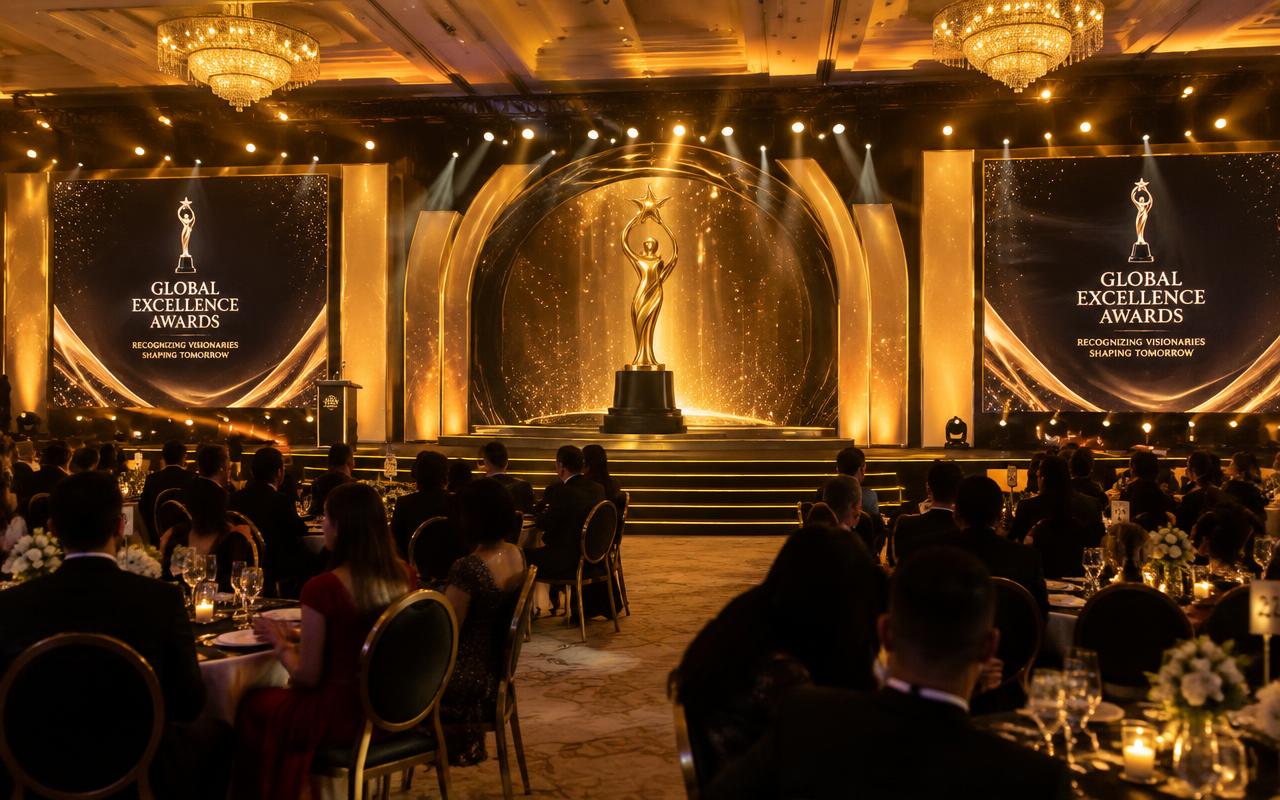
In Belagavi, foundry, die-casting and auto-component industry meets set the standard everything else is measured against. Our LED screen rental is specified to clear that bar at Hotel Sankam and anywhere else in the city.
- Lead time
- From 4 weeks
- Peak season
- Oct–Feb
- Coverage
- Belagavi & Karnataka
Key takeaway
LED Screen Rental for Belagavi’s biggest events
IMAG — image magnification — exists for one reason: so the person in row forty can read a face. The brief is visibility and legibility, not scenic design. Screen size comes from the furthest viewer: a usable rule is that text height on screen should be at least one fiftieth of the viewing distance for comfortable reading, which pushes side screens on a long ground to six metres wide and upward. Standard 16:9 formats are the right choice here, because content is a live camera cut and a presentation deck, both of which already live in that aspect and should never be letterboxed or stretched to fit a creative canvas.
IMAG lives or dies on sightlines, so balcony overhangs, lighting-rig positions and the shape of the seating decide where screens can hang and how many you need. In Belagavi that plays out at venues like Hotel Sankam, Fairfield Belagavi, CPED Ground, and across Tilakwadi, Camp, Shahapur, Hindalga.
Delay screens handle depth. Beyond roughly 70 to 80 metres from the stage, a main screen is too small to read regardless of how bright it is, so we place additional screens down the audience on their own structures. These need their own power, their own signal path — usually fibre or a long-haul SDI run rather than copper HDMI — and a decision about whether to delay the video to match the delayed audio at that position. For speech-led events we generally keep video aligned to the audio arriving at that spot, because lip-sync error reads as a fault far faster than absolute latency does.
What’s included
- Side IMAG screens
- Outdoor daylight-bright screens
- Video switching & playback
- Mobile LED trucks
Equipment we carry
Why Belagavi chooses Prime AV
- Crews and trucks positioned for fast load-in at CPED Ground and venues in Shahapur and Hindalga.
- Screen positions are set against the lighting plot and the seating plan together, with a physical sightline walk before panels go up.
- Programme recording of the IMAG cut as actually shown
- Working knowledge of Karnataka venue rules, power sanctions and permission timelines.
Local conditions
Producing LED screen rental in Belagavi
Weather & the rig
An IMAG screen has to stay readable in whatever light the sky provides, so sun path across the actual show hours and the brightness specification are decided together. At roughly 750 m on the Deccan edge, Belagavi has the mildest climate of any Karnataka city — but the Western Ghats sit 50 km west, so Jun–Sep brings ghat-spillover rain with persistent low cloud and days of fine drizzle rather than heavy bursts, which is worse for a build than a downpour because nothing ever dries out. May brings strong pre-monsoon winds, and Dec–Jan nights fall to 10–12°C, cold enough that outdoor dinners need heating and dew sits heavy on anything left rigged overnight. Jun–Sep ghat-spillover monsoon with its persistent drizzle and cloud; and the December legislature session if the brief needs hotel rooms.
Power & redundancy
Delay and outdoor screen positions sit far from the main distribution, each needing its own stable feed, which usually means a satellite generator rather than a long cable run. HESCOM supply to the industrial focal points at Udyambag and Auto Nagar is strong with genuine three-phase capacity, which is a real advantage for factory-site events. The weak side is the city fringe and the open grounds, where feeders dip in the evening peak, so DG with a stabiliser is standard for lawn and maidan builds and silent sets are expected in residential pockets.
Permits & noise rules
Large outdoor screens draw attention from traffic and nearby residents, so siting, mounting and light spill typically need clearance alongside the event permission itself. Belagavi City Corporation for the licence and temporary-structure permission, the Belagavi City Police Commissionerate for the public-performance and loudspeaker licence, and Karnataka's noise rules with the 10 pm outdoor limit. The harder file is airspace: Belagavi Airport at Sambra shares the area with an Air Force station, so drone operations need DGCA clearance plus military coordination and are frequently refused. Government-protocol clearance applies to anything at the Suvarna Vidhana Soudha, and language-policy sensitivity around Marathi and Kannada signage is best settled at the artwork stage rather than on site.
Load-in & access
Delay positions and mobile LED trucks need vehicle access deep into the audience area before the crowd arrives, which makes gate widths and ground conditions the real constraint. Belagavi sits on NH-48 between Pune and Bengaluru, which makes it unusually well supplied for its size — Pune is 330 km and about 6 hours, Bengaluru 500 km and 9 hours, and Goa 2.5 hours over the Chorla or Anmod ghat. Most heavy gear and large-format LED comes down from Pune rather than up from Bengaluru. In town the Camp and Tilakwadi grids are workable for a 22-ft truck; the old Shahapur lanes are not.
Season & booking
The winter Vidhan Sabha session at Suvarna Vidhana Soudha, usually in December, books out every hotel room and much of the city's police and logistics bandwidth. Belagavi's Ganesh Chaturthi runs on Maharashtrian mandal lines across eleven days in Aug–Sep and takes the district's entire sound and lighting stock. Add Lakshmi Teej, the Lingayat and Marathi wedding muhurat clusters from Oct–Feb, and the inter-collegiate culturals in Jan–Feb. Peak demand runs Oct–Feb.
Crew & dispatch
Pune-sourced trucking and large-format inventory, 6 hours down NH-48, with local crew and consumables held in Belagavi; the Goa market 2.5 hours west is a useful secondary source outside its own December peak. Load-in support covers Shahapur, Hindalga and the rest of the city.
What it costs here
Foundry and component clients are engineers who buy on specification and will ask what a processor actually does before approving the line — honest technical quoting wins here and discount-led quoting does not. Government session work is tendered with slow settlement. Weddings sit in the middle: solid budgets, close scrutiny of visible spend, little appetite for invisible infrastructure.
Local expectations
This is a border city and the production has to read correctly in two languages — Marathi and Kannada scripting side by side, with English for the corporate layer. Ganesh mandal work answers to a committee rather than a single client, so the plan gets walked through a room of people. Weddings keep a Marathi ritual spine, with the antarpat and mangalashtak needing clean vocal reinforcement rather than volume.
Specification
LED Screen Rental: technical specification
| Specification | Detail |
|---|---|
| Typical pitch | P2.6 – P3.9 indoor IMAG, P4.8 – P10 outdoor and delay positions |
| Legibility rule | On-screen text height at least 1/50th of the furthest viewing distance |
| Standard formats | 16:9 at 1920 x 1080 or 3840 x 2160 native, avoiding non-standard canvases |
| Delay screen spacing | Additional positions beyond 70 – 80 m of audience depth |
| Outdoor brightness | 5,000 nits minimum for daylight, 7,500 nits in direct sun |
| Switching | Barco E2/E3, Roland or ATEM with scaling handled once at the switcher |
| Long-haul signal | Fibre or 12G-SDI to delay positions, never long copper HDMI |
| Lip-sync handling | Video delayed to match audio arrival at each screen position |
| Mobile LED | Trailer-mounted 15 – 40 sq m daylight screens, hydraulic deploy in under two hours |
The switching layer is what distinguishes a working IMAG setup from a wall with a camera plugged in. A video switcher takes camera inputs, presentation machines, playback and remote feeds, and produces a programme cut plus separate outputs for the screens, the stage confidence monitors and any stream. Scaling is handled once, cleanly, at the switcher rather than panel-side. For outdoor daylight, screens need 5,000 nits or more, and mobile LED trucks are often the fastest way to deliver a large daylight-bright surface on a site with no rigging and a short build window.
Sizing
What size rig does your event actually need?
| Scale | Guests | Recommended setup |
|---|---|---|
| Seminar room | 100 – 300 | One 4 m x 2.25 m screen at P2.6, furthest viewer under 20 m |
| Conference hall | 500 – 1,200 | 6 m x 3.4 m centre plus two 3 m side IMAG screens, four-input switcher |
| Arena floor | 2,000 – 8,000 | Two 8 m x 4.5 m side screens at P3.9, flown, four-camera IMAG |
| Open ground | 10,000 – 25,000 | Two 10 m main screens at 5,000+ nits plus two delay positions at 80 m and 160 m |
| Stadium screening | 30,000 – 50,000+ | Four daylight screens or mobile LED trucks on the bowl perimeter, fibre fed |
Scope
LED Screen Rental scope tiers in Belagavi
Single IMAG Screen
Conferences and AGMs up to 800 seats
- One 6 m x 3.4 m 16:9 screen at P3.9, ground-stacked
- Switcher with two camera inputs and two presentation machines
- Confidence monitor feed for the stage
- Vision mixer operator and an LED technician
- Spare panels, cards and a backup playback machine
Side Screen Pair
Large conferences, concerts and award nights, 1,500 – 6,000 guests
- Two flanking IMAG screens plus a centre presentation surface
- Multi-input switcher with programme, screen and stream outputs
- Three to four camera inputs with IMAG cutting
- Independent scaling per output so the stage feed stays clean
- Vision mixer, LED technician, rigger and a camera liaison
Daylight & Delay Array
Outdoor grounds, sports screenings and mass gatherings, 10,000 – 50,000+
- Main daylight-bright screens plus two to four delay positions
- Fibre signal distribution with redundancy to each position
- Per-position video delay matched to the audio arrival time
- Mobile LED trucks where rigging or build time is restricted
- Crew per position plus a central vision control
Foundry and component clients are engineers who buy on specification and will ask what a processor actually does before approving the line — honest technical quoting wins here and discount-led quoting does not. Government session work is tendered with slow settlement. Weddings sit in the middle: solid budgets, close scrutiny of visible spend, little appetite for invisible infrastructure.
Venues
Where we work in Belagavi
| Venue | Capacity | Production note |
|---|---|---|
| Hotel Sankam | Up to 800 seated across banquet halls | Long-established city banqueting with a lift-and-stair load-in and almost no dock; the halls have a shallow beam-to-slab gap, so lighting trims low and sightlines have to be resolved on paper before the truss goes up. |
| Fairfield Belagavi | Up to 600 across ballroom and pre-function | The cleanest power and most predictable conference infrastructure in the city with a proper service entrance, but the ballroom's rated rigging capacity is conservative, so heavy video and array loads go onto ground support. |
| CPED Ground | 10,000-plus standing on open ground | Large physical-education college ground used for concerts, rallies and exhibitions: bare surface, no show-grade mains, one usable gate, and black-cotton soil that turns greasy after any rain, so matting under trucks and plating under towers is non-negotiable. |
| Suvarna Vidhana Soudha precinct | Protocol-controlled; auditoria and forecourt use | The second legislative complex north of the city is government property under full protocol control — crew police verification, sealed-venue timelines and schedules rewritten at short notice around ministerial movement. |
| Military Mahadev Mandir grounds | Up to 3,000 on open ground | A popular community ground in the Camp area; cantonment proximity means security intimation for any large build, and the surrounding residential grid makes the sound curfew firmly enforced. |
Crew
Who turns up on show day
- Vision mixer
Cuts the IMAG programme live from cameras and presentation sources, and protects the stage feed from screen-side changes.
- LED technician
Builds and maps each screen, verifies brightness against ambient light and holds spares for every position.
- Signal engineer
Runs fibre or SDI to every screen and delay position, proves the paths and sets per-position video delay.
- Presentation operator
Receives, versions and cues decks and video, and keeps a mirrored backup machine one slide behind.
- Delay position technician
Builds, powers and monitors a remote screen, and holds position in case signal or power drops.
What you receive
- Sightline study showing screen sizes against furthest viewer distances
- Switcher input and output map with the full signal route
- Presentation standards document for every presenter
- Per-position video delay sheet matched to audio arrival times
- Brightness and colour match record across all screen positions
- Programme recording of the IMAG cut as actually shown
Timeline
From enquiry to load-out
- T-4 weeks
Sightline study
Furthest-viewer distance and audience spread set screen sizes, positions and whether delay screens are needed.
- T-3 weeks
Signal plan
Switcher input list, output map, cable route and fibre requirement drawn for every screen position.
- T-2 weeks
Content standards issued
Deck aspect ratio, safe title area, minimum font size and frame rate sent to every presenter and the content team.
- Show day −1
Build and signal proving
Screens built, every signal path tested end to end, per-position delay set and brightness matched across positions.
- Show day, T-4 hours
Rehearsal
Camera IMAG rehearsed, deck transitions walked through, backup playback machine proved under a live switch.
- Show day to +4 hours
Show and strike
Operated live with spares on hand; delay positions struck first because they are furthest from the trucks.
Risk control
What goes wrong, and how we stop it
What can go wrong
How we prevent it
- What can go wrong
Side screens are hung where the stage lighting rig blocks sightlines from the flanks.
How we prevent itScreen positions are set against the lighting plot and the seating plan together, with a physical sightline walk before panels go up.
- What can go wrong
A presenter's deck is 4:3 or uses 12 pt body text and is illegible from row twenty.
How we prevent itPresentation standards go out at T-2 weeks with aspect ratio, safe area and minimum font size, and we re-format decks on site rather than show something nobody can read.
- What can go wrong
IMAG video arrives before the delayed audio at a far position and lip-sync looks broken.
How we prevent itEach screen position gets its own video delay, measured against the audio arrival time at that exact spot during the build.
- What can go wrong
A long copper HDMI run to a delay screen works at build and drops out when the sun hits the cable.
How we prevent itAnything beyond about 20 m runs on fibre or 12G-SDI with a tested redundant path, and copper HDMI stays inside the rack.
Honest comparison
Is this the right choice for your event?
- A mobile LED truck instead of a built screenOur verdict
For a short build window, a site with no rigging, or a one-day outdoor screening, the truck is faster and often cheaper all-in. Built screens win on size flexibility, positioning and on looking like part of a set.
- Projection screens instead of LED for IMAGOur verdict
In a darkened hall with controlled ambient light, projection delivers a larger image per rupee and is perfectly adequate. In any lit room, outdoors, or where a presenter stands near the surface, LED is the only reliable answer.
- One large centre screen instead of a side screen pairOur verdict
A centre screen is cheaper and simpler, and right when the content is a deck. For IMAG it fights the stage for attention and leaves the flanks with poor sightlines — side screens serve a wide audience better.
Demand
What Belagavi books most
Belagavi event mix
- Foundry, die-casting and auto-component industry meets
- State legislature session and government functions
- Marathi and Lingayat community weddings
- Ganesh Chaturthi mandal production across eleven days
- College and university cultural festivals
- Defence-station and institutional ceremonial events
Ideal for
Events we power with LED screen rental in Belagavi
Process
From brief to standing ovation
01
Brief & recce
We visit the venue, map power and rigging, and understand your show flow.
02
Design & quote
CAD plans, 3D previews and an itemised quote within 24 hours.
03
Build & rehearse
Load-in, system tuning, content checks and full technical rehearsal.
04
Show & strike
Show-caller-led execution, then a quick, clean load-out.
FAQ
LED Screen Rental in Belagavi: FAQs
More services in Belagavi
LED Screen Rental in nearby cities
Areas we cover in Belagavi
Events in Belagavi