Event production · Jodhpur, Rajasthan
Fashion Shows AV in Jodhpur
Jodhpur sells a sandstone skyline and its AV market exists almost entirely to serve it: Umaid Bhawan and the Mehrangarh ramparts pull international destination weddings, while the city's handicraft and guar-gum exporters fund buyer meets and a large military establishment generates its own ceremonial calendar. Volume is low here; specification and discretion are high. Prime AV Solutions produces the fashion shows end of that calendar — ramp lighting design, LED backdrops, punchy runway sound — with one crew owning the whole stack.
- Lead time
- 5 weeks out
- Peak season
- Oct–Mar
- Coverage
- Jodhpur & Rajasthan
Key takeaway
Complete AV for fashion shows in Jodhpur
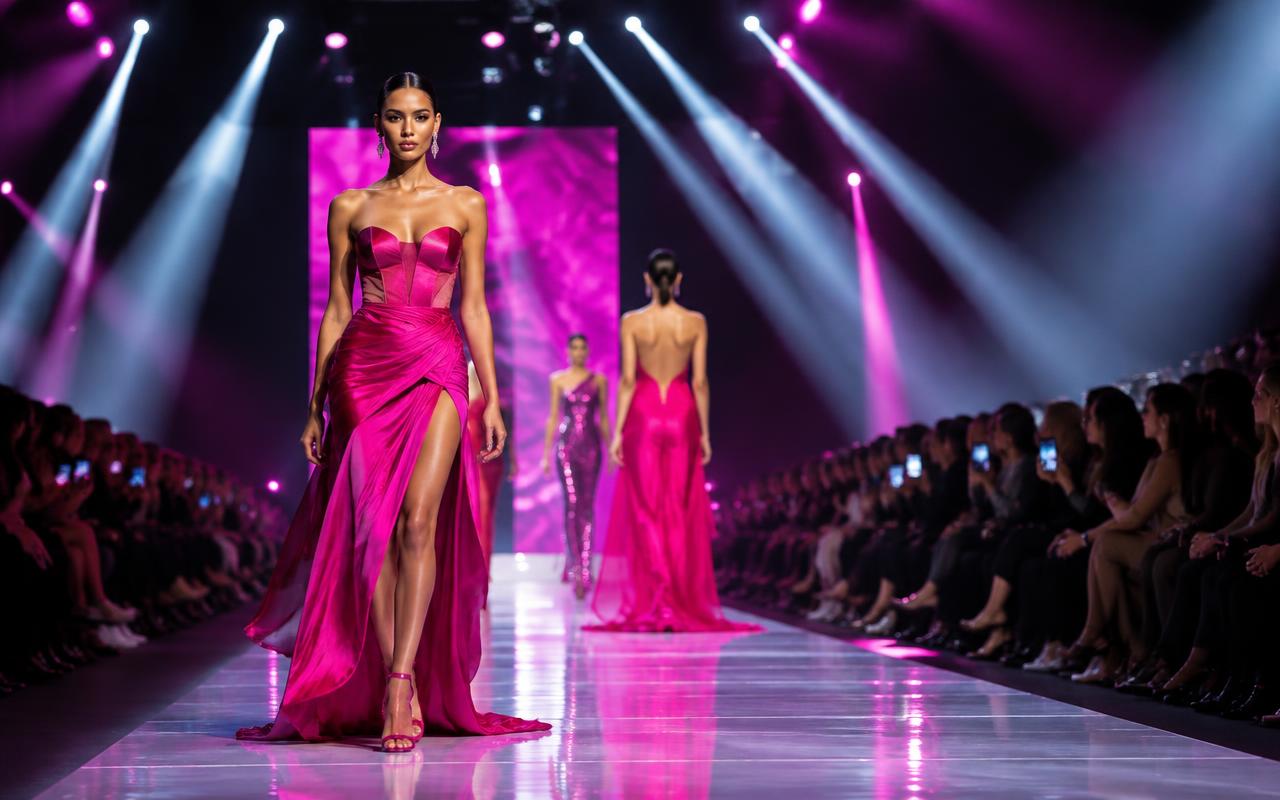
Runway lighting is a colour-rendering problem disguised as a design one. Garments are bought and photographed under your light, so the front wash needs a high colour-rendering index, a consistent colour temperature along the entire ramp and enough level for a photographer at the end of the runway to shoot at a sensible shutter. Shadowing across the face is the thing to avoid: light from front and slightly above at a repeatable angle, add back light to separate the model from the backdrop, and resist the temptation to put colour anywhere that touches skin or fabric.
Ramp length, ceiling height and where the photographers' pit can physically sit are decided by the room long before the lighting plot is drawn. In Jodhpur we work at Umaid Bhawan Palace, Mehrangarh Fort, Raas Jodhpur and venues across Ratanada, Sardarpura, Paota, Mandore, Shastri Nagar.
The show is twelve minutes long and takes six hours to rehearse. That time goes into the line-up order, the music edit and the timing of each exit, because once the first model walks there is no stopping. Lock the music as a timecoded edit, cue the lighting states to it, and rehearse with the actual walk speed rather than an assumed one. Expect the designer to reorder the sequence backstage an hour before doors, so the cue structure should be built around looks and segments rather than around individual model numbers.
What your event needs
- Ramp lighting design
- LED backdrops
- Punchy runway sound
- Media camera positions
Why Jodhpur organisers choose Prime AV
- Crews and trucks positioned for fast load-in at Umaid Bhawan Palace and venues in Ratanada and Sardarpura.
- Set haze density with a camera in the pit rather than from the lighting position, keep it behind the models rather than between them and the pit, and agree the level with the designer and the photographer together.
- A standing Jodhpur client base across destination weddings in palace and fort settings and high-end private celebrations and milestone birthdays, so the rig is specified from experience rather than a catalogue.
- Working knowledge of Rajasthan venue rules, power sanctions and permission timelines.
What you will be judged on afterwards
- Garment colour in the published photographs matched what the designer saw in the studio.
- Every model's face was evenly lit along the whole ramp, with no dark patch and no hot spot.
- The show ran as one unbroken twelve-minute piece with no visible cue hesitation.
- The front row could see the runway past the photographers' pit without leaning.
- The designer could reorder the line-up an hour before doors without the show having to be rebuilt.
Local conditions
Producing fashion shows in Jodhpur
Weather & the rig
A ramp show is built indoors for controlled light, but humidity and heat reach the models, the garments and a room carrying a dense lighting rig. Thar dust is the permanent adversary: fine sand works into moving heads, media servers and LED cabinet fans, and an April–June afternoon duststorm can strip a draped frame in minutes. The diurnal swing is extreme — a 30°C January day drops to 8°C by midnight — so expect condensation on cold glass, stiffened cable and focus drift on long projector throws as the evening cools. April–June is punishing, with 44–47°C afternoons and pre-monsoon dust walls; July–August brings short intense bursts that soak open ground. Palace weddings concentrate Oct–Mar, with February–March the most comfortable evenings.
Power & redundancy
A runway rig is lighting-heavy and sensitive to flicker on camera, so stable, clean supply matters far more than headroom. The city grid is stable by Rajasthan standards, but no heritage venue will release meaningful event load — palace and fort properties protect their own supply, so plan fully generator-fed shows. Silent canopies are effectively mandatory because the DG compound will sit within earshot of guest rooms, and long cable runs from a distant screened generator position are simply the cost of working here.
Permits & noise rules
Fashion shows usually sit inside a hotel or studio venue, so rigging, fire-load and late-night approvals come through the venue layered over local rules. Jodhpur Municipal Corporation handles public ground and roadside permissions; the police commissionerate licenses assembly, and the Rajasthan noise rules plus the 10 pm amplified-sound limit are enforced in earnest around residential Ratanada and the old city. Fort events run through the Mehrangarh Museum Trust with conditions on fixings and lighting heat, and Jodhpur's airfield is a defence aerodrome — drone work and aerial photography face restrictions well beyond the usual DGCA process, so assume no-fly until written clearance exists.
Load-in & access
Ramp decking, truss and a full lighting rig arrive the day before and strike the same night, which makes dock access and lift size the whole plan. Trucks reach the city easily, but the last mile defeats them. The blue-city lanes below the fort take nothing wider than a tempo, fort access is a hand-carry operation, and Umaid Bhawan requires scheduled gate slots that respect guest arrivals. Build three days of load-in for a fort show where a hotel ballroom would take one, and treat porterage as a line item rather than an afterthought.
Season & booking
The Rajasthan International Folk Festival takes Mehrangarh around Sharad Purnima in October and the fort closes to private production either side of it. Marwar Festival in October, the polo season, and the Pushkar Fair in November all compete for the same regional crew and trucks. Peak dates between late November and February are typically held a year ahead by planners rather than clients. Peak demand runs Oct–Mar.
Crew & dispatch
Local crew and consumables held in Jodhpur, with the heavy rig trucked from our Jaipur depot — 335 km via Ajmer and Beawar, about six hours loaded — and specialist control and camera packages flown in from Delhi or Mumbai for international briefs.
What it costs here
The highest-paying market in this list after Udaipur, because the buyer is usually a Delhi, Mumbai or overseas planner working to an international rider. Expect specification-led briefs, named-brand requirements and a real premium for heritage handling, porterage and multi-day builds. Local corporate and export-meet work, by contrast, is priced conservatively.
Local expectations
Marwari and international palace weddings want grandeur with the machinery hidden — concealed infrastructure, warm 2700–3000 K washes over sandstone, no truss in a hero photograph. Folk ensembles, langa and shehnai sets need discreet acoustic reinforcement rather than a big front-of-house push, and sundowner timings on the fort side mean the lighting look must hold through a fast twenty-minute dusk.
Run of show
A typical fashion shows schedule
| Time | Moment | What AV is doing |
|---|---|---|
| T−1 day | Ramp and rig build | Ramp decked, levelled and surfaced; truss and lighting rig up; backdrop or LED built and content mapped. |
| T−8 hrs | Lighting focus | Front wash focused for even colour along the full ramp length, colour temperature matched fixture to fixture, back light and pit angle set with a stand-in. |
| T−5 hrs | Music and cue build | Final edit loaded as a timecoded track, lighting states cued to it, segment markers set so the designer can reorder without rebuilding the show. |
| T−2 hrs | Model walk-through | Full run with real walk speed and real garments, backstage comms and ramp monitor tested, photographer test shots reviewed on camera. |
| 18:30 | Doors | Pre-show lighting state, ambient bed along the ramp, backdrop on a holding loop, pit confirmed clear and taped. |
| 19:00 | Show starts | House to show state in one cue, music from timecode, lighting segments follow the line-up, no live improvisation once the first model walks. |
| 19:12 | Finale | Full ramp level for the group walk, backdrop to the designer's finale content, cameras locked wide for the full line. |
| 19:20 | Designer bow and press | House light up to a photography-usable level, audio to interview mode, backdrop to the brand frame for press shots. |
The build itself is unforgiving in two directions. The ramp must be stiff, level and quiet under heels, with a surface that does not reflect the front light into the cameras and a height that still gives the seated front row a sightline past the photographers' pit. Audio needs even coverage along the full length rather than two loud boxes at the top, because guests sit within arm's reach of the runway. Backstage needs a music and comms feed, a monitor showing the ramp, and a dresser area lit well enough to check a garment before it walks.
Scope
Fashion Shows scope levels in Jodhpur
A hotel or studio ramp up to 20 metres: high-CRI front wash, back light, a clean distributed audio line along the ramp, playback and a fabric or printed backdrop.
Designed lighting plot with moving fixtures and programmed segments, LED backdrop with content, ramp decking and skirting, timecoded playback and a lighting operator on cue.
Multiple shows per day on a shared rig, custom ramp geometry, large LED, haze and effects, a camera position for the house film and a resident crew across the schedule.
Custom set fabrication, projection or kinetic elements, a full broadcast or streaming package, dedicated lighting design with previsualisation and a multi-day build.
The highest-paying market in this list after Udaipur, because the buyer is usually a Delhi, Mumbai or overseas planner working to an international rider. Expect specification-led briefs, named-brand requirements and a real premium for heritage handling, porterage and multi-day builds. Local corporate and export-meet work, by contrast, is priced conservatively.
Venues
Where fashion shows happen in Jodhpur
| Venue | Capacity | Production note |
|---|---|---|
| Umaid Bhawan Palace | Several hundred per setting across the Marwar hall, the Baradari and the gardens | A living palace and a Taj property: no fixings into sandstone, no visible cabling on guest routes, and every truss position needs sign-off against the sightline from the main facade. |
| Mehrangarh Fort | 1,500–2,500 across Chokelao Bagh, the Jaswant Thada lawn and the courtyards | The last stretch to the upper courtyards is a cobbled ramp inside the gates with no vehicle access, so the whole rig goes up by hand-trolley and porter chain; rampart rigging is tied to the Mehrangarh Museum Trust conservation conditions and ballast-only bases. |
| Raas Jodhpur | 200–400 across the courtyard and terraces | Boutique scale directly under the fort wall with residential neighbours on three sides — the sound brief is tight pattern control to a low SPL target, not system size. |
| Bal Samand Lake Palace | Around 600 across the lawns and garden pavilion | Soft garden ground and mature trees rule out crane positions; scaffold towers on spreader plates do the work, and buried irrigation dictates where anything can be staked. |
| Khimsar and Mandore heritage settings | 300–800 outdoors | Dust governs everything — long open approaches mean filtration and daily cleaning on every fan-cooled fixture and projector air path. |
Demand
What Jodhpur books most
Jodhpur event mix
- Destination weddings in palace and fort settings
- High-end private celebrations and milestone birthdays
- Heritage-venue music and arts festivals
- Handicraft and furniture export buyer meets
- Defence and regimental ceremonial functions
Services
Recommended production stack
Stage Lighting Design
Lighting designers who build looks, cue every moment and run grandMA3 consoles — from elegant gala washes to high-energy concert shows.
LED Wall Rental
Indoor P2.6/P3.9 and outdoor P4.8 LED walls in any size or shape — curved, cubes, floor LED and kinetic panels — powered by Novastar processing.
Concert Sound Systems
Concert-grade PA built around L-Acoustics, d&b and JBL VTX class line arrays, tuned by system engineers for even coverage from front row to last.
Broadcast & Multi-Camera
Broadcast-grade cameras, jibs, PTZs and OB-style control for IMAG, TV feeds and post-event films that capture every moment.
Timeline
Planning milestones
- 5 weeks out
Ramp geometry and seating plan
Ramp length, width, height, pit position and seat rows fixed, because they determine the lighting angles and the audio layout.
- 3 weeks out
Lighting design
Plot drawn with colour temperature, colour rendering and angles specified, previsualised where the set is complex, and rigging requirements issued.
- 2 weeks out
Content and music brief
Backdrop canvas map issued to the content team, music direction agreed with the designer and a draft edit received for cue building.
- 3 days out
Final edit and line-up
Timecoded music edit delivered, line-up by look and segment received so the cue structure can be built to survive reordering.
- T−1 day to T−2 hrs
Build, focus and rehearsal
Ramp and rig complete, focus with a stand-in, camera tests reviewed, then a full walk-through at real pace with garments.
- Same night
Strike
Rapid derig after press, with ramp decking and lighting down to the venue's handover time.
Risk control
What goes wrong, and how we stop it
What can go wrong
How we prevent it
- What can go wrong
Haze looks beautiful in the room and ruins the photographs.
How we prevent itSet haze density with a camera in the pit rather than from the lighting position, keep it behind the models rather than between them and the pit, and agree the level with the designer and the photographer together.
- What can go wrong
Front light is too cool or has poor colour rendering and the garments photograph wrong.
How we prevent itSpecify high colour-rendering fixtures at a single agreed colour temperature, test against actual fabric swatches during focus, and review photographer test shots on camera rather than judging by eye.
- What can go wrong
The music edit changes an hour before doors.
How we prevent itBuild the show as timecoded segments rather than one monolithic cue stack, keep the music operator and the lighting operator on a shared cue sheet, and run the new edit once before doors even if that delays doors by ten minutes.
- What can go wrong
The designer reorders the line-up backstage mid-show.
How we prevent itCue lighting to segments and looks rather than to model numbers, keep a backstage comms line to the dresser area, and have the show-caller confirm each change back verbally before it happens.
Process
From brief to standing ovation
01
Brief & recce
We visit the venue, map power and rigging, and understand your show flow.
02
Design & quote
CAD plans, 3D previews and an itemised quote within 24 hours.
03
Build & rehearse
Load-in, system tuning, content checks and full technical rehearsal.
04
Show & strike
Show-caller-led execution, then a quick, clean load-out.
FAQ
Fashion Shows AV in Jodhpur: FAQs
Other events in Jodhpur
Fashion Shows AV in nearby cities
Services in Jodhpur
Areas we cover in Jodhpur