Conference & Broadcast · Ajmer, Rajasthan
Conference AV Services in Ajmer
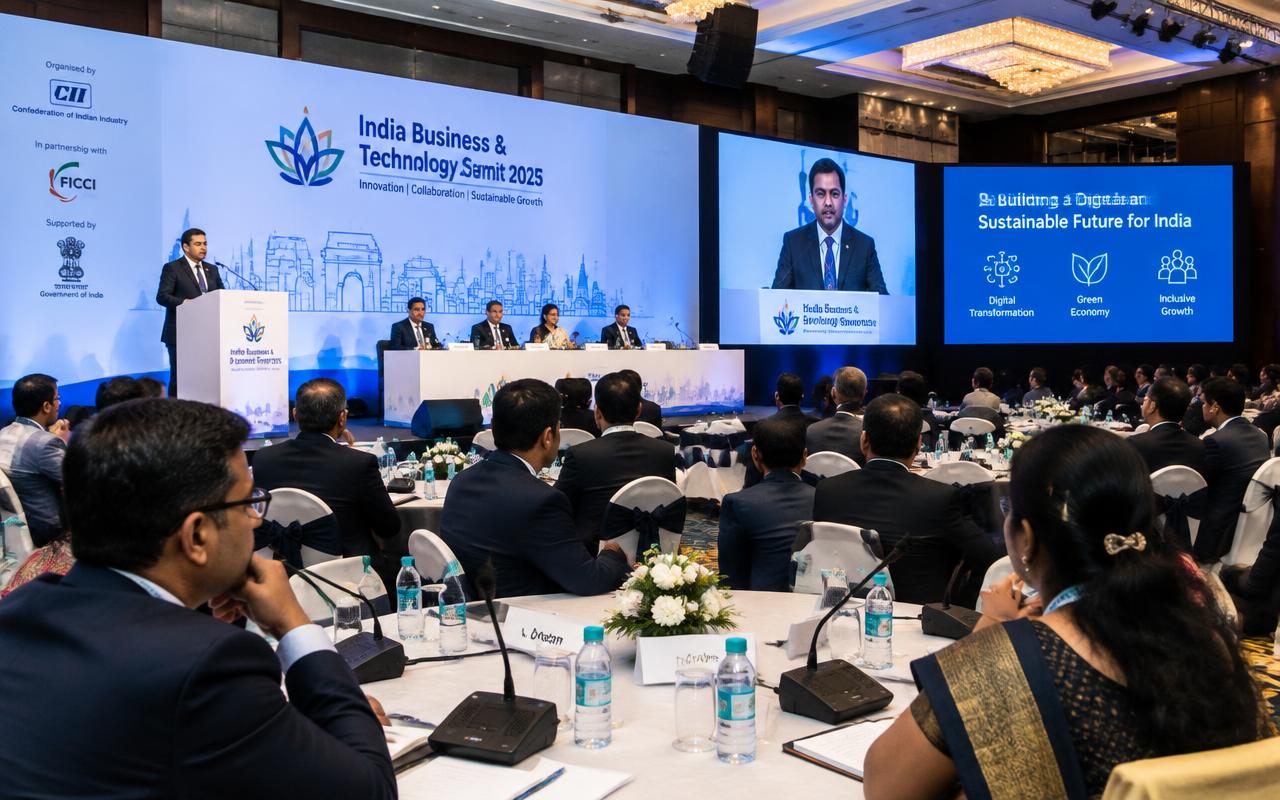
Ajmer is two event markets under one postcode: the Dargah of Khwaja Moinuddin Chishti, whose Urs and weekly pilgrim flow drive devotional and institutional work, and Pushkar 11 km over the Nag Pahar ridge, where a cluster of resorts has turned the Camel Fair town into Rajasthan's value destination-wedding alternative to Jaipur and Jodhpur. Prime AV Solutions supplies the conference AV setup behind those events — designed on paper, proven in rehearsal and run by our own crew.
- Lead time
- From 6 weeks
- Peak season
- Oct–Mar
- Coverage
- Ajmer & Rajasthan
Key takeaway
Conference AV Setup for Ajmer’s biggest events
Conference AV is judged on intelligibility and on the clock. Speech reinforcement in a long reflective ballroom is a harder problem than concert sound, because there is no masking music and every reflection smears a consonant. We design for a measurable target — a speech transmission index of around 0.5 or better is where a room stops being tiring — using distributed loudspeakers aimed down into the seating rather than a single loud source, and delayed so sound arrives coherently from the direction of the stage. Delegate microphone systems from Bosch DICENTIS or Shure Microflex Complete handle multi-speaker panels with request-to-speak queueing and automatic mixing to limit open microphones.
Ballroom acoustics decide this service: reflective rear walls, pillars and low ceilings drive the speaker count, the delay zones and where screens can go. In Ajmer that plays out at venues like Pushkar Fair Grounds, Ananta Pushkar, Mansingh Palace, and across Vaishali Nagar, Civil Lines, Pushkar, Kishangarh.
The presentation chain is where conferences fail most visibly. Every deck, video and remote feed goes through a switcher with independent outputs for the main screens, the stage confidence monitors, the record feed and the stream, so changing one does not disturb another. Two mirrored presentation machines run in parallel with the operator advancing both, and a wireless presentation system handles the inevitable speaker who arrives with their own laptop five minutes before their slot. Confidence monitors downstage give presenters their current and next slide, and a countdown timer visible only to the stage is what actually keeps a six-speaker morning on schedule.
What’s included
- Bosch & Shure delegate systems
- Confidence monitors & timers
- Presentation & video switching
- Breakout room AV
Equipment we carry
Why Ajmer chooses Prime AV
- Crews and trucks positioned for fast load-in at Pushkar Fair Grounds and venues in Vaishali Nagar and Civil Lines.
- A wireless presentation system is live on the switcher as a permanent input, and the operator holds a laptop input already tested so the switch is a cut rather than a rebuild.
- Post-event technical report including any session that ran over
- Working knowledge of Rajasthan venue rules, power sanctions and permission timelines.
Local conditions
Producing conference AV services in Ajmer
Weather & the rig
Conference AV is mostly indoors, but climate still reaches it through the venue's air conditioning, which adds broadband noise that raises the speech level the system has to achieve. Semi-arid Aravalli country means an extreme swing: Apr–Jun runs to 42°C with dust-storm risk that materialises in twenty minutes, while Dec–Jan nights in the Pushkar valley fall to 4–6°C with morning fog over the lake. That cold is a design constraint rather than a comfort footnote — it stiffens cable, shortens wireless-pack battery life and makes an unheated outdoor dinner fail outright. Dust is the year-round enemy of moving-light optics and fan filters here. Apr–Jun heat and dust-storm season; and the Kartik Camel Fair fortnight in November unless the fair is the brief, because every room, vehicle and crew member in the district is committed.
Power & redundancy
Conference loads are modest but must be absolutely uninterrupted, so control, recording and presentation machines sit on UPS protection rather than trusting the house supply. AVVNL supply to Ajmer city is workable but the Pushkar valley sits on thin feeders that sag badly when resort occupancy peaks, so resort weddings run DG-primary with the mains as backup. The fair grounds are DG-only with a fuel bowser planned in. Servo stabilisation ahead of LED processors is worth specifying — the voltage swing here is wide enough to matter.
Permits & noise rules
Indoor conference work rarely needs event permissions, but recording, streaming and multilingual sessions bring their own consent and content-rights paperwork. Ajmer Municipal Corporation for the city, Pushkar Nagar Palika for anything in the valley, the district collector and SP for assembly and loudspeaker permission, and RSPCB noise rules with the 10 pm outdoor limit. The Dargah Committee's authority governs the Dargah Bazaar precinct and its lanes. The decisive constraint in Pushkar is that it is a sacred town — alcohol and meat are prohibited within municipal limits, which rules out the standard destination-wedding bar format and pushes the celebration side to venues outside the limit. Kishangarh airport is 30 km away, so drone work is possible but needs Digital Sky clearance plus crowd-safety sign-off in fair season.
Load-in & access
Hotel ballrooms impose short, shared load-in windows through guest areas, which makes the build sequence and the lift booking the real schedule risk. Jaipur is 135 km and about 2.5 hours on NH-48, and that is the realistic source for trucks, LED and crew depth. The sting is the last 11 km: the old Nag Pahar ghat road into Pushkar has tight bends and a practical length limit, while the bypass takes heavy vehicles but adds time. Inside Pushkar, Sadar Bazaar and the ghat lanes are hand-carry only, and fair-season closures and one-way systems turn a 20-minute run into two hours.
Season & booking
Two immovable fixtures dominate. The Pushkar Camel Fair around Kartik Purnima in November takes the grounds, the resorts, the labour pool and the police bandwidth for a fortnight. The Urs of Khwaja Moinuddin Chishti moves with the Islamic calendar into Rajab and brings lakhs of pilgrims into Ajmer, closing the city's hospitality for a week either side. Teej, Gangaur and the Nov–Mar wedding clusters fill the rest. Peak demand runs Oct–Mar.
Crew & dispatch
Light crew and consumables held locally; trucked LED, truss, line array and additional technicians come from Jaipur, 2.5 hours on NH-48, with Jodhpur as a secondary source during Jaipur's own peak weeks. Load-in support covers Vaishali Nagar, Civil Lines and the rest of the city.
What it costs here
Pushkar exists as the value alternative to Jaipur and Udaipur and clients choose it precisely on budget, so the market pays well below Rajasthan's palace-wedding rates while expecting a comparable look. The honest answer is that it works because the venues are cheaper, not the production. Fair-season brand activations are the one genuinely premium line here.
Local expectations
The Rajasthani wedding sequence is long and ritual-dense — mehendi, mahira, toran and pheras each needing their own setup — and the folk element, kalbeliya dancers and langa-manganiyar musicians, is acoustic-first and badly served by a loud front-of-house. Devotional work at the Dargah demands restraint: qawwali reinforcement is about intelligibility, never level. In Pushkar, no-alcohol and vegetarian-only is a licence condition, not a preference to negotiate.
Specification
Conference AV Setup: technical specification
| Specification | Detail |
|---|---|
| Delegate systems | Bosch DICENTIS and CCS 1000 D, Shure Microflex Complete with request-to-speak |
| Speech intelligibility target | STI of approximately 0.5 or better across the seating area |
| Speech level | 70 – 75 dBA at the seat from distributed, time-aligned loudspeakers |
| Automatic mixing | Gating and NOM attenuation to limit simultaneously open microphones |
| Presentation switching | Barco E2, Roland or ATEM with independent screen, stage, record and stream outputs |
| Playback redundancy | Two mirrored presentation machines advanced in parallel by the operator |
| Confidence monitors | Downstage current and next slide, plus a stage-only countdown timer |
| Wireless presentation | Barco ClickShare or equivalent for bring-your-own-laptop speakers |
| Breakout rooms | Independent screen, microphone, recording and technician per room |
| Session capture | Per-room recording with clean programme audio, not camera on-board sound |
Someone has to run the day, and that is the show caller. Working from a cue-marked running order on headset comms to audio, video, lighting and the stage manager, they call every walk-on, every slide hand-off, every video roll and every break. A conference with breakout rooms multiplies this: each room needs its own projection or screen, its own microphones, its own recording, and a technician who can hold a session alone while the main hall runs. Session recordings, usually required for internal distribution, are captured per room with a clean programme audio feed rather than a camera's on-board microphone.
Sizing
What size rig does your event actually need?
| Scale | Guests | Recommended setup |
|---|---|---|
| Boardroom | 20 – 60 | Table microphone array, one display, two wireless mics, single technician |
| Seminar room | 100 – 300 | Four distributed speakers, one 4 m screen, four wireless mics, confidence monitor |
| Ballroom | 300 – 800 | Eight time-aligned speakers, centre screen plus two IMAG, delegate system for panels |
| Convention hall | 1,000 – 2,500 | Distributed array with delay zones, three-screen set, show caller, full comms |
| Multi-track summit | 2,500 – 5,000 | Main hall plus six breakout rooms, central content control, per-room recording |
Scope
Conference AV Services scope tiers in Ajmer
Seminar Room
Single-room sessions and AGMs up to 300 delegates
- Distributed speech reinforcement with four wireless microphones
- Single screen with switcher and two mirrored presentation machines
- Confidence monitor and a stage countdown timer
- Session recording with clean programme audio
- Audio technician and a presentation operator
Summit Hall
Conferences and dealer meets, 400 – 1,200 delegates
- Time-aligned distributed PA designed to a measured intelligibility target
- Delegate microphone system with request-to-speak for panels
- Centre screen plus side IMAG with independent output scaling
- Show caller on headset comms across all departments
- Full crew including audio, video, lighting and stage management
Multi-Track Conference
Multi-day summits with breakouts, 1,000 – 5,000 delegates
- Main hall production plus three to eight independently crewed breakout rooms
- Central content management with versioned decks across every room
- Per-room recording and a consolidated post-event media delivery
- Registration, signage and foyer AV integration
- Technical producer, show callers per room and a floating engineering team
Pushkar exists as the value alternative to Jaipur and Udaipur and clients choose it precisely on budget, so the market pays well below Rajasthan's palace-wedding rates while expecting a comparable look. The honest answer is that it works because the venues are cheaper, not the production. Fair-season brand activations are the one genuinely premium line here.
Venues
Where we work in Ajmer
| Venue | Capacity | Production note |
|---|---|---|
| Pushkar Fair Grounds | 50,000-plus standing across the mela ground | Deep soft sand administered by the district and the Pushkar municipality, with no permanent power or hard-standing — every tower sits on a ply raft, every truck needs matting, and dust suppression is a continuous job rather than a setup task. |
| Ananta Pushkar | Up to 1,000 across lawns and banquet space | Built into the Aravalli slope, so the lawns are terraced at different levels and a single continuous truss run rarely works; the approach is a narrow resort road where a 32-ft trailer has to break bulk, and the DG compound sits far enough out that cable runs are long. |
| Mansingh Palace | Up to 700 across hall and Ana Sagar-facing terrace | The lakeside position gives the view clients want and a damp evening breeze off Ana Sagar they do not; the terrace has limited point-load capacity and the city-side approach is congested enough that night working is the only realistic window. |
| The Westin Pushkar Resort & Spa | Up to 1,200 across ballroom and lawns | The largest conditioned indoor space in the Pushkar valley with a usable dock, but lawn builds still face the valley's Dec–Jan night temperature crash and the property's own curfew conditions given the sacred-town setting. |
| Brahma Temple precinct and lake ghats | Ceremonial use only, limited numbers | Pushkar's ghats and temple surrounds are sacred ground with hard conditions — no leather, no alcohol, no amplified entertainment and in practice no equipment on the steps; ceremonies here are acoustic or very lightly reinforced. |
Crew
Who turns up on show day
- Technical producer
Owns the AV plan against the agenda, coordinates every department and is the client's single point of contact on site.
- Show caller
Calls walk-ons, slide hand-offs, video rolls and breaks from a cue-marked running order on headset comms.
- Audio engineer
Mixes speech and panels, manages the delegate system's automatic mixing and holds intelligibility over volume.
- Presentation operator
Collects, versions and cues every deck, advances two mirrored machines and handles late bring-your-own-laptop speakers.
- Vision mixer
Cuts IMAG and content to the screens and protects the stage and stream feeds from screen-side changes.
- Breakout room technician
Runs a room single-handed — microphones, screen, recording and the session clock — with the main hall unavailable to help.
What you receive
- Room-by-room technical plan with equipment and crew allocation
- Speech coverage and intelligibility measurement for the main hall
- Cue-marked running order used by the show caller
- Presentation standards document and the final versioned deck set
- Session recordings per room with clean programme audio
- Microphone allocation chart naming every speaker and panellist
- Post-event technical report including any session that ran over
Timeline
From enquiry to load-out
- T-6 weeks
Agenda and room review
The agenda, speaker count, panel formats and room dimensions drive the system design rather than a standard package.
- T-4 weeks
Technical plan issue
Room-by-room equipment plan, screen sizes against sightlines, microphone counts and the comms plan.
- T-2 weeks
Content standards and collection
Presentation standards issued to every speaker and a deck collection deadline enforced with a named owner.
- Show day −1
Build and intelligibility check
Systems built, speech coverage measured and adjusted, every screen path proved and the recording chain tested.
- Show day −1 evening
Speaker rehearsal
Presenters walk the stage, check their deck on the actual screen and use the actual microphone they will wear.
- Day 1 to final day +4 hours
Conference days and strike
Sessions run to the called order, recordings are offloaded and checked nightly, then strike in venue-mandated order.
Risk control
What goes wrong, and how we stop it
What can go wrong
How we prevent it
- What can go wrong
A speaker arrives at the podium with an unseen deck on their own laptop two minutes before their slot.
How we prevent itA wireless presentation system is live on the switcher as a permanent input, and the operator holds a laptop input already tested so the switch is a cut rather than a rebuild.
- What can go wrong
Panel discussions become unintelligible with six microphones open at once.
How we prevent itThe delegate system's automatic mixing gates unused microphones and attenuates for the number of open channels, and the moderator is briefed on request-to-speak before the session.
- What can go wrong
The morning overruns by forty minutes and the afternoon is compressed into chaos.
How we prevent itA stage-only countdown timer and a show caller on comms, with the agreed intervention — a two-minute warning and then a hard wrap cue — agreed with the client in advance.
- What can go wrong
Session recordings are unusable because audio was taken from a camera's on-board microphone.
How we prevent itEvery recording takes a clean programme feed from the audio console, recorded on a separate device, and the first session is checked and reviewed before the second begins.
Honest comparison
Is this the right choice for your event?
- Projection instead of LED screens for a conferenceOur verdict
In a darkened hall with controlled lighting, projection gives a bigger image for less money and is genuinely the right choice. The moment the room is brightly lit for cameras or the ambience the client wants, projection washes out and LED becomes necessary.
- Running without a show callerOur verdict
A single-session seminar does not need one. A six-speaker morning with videos, panels, walk-ons and a sponsor reel does — the caller is the cheapest person on the crew list and the one who determines whether you finish on time.
- The hotel's in-house AV instead of a production companyOur verdict
For a boardroom session or a single-screen seminar, in-house is cheaper, already installed and perfectly adequate. For a multi-speaker conference with IMAG, panels, recording and a running order, in-house kit and staffing are usually sized for the former and get overwhelmed by the latter.
Demand
What Ajmer books most
Ajmer event mix
- Pushkar destination weddings at resort properties
- Dargah Urs and devotional gatherings
- Camel Fair-season brand activations and hospitality
- Mayo College and institutional ceremonies
- Kishangarh marble and stone trade meets
- Regional political and civic functions
Ideal for
Events we power with conference AV setup in Ajmer
Process
From brief to standing ovation
01
Brief & recce
We visit the venue, map power and rigging, and understand your show flow.
02
Design & quote
CAD plans, 3D previews and an itemised quote within 24 hours.
03
Build & rehearse
Load-in, system tuning, content checks and full technical rehearsal.
04
Show & strike
Show-caller-led execution, then a quick, clean load-out.
FAQ
Conference AV Services in Ajmer: FAQs
More services in Ajmer
Conference AV Services in nearby cities
Areas we cover in Ajmer
Events in Ajmer