Venue · Solapur, Maharashtra
Event AV at Hutatma Smruti Mandir
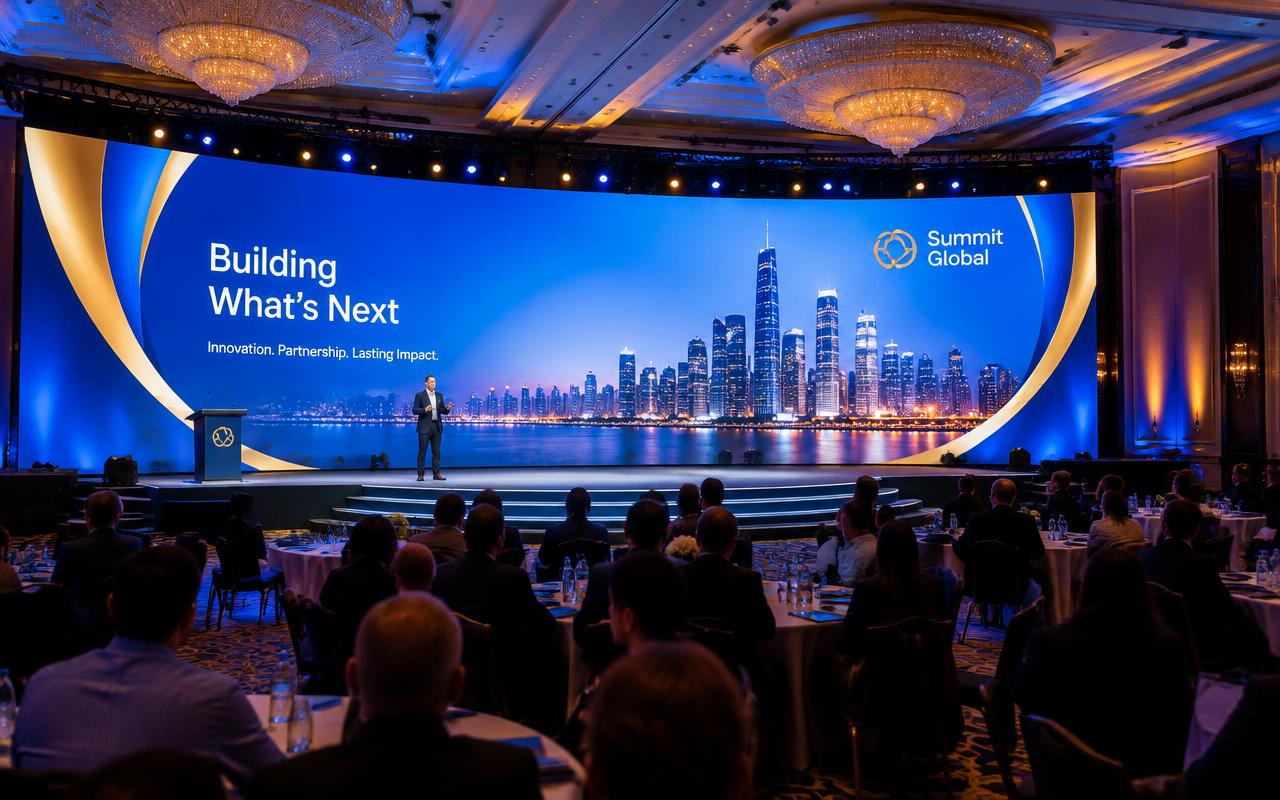
Hutatma Smruti Mandir — Around 1,000 seated. A civic auditorium with a hard reverberant shell and a fixed proscenium; intelligibility depends on a point-source design with tight vertical control rather than the house system. We design, rig and run the full AV stack here.
- Capacity
- Around 1,000 seated
- City
- Solapur
- Peak season
- Oct–Feb
Key takeaway
What we produce at Hutatma Smruti Mandir
From line-array sound and seamless LED walls to drone light shows over the grounds and projection mapping on the façade, every production here is designed after a site recce and run by a dedicated show-caller.
Solapur is a mill town in transition — terry-towel and chaddar weaving, beedi manufacture, a long textile tradition — set in a rain-shadow district of south Maharashtra and shaped by pilgrim traffic to Pandharpur and Akkalkot. AV work comes from Marathi community weddings, textile and power-loom trade meets, and large temple-adjacent devotional programming.
Events we regularly rig for at venues of this type: Corporate Conferences, Product Launches, Award Nights & Galas, Concerts & Live Shows, Weddings & Sangeet, Destination Weddings, Exhibitions & Trade Shows, College Fests.
Local conditions
Producing at Hutatma Smruti Mandir
Venues & rigging
Balives Hotel — The most reliable hospitality venue in the city, but the sanctioned load is modest and service access is a single narrow lane, so stage and LED arrive on tempos across several trips. Indira Gandhi Stadium — A bare municipal ground with no rigging and negligible house power; the hard dusty surface needs watering and matting, and every structure is ballasted because there is nothing to tie to. Hutatma Smruti Mandir — A civic auditorium with a hard reverberant shell and a fixed proscenium; intelligibility depends on a point-source design with tight vertical control rather than the house system. Mangal karyalaya circuit along Hotgi and Akkalkot Roads — Traditional Maharashtrian wedding halls with high tin or truss roofs that are not load-rated; expect ground-stacked audio, street-parked generators and limited three-phase provision. Siddheshwar temple precinct grounds — Crowd density and constant public movement mean cable runs must be trenched or fully ramped, and the temple trust sets its own conditions on structure placement and timings.
Weather & season
Solapur is one of the hottest places in Maharashtra, with April–May routinely at 42–44°C and a dry abrasive wind off the surrounding plateau that makes afternoon outdoor rehearsal impractical and drives dust into fixtures. Rainfall is genuinely scarce in this rain-shadow district, so monsoon risk is lower than elsewhere in the state, but a single heavy cell can still waterlog an unprepared maidan, and winter nights drop sharply enough to matter on overnight builds. March to early June is too hot for daytime outdoor work. The Ashadhi Ekadashi wari to Pandharpur in June–July takes crew, vehicles and road capacity across the district; October–February is the practical production window.
Power & backup
MSEDCL supply into the city is workable, but this is a feeder network shaped by agricultural pumping load, so evening dips and scheduled rural load management are facts of life in the surrounding belt. Sanctioned loads at karyalayas and the civic auditorium are small, so diesel generation covers almost all show load; the local hire fleet is textile-industry oriented and tends toward older open sets, so specify silent canopies explicitly and inspect before confirming.
Permits & noise rules
The Solapur Municipal Corporation allots grounds and issues pandal permissions, the district police handle assembly and traffic, and the Maharashtra Noise Pollution Rules — enforced with notable seriousness in this state, including silence-zone provisions near hospitals and schools and the 10 pm outdoor amplified-sound limit — govern sound. Bombay High Court directions on festival loudspeaker use are applied here, so an extension past curfew is not something to assume. Drone work needs DGCA clearance and local police intimation.
Load-in & access
Solapur sits on NH-65 between Pune and Hyderabad, so inbound freight is straightforward, but the inner city around Railway Lines, Murarji Peth and the old market is a maze of narrow lanes with day-time commercial congestion and no truck access worth attempting. Stage from a ring-road yard and shuttle in tempos. Pilgrim-season traffic toward Pandharpur and Akkalkot can add hours on those corridors.
Local expectations
Marathi conventions apply: a shubharambha and lamp-lighting sequence with its own lighting state, satkar and felicitation segments needing multiple roving mics and strong speech coverage, and kirtan or bhajan ensembles that want warm natural reinforcement rather than a processed sound. Programmes run long with many speakers, so cue discipline and a visible countdown for the stage manager earn more goodwill than any amount of effect lighting.
Venues
Other venues in Solapur
| Venue | Capacity | Production note |
|---|---|---|
| Balives Hotel | 500–900 across the banquet hall and lawn | The most reliable hospitality venue in the city, but the sanctioned load is modest and service access is a single narrow lane, so stage and LED arrive on tempos across several trips. |
| Indira Gandhi Stadium | 15,000-plus in an open layout | A bare municipal ground with no rigging and negligible house power; the hard dusty surface needs watering and matting, and every structure is ballasted because there is nothing to tie to. |
| Mangal karyalaya circuit along Hotgi and Akkalkot Roads | 600–2,000 depending on the hall | Traditional Maharashtrian wedding halls with high tin or truss roofs that are not load-rated; expect ground-stacked audio, street-parked generators and limited three-phase provision. |
| Siddheshwar temple precinct grounds | 5,000–20,000 for devotional programming | Crowd density and constant public movement mean cable runs must be trenched or fully ramped, and the temple trust sets its own conditions on structure placement and timings. |
Process
How we deliver
01
Brief & recce
We visit the venue, map power and rigging, and understand your show flow.
02
Design & quote
CAD plans, 3D previews and an itemised quote within 24 hours.
03
Build & rehearse
Load-in, system tuning, content checks and full technical rehearsal.
04
Show & strike
Show-caller-led execution, then a quick, clean load-out.
FAQ
AV at Hutatma Smruti Mandir: FAQs
AV services in Solapur
Events at venues in Solapur