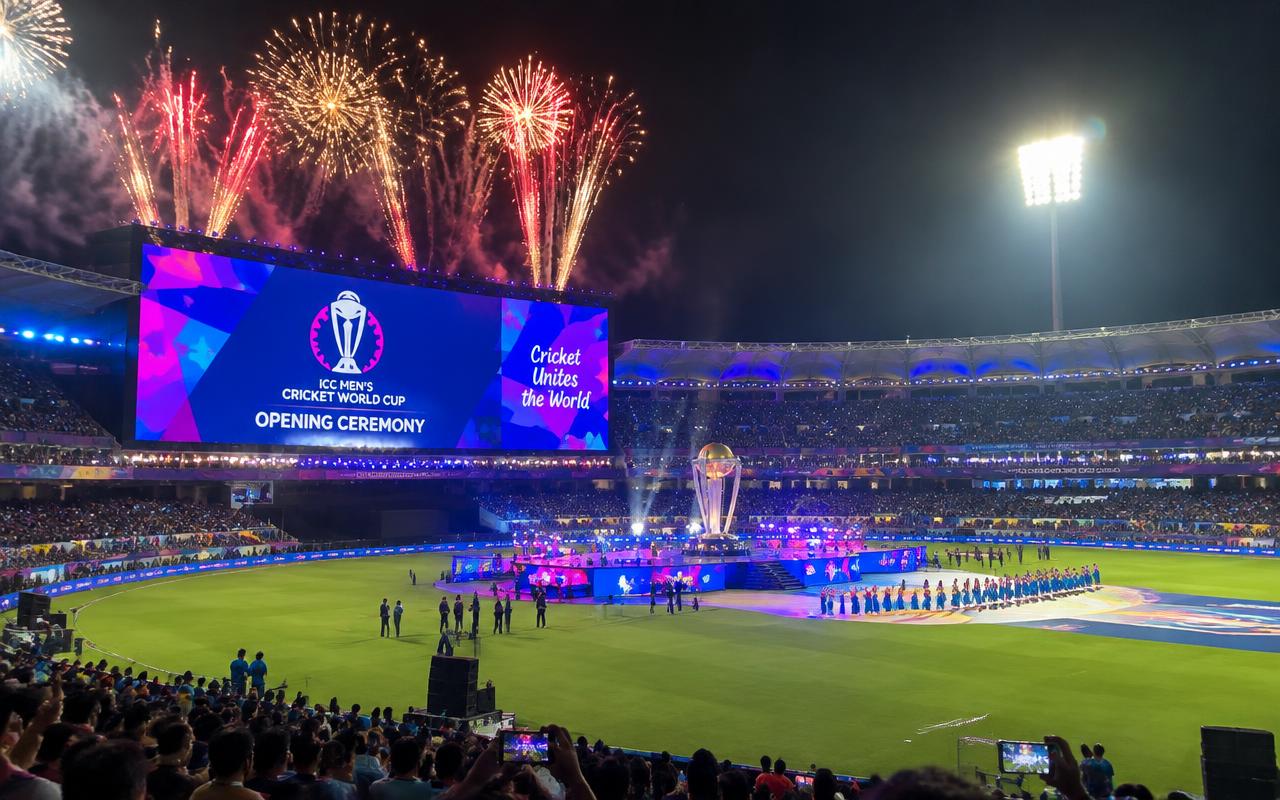
Event production · Rajkot, Gujarat
Sports Events & Ceremonies AV in Rajkot
Rajkot is Saurashtra's commercial engine — foundries, machine tools, oil engines, imitation jewellery and bearings — and the event market follows that pattern: machinery exhibitions, dealer meets for the whole Saurashtra distribution network, and community weddings at a scale where two to five thousand guests is unremarkable. Prime AV Solutions produces the sports events & ceremonies end of that calendar — stadium-scale PA, giant outdoor LED, opening ceremony shows — with one crew owning the whole stack.
- Lead time
- 8 weeks out
- Peak season
- Oct–Feb
- Coverage
- Rajkot & Gujarat
Key takeaway
Complete AV for sports events & ceremonies in Rajkot
Stadium audio is a public-address problem first and an entertainment system second. Announcements have to be intelligible to a crowd generating ninety-odd decibels of its own noise, across tiers with wildly different distances and plenty of hard reflective concrete, which means distributed coverage aimed tier by tier rather than a central cluster turned up. Build the system so the announcer always takes priority over the music feed through a hardware override, and verify intelligibility in a full stadium rather than an empty one, because an empty bowl tells you almost nothing useful.
Stadium geometry decides screen placement, speaker hangs per tier and where a stage can stand without a wheel touching the playing surface. In Rajkot we work at Race Course Ground, The Imperial Palace, Saurashtra Cricket Stadium and venues across Kalawad Road, Race Course, University Road, 150 Feet Ring Road, Mavdi.
Ceremonies are a build-window exercise on somebody else's playing surface. The groundsman controls the pitch, the fixture list controls the calendar, and you may have six hours between the end of pitch preparation and the first guests, often with a rule that no wheeled vehicle crosses the turf. The answer is a modular ceremony rig carried on boards, pre-assembled sections, cable routes laid on protective matting around the boundary, pitch-side distribution boxes placed before covers come off, and a strike plan that clears the surface before the officials inspect it.
What your event needs
- Stadium-scale PA
- Giant outdoor LED
- Opening ceremony shows
- Broadcast feeds
Why Rajkot organisers choose Prime AV
- Crews and trucks positioned for fast load-in at Saurashtra Cricket Stadium and venues in University Road and 150 Feet Ring Road.
- Specify distributed coverage aimed tier by tier with a hardware announcer override above the music feed, and verify intelligibility with the stadium full rather than signing it off in an empty bowl.
- A standing Rajkot client base across engineering and machinery exhibitions and large community and family weddings, so the rig is specified from experience rather than a catalogue.
- Working knowledge of Gujarat venue rules, power sanctions and permission timelines.
What you will be judged on afterwards
- Safety and in-play announcements were intelligible in every tier with the stadium full.
- The ceremony came on and off the playing surface inside its window, and the groundsman passed the pitch.
- Replays and the match clock on the big screens stayed in step with what the crowd was watching live.
- The broadcaster received the agreed clean feeds at the agreed reference without a single dropout.
- No cable, box or structure left a mark on the surface or sat in a crowd escape route.
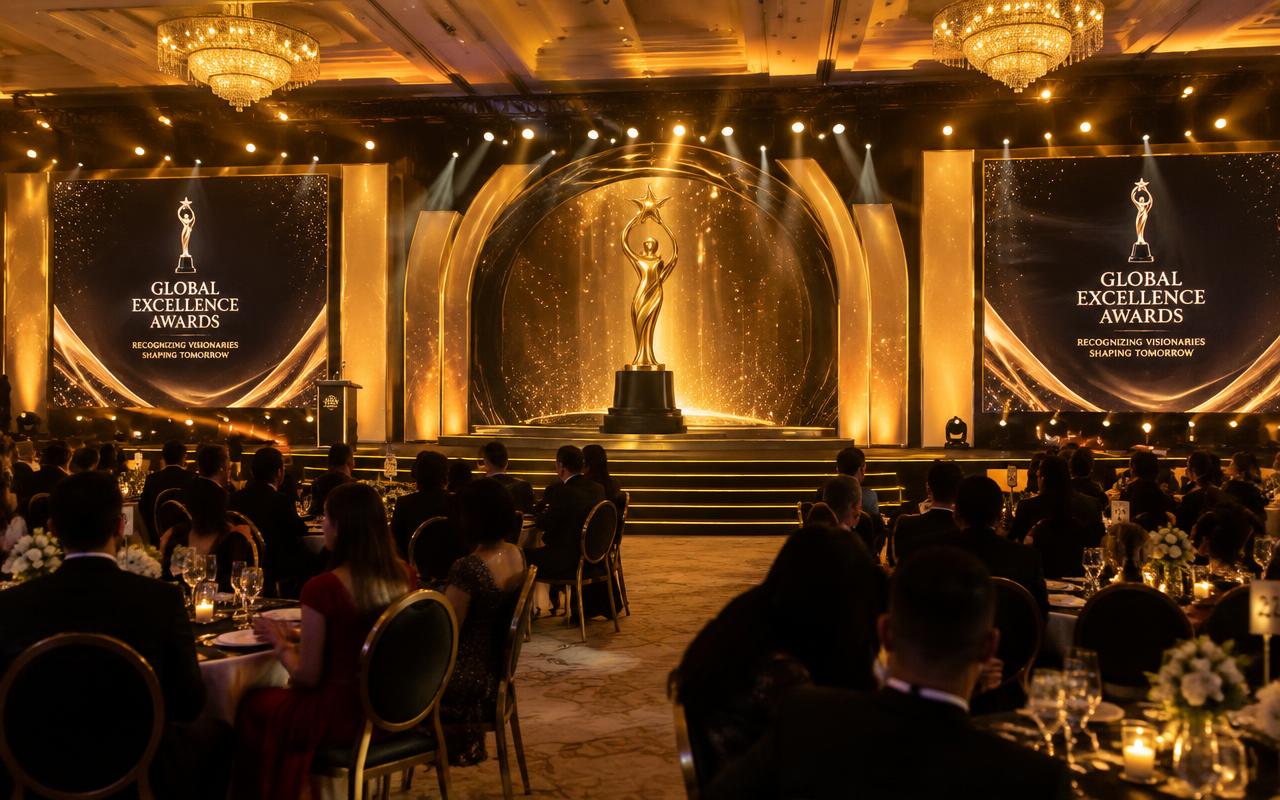
Local conditions
Producing sports events & ceremonies in Rajkot
Weather & the rig
Stadium work is entirely open to the sky, so the ceremony rig, the screens and a seated crowd all take the conditions exactly as they come. Saurashtra's semi-arid climate brings 42–43°C in May with dry heat and a persistent fine dust that works into every moving fixture and fan intake. The city is far enough inland to escape the worst coastal salt but close enough to the Arabian Sea that the cyclonic systems which have repeatedly tracked along Gujarat's coast in June and October can force a strike call on an outdoor build with under 48 hours of notice. Winter nights settle to 10–12°C, dry and still. Jun–Sep monsoon plus the Arabian Sea cyclone risk at both edges of that window; Apr–Jun for daytime outdoor work.
Power & redundancy
Stadiums have power but almost never where a pitch-side ceremony needs it, so temporary distribution around the boundary with generator backup carries the show. PGVCL supply in the city is adequate, and the engineering industry base means DG hire, heavy cabling and skilled electrical labour are cheap and abundant — a genuine advantage for a nine-night garba or a week-long machinery exhibition. GPCB requires acoustic enclosures, and the 10pm cut applies outside the state's Navratri notification.
Permits & noise rules
Match-day events sit under the stadium authority's rules, a police crowd plan and separate clearance for any pyrotechnic or drone element, all on a fixture date that cannot move. Rajkot Municipal Corporation handles ground allotment, temporary structures and the fire NOC, and the Rajkot Police Commissionerate licenses loudspeakers and gatherings, with the state's annual Navratri relaxation being the operative rule on late-night garba. The new Hirasar international airport out on the Ahmedabad highway has shifted the drone restriction footprint away from the city centre, but the old airstrip area and the stadium corridor still need checking rather than assuming.
Load-in & access
Build windows are dictated by the fixture list and the groundsman, so everything loads in, moves on boards and strikes around play rather than around the production. Rajkot is the Saurashtra road hub on NH-27 with four hours to Ahmedabad, so trucking in is routine and the 150-ft Ring Road takes any vehicle. The old city around Dharmendra Road, Soni Bazaar and Lohanagar is narrow with handcart-only access during trading hours. The Khandheri stadium run needs its own staging plan because there is no support infrastructure within several kilometres.
Season & booking
Navratri's nine nights run in the Saurashtra raas-garba style, which differs in tempo and choreography from Ahmedabad's. The Janmashtami lok mela on the Race Course is a week-long fair that occupies the ground and the local infrastructure. The distinctive local fact is that Saurashtra communities also marry in the pre-monsoon Vaishakh window in April and May, which most of India does not, so inventory here is contested twice a year rather than once. Peak demand runs Oct–Feb.
Crew & dispatch
Trucked from the Ahmedabad base in about four hours on NH-27, with local DG, cabling and rigging labour sourced in Rajkot, which keeps the mobilisation cost low.
What it costs here
Value-driven and sharply negotiated — Rajkot buyers are manufacturers who cost things per unit and will ask what a specific line item is for, so an itemised quotation with justified engineering wins where a package price does not. A machinery exhibition build is costed on exactly that logic.
Local expectations
Saurashtra raas-garba has its own tempo and the band mix sits differently from Ahmedabad's, with the dhol and the singer forward and coverage that must hold across a very large circle. The wedding problem here is scale rather than spectacle: with several thousand guests and a vast dining area, PA intelligibility across the full footprint and the flow of catering drive the design more than the stage look does. Gujarati throughout.
Run of show
A typical sports events & ceremonies schedule
| Time | Moment | What AV is doing |
|---|---|---|
| T−3 days | Screen and PA build | Giant screens erected on engineered supports, distributed speaker positions hung or stacked per tier, cable routes matted around the boundary. |
| T−1 day | Integration and rehearsal | Broadcast feed points tested with matched reference, scoring and clock integration verified, ceremony rehearsed with stand-ins on the boards. |
| T−5 hrs | Announcement and music check | Announcer override tested from every position, music bed levels set per tier, emergency message script read through with the venue safety officer. |
| 16:00 | Gates open | Walk-in music at measured level per tier, welcome and safety messages on a timed rotation, screens on sponsor and wayfinding content. |
| 17:30 | Fan engagement | Crowd cameras cut to the big screens, competitions run from the announcer position, audio follows the active zone rather than running flat everywhere. |
| 18:30 | Opening ceremony | Ceremony rig live on the boards, performance audio taken by a second engineer, lighting and effects cued, broadcast taking the clean programme feed. |
| 19:00 | Match start | Ceremony struck off the surface inside the agreed window, screens switch to match feed with replays, announcer on priority for all in-play messaging. |
| 22:15 | Presentation | Podium placed and lit, radio mics on an allocated block, screens on the presentation cut, recording closed and feeds reconciled with the broadcaster. |
Broadcast integration is where sports events differ most from other live work. The host broadcaster owns the match feed and the timing, and your giant screens, replay and ceremony coverage have to interface with that cleanly: agreed feed points, matched reference and frame rate, a clear understanding of who supplies replays and with what delay, and a scoring and clock integration that does not drift. Fan-park screens elsewhere in the city then take a distributed feed with their own audio, their own power and their own crowd plan.
Scope
Sports Events & Ceremonies scope levels in Rajkot
Match-night overlay at a mid-size stadium: distributed PA supplement, announcer position, one large screen or LED panel set, playback and a show-caller.
An opening or closing ceremony on the field of play: modular stage on boards, performance-grade PA, programmed lighting rig, LED, pitch-side power and a rehearsal day.
Multi-match delivery with giant screens, full stadium PA supplement, broadcast feed integration, replay to screens and a resident crew across the fixture window.
A large opening ceremony with drone or pyrotechnic finale, multi-zone audio across the bowl, broadcast-grade camera package, full generator redundancy and a multi-day build.
Value-driven and sharply negotiated — Rajkot buyers are manufacturers who cost things per unit and will ask what a specific line item is for, so an itemised quotation with justified engineering wins where a package price does not. A machinery exhibition build is costed on exactly that logic.
Venues
Where sports events & ceremonies happen in Rajkot
| Venue | Capacity | Production note |
|---|---|---|
| Race Course Ground | Tens of thousands across the central open ground | Flat and well-connected but entirely without infrastructure, so dust suppression and matting are standing requirements, every kilowatt is generated, and the ground hosts back-to-back fairs that compress the build and strike windows. |
| The Imperial Palace | Several hundred banquet on Dr Yagnik Road | The city's established upscale hotel, reached by a constrained urban service approach, so trucks unload in sequence overnight and kit is broken down to lift dimensions. |
| Saurashtra Cricket Stadium | Around 28,000 at Khandheri | Fifteen kilometres out on the Jamnagar road with nothing nearby, so a field event needs its own staging yard and welfare provision; full turf protection, ground support only, and SCA plus police clearance. |
| Hemu Gadhvi Hall | Around 1,000 seated | A civic auditorium with fixed seating and modest house infrastructure, where a show rig brings its own distribution and the municipal booking process sets the build window. |
| Shri Ram Krishna Ashram grounds | Several thousand on open ground | Community grounds where the trust's own conditions govern what may be built and how late it may run, independent of whatever the municipal permission allows. |
Demand
What Rajkot books most
Rajkot event mix
- Engineering and machinery exhibitions
- Large community and family weddings
- Navratri raas-garba in the Saurashtra style
- Dealer and distributor meets for the Saurashtra trade
- Lok mela and public fair production
- Cricket and sporting events at the stadium
Services
Recommended production stack
Line Array Systems
Flown line array systems designed in prediction software for outdoor grounds, convention halls and arenas of 1,000 to 50,000 guests.
LED Screen Rental
Large-format LED screens and IMAG side screens with switching, so every guest sees speakers, performers and content in crisp detail.
Drone Light Shows
Choreographed drone light shows with 100 to 1,000+ drones that paint logos, names and stories across the night sky — with all permissions handled.
Broadcast & Multi-Camera
Broadcast-grade cameras, jibs, PTZs and OB-style control for IMAG, TV feeds and post-event films that capture every moment.
Timeline
Planning milestones
- 8 weeks out
Fixture and access plan
Match date, pitch-preparation schedule, build and strike windows and the surface protection method agreed with the venue and groundsman.
- 6 weeks out
Audio and screen design
Tier-by-tier coverage modelled, screen positions fixed against sightlines and support engineering, announcer override architecture specified.
- 4 weeks out
Broadcast interface agreed
Feed points, reference and frame rate, replay responsibility, clock and scoring integration documented with the host broadcaster.
- 3 weeks out
Ceremony design and safety sign-off
Modular rig drawings, cable plan, effect clearances and crowd-safety review completed with the venue safety officer.
- T−3 to T−1 day
Build, integration and rehearsal
Screens and PA installed and tested, broadcast integration proven, ceremony rehearsed with timed move-in and strike drills.
- Immediately post event
Strike and surface handover
Ceremony off the surface first, full derig to the venue deadline, and a joint pitch and stand inspection before sign-off.
Risk control
What goes wrong, and how we stop it
What can go wrong
How we prevent it
- What can go wrong
Crowd noise masks announcements when it matters most.
How we prevent itSpecify distributed coverage aimed tier by tier with a hardware announcer override above the music feed, and verify intelligibility with the stadium full rather than signing it off in an empty bowl.
- What can go wrong
Big-screen replays drift out of sync with the live action.
How we prevent itLock to the broadcaster's reference and frame rate, agree in writing who supplies replays and at what delay, and keep a dedicated operator on the screen feed rather than running it from the announcer position.
- What can go wrong
Cable runs cross the field of play or a crowd escape route.
How we prevent itRoute everything around the boundary on matting, obtain the safety officer's sign-off on the cable plan before build, and use wireless or pre-installed venue infrastructure for anything that would otherwise cross a gangway.
- What can go wrong
Weather forces a call in an open bowl with a flown rig.
How we prevent itHold written wind-load limits for every flown element, nominate the decision-maker jointly with the venue, and rehearse a sequence that lowers and secures the rig without crossing the surface.
Process
From brief to standing ovation
01
Brief & recce
We visit the venue, map power and rigging, and understand your show flow.
02
Design & quote
CAD plans, 3D previews and an itemised quote within 24 hours.
03
Build & rehearse
Load-in, system tuning, content checks and full technical rehearsal.
04
Show & strike
Show-caller-led execution, then a quick, clean load-out.
FAQ
Sports Events & Ceremonies AV in Rajkot: FAQs
Other events in Rajkot
Sports Events & Ceremonies AV in nearby cities
Services in Rajkot
Areas we cover in Rajkot