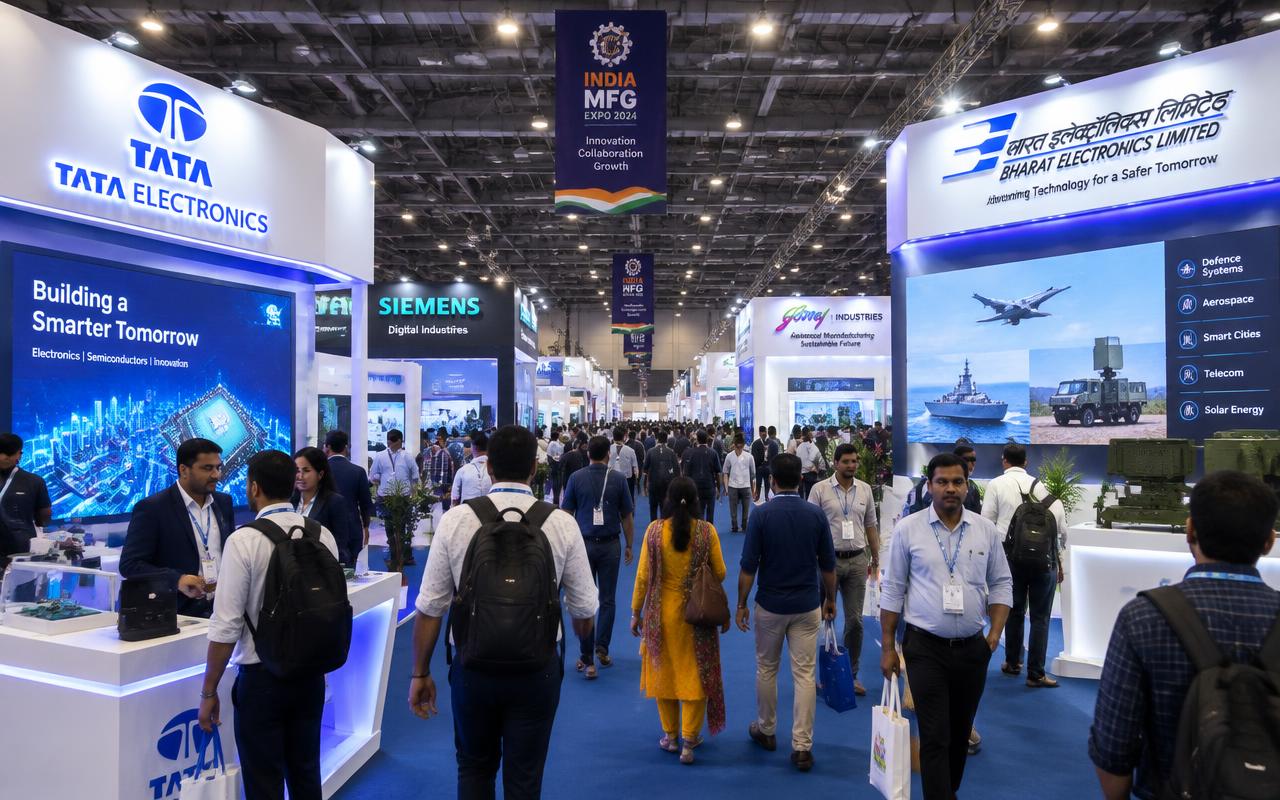
Event production · Srinagar, Jammu & Kashmir
Exhibitions & Trade Shows AV in Srinagar
The valley's event economy is tourism-led — houseboat and lakefront weddings, incentive groups, and conferences that come for the setting — supported by handicraft and horticulture trade bodies and a government calendar. Uniquely in this list, the working season is the Indian off-season, running April to October while the rest of the country shuts down for summer. Prime AV Solutions produces the exhibitions & trade shows end of that calendar — booth LED & touchscreens, keynote stage PA, pavilion lighting — with one crew owning the whole stack.
- Lead time
- 8 weeks out
- Peak season
- Apr–Oct
- Coverage
- Srinagar & Jammu & Kashmir
Key takeaway
Complete AV for exhibitions & trade shows in Srinagar
An exhibition is a power-distribution problem before it is an audio-visual one. Every booth draws from a shared hall supply through a metered feed ordered weeks in advance from the organiser's appointed electrical contractor, and the single most common cause of a dark booth is a feed ordered at half the load the LED wall and processing actually need. Calculate the draw honestly, order single or three phase deliberately, keep LED processors and media players on their own circuit away from switched lighting, and put a small uninterruptible supply behind anything whose reboot takes four minutes.
Expo centres set the ceiling height, the rigging policy and the booth power you are permitted to order, and the whole design has to live inside those published limits. In Srinagar we work at SKICC, Taj Vivanta Dal View, Royal Springs and venues across Boulevard Road, Rajbagh, Sonwar, Dal Gate, Hazratbal.
The second problem is the build queue. Hundreds of contractors share one marshalling yard, a handful of hall doors and a window of thirty-six to forty-eight hours, and nobody is waiting for you. The way through it is preparation: numbered and labelled flight cases, a loading list in build order, a booked load-in slot, pre-assembled LED panel sets and a crew briefed to finish early rather than to finish on time. Finishing a day ahead buys you the quiet hours to solve content and alignment problems that are impossible to solve in a crowded hall.
What your event needs
- Booth LED & touchscreens
- Keynote stage PA
- Pavilion lighting
- Content playback
Why Srinagar organisers choose Prime AV
- Crews and trucks positioned for fast load-in at Kashmir Haat and venues in Hazratbal and Boulevard Road.
- Calculate draw per circuit honestly, order the correct feed from the appointed contractor, balance across phases, and put inrush-heavy LED and lighting on separate protected circuits with their own breakers.
- A standing Srinagar client base across destination weddings and lakefront receptions and government and institutional conferences at skicc, so the rig is specified from experience rather than a catalogue.
- Working knowledge of Jammu & Kashmir venue rules, power sanctions and permission timelines.
What you will be judged on afterwards
- The stand was live and tested before the hall opened on day one, not during the first visitor hour.
- Screens and content ran all three days without a visitor ever seeing a desktop, an error or a black panel.
- The stand team could start, stop and recover the system from a single printed page without calling anybody.
- Neither the organiser nor a neighbouring exhibitor raised a complaint about power draw or audio spill.
- Content read clearly on camera and in photographs taken under hall lighting with the doors open.
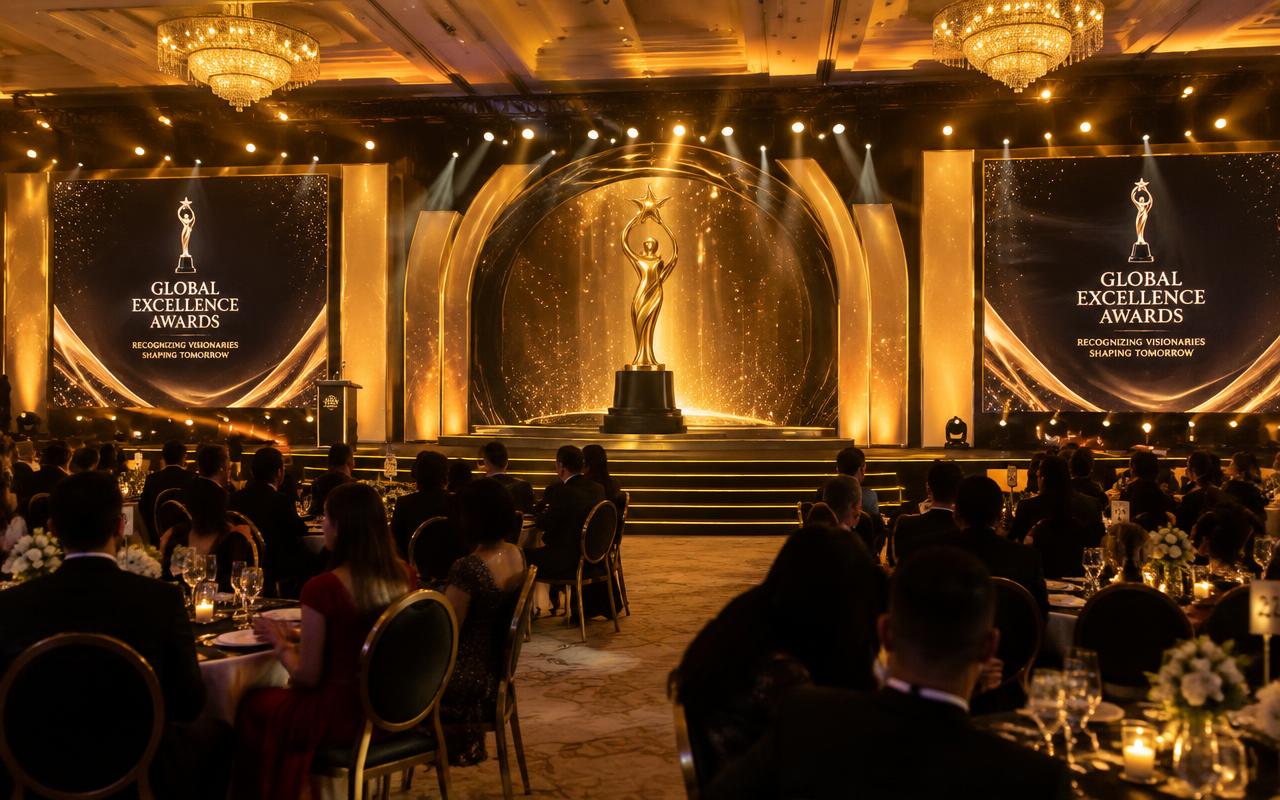
Local conditions
Producing exhibitions & trade shows in Srinagar
Weather & the rig
Expo halls are enormous shells with roller doors open to a loading yard all day, so the outside climate walks straight into the stand and changes how bright the screens need to be. Srinagar inverts the Indian calendar and the cold is a specification problem rather than a comfort one. Chillai Kalan from late December brings −4 to −8°C, where lithium packs for wireless and camera lose most of their rated capacity, LCD response slows visibly on monitors, condensation forms the instant cold kit is carried into a heated hall, and drone flight time halves. At 1,585m the thinner air also reduces rotor lift and changes how fixtures shed heat. The usable window is roughly April to October. Dec–Feb for anything outdoor, and more importantly for transport — snowfall closes the Jammu-Srinagar highway at the Banihal tunnel for days at a time, which is a risk to the inventory itself and not merely to the show; also plan around Ramzan, when the working day shifts entirely.
Power & redundancy
An exhibition is a power-distribution exercise before it is an AV one, because every booth draws off a shared hall supply where one imbalanced phase takes a whole aisle dark. JKPDD supply is the least reliable of any city on this list, with long scheduled curtailment in winter and load shedding even through summer, so every event here is designed as a DG-primary installation with full redundancy and fuel supply treated as a planning item in its own right. Silent sets are expected along the Boulevard, which is a noise-sensitive tourist zone.
Permits & noise rules
Exhibition work runs on the organiser's rulebook layered over local fire and electrical approvals, and both have to be cleared before a single panel goes up. Srinagar Municipal Corporation grants ground and structure permission and the District Magistrate with J&K Police license gatherings and loudspeakers, but in practice the security apparatus is the decisive approver and event clearances take longer here than anywhere else in India — a timeline that assumes NCR-style turnaround will fail. The Lakes and Waterways Development Authority governs anything on or beside the Dal, including structures and discharge. Drone flying in the valley is prohibited for civilians as a security matter, so aerial work needs specific police and administration clearance rather than a Digital Sky permission.
Load-in & access
The build is a queue of hundreds of contractors through one marshalling yard in a fixed window, so slotting and case labelling matter more than the equipment itself. Everything arrives on NH-44 through the Pir Panjal, a nine to ten hour run from Jammu that weather and landslides can extend or stop outright, so inventory is sent with margin and spares are deliberately over-provisioned because there is no local replacement for a failed amplifier. Air freight through Srinagar airport is possible but moves through security screening that slows cargo considerably. Dal-side venues reached by shikara need every case waterproofed and transferred by hand.
Season & booking
The April tulip bloom at the Indira Gandhi Memorial Tulip Garden opens the season, the summer months carry the tourist and wedding load, and the chinar and saffron weeks in October close it. Ramzan and Eid shift the entire working day, the Amarnath Yatra months bring heavy security deployment across the valley, and winter effectively closes the market rather than merely slowing it. Peak demand runs Apr–Oct.
Crew & dispatch
Mobilised from the Delhi NCR base with road transit via Jammu, which means a two-day inbound run and a deliberate decision to carry spares rather than rely on local supply; local labour is capable and generator hire is essential.
What it costs here
The highest travel and contingency loading of any market in this set, and legitimately so — two-day transit each way, highway weather risk, over-provisioned spares and DG-primary power all cost money, and a wedding function here carries every one of those lines. Clients who have produced in the valley before understand this; those who have not need it shown line by line.
Local expectations
Kashmiri weddings centre on the wazwan, a long multi-course meal that sets the schedule and keeps guests seated for hours, so the sound design serves conversation and ceremony rather than a dance floor. Sufiyana and chakri ensembles need acoustic-instrument miking and a quiet stage. Modesty in content and in crew conduct is expected, Urdu and Kashmiri are the working languages, and intermittent curtailment of internet and mobile connectivity rules out any design that depends on live cloud streaming without a local recording fallback.
Run of show
A typical exhibitions & trade shows schedule
| Time | Moment | What AV is doing |
|---|---|---|
| T−48 hrs | Marshalling and load-in slot | Vehicle reports to the yard against a booked slot; cases unloaded in build order and moved to the stand footprint. |
| T−36 hrs | Structure and power | Frames and ground support built, metered feed connected by the appointed contractor, distribution split with LED processing on its own circuit. |
| T−24 hrs | LED and screen build | Panels hung or stacked, processing mapped to the actual pixel canvas, touchscreens and media players installed and cable-managed. |
| T−12 hrs | Content and brightness set | Attract loops and interactive content loaded locally, aspect ratios checked on the real canvas, brightness set with hall doors open. |
| T−2 hrs | Handover to the stand team | Scheduled power-on tested, recovery after a simulated trip verified, one-page operating note left with the stand manager. |
| 10:00 | Hall opens, day one | Attract loops running, a technician on call across the hall, audio level checked against neighbouring stands and the organiser's limit. |
| 12:30 | Keynote stage session | Stage PA and presentation switching live, radio mics on an allocated block clear of other halls, session recorded. |
| 17:00 | Hall closes | Scheduled shutdown, screens powered down, overnight security condition noted and content drives secured. |
Then the rig has to run unattended for nine hours a day, three days running, with a client-facing team that has no technical training. That means a looped playback system that recovers automatically after a power event, scheduled start and shutdown, content held locally rather than streamed, screen brightness set for a hall with open roller doors and daylight at the ends, and a written single-page operating note taped inside the store cupboard. Booth audio needs a deliberately short-throw design so it serves your stand without being the reason your neighbour complains to the organiser.
Scope
Exhibitions & Trade Shows scope levels in Srinagar
A 3x3 or 4x4 metre stand for three days: an LED wall or large-format screen, a media player with attract-loop playback, a touchscreen and a short-throw audio point.
A larger pavilion with multiple screens or a shaped LED feature, interactive stations, accent lighting, local content management and a technician attending daily.
A hall pavilion with a presentation stage: PA, delegate and radio mics, presentation switching, session recording, and multiple booth screens on a managed content system.
Organiser-side delivery across a full hall: inaugural stage, registration and wayfinding screens, pavilion lighting, multiple session rooms and a floating crew for the run of the show.
The highest travel and contingency loading of any market in this set, and legitimately so — two-day transit each way, highway weather risk, over-provisioned spares and DG-primary power all cost money, and a wedding function here carries every one of those lines. Clients who have produced in the valley before understand this; those who have not need it shown line by line.
Venues
Where exhibitions & trade shows happen in Srinagar
| Venue | Capacity | Production note |
|---|---|---|
| SKICC | A few thousand in the auditorium with lakefront lawns alongside | The valley's flagship convention venue sits directly on the Dal, so wind off the water sets the structural rating for anything on the lawns and the protected lakeshore environment restricts what may be built and where effluent and fuel may go. |
| Taj Vivanta Dal View | A few hundred across halls and terraces | Reached by a winding hill road up the Kralsangri slope that loaded trucks manage only slowly and in daylight, so the load-in is staged across more trips and more hours than the rig size suggests. |
| Royal Springs | Several hundred across clubhouse and fairway settings | A golf course where turf protection is the governing condition, vehicle movement across the fairways is tightly controlled, and every kilowatt is generated because there is no usable feed out on the course. |
| Centaur Lake View Hotel | Around 500 across halls and lawns | Boulevard-side property where the tourist-season traffic restrictions on the Boulevard dictate when a truck may approach at all. |
| Kashmir Haat | A few thousand across the exhibition grounds | The handicraft exhibition ground, where stalls and the event build share generated power and the surrounding residential area makes the sound curfew a practical limit. |
Demand
What Srinagar books most
Srinagar event mix
- Destination weddings and lakefront receptions
- Government and institutional conferences at SKICC
- Handicraft, pashmina and horticulture trade exhibitions
- Cultural, literary and music festivals
- Incentive and leisure group events
- Film and commercial shoots with allied production
Services
Recommended production stack
LED Screen Rental
Large-format LED screens and IMAG side screens with switching, so every guest sees speakers, performers and content in crisp detail.
LED Wall Rental
Indoor P2.6/P3.9 and outdoor P4.8 LED walls in any size or shape — curved, cubes, floor LED and kinetic panels — powered by Novastar processing.
Conference AV Setup
End-to-end conference AV: delegate mic systems, confidence monitors, presentation switching, speaker timers and a show-caller who keeps it on time.
Stage Lighting Design
Lighting designers who build looks, cue every moment and run grandMA3 consoles — from elegant gala washes to high-energy concert shows.
Timeline
Planning milestones
- 8 weeks out
Stand design and power schedule
Screen sizes, canvas shapes and device list fixed, with a written per-circuit load calculation to drive the organiser power order.
- 6 weeks out
Organiser submissions
Power order, structural and rigging declarations, and contractor passes submitted against the organiser's published deadlines.
- 4 weeks out
Content specification issued
Pixel canvas maps, safe areas, resolution, codec and loop duration issued to the content and brand teams.
- 2 weeks out
Content delivery and dry build
Final files received and played on identical processing in the warehouse; LED panel sets pre-assembled and tested.
- T−48 to T−2 hrs
Build and handover
Load-in, structure, power, screens, content and a tested handover to the stand team with a printed operating note.
- Final day, post close
Strike
Derig to the organiser's clearance deadline, with content drives and hired devices reconciled against the manifest.
Risk control
What goes wrong, and how we stop it
What can go wrong
How we prevent it
- What can go wrong
The booth trips and takes a section of the hall's phase with it.
How we prevent itCalculate draw per circuit honestly, order the correct feed from the appointed contractor, balance across phases, and put inrush-heavy LED and lighting on separate protected circuits with their own breakers.
- What can go wrong
The power order is placed at half the real load to save money.
How we prevent itProduce a written load schedule per device at design stage, size the order to measured draw plus headroom, and treat the contractor's feed cost as fixed infrastructure rather than a negotiable line.
- What can go wrong
Content arrives in the wrong aspect for a non-standard LED canvas.
How we prevent itIssue the exact pixel canvas map and safe area to the content team at briefing, and test the real files on the real processing during the build rather than on a laptop.
- What can go wrong
The truck sits in the marshalling queue and the build window shrinks.
How we prevent itBook a load-in slot, load in build order with numbered cases, and send a small advance team to secure the footprint while the vehicle waits its turn.
Process
From brief to standing ovation
01
Brief & recce
We visit the venue, map power and rigging, and understand your show flow.
02
Design & quote
CAD plans, 3D previews and an itemised quote within 24 hours.
03
Build & rehearse
Load-in, system tuning, content checks and full technical rehearsal.
04
Show & strike
Show-caller-led execution, then a quick, clean load-out.
FAQ
Exhibitions & Trade Shows AV in Srinagar: FAQs
Other events in Srinagar
Exhibitions & Trade Shows AV in nearby cities
Services in Srinagar
Areas we cover in Srinagar