Sound · Gorakhpur, Uttar Pradesh
Premium DJ Sound Setup in Gorakhpur
Gorakhpur's event economy is driven by two unusual concentrations: the Gorakhnath temple complex, which runs a mass religious calendar of its own, and an exceptional density of VIP and government activity that brings full protocol and security apparatus to functions a city of this size would not otherwise see. Add AIIMS Gorakhpur, the North Eastern Railway headquarters, the fertiliser plant and cross-border trade with Nepal, and the Ramgarh Taal lakefront redevelopment as the new venue, and the work is institutional and ceremonial far more than commercial. Prime AV Solutions supplies the DJ & premium party sound behind those events — designed on paper, proven in rehearsal and run by our own crew.
- Lead time
- From 3 weeks
- Peak season
- Oct–Feb
- Coverage
- Gorakhpur & Uttar Pradesh
Key takeaway
DJ & Premium Party Sound for Gorakhpur’s biggest events
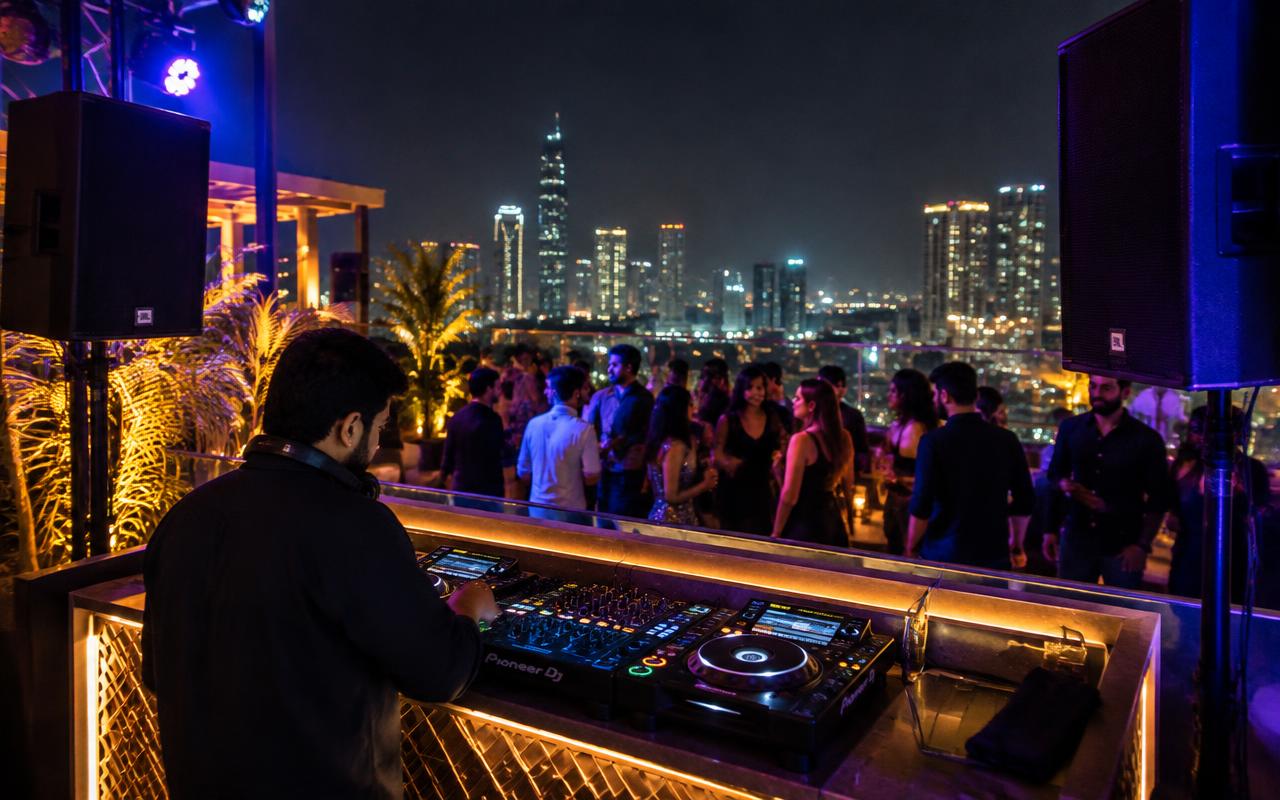
A premium DJ setup is judged on two things: what the DJ feels in the booth and what the dance floor feels in the chest. The booth is built around a Pioneer CDJ-3000 pair or quad with a DJM-A9 or V10 mixer, linked over Pro DJ Link so beat grids, quantise and track loading behave as the artist expects. Booth monitoring is a separate send on its own cabinets, angled at the DJ's ear height and level-matched so they are not mixing against a 20-metre delayed slap from the main system. We supply a laptop stand, a USB hub, RCA and XLR patching for every common controller, and a dedicated power circuit for the booth that nothing else shares.
Dance-floor shape dictates everything here: a long narrow floor needs delay fills, a square one needs a centre sub cluster, and low ceilings decide whether tops fly at all. In Gorakhpur that plays out at venues like Radisson Gorakhpur, Veer Bahadur Singh Sports College, Ramgarh Taal, and across Golghar, Civil Lines, Ramgarh Taal, Taramandal.
The dance floor is a low-frequency problem. Club-grade subs placed in a left-right pair produce a comb pattern across the floor, so we prefer a centre-clustered block or a four-box arc that gives the whole floor similar energy between 40 and 80 Hz. Tops are flown or pole-mounted above head height and aimed down into the floor rather than across it, which keeps level on the dancers and off the bar and the smoking terrace. Target is 100 to 105 dBA on the floor with the system still clean at that level, which comes from headroom and correct crossover points rather than from pushing limiters.
What’s included
- Pioneer CDJ-3000 & DJM-A9 booths
- Club subwoofers & tops
- Beam, wash and laser lighting
- LED DJ console facades
Equipment we carry
Why Gorakhpur chooses Prime AV
- Crews and trucks positioned for fast load-in at Radisson Gorakhpur and venues in Golghar and Civil Lines.
- A dedicated monitor send on its own cabinets at ear height, level-matched at soundcheck with the artist actually standing in the booth.
- Dance-floor coverage plan showing sub positions and top aiming
- Working knowledge of Uttar Pradesh venue rules, power sanctions and permission timelines.
Local conditions
Producing premium DJ sound setup in Gorakhpur
Weather & the rig
DJ booths and dance floors are frequently rooftop or poolside, which puts expensive decks, a mixer and a laptop in direct reach of dew, dust and sudden rain. Gorakhpur sits in the Terai with the Rapti and Rohini close by, and that gives it the most humid summer of any city in the Uttar Pradesh set — pre-monsoon June combines 40°C with oppressive moisture, and the monsoon from late June through September is heavy enough that river flooding in the district is an annual event. Winter brings dense fog and genuine cold-wave nights in December and January, with visibility before dawn poor enough to affect both travel and any projection-dependent design. Late June to September is monsoon with real flooding risk in the district, and May–June humid heat is punishing for crew. The Khichdi Mela fortnight around Makar Sankranti takes the city over completely. October to December and February to March are the workable stretches.
Power & redundancy
A party rig is electrically noisy — lighting, lasers, CO2 solenoids and the booth all on one supply is how hum gets into a mix, so the booth takes its own clean circuit. UPPCL supply has improved with the city's recent investment but remains interruption-prone, and the lakefront and sports ground sites have no event-grade provision at all. Full independent generation with redundancy is the standard, and for VIP functions it is a requirement rather than a choice — security protocol will typically demand a tested changeover and a standby set with an operator present throughout.
Permits & noise rules
After-parties sit squarely against the local noise curfew, and late-night licensing is usually what decides whether the set ends at midnight or at two. The Gorakhpur Nagar Nigam and the Gorakhpur Development Authority control ground and lakefront use, the district magistrate and senior superintendent of police license assembly, and the Uttar Pradesh noise rules with the 10 pm outdoor amplified-sound limit apply. VIP functions add a security layer that dominates everything else: anti-sabotage checks, frozen zones, equipment manifests submitted days ahead, and a hard load-in cut-off well before the principal arrives. Gorakhpur airport operates from an Air Force station, so drone work is effectively off the table in much of the city, and temple-precinct events run under the Gorakhnath Temple administration.
Load-in & access
Rooftop and poolside builds mean carrying subs up service lifts in a narrow window, so the sub count is often limited by the lift, not the budget. The Gorakhpur Link Expressway and the Purvanchal Expressway have transformed access — Lucknow is now about five hours and freight arrives without drama. Inside the city, the Golghar and Reti Road commercial core is slow and tempo-only through the day, the temple approaches are impassable during the Mela, and VIP movement routinely closes arterial roads at no notice, which has to be built into a load-in plan as a contingency rather than a surprise.
Season & booking
The Khichdi Mela at Gorakhnath temple around Makar Sankranti in mid-January draws lakhs over a fortnight and commits sound, barricading and generator inventory across the district. Ramnavami and Shivratri bring their own temple programming, Chhath Puja in November closes the river ghats and absorbs community systems, and the Nov–Feb wedding run is dense. Government and VIP functions cluster unpredictably and take priority over everything booked. Peak demand runs Oct–Feb.
Crew & dispatch
Dispatched from our Lucknow depot, 270 km on the Purvanchal and Gorakhpur Link expressways at about five hours, with Varanasi 230 km south as the alternate; local labour and mandap structure hired in Gorakhpur and our own power brought in on every job. Load-in support covers Golghar, Civil Lines and the rest of the city.
What it costs here
Government and institutional work is the dominant spend and comes with tender documentation, compliance paperwork and long payment cycles, but also with volume and repeat engagement. The private market is price-sensitive and benchmarked against tent-house rates, with the exception of the small top tier of wedding clients who want Lucknow-standard production. VIP work carries a real cost in standby crew, redundant equipment and waiting time that must be priced honestly.
Local expectations
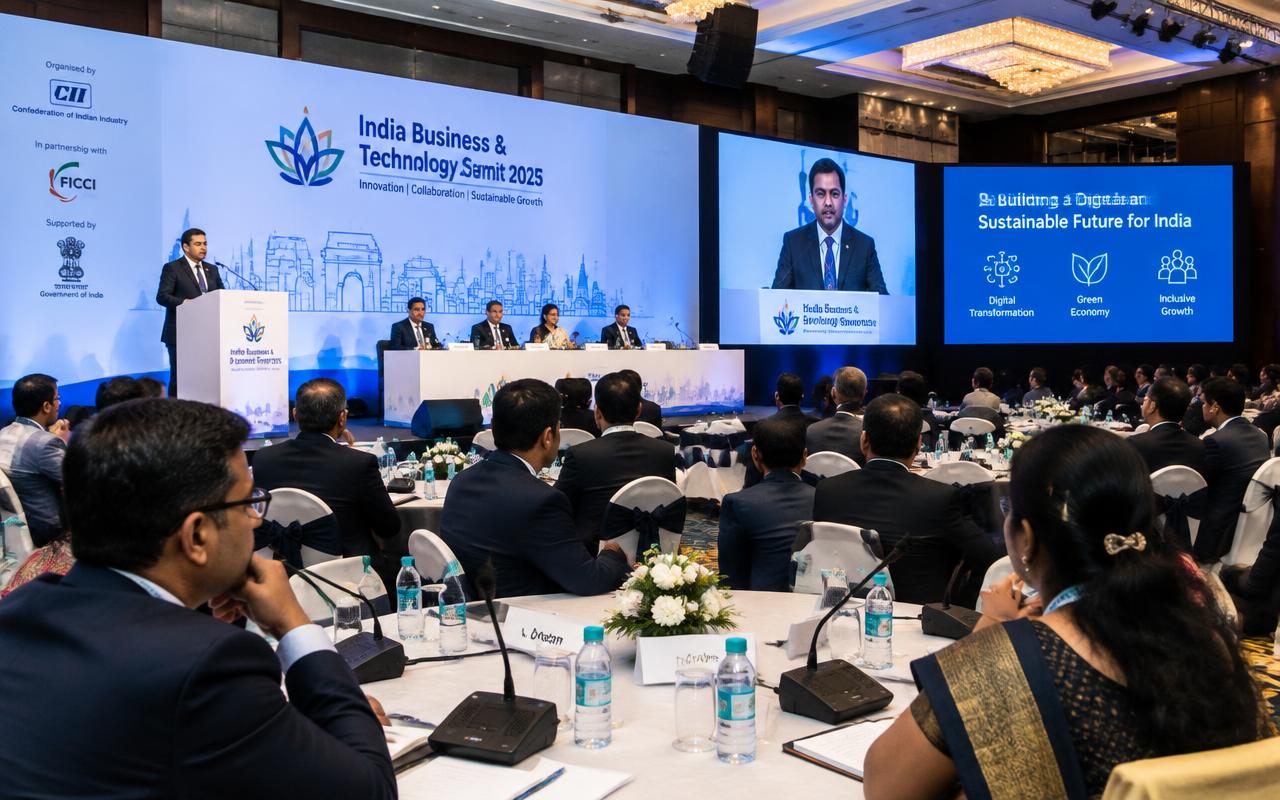
Protocol defines the ceremonial work: a precisely ordered dais, lectern and lectern lighting that will be photographed, impeccable speech reinforcement in Hindi, and a visual design that reads cleanly on television feeds because the broadcast cut matters as much as the room. Temple programming is devotional and continuous, needing warm, forgiving vocal reinforcement across a vast area rather than fidelity. Purvanchal wedding culture is loud, late and decor-led, with the baraat and entry sequences carrying the emotional weight of the evening.
Specification
DJ & Premium Party Sound: technical specification
| Specification | Detail |
|---|---|
| Booth standard | 2 – 4 x Pioneer CDJ-3000 with DJM-A9 or DJM-V10, Pro DJ Link |
| Booth monitoring | Dedicated send, two coaxial or compact cabinets at ear height |
| Dance-floor SPL target | 100 – 105 dBA on the floor, clean with limiter headroom intact |
| Sub configuration | Centre cluster or four-box arc, never a bare left-right pair |
| Low-frequency band | Useful output to 35 – 40 Hz with crossover at 80 – 100 Hz |
| Top placement | Flown or pole-mounted above head height, aimed into the floor |
| Booth power | Dedicated circuit, isolated from lighting and effects phases |
| Effects | CO2 jets, low-fog, confetti and hazers on DMX with manual override |
| Laser safety | Beams masked above the audience plane; no audience scanning |
Lighting and effects are programmed to the music, not left on sound-active. Beams and washes are built as looks on a console with a busking layout so the operator can hit the drop, and strobes and CO2 jets are placed where they read on camera without blinding the DJ. Lasers, where used, are aimed and masked so no beam enters the audience plane at eye height — audience scanning is an avoidable risk and we simply do not take it. LED booth facades carry content or a live pixel-mapped feed, and the whole lighting world runs on a separate electrical phase from audio.
Sizing
What size rig does your event actually need?
| Scale | Guests | Recommended setup |
|---|---|---|
| Lounge floor | 80 – 200 | Two tops, one centre sub, booth monitor pair, eight washes, four beams |
| Rooftop | 200 – 500 | Four tops pole-mounted, two subs centre-clustered, 16 fixtures, hazer |
| Ballroom after-party | 500 – 1,000 | Flown tops, four-box sub arc, two delay fills, 24 fixtures, two CO2 jets |
| Warehouse or lawn | 1,000 – 2,500 | Compact array per side, eight to twelve subs in a block, 40+ fixtures, lasers |
| Festival dance stage | 3,000 – 5,000+ | Full array with outfills, 16 subs, timecoded lighting and effects, duplicate booth |
Scope
Premium DJ Sound Setup scope tiers in Gorakhpur
Cocktail Booth
Cocktail hours and intimate parties, 100 – 300 guests
- CDJ-3000 pair with DJM-A9 and booth monitor send
- Four tops and two subs with a centre sub position
- Eight washes and four beams on a busking console layout
- LED booth facade with content playback
- Sound engineer and one lighting operator
Club Floor
After-parties, rooftop nights and corporate socials, 300 – 800 guests
- Quad CDJ booth with mixer redundancy and spare channel
- Flown tops with a four-box sub arc and dance-floor delay fills
- Twenty-four fixture lighting rig with hazer and two CO2 jets
- Pixel-mapped booth and bar-back LED
- Three-person crew with programmed looks and a busking layout
Headline Night
Touring DJ sets and large party productions, 1,000 – 5,000 guests
- Rider-matched booth with artist-specified mixer and spare deck
- Compact line array per side with a dedicated sub block
- Sixty-plus fixtures, lasers under masked aiming and timecoded looks
- Full LED stage-design surface with media server playback
- Crew chief, system engineer, monitor tech and lighting programmer
Government and institutional work is the dominant spend and comes with tender documentation, compliance paperwork and long payment cycles, but also with volume and repeat engagement. The private market is price-sensitive and benchmarked against tent-house rates, with the exception of the small top tier of wedding clients who want Lucknow-standard production. VIP work carries a real cost in standby crew, redundant equipment and waiting time that must be priced honestly.
Venues
Where we work in Gorakhpur
| Venue | Capacity | Production note |
|---|---|---|
| Radisson Gorakhpur | Around 600 in the ballroom, 1,100 with lawn | The only venue in the city with international-standard infrastructure, which means it absorbs almost all corporate and premium wedding demand; the grid handles lighting but heavy LED needs ground support, and VIP functions here come with security conditions on load-in. |
| Veer Bahadur Singh Sports College | 10,000–25,000 across the ground and stadium | Large open sports ground used for rallies and public functions, with easy truck access but no usable show power, no rigging and a surface needing full protection; rally-scale builds run on distributed delay towers over a standing crowd. |
| Ramgarh Taal | 3,000–15,000 across the lakefront promenade and adjoining grounds | The redeveloped waterfront is the city's showpiece venue, which brings two specific problems — very heavy overnight dew and lake humidity on exposed gear, and pedestrian promenade routes that cannot be blocked, so cable runs must be ramped and the structure footprint kept tight. |
| Gorakhnath temple precinct | Lakhs across the Khichdi Mela period in the complex and surrounding streets | Distributed public-address and relay sound over an enormous moving crowd rather than a single stage system, built and operated under the temple administration's conditions and running continuously for days. |
| Medical Road and Taramandal banquet belt | 800–2,500 across halls and lawns | The practical wedding circuit, running on connections sized for decorative lighting with no spare capacity, and approached by roads that congest badly around hospital shift changes. |
Crew
Who turns up on show day
- System engineer
Tunes the floor for even low-frequency coverage and keeps the system clean at target level rather than limiter-bound.
- Booth technician
Builds and tests the DJ booth, hosts each artist through changeover and handles their patching and monitoring.
- Lighting operator
Busks looks against the set, hits drops live, and runs hazer, CO2 and strobe cues to the music.
- Effects technician
Loads and arms CO2 and confetti, monitors gas levels, and keeps firing lines clear of guests and the booth.
- Laser operator
Aims and masks every beam above the audience plane and holds the kill switch for the duration of the set.
What you receive
- Booth layout drawing with patching and power detail
- Dance-floor coverage plan showing sub positions and top aiming
- Lighting plot with the busking layout and programmed look list
- Effects firing plan with safety exclusion zones marked
- Laser aiming and masking record with the operator's sign-off
- Recorded set audio on request, taken from a dedicated mixer output
Timeline
From enquiry to load-out
- T-3 weeks
Artist spec confirmation
Booth layout, mixer model, monitor preference and any lighting or timecode requirement confirmed with the DJ's team.
- T-2 weeks
Floor and rig plan
Sub positions, top aiming, fixture plot and effects firing positions drawn against the venue layout.
- T-1 week
Content and look build
Booth facade content, LED visuals and the programmed lighting looks are built and reviewed.
- Show day
Load-in and tune
Build, tune the floor for even low frequency, set booth monitoring and walk the laser masking.
- Show day, T-2 hours
Soundcheck and set
Each artist checks their booth, levels are agreed, then the set runs with an operator on lighting throughout.
- Set end +2 hours
Strike
Effects are made safe and gas isolated first, then lighting, then audio, with the booth packed under supervision.
Risk control
What goes wrong, and how we stop it
What can go wrong
How we prevent it
- What can go wrong
The DJ cannot hear the booth monitor over the main system and starts mixing badly.
How we prevent itA dedicated monitor send on its own cabinets at ear height, level-matched at soundcheck with the artist actually standing in the booth.
- What can go wrong
A visiting DJ arrives expecting a mixer model that was never confirmed.
How we prevent itThe booth spec is confirmed in writing at T-3 weeks and a second mixer travels in the truck on any headline night.
- What can go wrong
Laser beams drop into the audience plane as the crowd surges forward.
How we prevent itBeams are masked and aimed above head height at build, the exclusion zone is physically barricaded, and the operator holds a kill switch all set.
- What can go wrong
CO2 jets empty halfway through the set because the cylinder count was guessed.
How we prevent itGas is calculated from the number of programmed hits plus 40 per cent reserve, and cylinder pressure is checked between artists.
Honest comparison
Is this the right choice for your event?
- Lasers instead of beams and CO2Our verdict
Lasers look spectacular in haze and photograph brilliantly, but they add an operator, a safety plan and masking time. On a tight load-in, beams plus two CO2 jets deliver most of the impact with far less risk.
- A controller-and-laptop setup instead of a CDJ boothOur verdict
For a resident DJ who owns their workflow, a controller is lighter and perfectly capable. Guest and touring artists expect CDJ-3000s and Pro DJ Link, and asking them to adapt on the night is where sets go wrong.
- Sound-active lighting instead of a programmed rig with an operatorOur verdict
Sound-active is adequate for a small private party where nobody is watching the lights. For anything photographed or filmed, an operator hitting the drop is the difference between a rig and a show.
Demand
What Gorakhpur books most
Gorakhpur event mix
- Government functions and VIP ceremonial events with full protocol
- Temple-complex religious gatherings and mass annadan programmes
- Medical, railway and institutional conferences
- Weddings and receptions on the lakefront and Medical Road circuit
- Political rallies and public outreach programmes
- University and sports college festivals and tournaments
Ideal for
Events we power with DJ & premium party sound in Gorakhpur
Process
From brief to standing ovation
01
Brief & recce
We visit the venue, map power and rigging, and understand your show flow.
02
Design & quote
CAD plans, 3D previews and an itemised quote within 24 hours.
03
Build & rehearse
Load-in, system tuning, content checks and full technical rehearsal.
04
Show & strike
Show-caller-led execution, then a quick, clean load-out.
FAQ
Premium DJ Sound Setup in Gorakhpur: FAQs
More services in Gorakhpur
Premium DJ Sound Setup in nearby cities
Areas we cover in Gorakhpur
Events in Gorakhpur