Lighting & Stage · Thiruvananthapuram, Kerala
Stage Lighting in Thiruvananthapuram
As Kerala's seat of government, Thiruvananthapuram's AV calendar is unusually weighted toward the state: Secretariat and assembly-adjacent functions, Technopark's corporate flow, ISRO and VSSC technical conferences, and a well-funded public cultural programme at Kanakakkunnu. Add Kovalam's resort weddings and a medical and ayurveda tourism conference circuit and the city supports steady, year-round work rather than a short season. Prime AV Solutions supplies the stage lighting design behind those events — designed on paper, proven in rehearsal and run by our own crew.
- Lead time
- From 6 weeks
- Peak season
- Sep–Mar
- Coverage
- Thiruvananthapuram & Kerala
Key takeaway
Stage Lighting Design for Thiruvananthapuram’s biggest events
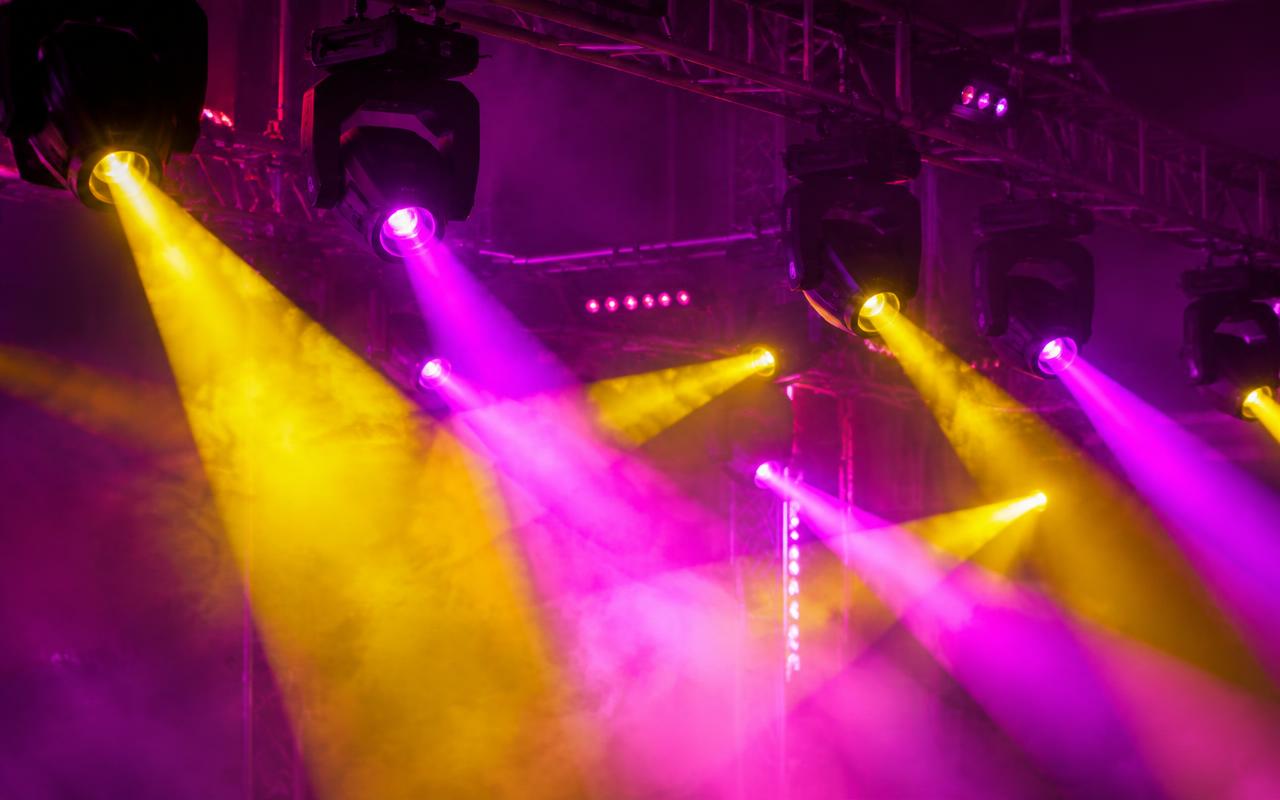
Lighting design is a drawing and a cue stack, not a fixture list. The designer starts from the running order and the stage geometry, then builds a plot in Vectorworks or WYSIWYG: every fixture positioned, angled, addressed and assigned to a purpose — key light for faces, backlight for separation, side light for shape, specials for the lectern and the award table. Previsualisation in grandMA3's 3D engine or Capture lets the designer build and refine looks before any truss is hung, which is what turns a one-day load-in into a programming session rather than a scramble. The plot includes DMX universes, data paths and a power schedule per circuit.
The plot is written by the room's trim height, rigging positions and sightlines, because a design that cannot be hung where it was drawn is just a drawing. In Thiruvananthapuram that plays out at venues like Greenfield Stadium, Kanakakkunnu Palace, Leela Kovalam, and across Kovalam, Technopark, Kowdiar, Vazhuthacaud.
Programming is the craft that clients are actually buying. Looks are built as cues in a stack, grouped into sequences and given times — a two-second crossfade reads as elegance, a zero-count snap reads as impact, and knowing which moment wants which is the whole job. For shows with music or video, cues are chased to timecode (LTC or MTC) so lighting, video and audio hit together frame-accurately. For live segments, the operator works from a busking layout of executors so an unplanned moment still gets a look. Everything runs on sACN or Art-Net over a managed network, with DMX512-A as the final hop to the fixtures.
What’s included
- Lighting plots & 3D previsualisation
- grandMA3 & ChamSys programming
- Haze, CO2 & special effects
- Architectural uplighting
Equipment we carry
Why Thiruvananthapuram chooses Prime AV
- Crews and trucks positioned for fast load-in at Greenfield Stadium and venues in Kovalam and Technopark.
- A tracking backup console runs session-synced on every show above gala scale, and every fixture holds its last look on data loss rather than defaulting to zero.
- Fixture plot with positions, angles, addresses and purposes
- Working knowledge of Kerala venue rules, power sanctions and permission timelines.
Local conditions
Producing stage lighting in Thiruvananthapuram
Weather & the rig
Lighting design has to survive its environment — heat shortens fixture life and changes colour output, humidity defeats haze, and an outdoor plot needs IP-rated positions rather than a studio layout. This is a two-monsoon city and that single fact shapes every plan: the south-west monsoon from June to September and the north-east monsoon through October and November deliver well over 1,700 mm between them, and even in the dry months coastal humidity sits in the seventies and eighties. Condensation on projector and camera optics when gear moves between an air-conditioned hall and the outdoors is a routine problem, salt carried off the sea at the Shanghumugham and Kovalam venues corrodes connectors and hardware, and nothing exposed should be specified below IP54. June to September is the south-west monsoon in full and October to November brings the north-east monsoon, so roughly half the year is genuinely wet. December to March is the dependable window; the Attukal Pongala in February or March effectively shuts the city for a day either side, and plans in those weeks must account for it.
Power & redundancy
A lighting plot is a power schedule in disguise, with every circuit load-balanced across phases, which is why grid stability and generator sizing are design inputs rather than site problems. KSEB supply is among the more reliable state distribution networks and Kerala's urban grid holds up well, so a mains tie-in at a good venue is a realistic part of the design rather than a hope. Generator backup remains standard for public and outdoor work, and silent sets are effectively obligatory because Kerala enforces generator noise and siting norms seriously. The practical trap is earthing quality at older government venues, which should be measured rather than assumed.
Permits & noise rules
Lighting is the department most likely to attract a light-spill objection, so beam angles and façade wash are planned against what can legally point where after dark. The Thiruvananthapuram Corporation handles ground and public-space permissions, the City Police Commissionerate licenses assembly, and the Kerala noise rules with the Supreme Court 10 pm outdoor amplified-sound limit are enforced more strictly here than in most Indian cities — the Kerala High Court has repeatedly intervened on loudspeaker use, and police will act on a single complaint. Thiruvananthapuram International Airport sits close to the city and the coast, making drone work a live clearance matter, and events near the Padmanabhaswamy temple require the temple administration's conditions on timing, structures and sound.
Load-in & access
Fixtures, truss and dimmer racks go in early and come out late, and focus time is the first casualty when a load-in window tightens, so the schedule is negotiated before the plot is drawn. NH-66 runs along the coast and the Karyavattom and Technopark venues take full trucks, but the city core around East Fort, Chalai and the Padmanabhaswamy approaches is dense, narrow and busy through the day. Kovalam adds a different problem: the resort access roads are steep and single-lane with no turning space, so a transfer to tempos at the top and a hand-carry down the cliffside paths is the normal build. Government venues operate on security-fixed load-in windows.
Season & booking
Attukal Pongala in February or March brings one of the world's largest gatherings of women and the city's streets and crew are entirely absorbed. Onam in August or September is the state's cultural and commercial peak with the Onam week celebrations in the capital, the Nishagandhi and Soorya festival seasons take winter dates at Kanakakkunnu, and the Padmanabhaswamy temple's Painkuni and Alpashy Arattu festivals close surrounding routes. The Technopark calendar quietens over Christmas and Onam. Peak demand runs Sep–Mar.
Crew & dispatch
Served from our Kochi base, 200 km down NH-66 at about four and a half hours, with Thiruvananthapuram crew held locally for government work that needs quick response; marine-grade consumables and spare connectors are stocked in the city precisely because of the coastal corrosion problem. Load-in support covers Kovalam, Technopark and the rest of the city.
What it costs here
Government work is tendered with detailed specifications, documentation requirements and payment cycles measured in months rather than weeks, so cash-flow planning matters as much as the margin. Technopark corporate work benchmarks against Bengaluru and buys sensibly. Kovalam resort weddings carry a genuine premium for coastal handling, and the cultural festival sector pays modestly but books with real consistency.
Local expectations
Malayali production expectation is formality over spectacle — a clean, well-lit stage, impeccable speech intelligibility for long bilingual Malayalam and English programmes, and lighting that flatters rather than dazzles. Classical dance programming demands acoustically honest reinforcement for the mridangam, edakka and vocalist, and a lighting state that respects the choreography. Reception-style weddings are structured and punctual, and the audience's tolerance for excessive volume is low — intelligibility and tone win here where SPL wins in Punjab.
Specification
Stage Lighting Design: technical specification
| Specification | Detail |
|---|---|
| Consoles | MA Lighting grandMA3 full-size and light, ChamSys MagicQ MQ500 |
| Plot software | Vectorworks Spotlight, WYSIWYG, Capture, grandMA3 3D previsualisation |
| Control protocols | sACN and Art-Net over a managed network, DMX512-A to fixtures |
| Universe planning | 512 channels per universe; typical show runs 4 – 24 universes |
| Timecode | LTC or MTC chase for frame-accurate sync with audio and video |
| Key light for camera | Faces at a level the vision engineer can shade without opening the iris wide |
| Colour discipline | Single unified white point across the rig, matched to the video chain |
| Atmospherics | Hazers set below smoke-detector threshold, with venue fire-panel isolation agreed |
| Followspots | Operated positions with dedicated comms to the lighting operator |
| Backup | Tracking backup console or a session-synced second desk on every show |
Then there are the looks that cannot be programmed: haze density, which makes beams visible but has to sit below the threshold where a smoke detector or a camera's contrast objects; followspot operators who track a performer by eye and need clear comms; CO2 and low-fog timed to a beat. A designer also plans for the cameras, because what reads beautifully to the eye can be unusably contrasty on broadcast. Key levels are set against the camera's requirement rather than the designer's preference, and colour temperature is unified so the vision engineer is not fighting the rig all night.
Sizing
What size rig does your event actually need?
| Scale | Guests | Recommended setup |
|---|---|---|
| Conference stage | 200 – 800 | Twelve washes, six profiles, four specials, two universes, one operator on a cue stack |
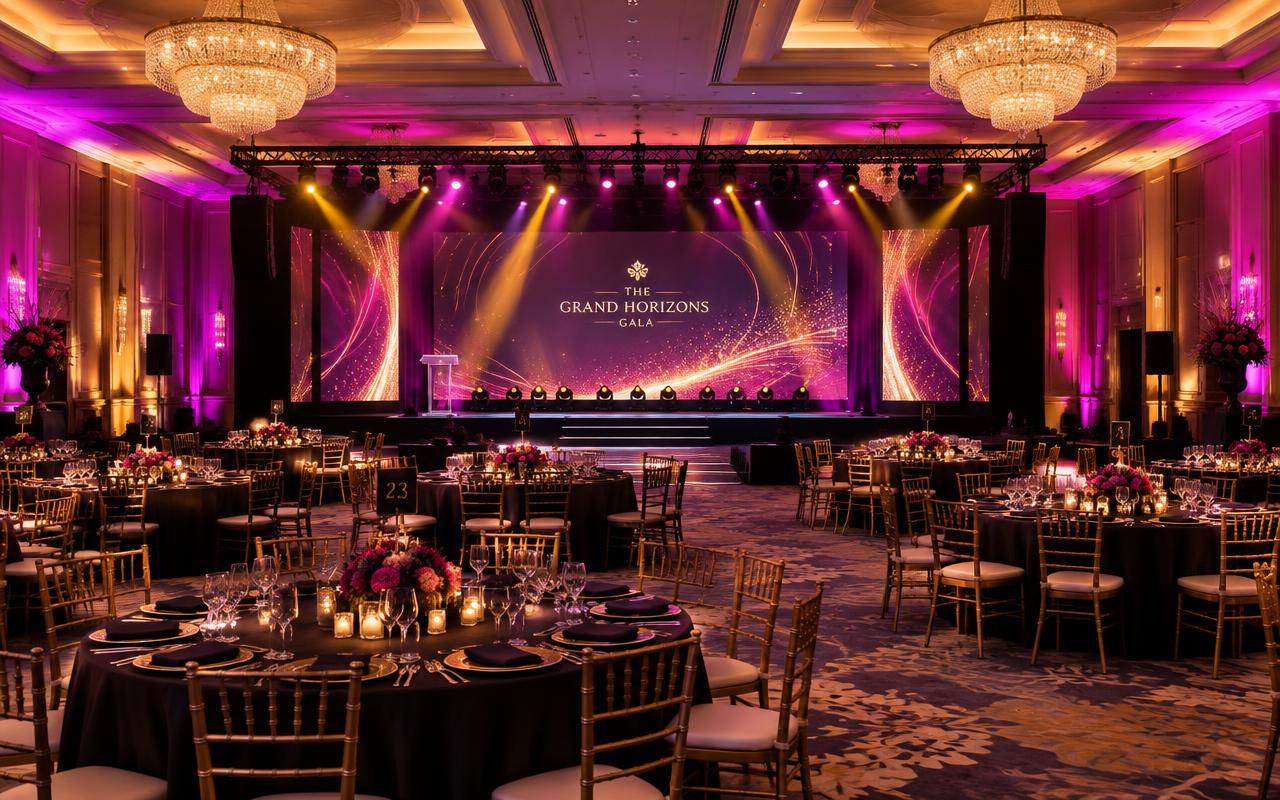
| Gala ballroom | 500 – 1,500 | Thirty-six fixtures across front truss and uprights, decor wash, four universes, previsualised |
| Award show | 1,500 – 4,000 | Eighty-plus fixtures, camera-balanced key, timecoded stack, two followspots, eight universes |
| Concert stage | 5,000 – 20,000 | 150+ fixtures over multiple trusses and floor positions, busking plus timecode, 16 universes |
| Televised production | 20,000+ | 250+ fixtures, tracking backup console, pre-production programming days, 24 universes |
Scope
Stage Lighting scope tiers in Thiruvananthapuram
Design & Programme
Single-session events, galas and conferences up to 800 guests
- Lighting plot drawn to the stage and truss layout
- Previsualised look build before load-in
- Cue stack for the full running order with timed transitions
- On-site programming session and show operation on grandMA3
- Lighting designer plus one operator
Show Design
Award nights, fashion shows and concerts, 1,000 – 5,000 guests
- Full design package with 3D previsualisation and look renders
- Timecoded cue stacks synchronised to audio and video playback
- Camera-aware key lighting agreed with the broadcast team
- Haze, CO2 and special-effect cueing with a dedicated technician
- Designer, programmer, operator and followspot operators
Production Design
Multi-day festivals, televised shows and tours, 5,000+ guests
- Complete production lighting design including scenic integration
- Tracking backup console and redundant network topology
- Multiple cue stacks for guest artists and back-to-back segments
- Pre-production studio programming days before load-in
- Full lighting department with crew chief, programmers and dimmer techs
Government work is tendered with detailed specifications, documentation requirements and payment cycles measured in months rather than weeks, so cash-flow planning matters as much as the margin. Technopark corporate work benchmarks against Bengaluru and buys sensibly. Kovalam resort weddings carry a genuine premium for coastal handling, and the cultural festival sector pays modestly but books with real consistency.
Venues
Where we work in Thiruvananthapuram
| Venue | Capacity | Production note |
|---|---|---|
| Greenfield Stadium | Around 50,000 in the bowl | A modern privately built stadium at Karyavattom with genuine power provision and wide perimeter access, but the pitch and the surrounding drop-in areas are protected absolutely and all structures need engineered decking with the operator's sign-off. |
| Kanakakkunnu Palace | 2,000–5,000 across the Nishagandhi amphitheatre and the palace grounds | The city's cultural heart, where the open amphitheatre hosts long classical seasons — the state's own festival calendar has first claim on dates, rigging onto the heritage structure is not permitted, and the surrounding tree canopy limits tower positions. |
| Leela Kovalam | 400–900 across the ballroom, terraces and cliffside lawns | A clifftop property above the Arabian Sea where salt-laden air attacks connectors, fixture housings and truss within a single show cycle; everything exposed needs marine-grade protection and a post-show cleaning regime, and the level changes mean long hand-carry stretches. |
| Mascot Hotel and the Kowdiar convention properties | 300–800 across halls and lawns | Government-adjacent venues used for official functions, with protocol-driven dais layouts and security conditions that fix load-in timings; electrical headroom is modest for the formality of the events held there. |
| Nishagandhi and Tagore Theatre auditoria | 700–1,200 seated | Proscenium houses built for Mohiniyattam and Kathakali programming, acoustically sympathetic but with fixed grids and limited electrical capacity, so touring rigs need a supplementary feed and a careful grid loading calculation. |
Crew
Who turns up on show day
- Lighting designer
Owns the plot, the looks and the visual intent, and answers to the client for how the show reads on the night and on camera.
- Programmer
Builds the cue stack, groups, palettes and executors, and sets every fade time against the running order.
- Console operator
Runs the show live, busks the unplanned moments and holds the timecode chase in and out of segments.
- Network and data technician
Builds the sACN network, allocates universes, patches every fixture and traces any data fault during the run.
- Followspot operator
Tracks performers and presenters on cue from the operator, with dedicated comms and a marked seating reference.
- Atmospherics technician
Manages haze density against camera contrast and fire-panel thresholds, and fires CO2 and fog cues.
What you receive
- Fixture plot with positions, angles, addresses and purposes
- Universe and data path allocation diagram
- Previsualisation renders of the key looks
- Cue sheet mapped to the running order with fade times
- Console show file backed up to two drives and handed over
- Power schedule per circuit with phase balance
- As-run cue notes recording any live changes made on the night
Timeline
From enquiry to load-out
- T-6 weeks
Brief and look direction
Running order, stage design, camera plan and reference imagery reviewed so the design serves the actual show, not a generic concert look.
- T-4 weeks
Plot issue
Fixture plot, truss positions, universe allocation, data paths and the power schedule issued to rigging and the venue.
- T-2 weeks
Previsualisation and look build
Looks built and reviewed in a 3D previs session, with renders shared so the client sees the design before it exists.
- Show day −1
Load-in and focus
Rig hung, addressed and focused, then a programming session on the actual stage with the actual set.
- Show day, T-6 hours
Technical and dress rehearsal
Cue-to-cue through the running order, timecode verified, camera levels agreed with the vision engineer.
- Show day to +4 hours
Show and strike
Show operated live from the stack, then the rig struck in truss order with show files backed up before power down.
Risk control
What goes wrong, and how we stop it
What can go wrong
How we prevent it
- What can go wrong
A console failure mid-show takes the entire rig to black.
How we prevent itA tracking backup console runs session-synced on every show above gala scale, and every fixture holds its last look on data loss rather than defaulting to zero.
- What can go wrong
The running order changes an hour before doors and the cue stack no longer matches.
How we prevent itCue stacks are built as modular sequences keyed to segments rather than as one linear list, so a reorder is a change of order, not a reprogramme.
- What can go wrong
Decor and stage lighting disagree on colour and the stage looks dirty on screen.
How we prevent itOne white point is defined for the whole production and every department, including the decor lighting, is calibrated to it against physical samples.
- What can go wrong
The design looks beautiful to the eye and unusable on camera — faces in shadow, contrast too hard.
How we prevent itKey levels and colour temperature are agreed with the vision engineer at the design stage and verified under camera at rehearsal, with the rig balanced to the camera rather than to the room.
Honest comparison
Is this the right choice for your event?
- Skipping previsualisation to save a design dayOur verdict
Defensible on a repeat format in a familiar venue. On a new design, previs is the cheapest hour on the project — it converts on-site programming from discovery into refinement and usually saves more load-in time than it costs.
- Renting fixtures with a basic operator instead of a lighting designerOur verdict
Fine for a static conference look that never changes. For anything with entries, awards, performances or cameras, the design and the cue stack are what the audience actually perceives — the fixtures are just the hardware that delivers it.
- Busking the whole show instead of programming cuesOur verdict
A skilled busker is better than a bad stack, and essential for unpredictable live segments. But a scripted award show with sixty segments and video stingers needs a timecoded stack; busking that accurately for three hours is not realistically possible.
Demand
What Thiruvananthapuram books most
Thiruvananthapuram event mix
- State government functions, summits and policy events
- Technopark corporate conferences, town halls and hiring events
- Scientific, medical and ayurveda conferences
- Public cultural festivals and classical dance programming
- Resort weddings and receptions on the Kovalam coast
- Sporting events and ceremonies at Greenfield
Ideal for
Events we power with stage lighting design in Thiruvananthapuram
Process
From brief to standing ovation
01
Brief & recce
We visit the venue, map power and rigging, and understand your show flow.
02
Design & quote
CAD plans, 3D previews and an itemised quote within 24 hours.
03
Build & rehearse
Load-in, system tuning, content checks and full technical rehearsal.
04
Show & strike
Show-caller-led execution, then a quick, clean load-out.
FAQ
Stage Lighting in Thiruvananthapuram: FAQs
More services in Thiruvananthapuram
Stage Lighting in nearby cities
Areas we cover in Thiruvananthapuram
Events in Thiruvananthapuram