Event production · Bhubaneswar, Odisha
Sports Events & Ceremonies AV in Bhubaneswar
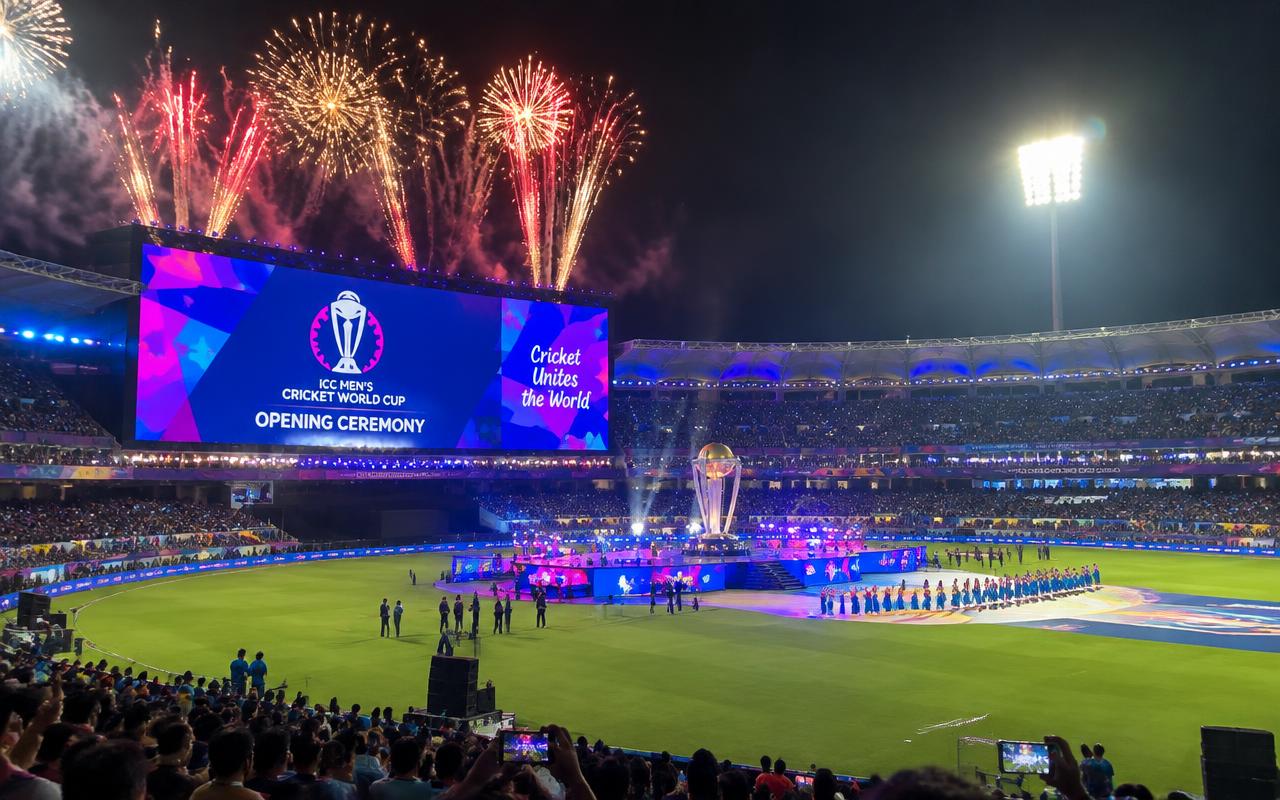
Bhubaneswar works as Odisha's administrative and institutional capital with an unusually large private education sector bolted on — KIIT and the surrounding university belt produce convocations and festivals at a scale few tier-2 cities match — alongside an IT presence at Infocity, state government programming, and a sports-event pipeline built around Kalinga Stadium's hockey credentials. Prime AV Solutions produces the sports events & ceremonies end of that calendar — stadium-scale PA, giant outdoor LED, opening ceremony shows — with one crew owning the whole stack.
- Lead time
- 8 weeks out
- Peak season
- Oct–Feb
- Coverage
- Bhubaneswar & Odisha
Key takeaway
Complete AV for sports events & ceremonies in Bhubaneswar
Stadium audio is a public-address problem first and an entertainment system second. Announcements have to be intelligible to a crowd generating ninety-odd decibels of its own noise, across tiers with wildly different distances and plenty of hard reflective concrete, which means distributed coverage aimed tier by tier rather than a central cluster turned up. Build the system so the announcer always takes priority over the music feed through a hardware override, and verify intelligibility in a full stadium rather than an empty one, because an empty bowl tells you almost nothing useful.
Stadium geometry decides screen placement, speaker hangs per tier and where a stage can stand without a wheel touching the playing surface. In Bhubaneswar we work at Kalinga Stadium, Janata Maidan, Mayfair Lagoon and venues across Patia, Saheed Nagar, Jaydev Vihar, Chandrasekharpur, Khandagiri.
Ceremonies are a build-window exercise on somebody else's playing surface. The groundsman controls the pitch, the fixture list controls the calendar, and you may have six hours between the end of pitch preparation and the first guests, often with a rule that no wheeled vehicle crosses the turf. The answer is a modular ceremony rig carried on boards, pre-assembled sections, cable routes laid on protective matting around the boundary, pitch-side distribution boxes placed before covers come off, and a strike plan that clears the surface before the officials inspect it.
What your event needs
- Stadium-scale PA
- Giant outdoor LED
- Opening ceremony shows
- Broadcast feeds
Why Bhubaneswar organisers choose Prime AV
- Crews and trucks positioned for fast load-in at Mayfair Lagoon and venues in Jaydev Vihar and Chandrasekharpur.
- Hold written wind-load limits for every flown element, nominate the decision-maker jointly with the venue, and rehearse a sequence that lowers and secures the rig without crossing the surface.
- A standing Bhubaneswar client base across university convocations, conclaves and cultural festivals and state government functions, summits and investor events, so the rig is specified from experience rather than a catalogue.
- Working knowledge of Odisha venue rules, power sanctions and permission timelines.
What you will be judged on afterwards
- Safety and in-play announcements were intelligible in every tier with the stadium full.
- The ceremony came on and off the playing surface inside its window, and the groundsman passed the pitch.
- Replays and the match clock on the big screens stayed in step with what the crowd was watching live.
- The broadcaster received the agreed clean feeds at the agreed reference without a single dropout.
- No cable, box or structure left a mark on the surface or sat in a crowd escape route.
Local conditions
Producing sports events & ceremonies in Bhubaneswar
Weather & the rig
Stadium work is entirely open to the sky, so the ceremony rig, the screens and a seated crowd all take the conditions exactly as they come. Two things dominate: humidity and cyclones. Coastal humidity sits high for most of the year, which means condensation management on optics, sealed connectors as standard and a genuine corrosion regime on hardware. More seriously, the Odisha coast is India's most cyclone-exposed and the October–November and April–May windows carry real landfall risk, so any temporary structure in those months needs engineered wind loading, a documented strike plan and a decision point written into the contract. Summer before the monsoon reaches 40–42°C with oppressive humidity. June–September south-west monsoon is heavy and sustained, and October–November is peak Bay of Bengal cyclone season — the single biggest structural risk in the state. December to February is the dependable window; plan anything in the cyclone months with a named abandonment trigger.
Power & redundancy
Stadiums have power but almost never where a pitch-side ceremony needs it, so temporary distribution around the boundary with generator backup carries the show. TPCODL supply into the capital is reasonably good by eastern India standards and institutional venues have decent sanctioned loads, Kalinga Stadium notably so. The caveat is storm season, when outages follow wind events and restoration can take time, so full generator redundancy is standard practice between October and February. Fuel and plant hire are available locally; the high water table means every DG and distribution position needs to be raised and bunded.
Permits & noise rules
Match-day events sit under the stadium authority's rules, a police crowd plan and separate clearance for any pyrotechnic or drone element, all on a fixture date that cannot move. The Bhubaneswar Municipal Corporation and the Bhubaneswar Development Authority control ground use, the Commissionerate of Police for Bhubaneswar-Cuttack licenses assembly and traffic, and the Odisha State Pollution Control Board applies the noise rules alongside the 10 pm outdoor amplified-sound limit. Biju Patnaik International Airport sits inside the urban area, which makes drone work across much of the city a live DGCA clearance matter against the approach. The Ekamra heritage temple zone around Lingaraj and the ASI-protected sites restrict structures and fixings, and anything near the protected monuments needs archaeological clearance.
Load-in & access
Build windows are dictated by the fixture list and the groundsman, so everything loads in, moves on boards and strikes around play rather than around the production. NH-16 feeds the city and the Kalinga Stadium and Janata Maidan complex takes full container trucks without difficulty, which makes large builds here easier than almost anywhere else in eastern India. The friction is in the old temple quarter around Lingaraj and Old Town, where lanes are narrow and pilgrim traffic is constant, and in monsoon season when waterlogging on the ring road slows everything. Campus load-in follows academic hours.
Season & booking
Durga Puja and Kali Puja in September–October commit pandal staging, lighting and sound across the city for a fortnight. Rath Yatra at Puri, 60 km away, in June–July absorbs the entire state's crew, trucks and barricading for weeks. Adivasi Mela at Janata Maidan in January, Odisha's Utkal Divas on 1 April, the KIIT festival season and Raja Parba in June are the other fixed points; the wedding season runs Nov–Feb. Peak demand runs Oct–Feb.
Crew & dispatch
Core inventory based in Bhubaneswar itself to serve the Cuttack and coastal Odisha belt, with heavy top-ups trucked from our Kolkata depot, 440 km down NH-16 at about eight hours loaded, and Visakhapatnam as the southern alternate.
What it costs here
Institutional and government work goes through formal tendering with specification sheets and slow but certain payment; the university sector buys at scale and negotiates on volume. Corporate conference work benchmarks against Kolkata. Sporting events, where an international federation sets the standard, are the segment that genuinely pays for specification — and the only one where a premium is readily accepted.
Local expectations
Odia programming has its own grammar: a formal lamp-lighting and Vande Utkala Janani opening, long felicitation sequences needing many roving mics, and Odissi recitals that want clean, musical reinforcement and a sympathetic lighting state rather than effects. Puja committee work is judged by the community on both the pandal lighting and the volume, and government summits expect bilingual Odia and English content with impeccable presentation playback.
Run of show
A typical sports events & ceremonies schedule
| Time | Moment | What AV is doing |
|---|---|---|
| T−3 days | Screen and PA build | Giant screens erected on engineered supports, distributed speaker positions hung or stacked per tier, cable routes matted around the boundary. |
| T−1 day | Integration and rehearsal | Broadcast feed points tested with matched reference, scoring and clock integration verified, ceremony rehearsed with stand-ins on the boards. |
| T−5 hrs | Announcement and music check | Announcer override tested from every position, music bed levels set per tier, emergency message script read through with the venue safety officer. |
| 16:00 | Gates open | Walk-in music at measured level per tier, welcome and safety messages on a timed rotation, screens on sponsor and wayfinding content. |
| 17:30 | Fan engagement | Crowd cameras cut to the big screens, competitions run from the announcer position, audio follows the active zone rather than running flat everywhere. |
| 18:30 | Opening ceremony | Ceremony rig live on the boards, performance audio taken by a second engineer, lighting and effects cued, broadcast taking the clean programme feed. |
| 19:00 | Match start | Ceremony struck off the surface inside the agreed window, screens switch to match feed with replays, announcer on priority for all in-play messaging. |
| 22:15 | Presentation | Podium placed and lit, radio mics on an allocated block, screens on the presentation cut, recording closed and feeds reconciled with the broadcaster. |
Broadcast integration is where sports events differ most from other live work. The host broadcaster owns the match feed and the timing, and your giant screens, replay and ceremony coverage have to interface with that cleanly: agreed feed points, matched reference and frame rate, a clear understanding of who supplies replays and with what delay, and a scoring and clock integration that does not drift. Fan-park screens elsewhere in the city then take a distributed feed with their own audio, their own power and their own crowd plan.
Scope
Sports Events & Ceremonies scope levels in Bhubaneswar
Match-night overlay at a mid-size stadium: distributed PA supplement, announcer position, one large screen or LED panel set, playback and a show-caller.
An opening or closing ceremony on the field of play: modular stage on boards, performance-grade PA, programmed lighting rig, LED, pitch-side power and a rehearsal day.
Multi-match delivery with giant screens, full stadium PA supplement, broadcast feed integration, replay to screens and a resident crew across the fixture window.
A large opening ceremony with drone or pyrotechnic finale, multi-zone audio across the bowl, broadcast-grade camera package, full generator redundancy and a multi-day build.
Institutional and government work goes through formal tendering with specification sheets and slow but certain payment; the university sector buys at scale and negotiates on volume. Corporate conference work benchmarks against Kolkata. Sporting events, where an international federation sets the standard, are the segment that genuinely pays for specification — and the only one where a premium is readily accepted.
Venues
Where sports events & ceremonies happen in Bhubaneswar
| Venue | Capacity | Production note |
|---|---|---|
| Kalinga Stadium | 15,000 in the hockey arena, with a larger athletics bowl | Genuinely international infrastructure after hosting world-level hockey, with real power provision and perimeter access, but the playing surface is a synthetic turf that is protected absolutely — every load path needs engineered decking and the sports authority's approval. |
| Janata Maidan | 50,000-plus in an open public layout | The city's rally and fair ground, adjacent to Kalinga Stadium, with easy truck access but nothing else — barricading, towers, power and dust control are all brought in, and the ground is exposed with no wind break. |
| Mayfair Lagoon | 600–1,500 across the ballroom, lawns and waterside areas | The premium wedding and conference property, laid out around water features and mature landscaping, which severely limits crane and tower positions and makes cable routing a design exercise rather than an afterthought. |
| KIIT convention and auditorium complex | 2,000–5,000 across the larger halls | Purpose-built campus infrastructure with good capacity and grids, but institutional protocol fixes the dais and procession layout and the academic calendar controls availability absolutely. |
| Idco Exhibition Ground and the Nandankanan Road hotel belt | 1,000–8,000 depending on configuration | Workable exhibition and banquet options, though the high water table across the city means generator and distribution positions must be raised, and monsoon-season builds need bunding and pumped drainage. |
Demand
What Bhubaneswar books most
Bhubaneswar event mix
- University convocations, conclaves and cultural festivals
- State government functions, summits and investor events
- International and national sporting events and ceremonies
- Durga Puja and Kali Puja pandal staging
- IT and corporate conferences at Infocity
- Odia weddings and receptions at the resort properties
Services
Recommended production stack
Line Array Systems
Flown line array systems designed in prediction software for outdoor grounds, convention halls and arenas of 1,000 to 50,000 guests.
LED Screen Rental
Large-format LED screens and IMAG side screens with switching, so every guest sees speakers, performers and content in crisp detail.
Drone Light Shows
Choreographed drone light shows with 100 to 1,000+ drones that paint logos, names and stories across the night sky — with all permissions handled.
Broadcast & Multi-Camera
Broadcast-grade cameras, jibs, PTZs and OB-style control for IMAG, TV feeds and post-event films that capture every moment.
Timeline
Planning milestones
- 8 weeks out
Fixture and access plan
Match date, pitch-preparation schedule, build and strike windows and the surface protection method agreed with the venue and groundsman.
- 6 weeks out
Audio and screen design
Tier-by-tier coverage modelled, screen positions fixed against sightlines and support engineering, announcer override architecture specified.
- 4 weeks out
Broadcast interface agreed
Feed points, reference and frame rate, replay responsibility, clock and scoring integration documented with the host broadcaster.
- 3 weeks out
Ceremony design and safety sign-off
Modular rig drawings, cable plan, effect clearances and crowd-safety review completed with the venue safety officer.
- T−3 to T−1 day
Build, integration and rehearsal
Screens and PA installed and tested, broadcast integration proven, ceremony rehearsed with timed move-in and strike drills.
- Immediately post event
Strike and surface handover
Ceremony off the surface first, full derig to the venue deadline, and a joint pitch and stand inspection before sign-off.
Risk control
What goes wrong, and how we stop it
What can go wrong
How we prevent it
- What can go wrong
Weather forces a call in an open bowl with a flown rig.
How we prevent itHold written wind-load limits for every flown element, nominate the decision-maker jointly with the venue, and rehearse a sequence that lowers and secures the rig without crossing the surface.
- What can go wrong
Ground staff refuse to allow loading across the playing surface.
How we prevent itAgree the surface protection method and the exact route at the recce with the groundsman in writing, design a modular rig that moves on boards and trolleys, and budget the labour for hand-carrying rather than assuming vehicle access.
- What can go wrong
The ceremony build window collides with pitch preparation.
How we prevent itBuild the schedule jointly with the venue and the match officials, pre-assemble everything possible outside the bowl, and rehearse the move-in and strike as timed drills with a counted crew.
- What can go wrong
Crowd noise masks announcements when it matters most.
How we prevent itSpecify distributed coverage aimed tier by tier with a hardware announcer override above the music feed, and verify intelligibility with the stadium full rather than signing it off in an empty bowl.
Process
From brief to standing ovation
01
Brief & recce
We visit the venue, map power and rigging, and understand your show flow.
02
Design & quote
CAD plans, 3D previews and an itemised quote within 24 hours.
03
Build & rehearse
Load-in, system tuning, content checks and full technical rehearsal.
04
Show & strike
Show-caller-led execution, then a quick, clean load-out.
FAQ
Sports Events & Ceremonies AV in Bhubaneswar: FAQs
Other events in Bhubaneswar
Sports Events & Ceremonies AV in nearby cities
Services in Bhubaneswar
Areas we cover in Bhubaneswar